If you've ever watched a Baglamukhi Havan being performed — the crackling sacred fire, the steady rhythm of mantras, the fragrant smoke rising from the kund — you may have wondered: what exactly is being offered into that fire? And why?
This is one of the most common questions people ask before booking their first ritual at Maa Baglamukhi Siddha Peeth, Nalkheda. And it's a deeply valid one. Understanding the samagri (ritual materials) used in a Baglamukhi Havan doesn't just satisfy curiosity — it deepens your connection to the ritual itself and helps you understand why this ancient practice is so extraordinarily effective.
In Vedic tradition, nothing in a ritual is arbitrary. Every single item placed into the havan kund carries a specific vibrational frequency, a specific purpose, and a specific relationship with the divine energy being invoked. This is especially true for Maa Baglamukhi Havan — a ritual aligned with one of the most fierce and powerful of the ten Mahavidyas.
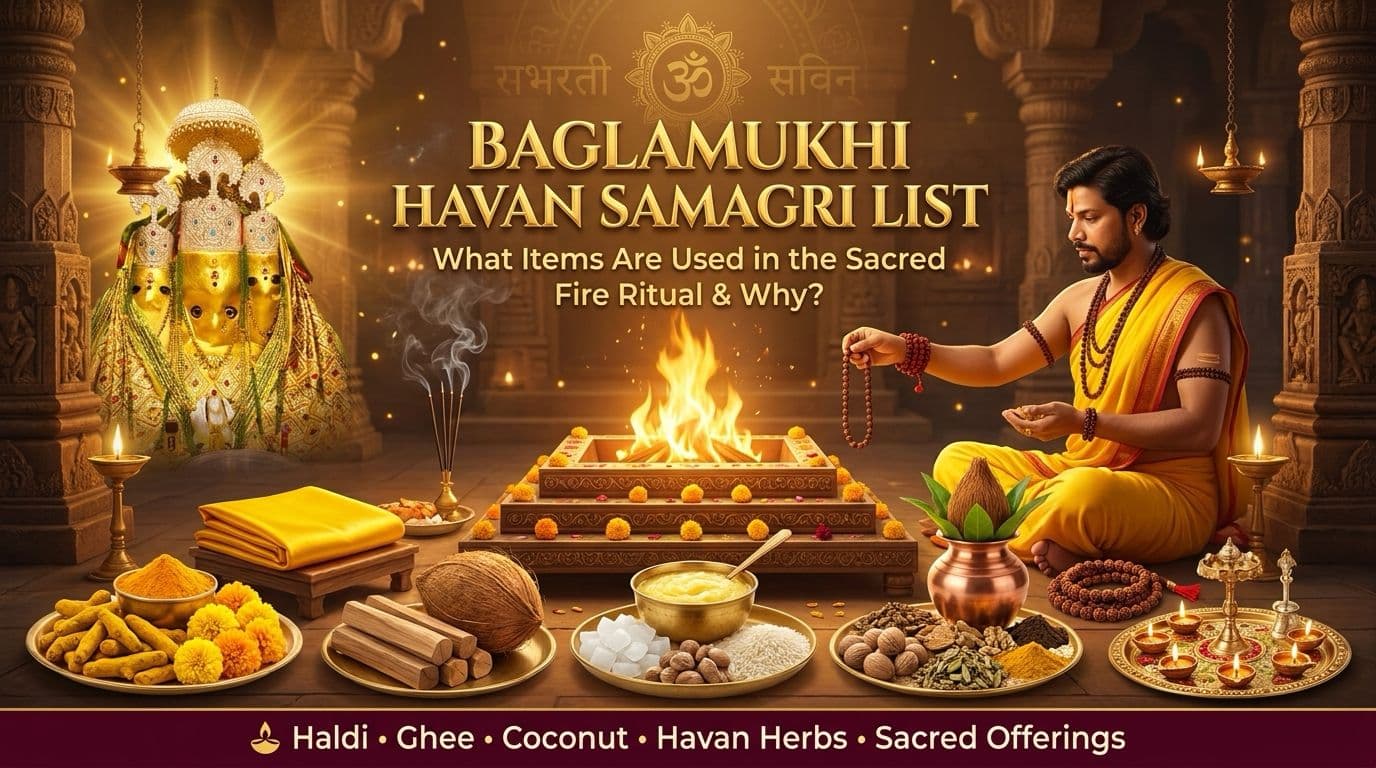
Let's go through the complete Baglamukhi Havan samagri list, and more importantly — let's understand the why behind each item.
First, Why Does Samagri Selection Matter So Much?
Before we list the items, this point deserves a moment.
In a commercialized or rushed puja, samagri is often generic — a standard packet bought from a shop, used identically for every type of ritual. This is precisely why so many people experience limited results from such pujas.
Baglamukhi Havan is a highly specific Tantric-Vedic ritual aligned to a very particular divine frequency — Stambhan Shakti, the power of immobilization and control. The samagri used must be aligned to this frequency. Items associated with Maa Baglamukhi's specific energy — particularly her connection to the color yellow (Pitambara), turmeric, and particular woods and grains — are not interchangeable with generic havan items.
This is why Acharya Tiwari Chetan Guru personally oversees the preparation of samagri for every ritual performed at Nalkheda. The authenticity of materials is non-negotiable.
The Complete Baglamukhi Havan Samagri List
1. Haldi (Turmeric) — The Most Sacred Item in Baglamukhi Puja
If there is one ingredient that is absolutely central to every Maa Baglamukhi Puja and Havan, it is turmeric.
Maa Baglamukhi is known as Pitambara Devi — the Goddess of Yellow. Yellow is her color, her energy signature, her cosmic frequency. Haldi (turmeric) is the earthly manifestation of that yellow divine energy.
When turmeric is offered into the sacred fire with the proper Baglamukhi mantras, it creates a vibrational alignment between the devotee's intention and Maa's Stambhan Shakti. It is offered in multiple forms — whole turmeric pieces, turmeric powder, turmeric-mixed ghee — at different stages of the havan.
Why it works: Turmeric carries powerful purifying and protective properties in both Vedic science and modern chemistry. In the havan, its smoke purifies the energy field of the ritual space and creates a concentrated zone of divine yellow frequency.
2. Ghee (Clarified Butter) — The Primary Ahuti
Ghee is the most fundamental offering in any Vedic havan. It is the vehicle through which all other offerings reach the divine. When poured into the fire, ghee amplifies the flame, purifies the air, and acts as a carrier of sacred intent.
In Baglamukhi Havan specifically, cow ghee is used — no substitutes. The purity of the ghee directly impacts the purity of the ritual energy generated.
Why it works: Ancient Vedic texts describe ghee as the medium between the physical and spiritual worlds. The fire (Agni) transforms the ghee into divine energy that rises upward — carrying the devotee's Sankalp directly to the deity.
3. Mango Wood (Aam ki Lakdi) — The Sacred Havan Fuel
The havan kund is not lit with ordinary firewood. The primary fuel used in Baglamukhi Havan is mango wood — considered auspicious and pure in Vedic tradition.
Mango wood burns cleanly, produces fragrant smoke, and is specifically mentioned in ancient texts as the preferred wood for Shakti-related havans. It is often combined with Peepal wood and Neem wood for specific purposes within the ritual.
Why it works: Different woods produce different energetic frequencies when burned. Mango wood's frequency is aligned with positive transformation and the removal of obstacles — a perfect match for Baglamukhi's energy.
4. Yellow Mustard Seeds (Peeli Sarson) — For Stambhan & Enemy Neutralization
This is one of the most specific items in Baglamukhi Havan samagri — and one of the most powerful.
Yellow mustard seeds carry an intense Stambhan (immobilizing) energy in Tantric Vedic practice. When offered into the fire with specific Baglamukhi mantras — particularly during the portion of the ritual dedicated to enemy neutralization — they act as a concentrated burst of paralyzing divine energy directed at the source of harm.
If you are performing Maa Baglamukhi Shatru Nashak Puja or any ritual targeting enemy protection, yellow mustard seeds are a non-negotiable component.
Why it works: In Vedic Tantra, the sharp, penetrating nature of mustard mirrors the piercing quality of Stambhan Shakti. The yellow color aligns it directly with Maa Baglamukhi's frequency.
5. Yellow Flowers — Especially Marigold (Genda) and Yellow Champa
Maa Baglamukhi's preferred flowers are yellow. Marigold, yellow champa, and yellow rose petals are offered both in the puja portion and into the havan fire.
Flowers in Vedic ritual are not merely decorative. Each flower carries a specific vibrational signature. Yellow flowers resonate with the solar plexus energy (Manipura Chakra) — the center of personal power, authority, and willpower. This is precisely the energy that Maa Baglamukhi activates in her devotees.
Why it works: Offering yellow flowers creates a vibrational bridge between the devotee's desire for strength and victory and the divine feminine power that grants it.
6. Navadhanyas (Nine Sacred Grains)
The Navadhanyas — nine sacred grains including wheat, rice, black sesame, green moong, chana, urad, barley, masoor, and til — are offered together as a symbol of complete abundance and the removal of all nine types of obstacles.
In Maa Baglamukhi Maha Hawan, the Navadhanyas offering holds special significance. Each grain corresponds to a specific planet in Vedic astrology. Offering all nine together neutralizes any planetary afflictions (Graha Dosha) that may be contributing to the devotee's problems.
Why it works: This offering addresses spiritual blockages at the astrological level — complementing the direct Stambhan energy of the Baglamukhi mantras.
7. Black Sesame Seeds (Kala Til) — For Removal of Negative Energy
Black sesame seeds are a powerful item in Tantric havan practice. They are specifically used during the portions of the ritual dedicated to removing black magic, evil eye (Nazar Dosha), and deeply rooted negative energies.
If your ritual includes the Maa Baglamukhi Sampurna Uchchatan Prayog — the specialized ritual for removing stubborn occult attacks — black sesame seeds feature prominently in the ahutis.
Why it works: Black sesame carries an absorbing, neutralizing quality in Vedic science. When burned with the proper mantras, it absorbs and destroys negative energetic residue from the devotee's aura.
8. Camphor (Kapoor) — The Purifier of Space
Camphor is burned at key moments during the Baglamukhi Havan — particularly at the beginning (to purify the ritual space) and at the Purna Ahuti (to seal the ritual's energy).
The flame of camphor is uniquely pure — it burns completely, leaving no residue. This completeness is deeply symbolic: it represents the total burning away of obstacles, fears, and negative forces.
Why it works: Camphor's intense, purifying fragrance clears the ritual space of all negative vibrations and signals the beginning and completion of divine contact.
9. Loban and Guggul (Sacred Resins) — The Divine Fragrances
Loban (frankincense) and Guggul are sacred resins burned throughout the Baglamukhi Havan. Their fragrant smoke is considered deeply pleasing to Maa Baglamukhi and acts as a continuous offering of devotion during the extended mantra jaap.
Beyond their devotional significance, these resins have powerful air-purifying properties. The smoke from Guggul in particular is known in both Ayurveda and Vedic ritual for its ability to clear negative energies from physical spaces.
Why it works: Sacred resins maintain the energetic purity of the ritual environment throughout the havan — especially important during multi-day Baglamukhi Anushthan sessions.
10. Yellow Cloth and Yellow Thread (Pitambari Vastra & Dhaga)
The priest performing the Baglamukhi Havan wears yellow — always. The havan kund may be decorated with yellow cloth. And the Raksha Sutra (protective thread) that is prepared and energized during the ritual for the devotee is always yellow.
This consistency of yellow throughout the ritual is intentional and deeply significant. It maintains the alignment of the entire ritual — priest, space, fire, and intention — with Maa Baglamukhi's specific divine frequency from beginning to end.
Why it works: Color carries vibrational energy in Vedic science. Consistent use of yellow throughout the ritual creates an undiluted channel of Pitambara Devi's energy.
11. Panchamrit (Five Sacred Liquids)
Panchamrit — a mixture of milk, curd, honey, ghee, and sugar — is used to bathe the deity's image or yantra during the puja portion that precedes the havan. It represents the five elements and is offered as a symbol of complete devotion.
In Baglamukhi Havan, Panchamrit is offered with specific mantras invoking Maa's maternal blessings — reminding us that behind the fierce Stambhan power is a goddess who ultimately loves and protects her devotees.
12. Baglamukhi Yantra — The Geometric Seat of Divine Energy
While not burned in the fire, the Baglamukhi Yantra is placed at the center of the ritual space and serves as the geometric residence of Maa's energy during the havan. Every mantra chanted, every offering made — all of it flows through and is amplified by the Yantra.
After the havan is completed, the Yantra — now charged with the concentrated energy of the entire ritual — is dispatched to the devotee as part of the Prasad. When kept in your home or place of business, it continues to emanate Maa Baglamukhi's protective energy. Learn more about daily Yantra use in our blog on how to use Baglamukhi Yantra for protection.
Why Authentic Samagri Cannot Be Compromised
Reading through this list, you begin to understand why the quality, source, and ritual preparation of samagri matters so deeply.
A Baglamukhi Havan performed with impure ghee, generic firewood, or samagri assembled without proper Vedic knowledge will generate a fraction of the spiritual force of one performed with authentic, carefully selected materials. This is not superstition — it is the science of vibrational alignment.
At Baglamukhi Hawan Nalkheda, every item in the samagri is sourced with deliberate care. The preparation itself follows a pre-ritual purification process. Nothing enters the havan kund that has not been sanctified.
Ready to Experience the Power of Authentic Baglamukhi Havan?
Now that you understand what goes into a genuine Baglamukhi Havan — and why — you understand why the place and the priest who performs it matter as much as the ritual itself.
If you are facing persistent enemies, a long-standing court case, unexplained business losses, or the weight of negative energies that nothing seems to clear, the authentic Baglamukhi Havan performed at Nalkheda under Acharya Tiwari Chetan Guru's direct guidance is your answer.
Book Your Baglamukhi Havan Today →
WhatsApp for Free Consultation →
Call: +91 9074342490
Explore our complete range of Maa Baglamukhi Puja services or visit the Spiritual Blog for more in-depth Vedic knowledge.
Performed with authentic samagri at Maa Baglamukhi Siddha Peeth, Nalkheda, Agar Malwa, Madhya Pradesh.
Sacred Clarifications
About Baglamukhi Havan &
Puja in Nalkheda
Turmeric (Haldi) is the single most important item. Maa Baglamukhi is Pitambara Devi — the Goddess of Yellow — and turmeric is her earthly energy signature. No authentic Baglamukhi Havan or puja is performed without it, offered in whole, powdered, and ghee-mixed forms at different stages of the ritual.
While some basic items like ghee, turmeric, and flowers are easily available, several samagri items — particularly the quality of mango wood, specific resins like Guggul and Loban, and the Baglamukhi Yantra — require expert sourcing and pre-ritual purification. At Nalkheda, Acharya Tiwari Chetan Guru personally oversees samagri preparation to ensure every item meets authentic Vedic standards before it enters the havan kund.
Yellow is Maa Baglamukhi's divine color — her frequency. Everything in the ritual, from the priest's clothing to the flowers, mustard seeds, turmeric, and protective thread, is yellow to maintain unbroken vibrational alignment with Pitambara Devi's Stambhan Shakti throughout the ritual.
Yes. While the core samagri remains consistent, specific items are emphasized based on the devotee's Sankalp. Yellow mustard seeds are used heavily for enemy and court case situations. Black sesame seeds are prominent when removing black magic or Nazar Dosha. Navadhanyas are added when planetary afflictions are involved. Acharya Ji customizes the samagri composition after understanding your specific situation.
The core items are the same, but the quantity, repetition, and additional specialized ingredients increase significantly in a Maha Hawan. A standard Havan uses samagri for a single session. The Maha Hawan spans multiple days with fresh, purified samagri prepared daily — and the cumulative offering of 1.25 lakh+ ahutis requires a far larger and more meticulously prepared set of materials.
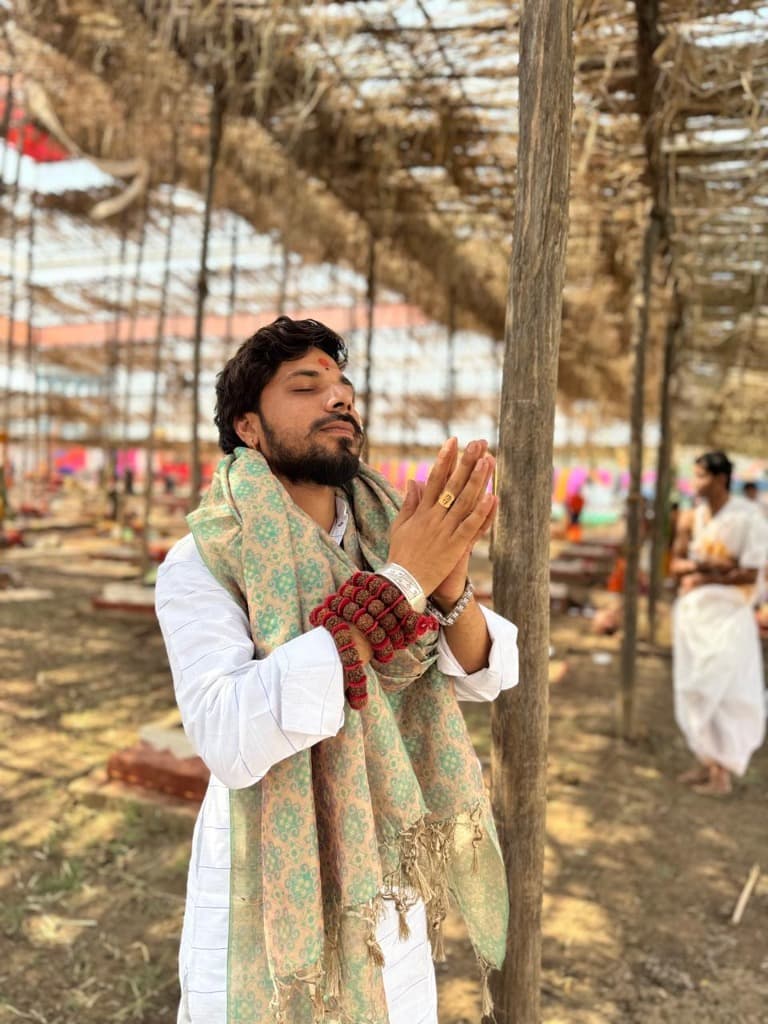
Acharya Tiwari Chetan Guru
Siddha Peethadheesh & Head Vedic Scholar
With over 15+ years of unbroken Vedic practice at Maa Baglamukhi Siddha Peeth, Nalkheda, Acharya Ji is a globally authoritative voice on Tantra Shastra, Stambhan Vidya, and Karmic Astrology. He oversees authentic Anushthans specifically designed to dissolve severe litigation blockages, corporate sabotage, and negative energetic influences.
Need Exact Hawan Cost & Shubh Muhurat?
Get direct guidance from Head Priest Acharya Tiwari Chetan Guru.