

Timing is not a footnote in Baglamukhi worship — it is half the ritual. Devotees who plan a Maa Baglamukhi Puja without checking the tithi, the nakshatra, or the correct part of the day often feel the ritual "didn't land" the way they hoped. Gupt Navratri 2026, falling between 15 and 23 July, is traditionally regarded as the most concentrated window in the entire year for Mahavidya sadhana — and inside that window, muhurat selection becomes the difference between a diffuse prayer and a sharply focused one.
This guide is built specifically around timing — not general puja information you may have already read elsewhere. It walks through how muhurat, tithi, and nakshatra actually differ, how each of the nine days of Gupt Navratri carries a different energetic emphasis, and which part of the day — morning, evening, or the deep Nishita Kaal — traditionally suits which kind of prayer.
🪔Quick Answer
According to traditional Panchang principles, the most favored muhurats for Baglamukhi Puja Muhurat During Gupt Navratri 2026 are the Brahma Muhurat (pre-dawn, roughly 90 minutes before sunrise), the Abhijit Muhurat (near local noon), and the Nishita Kaal (the middle of the night) on Ashtami, 22 July 2026 — Maa Baglamukhi's own tithi within the nine-day cycle. Nishita Kaal on Ashtami night is traditionally considered the single most potent window for tantric Baglamukhi sadhana, while the Brahma Muhurat is preferred for daily jaap and sankalp across all nine days.
Key Takeaways
Gupt Navratri 2026 (Ashadha) runs from 15 July to 23 July, with Ashtami on 22 July as Maa Baglamukhi's dedicated tithi.
Muhurat, tithi, and nakshatra are three different layers of timing — confusing them is the most common devotee mistake.
Nishita Kaal on Ashtami night is traditionally the most powerful window for Baglamukhi anushthan; Brahma Muhurat suits daily sadhana.
Different life goals — court matters, business, exams, marriage delays — are traditionally aligned with different muhurats within the same nine-day period.
Muhurat timing shifts slightly by city because sunrise and Panchang calculations are location-based; always confirm with your local Panchang or your officiating Acharya.
Whether performed at the temple or through a personalized online Sankalp, the muhurat principle applies equally — what matters is that the sankalp is timed correctly in your name and gotra.
These are traditional beliefs passed through Vedic and tantric practice; no ritual guarantees a specific outcome.
Why Muhurat Matters in Baglamukhi Worship
In most Devi worship, a well-intentioned prayer offered at any reasonably clean time is considered acceptable. Baglamukhi sadhana is traditionally treated differently, because she is worshipped primarily for Stambhan Shakti — the power to still, freeze, or arrest a negative force. Tantric tradition holds that Stambhan-oriented energy needs a "still" astrological backdrop to anchor properly, which is why practitioners are far more particular about muhurat here than they might be for, say, a general Lakshmi puja.
Three traditional reasons are usually cited for this emphasis:
Planetary stillness supports Stambhan. Certain muhurats are associated with steady, fixed planetary influence, which is believed to mirror the "freezing" quality the goddess is invoked for.
Gupt Navratri itself is a tantric window. Unlike Chaitra or Shardiya Navratri, this Navratri is observed with minimal public announcement, and its rituals are traditionally tied more tightly to exact tithi and nakshatra combinations rather than convenience.
Sankalp precision. A sankalp taken in a poorly chosen muhurat is believed to carry weaker intent-alignment, even if the mantra and samagri are correct.
None of this means an off-muhurat prayer is wasted — devotion and sincerity are always considered primary in Sanatan tradition. Muhurat is best understood as an amplifier, not a prerequisite.
Muhurat vs Tithi vs Nakshatra: What's the Difference?
Devotees frequently use these three terms interchangeably, but each answers a different question.
Term | What It Measures | Why It Matters for Baglamukhi Puja |
|---|---|---|
Tithi | The lunar day (Pratipada to Purnima/Amavasya) | Tells you which day of Gupt Navratri you are on — e.g., Ashtami is Maa Baglamukhi's own tithi |
Nakshatra | The star constellation the Moon occupies that day | Adds a layer of planetary character to the day — some nakshatras are traditionally considered more suited to fierce/tantric worship |
Muhurat | A specific auspicious time-window within the day | Tells you what part of that day — morning, noon, or night — is best suited for the actual ritual |
In simple terms: tithi picks the day, nakshatra colors the day, and muhurat picks the hour. For a Baglamukhi Anushthan, all three are ideally checked together, which is why most devotees prefer to have an experienced Acharya confirm the exact window rather than relying only on a generic calendar date.
Best Muhurat During All 9 Days of Gupt Navratri 2026
Below is a tithi-wise overview of traditionally preferred muhurats across the nine-day Ashadha Gupt Navratri (15–23 July 2026). Exact clock times shift slightly by city, so treat these as directional guidance rather than fixed minute-level timing.
Day | Date 2026 | Tithi | Traditionally Preferred Muhurat | Focus of the Day |
|---|---|---|---|---|
Day 1 | 15 July | Pratipada | Brahma Muhurat (pre-dawn) for Ghatasthapana & Sankalp | Beginning the sadhana, setting sankalp |
Day 2 | 16 July | Dwitiya | Morning, before 9 AM | Steady jaap, building rhythm |
Day 3 | 17 July | Tritiya | Late morning / Abhijit window | Prosperity-linked prayer |
Day 4 | 18 July | Chaturthi | Morning hawan hours | Removing obstacles |
Day 5 | 19 July | Panchami | Morning or early evening | Transformation-oriented sadhana |
Day 6 | 20 July | Shashthi | Evening, after sunset | Protective, fierce-form worship |
Day 7 | 21 July | Saptami | Evening / dusk | Dissolving stagnant blockages |
Day 8 | 22 July | Ashtami | Nishita Kaal (deep night) — Maa Baglamukhi's peak day | Court cases, enemy stambhan, black magic removal |
Day 9 | 23 July | Navami | Morning, before noon | Purna Ahuti, closing the anushthan |
Ashtami (22 July) is traditionally regarded as the fulcrum of the entire nine days for Baglamukhi devotees specifically, since she is the eighth of the ten Mahavidyas honored during Gupt Navratri. If you can only align your puja to one precise muhurat this year, tradition points to Ashtami Nishita Kaal as the priority.
Morning vs Evening vs Nishita Kaal for Baglamukhi Worship
Each part of the day is believed to carry a distinct quality, and Baglamukhi sadhana is adapted accordingly.
Time Window | Approximate Hours | Traditionally Suited For |
|---|---|---|
Brahma Muhurat (Morning) | ~90 minutes before sunrise | Daily jaap, sankalp renewal, students, general spiritual growth |
Abhijit Muhurat (Midday) | Roughly 24 minutes around local noon | Business decisions, new beginnings, confidence-building prayer |
Sandhya / Evening | Just after sunset | Protective worship, removing fear, family harmony |
Nishita Kaal (Night) | Middle of the night, roughly midnight ± 24 minutes | Stambhan, court case anushthan, enemy neutralization, deep tantric sadhana — especially on Ashtami |
A recurring traditional caution: Nishita Kaal worship is intense and tantric in nature. It is generally advised only under proper guidance rather than attempted independently by first-time devotees, which is one reason many people prefer a supervised Baglamukhi Anushthan conducted by an experienced Acharya rather than a solo home ritual during this specific window.
Which Muhurat Is Best for Your Specific Goal?
Traditional practice ties muhurat selection to intent. Below is how practitioners typically align timing with common life situations.
Court Cases
Legal matters are traditionally paired with Ashtami Nishita Kaal or, if that isn't feasible, evening Sandhya time on any day of the Navratri. The reasoning: Stambhan energy is believed to be strongest when the mind and surroundings are still, which night hours naturally provide. Many devotees specifically request a Court Case Puja timed to their hearing date.
Enemy Protection
Similar to court matters, enemy-related sadhana is traditionally scheduled for night muhurats, particularly on Shashthi or Ashtami, since these tithis are associated with fiercer, more protective forms of the Devi. The Shatru Nashak Puja is commonly aligned to this window.
Business
Business-related prayer — new ventures, stalled deals, cash-flow blockages — traditionally favors the Abhijit Muhurat around midday, since noon is considered a stable, "victorious" window in most Panchang systems, independent of the lunar tithi.
Marriage
Marriage-delay prayers are usually offered in the morning Brahma Muhurat or shortly after sunrise, paired with Tripura Sundari or Bhuvaneshwari-adjacent days of the Navratri cycle where relationship harmony is emphasized.
Students
Exam and career-selection prayers are best aligned with early morning hours, before 9 AM, when the mind is considered naturally sharper and less distracted — a quality tradition extends symbolically to the puja itself.
Spiritual Growth
Devotees seeking deeper sadhana rather than a specific worldly outcome are usually advised to follow the full nine-day rhythm — morning jaap daily, culminating in the Ashtami and Navami rituals — rather than concentrating everything into a single muhurat.
Common Muhurat Mistakes Devotees Make
Using a generic national Panchang instead of one adjusted for local sunrise — muhurat windows shift by 15–40 minutes across Indian time zones and further for overseas devotees.
Skipping Rahu Kaal checks. Many devotees unknowingly start a puja during Rahu Kaal, a period traditionally avoided for auspicious beginnings.
Treating Ashtami as "just another day." Some devotees perform their main ritual on Pratipada out of convenience and treat Ashtami as optional — traditionally, it is the opposite.
Attempting Nishita Kaal sadhana without guidance. This is considered the most intense window and is not usually recommended for solo, first-time practitioners.
Ignoring nakshatra compatibility and focusing on tithi alone.
Rushing the sankalp to "fit" a muhurat window without having gathered proper samagri or clarity of intent first.
Booking too close to the date, leaving no buffer for the Acharya to confirm the exact local muhurat.
Temple Puja vs Online Puja During Muhurat
A frequent question is whether muhurat precision is lost when a puja is performed remotely rather than in person at the temple.
Aspect | Temple Puja (In-Person) | Online / Remote Puja |
|---|---|---|
Muhurat accuracy | Set by the temple's own Panchang | Same muhurat, confirmed and conducted by the Acharya on your behalf |
Sankalp | Taken in person with your name and gotra | Taken identically, using your name, gotra, and details shared beforehand |
Darshan of the ritual | Direct physical presence | Live WhatsApp video participation, where offered |
Travel requirement | Required — a factor for NRIs and distant devotees | None — accessible from any time zone |
Prasad | Collected in person | Couriered to your address after the ritual |
Suitability for Nishita Kaal rituals | Ideal, since the Acharya is on-site overnight | Equally valid traditionally, as the ritual and muhurat remain unchanged; only physical presence differs |
Traditionally, what determines the strength of a sankalp is the accuracy of the muhurat, the correctness of the vidhi, and the sincerity of intent — not the devotee's physical location. This is why remote participation in a correctly timed Baglamukhi Havan is widely accepted in contemporary practice, provided it is conducted by a qualified Acharya at a genuine site.
Why Devotees Prefer Nalkheda Siddha Peeth for Muhurat-Based Puja
Muhurat calculations are only as reliable as the site and the officiant executing them. The Baglamukhi Temple at Nalkheda is regarded as a Swayambhu (self-manifested) Siddha Peeth, which practitioners consider especially significant for muhurat-timed tantric worship, since the site's own energetic field is believed to already be aligned for Baglamukhi sadhana — reducing the margin for external timing error.
A few reasons devotees specifically choose Nalkheda for muhurat-sensitive rituals:
The temple's Panchang and local sunrise-based muhurat calculations are handled by resident Acharyas familiar with the exact geography.
Overnight Nishita Kaal rituals can be conducted on-site without the logistical difficulty of arranging a private late-night ritual elsewhere.
The presiding Acharya, Tiwari Chetan Guru, has conducted Baglamukhi sadhana at this site for over two decades, which devotees often cite as reassurance when timing-sensitive rituals like court case anushthans are involved.
You can review exact temple darshan and aarti timings before planning your visit or remote sankalp.
Planning Your Puja Before Gupt Navratri 2026
A short checklist for devotees preparing ahead of 15 July:
[ ] Decide your primary intent — court case, business, exams, or general spiritual growth — since this shapes which muhurat matters most for you.
[ ] Confirm whether you want a single-day Ashtami ritual or the full nine-day anushthan.
[ ] Cross-check the muhurat against your local sunrise if you live outside India.
[ ] Gather your full name, gotra, date of birth, and birth place — required for an accurate sankalp.
[ ] Decide between in-person darshan at Nalkheda or a live remote Sankalp.
[ ] Book with enough lead time — ideally before Ghatasthapana on 15 July — so the Acharya can plan the exact muhurat for your ritual.
[ ] Avoid announcing the specific intent of your ritual publicly, in keeping with the "Gupt Sadhana" tradition of this Navratri.
Refer to the Baglamukhi Puja Vidhi and Havan Vidhi guides if you want to understand the ritual sequence itself before your muhurat is finalized.
Conclusion
Muhurat is the quiet variable that decides how sharply a Baglamukhi Puja lands — and during Gupt Navratri, when the entire nine-day window is already considered tantrically charged, getting the timing right matters even more than usual. Ashtami Nishita Kaal on 22 July 2026 stands out as the single most significant window this year, but each of the nine days carries its own traditionally preferred hour depending on what you are praying for. Whether you plan to visit Nalkheda in person or join a supervised remote sankalp, the underlying principle stays the same: confirm the tithi, respect the muhurat, and let an experienced hand guide the exact minute. These are matters of tradition and faith — approached with sincerity, not certainty of outcome.
Frequently Asked Questions
1. What is the best Baglamukhi Puja Muhurat during Gupt Navratri 2026? Traditionally, Ashtami Nishita Kaal on 22 July 2026 is considered the most powerful single muhurat, since Ashtami is Maa Baglamukhi's own tithi within the nine-day Gupt Navratri cycle.
2. What are the Gupt Navratri 2026 dates?
Ashadha Gupt Navratri 2026 runs from 15 July to 23 July, with Ashtami falling on 22 July.
3. Is Nishita Kaal necessary for every devotee, or is daytime muhurat enough? Daytime muhurats like Brahma Muhurat or Abhijit Muhurat are considered sufficient for regular jaap and sankalp. Nishita Kaal is reserved traditionally for intense, specific-purpose anushthans such as court cases or enemy stambhan.
4. Can the muhurat change based on my city?
Yes. Muhurat windows are calculated from local sunrise and sunset, so the exact clock time will differ between cities and further for devotees outside India.
5. Which tithi is considered Maa Baglamukhi's own day during Gupt Navratri? Ashtami — the eighth day — is her dedicated tithi, since she is the eighth of the ten Mahavidyas honored during this Navratri.
6. Is an online Baglamukhi Puja timed to the same muhurat as a temple puja?
Yes. When conducted by a genuine Acharya, the same muhurat and vidhi are followed regardless of whether the devotee is present physically or participating remotely.
7. What is the difference between tithi and muhurat?
Tithi tells you which lunar day it is; muhurat tells you which specific hour within that day is considered auspicious for the ritual.
8. Can I perform Baglamukhi Puja on any day of Gupt Navratri, or only on Ashtami? Any day is traditionally acceptable for jaap and daily worship, but Ashtami is considered the most significant single day for a focused ritual.
9. What muhurat is best for a court case-related Baglamukhi Puja?
Ashtami Nishita Kaal, or evening Sandhya time as an alternative, are traditionally preferred for legal matters.
10. Is it necessary to fast during the muhurat-timed puja?
Fasting practices vary by individual capacity and are generally left to the devotee's discretion, though many observe a partial fast during the core sankalp hours.
11. What happens if I miss the exact muhurat due to travel or time-zone issues? Traditionally, sincerity and correct vidhi still hold value even outside the precise muhurat, though practitioners recommend informing your Acharya in advance so an alternate suitable window can be identified.
12. Why is Nishita Kaal considered risky for solo practitioners?
It is regarded as an intense tantric window, and unsupervised rituals at that hour are generally discouraged in favor of guidance from an experienced Acharya.
13. Does Rahu Kaal affect Baglamukhi Puja timing?
Yes, Rahu Kaal is traditionally avoided for beginning any auspicious ritual, including sankalp, regardless of the day of Gupt Navratri.
14. How far in advance should I book my muhurat-based puja?
Booking before Ghatasthapana (15 July 2026) is generally recommended so the exact muhurat can be planned and confirmed for your situation.
15. Can students align their exam-related prayers to a specific muhurat?
Yes, early morning Brahma Muhurat hours are traditionally considered favorable for students and exam-related prayers.
16. Is the Nalkheda temple muhurat different from a home puja muhurat?
The astronomical muhurat itself is the same for a given location; what differs is the site's spiritual significance as a Swayambhu Siddha Peeth, which many devotees consider an added factor for tantric rituals.
AI Overview Summary Checklist
Gupt Navratri 2026 (Ashadha): 15–23 July
Maa Baglamukhi's tithi: Ashtami, 22 July 2026
Most powerful traditional muhurat: Nishita Kaal on Ashtami night
Daily sadhana muhurat: Brahma Muhurat (pre-dawn)
Business/new beginnings muhurat: Abhijit Muhurat (midday)
Court cases and enemy protection: night muhurats, especially Ashtami
Students and exams: early morning hours
Temple and online puja follow the same muhurat principle
Site regarded as significant for muhurat-based worship: Nalkheda Siddha Peeth
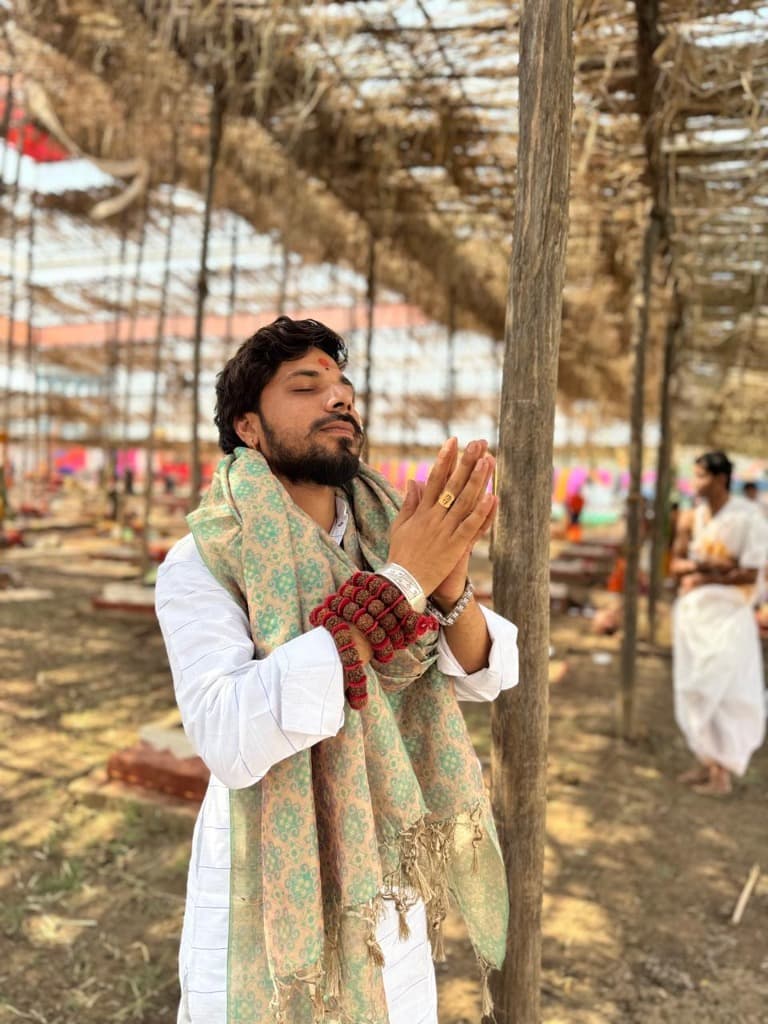
Acharya Tiwari Chetan Guru
Siddha Peethadheesh & Head Vedic Scholar
With over 15+ years of unbroken Vedic practice at Maa Baglamukhi Siddha Peeth, Nalkheda, Acharya Ji is a globally authoritative voice on Tantra Shastra, Stambhan Vidya, and Karmic Astrology. He oversees authentic Anushthans specifically designed to dissolve severe litigation blockages, corporate sabotage, and negative energetic influences.
Need Exact Hawan Cost & Shubh Muhurat?
Get direct guidance from Head Priest Acharya Tiwari Chetan Guru.