The Power of
Siddha Peethas
Discover India's most intense spiritual vortexes. These are not just places of worship, but active cosmic engines where destinies are rewritten through ancient Tantric and Vedic rituals.
Why Rituals Must Be Performed Here
A common question devotees ask is: "Can't I just perform this Havan at a local temple or at my home?"
The short answer is no. A Siddha Peeth is fundamentally different from a normal temple.
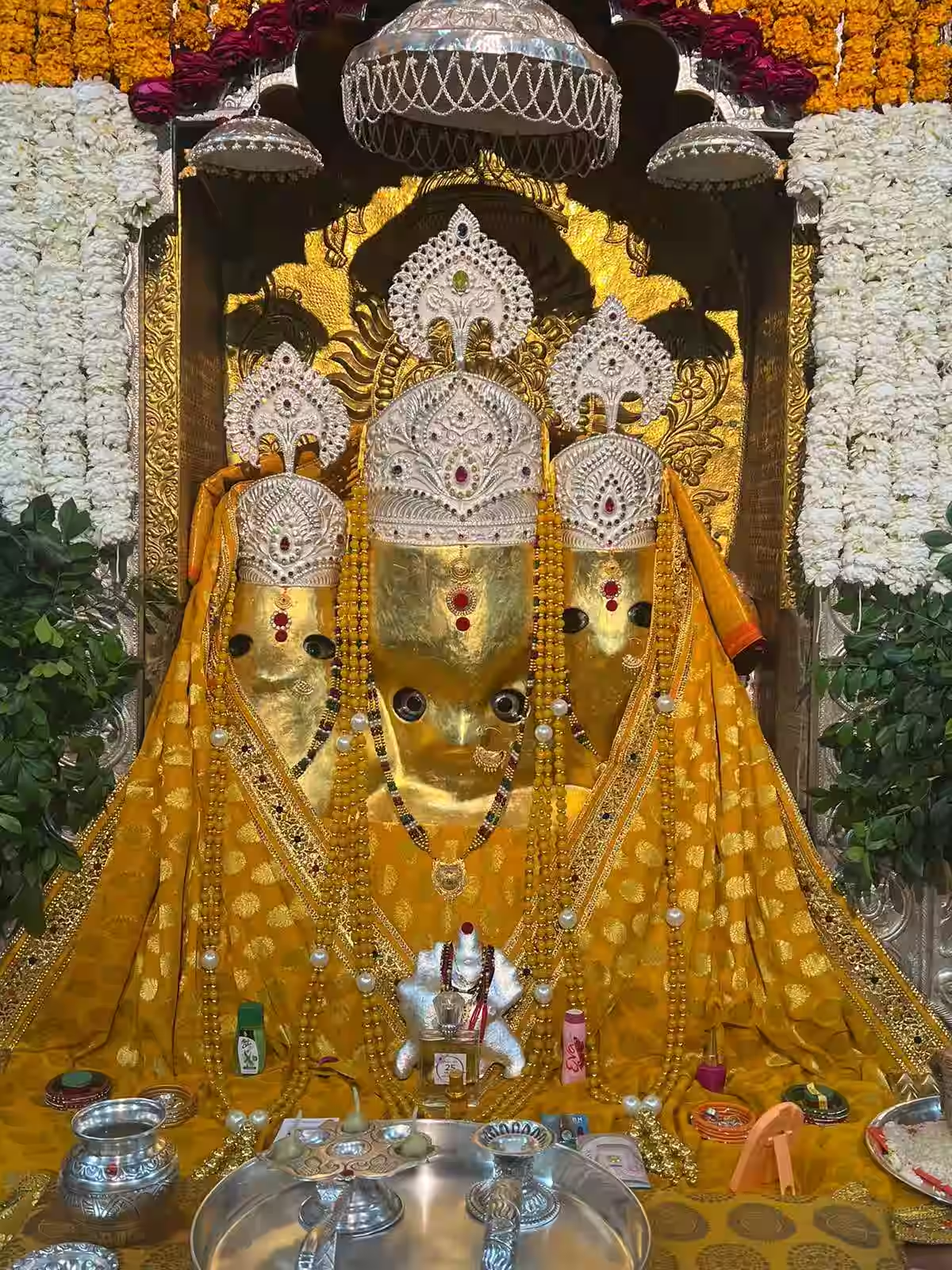
When you are fighting severe karmic blockages, prolonged court cases, or deep-rooted black magic, you need an intervention of massive spiritual scale. A Siddha Peeth like Nalkheda is a geographical energy vortex. It is Swayambhu (self-manifested) and has been supercharged by the unbroken chanting of millions of mantras over thousands of years. Performing a ritual on this specific soil amplifies the 'Stambhan Shakti' (immobilizing power) exponentially, ensuring that your prayers shatter the obstacles that ordinary efforts cannot touch.
Want to perform a ritual at the Siddha Peeth?
Let Acharya Ji guide you on the best temple and muhurat.

Shri Pitambara Peeth, Datia
Datia, Madhya Pradesh, India
A renowned Shaktipeeth and Siddha Peeth in Datia, MP, founded in the 1920s by Shree Swami Ji, with roots traced to Mahabharata-era legends and revered for its Baglamukhi and Shiva shrines.

Baglamukhi Temple, Bankhandi
Bankhandi, Kangra, Himachal Pradesh, India
A historic hill‑top Siddha Peeth in Kangra, HP, dedicated to Goddess Baglamukhi, famed for tantric energy, golden throne iconography, and ties to Lord Rama and the Pandavas.

Baglamukhi Temple, Nalkheda (Agar Malwa)
Nalkheda, Agar Malwa District, Madhya Pradesh, India
A globally revered Siddha Peeth on the banks of the sacred Lakhundar River in Nalkheda. This ancient sanctuary, established by the Pandavas under the divine guidance of Lord Krishna, is the epicenter of 'Stambhan Shakti'—the power to pause negativity and ensure victory over unseen obstacles.

Kamakhya Temple, Guwahati
Nilachal Hill, Guwahati, Assam, India
One of the world’s oldest and most revered Shakti Peethas, located on Nilachal Hill in Guwahati, Assam—dedicated to Goddess Kamakhya, a tantric center and site of the Ambubachi Mela.

Shri Mahakaleshwar Temple, Ujjain
Ujjain, Madhya Pradesh, India
A sacred Jyotirlinga temple dedicated to Lord Shiva, located in the ancient city of Ujjain, Madhya Pradesh. Known for its divine energy, Bhasma Aarti, and immense spiritual significance in Sanatan Dharma.
Why Do People Travel Hundreds of Miles Here?
A Siddha Peeth is not a tourist destination. It is the final resort for those facing immense struggles.
Fulfilling a Lifesaving Vow
Many travel here to fulfill a 'Mannat' (vow) after Maa Baglamukhi miraculousy saved their family member from a terminal illness or fatal accident.
Breaking Generational Curses
When tragedies repeat in a family across generations, ordinary prayers fail. The high-frequency energy of Nalkheda is required to permanently cut these dark karmic cords.
Seeking Ultimate Political Power
Before massive elections, top political leaders visit these Peethas secretly to perform Havans, seeking 'Stambhan Shakti' to silence their opponents and guarantee victory.
Siddha Peeth vs. Local Temples
Man-Made vs. Swayambhu (Self-Manifested)
Local temples are built and consecrated by humans. Siddha Peethas like Nalkheda are 'Swayambhu'—the divine energy naturally erupted from the earth, making it infinitely more potent for fierce Tantric rituals.
Devotion vs. Active Energy Realignment
You visit a local temple for peace and devotion. You visit a Siddha Peeth to actively rewrite your destiny, break black magic, and perform massive energetic interventions.
Common Mistakes Pilgrims Make
Arriving Unannounced for Havan
Nalkheda is incredibly busy. Arriving without pre-booking means you won't get a specific priest or the required pure Samagri for a personalized Havan. Always book your slot in advance.
Breaking Sattvic Discipline During Travel
Consuming alcohol or non-vegetarian food during your journey to the temple severely pollutes your aura before you even step foot on the sacred ground, nullifying the benefits.
What Happens After You Visit?
The energetic shift after visiting a Siddha Peeth is profound and undeniable.
1. The Immediate Purge
The moment you step into the temple complex, the heavy, chaotic noise in your mind goes completely silent. The intense vibration purges deep-seated emotional trauma.
2. The Return Journey
You return home carrying a completely different, highly purified aura. Long-standing conflicts at home begin to resolve themselves naturally due to your shifted energy.
3. The Manifestation
The specific intention (Sankalp) for which you traveled to the temple begins to manifest rapidly in the physical world, backed by the undeniable power of the Swayambhu deity.
Quick Answers (Voice Search)
Direct, to-the-point answers commonly asked on Google.
"Where is the original Baglamukhi temple located?"
The most prominent, self-manifested (Swayambhu) Maa Baglamukhi Siddha Peeth is located in Nalkheda, Agar Malwa district, Madhya Pradesh.
"What is a Siddha Peeth?"
It is an ancient, highly charged spiritual vortex where enlightened masters have performed rigorous austerities, making prayers manifest much faster.
"How far is Nalkheda from Ujjain?"
Nalkheda is approximately 120 km from Ujjain, which is a smooth 2 to 2.5-hour drive by taxi or bus.
"Can I perform Havan inside the Nalkheda temple?"
Yes, but fierce Tantric Havans must be performed under the strict guidance of qualified Acharyas at the temple's Yagya Shala to prevent karmic backfire.
"What should I wear to the Baglamukhi temple?"
Modest traditional Indian attire is required. Men wear dhoti/kurta, and women wear sarees/suits. Wearing yellow is considered highly auspicious.
"Why is Nalkheda so powerful?"
It was established during the Mahabharata era. Its location on the banks of the Lakhundar River acts as a natural energetic conductor, amplifying all Tantric rituals.
Frequently Asked Questions
Essential knowledge regarding temple visits, Siddha Peethas, and sacred geography.
In simple terms, a Siddha Peeth is an ancient spiritual vortex where enlightened masters (Siddhas) have performed rigorous austerities (Tapasya). It is a geographically charged location where the veil between the physical and spiritual realms is extremely thin, making prayers manifest much faster.
A normal temple is usually a place of general worship and devotion built by humans. A Siddha Peeth is often 'Swayambhu' (self-manifested) and acts as an active energy center used specifically for Tantric and Vedic energy realignment, not just standard prayer.
The most prominent and authentic Maa Baglamukhi Siddha Peeth is located on the banks of the Lakhundar River in Nalkheda, District Agar Malwa, Madhya Pradesh (PIN: 465445).
The short answer is its origin traces back to the Mahabharata era. It is believed that under the guidance of Lord Krishna, the Pandavas established this temple and performed rituals here to attain the 'Brahmastra' energy for their victory in the Kurukshetra war.
Swayambhu translates to 'self-manifested'. It means the deity's idol or the energetic focal point was not carved or installed by humans, but emerged naturally from the earth, carrying pure, unaltered cosmic energy.
Yes. Both are highly revered Siddha Peethas. Datia was established in the 1920s by Swamiji and is renowned for its combination of Baglamukhi and Dhumavati energies. Nalkheda is an ancient Mahabharata-era temple situated on a riverbank, highly specialized for Havan rituals.
Maa Baglamukhi is the presiding deity of 'Stambhan' (the power to silence opposition) and 'Vak-Siddhi' (power of speech). Politicians visit these temples to neutralize their adversaries, gain public influence, and ensure victory in elections.
In Tantric science, running water amplifies spiritual energy. The Lakhundar River flows adjacent to the Nalkheda temple, acting as a natural energetic conductor that purifies the environment and heightens the potency of the fire rituals (Havans) performed on its banks.
Absolutely. Devotion and spiritual distress have no gender. Women are completely permitted to enter, take Sankalp, and participate in the Havans at these Siddha Peethas.
Visitors must wear modest, traditional Indian attire. Men usually wear dhoti or kurta-pyjama, and women wear sarees or salwar suits. Wearing yellow clothing is highly auspicious when visiting a Baglamukhi temple.
Yes, designated Yagya Shalas (fire ritual arenas) exist within the temple complexes. However, a fierce Baglamukhi Havan must strictly be performed under the guidance of a qualified Acharya, not independently by a layman.
Tuesdays, Thursdays, and Ashtami (the 8th lunar day) are highly auspicious. Navratri and Baglamukhi Jayanti are considered the most spiritually charged times of the year to visit.
Yes, Navratri is the peak spiritual period. However, the temples experience massive crowds. It is highly recommended to book your rituals or accommodations well in advance if visiting during this time.
The Bankhandi temple in Himachal Pradesh is an ancient hill-top shrine, with local lore connecting it to Lord Rama, who allegedly performed a Yagya there to defeat Ravana.
For general darshan (viewing), no booking is required. However, if you wish to perform a specific, personalized Havan or Anushthan, you must book a slot with an Acharya in advance to secure the Muhurat and Samagri.
Maa Baglamukhi is known as 'Pitambara' (the yellow goddess). Therefore, yellow-colored offerings are mandatory, including yellow Laddoos, Besan sweets, bananas, and yellow mustard.
No. To preserve the spiritual sanctity and energetic concentration of the inner sanctum (Garbhagriha), photography and videography are strictly prohibited in almost all Siddha Peethas.
The short answer is yes. Distance does not affect Vedic science. NRIs can book rituals online, take their Sankalp via a live video call, and the priests will perform the Havan on their behalf at the temple.
Kamakhya in Assam is the epicenter of all Tantric Shakti worship. It is the most primal of the 51 Shakti Peethas, revered for its intense fertility and creation energies, drawing Sadhaks from across the globe.
Yellow represents the frequency of the Manipura Chakra (Solar Plexus) and cosmic brilliance. Utilizing yellow architecture, clothing, and offerings aligns the physical environment perfectly with the goddess's vibrational frequency.
Yes. While Nalkheda is a small town, there are temple trust Dharamshalas, private guest houses, and lodges nearby. For luxury stays, devotees often book hotels in nearby Ujjain or Indore.
Yes. A personalized Sankalp involving your exact Name, Gotra, and specific problem is the foundational step of any authentic ritual performed at the Siddha Peeth.
Nalkheda is well-connected by road. It is approximately a 2.5-hour drive (110 km) from Indore and about a 2-hour drive from Ujjain. Taxis and buses are readily available.
During Ambubachi (usually in mid-June), the temple is closed for three days as it is believed the Goddess undergoes her annual menstrual cycle. It is a period of intense Tantric significance, reopening on the fourth day for blessings.
The intricate Tantric rituals are managed and supervised by highly trained lineage priests and Siddha Peethadheesh scholars, such as Acharya Tiwari Chetan Guru, ensuring strict Vedic adherence.
Distance does not limit divine energy. You can participate in rituals via live video calls, taking your Sankalp directly while the priests perform the Havan at the Siddha Peeth.
Yes, the temple environment is perfectly safe and peaceful. However, during fierce Tantric Havans, young children are usually advised to wait outside the immediate smoke area.
We do not offer commercial tours, but if you book a physical visit with us, our ashram team will personally guide you through the Darshan, the history, and the Havan process.
No, staying inside the temple complex overnight is restricted. However, there are Dharamshalas and guest houses located just outside the temple gates for devotees.
The Brahma Muhurat (4 AM to 6 AM) is considered the most powerful time. Alternatively, evening sandhya timings (dusk) are highly effective for Tantric rituals.
Continue Your Spiritual Journey
Planning to visit or perform a ritual?
Speak directly with Acharya Ji to plan your visit and ensure all Samagri is prepared for you.
Talk to Guru Ji Now