You have woken up on the first day of Gupt Navratri, and you want to get it right. Not a long lecture on scripture, not a list of dates you already know, just a clear answer to one question: what should you actually do today, from the moment you open your eyes to the moment you close them at night.
This guide is written exactly for that. It walks you through Day 1 hour by hour, in plain language, for devotees who want to begin their Maa Baglamukhi Sadhana with the right intention and the right steps, whether you are doing this at home or planning to connect with Nalkheda Siddha Peeth for a more focused ritual.
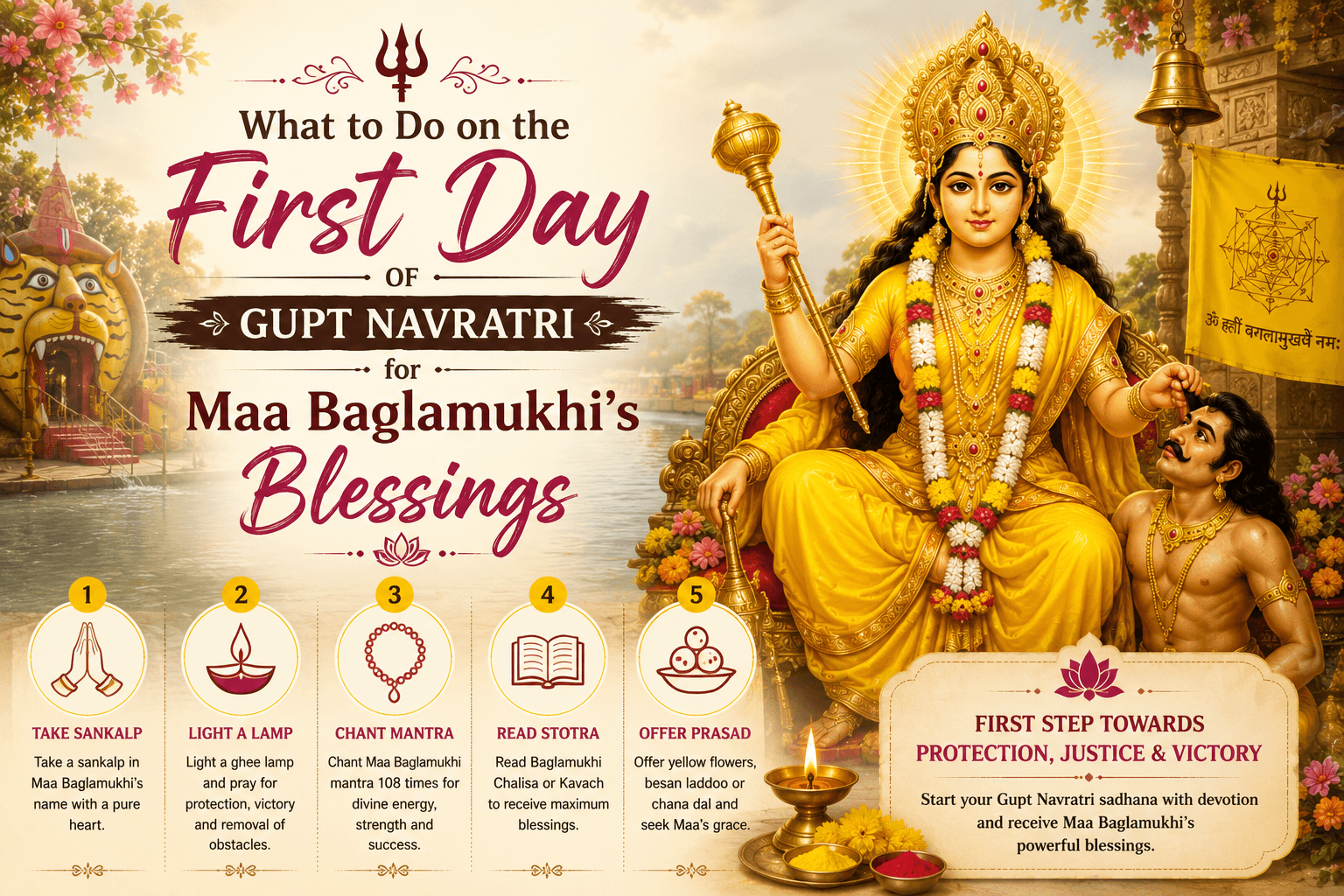
Quick Answer: On Day 1 of Gupt Navratri, wake before sunrise, bathe, wear yellow, clean your worship space, take sankalp in your name and gotra, offer turmeric and yellow flowers, light a mustard oil lamp, and chant the Baglamukhi mantra with a calm mind. Keep the day simple, sincere, and free of unnecessary rules.
Key Takeaways
Day 1 sets the tone for all nine days, so calm and consistency matter more than perfection.
A simple sankalp, a lit lamp, and sincere mantra chanting are enough to begin, even for a first-time devotee.
Yellow items, turmeric, and a mustard oil lamp are the core offerings for Maa Baglamukhi.
Beginners are better off with a short, steady practice than an ambitious one they cannot sustain.
You do not need to be physically present at a temple to begin. Online sankalp at Nalkheda is a genuine option from Day 1 itself.
Why the First Day of Gupt Navratri Matters
Quick Answer: Day 1 marks Ghatasthapana, the moment the nine-day sadhana window opens. Many devotees believe the sincerity and discipline you bring on this first day sets the energy for the rest of Gupt Navratri.
Think of Day 1 less as a single ritual and more as a starting point. Whatever intention you carry into the day, whatever calm or clarity you manage to hold on to, tends to carry forward into the days that follow. This is not about being perfect on Day 1. It is about being present. A short, sincere routine done properly on the first day is far more valuable than an elaborate one you cannot repeat tomorrow.
Why Devotees Begin Maa Baglamukhi Worship on Day One
Quick Answer: Devotees begin on Day 1 because continuity across all nine days is considered more powerful than starting midway. Beginning early also gives you time to settle into a rhythm before Ashtami, Maa Baglamukhi's most significant day.
If your situation feels urgent, whether it is a stalled dispute, a persistent obstacle, or simply a period of heaviness in life, starting on Day 1 gives your Sadhana the longest possible runway before Ashtami arrives. Devotees who begin late often say they spend the first few days catching up rather than settling in. Starting today means you walk into Ashtami already steady, not scrambling.
Morning Routine for Day One
Quick Answer: The Day 1 morning routine is simple: wake before sunrise, bathe, wear yellow clothing, and prepare a clean worship space before beginning sankalp and puja.
Ideal Time to Wake Up
Waking before sunrise, ideally in the Brahma Muhurta window in the early hours of the morning, is considered the most favourable time to begin. The mind is naturally quieter at this hour, which makes it easier to focus during sankalp and mantra chanting. If you cannot manage this, waking early and starting with a calm mind matters far more than hitting an exact clock time.
Bath
A simple bath before puja is meant to prepare both body and mind for worship. It does not need to be elaborate. Clean water, a few quiet minutes, and the intention to begin the day with a clear head is enough.
Yellow Clothes
Yellow is Maa Baglamukhi's favoured colour, and many devotees choose a yellow kurta, saree, or dupatta for Day 1 puja. If you do not own anything yellow, a yellow cloth draped over your shoulder or placed near your altar works just as well. The colour is a gesture of devotion, not a requirement that should cause stress if unavailable.
Temple Preparation
Clean the space where you will sit, even if it is a small corner of a room. Wipe down the altar, arrange a picture or yantra of Maa Baglamukhi, and keep your offerings within reach before you sit down. A calm, uncluttered space makes the rest of the morning easier.
How to Take Sankalp
Quick Answer: Sankalp on Day 1 means quietly stating your name, your gotra, and your sincere intention for the nine days ahead. It does not need to be elaborate or performed in Sanskrit if you are not comfortable with it.
Sit facing your altar, take a moment to settle your breathing, and speak your intention in your own words if that feels more natural. Say your name, your gotra if you know it, and what you are hoping to work toward through this Sadhana, whether that is protection, clarity, strength, or relief from a specific difficulty. If you do not know your gotra, Kashyap gotra is traditionally used as a default. The sincerity behind the words matters more than the exact phrasing.
What Offerings to Prepare
Quick Answer: The core Day 1 offerings for Maa Baglamukhi are yellow flowers, turmeric, besan ladoo, a piece of yellow cloth, and a lit mustard oil lamp. None of these need to be expensive or hard to find.
Yellow Flowers
Marigold or any seasonal yellow flower works well. Offer them fresh if possible, placed gently at the base of the image or yantra.
Turmeric
A small amount of turmeric powder or a whole turmeric root can be offered alongside the flowers. Turmeric is closely associated with Maa Baglamukhi's energy and is used throughout her worship.
Besan Ladoo
A simple sweet made from gram flour is a traditional offering. If you cannot prepare it yourself, any yellow-coloured sattvic sweet is an acceptable substitute.
Yellow Cloth
A small square of yellow cloth placed under the image, yantra, or offerings ties the whole altar together and is considered auspicious for her worship.
Mustard Oil Lamp
A lamp lit with mustard oil, kept burning through the puja, is one of the more important elements of Day 1 worship. If mustard oil is not available, ghee is a reasonable substitute, though mustard oil is traditionally preferred for Baglamukhi worship specifically.
What Mantra Can Be Chanted
Quick Answer: Beginners can chant Maa Baglamukhi's mool mantra, which asks for her protection and her power to still opposition. You do not need to understand every Sanskrit word to chant it with devotion.
The mantra most devotees use on Day 1 and throughout Gupt Navratri is:
"Om Hleem Baglamukhi Sarva Dushtanam Vacham Mukham Padam Stambhaya Jivham Kilaya Buddhim Vinashaya Hleem Om Swaha"
In simple terms, this mantra is a request for Maa Baglamukhi's protection and stillness against whatever is working against you. You do not need a detailed word by word breakdown to begin. Chanting it slowly, with attention rather than speed, matters far more than perfect pronunciation on your very first attempt. If you want to understand the mantra in more depth later, our complete guide to the Baglamukhi mantra covers it thoroughly.
How Many Malas Can Beginners Chant
Quick Answer: One mala of 108 repetitions is a reasonable target for beginners on Day 1. If that feels like too much, even 11 or 21 repetitions done with full attention is a genuine start.
There is no rule that says more is automatically better. A beginner who chants 21 times with real focus is in a better position than one who rushes through 108 with a distracted mind. Start where you can sustain the habit, not where you think you should be.
What Beginners Should Avoid
Do not attempt advanced tantric procedures or Anushthans without guidance. Day 1 is about a simple, sincere beginning, not an ambitious ritual you are unfamiliar with.
Do not switch mantras or methods midway through the day out of anxiety that you are doing it wrong. Pick one simple approach and stay with it.
Do not compare your Day 1 routine to what a temple priest or advanced sadhak does. Their years of practice are not the standard for someone just beginning.
Do not skip sankalp because it feels intimidating. A few honest sentences in your own words are enough.
What Food to Eat
Quick Answer: Sattvic, simple food is preferred on Day 1. Fruits, milk, yellow-coloured dishes, and light phalahar options are common choices for devotees observing any form of fast.
Many devotees eat a light, sattvic meal on Day 1, often including fruits, milk-based foods, or a simple phalahar of nuts and seasonal fruit if they are fasting. Yellow foods such as turmeric-infused dishes or besan preparations are considered fitting for the occasion, though this is a matter of personal devotion rather than a strict rule.
What Not to Eat
Non-vegetarian food and alcohol are avoided by most devotees during Gupt Navratri, especially on Day 1.
Onion and garlic are commonly skipped by those observing a stricter sattvic diet, though this varies by personal practice.
Stale or reheated food from the previous day is generally avoided in favour of fresh preparations.
Overeating, even of permitted foods, is discouraged, since a heavy meal makes evening puja and mantra chanting harder to focus on.
Common Mistakes on Day One
Quick Answer: The most common Day 1 mistakes are rushing through sankalp, skipping the lamp entirely, chanting while distracted, and trying to do too much on the very first day.
Do | Don't |
|---|---|
Wake early and start calmly | Rush through the morning routine |
Keep the altar simple and clean | Overcomplicate the setup with unnecessary items |
Take sankalp in your own words if needed | Skip sankalp because it feels intimidating |
Chant slowly with attention | Chant quickly just to finish a count |
Start with a routine you can repeat for nine days | Attempt an elaborate ritual you cannot sustain |
Things You Should Never Do on Day One
Never begin the puja in a state of anger or deep agitation. Take a few minutes to settle yourself first.
Never leave a lit lamp unattended, especially if you are using an open mustard oil diya.
Never treat Day 1 as optional if you have already committed to the nine-day Sadhana. Consistency matters more than intensity.
Never perform advanced tantric steps you have read about online without guidance from an experienced Acharya.
Can You Perform Baglamukhi Puja Online
Quick Answer: Yes. Devotees who cannot travel to Nalkheda can begin their Gupt Navratri Sadhana online from Day 1 itself, with sankalp taken in their name and gotra by an experienced Acharya.
If you are not near Madhya Pradesh, or simply prefer to have an experienced Acharya conduct a more focused puja on your behalf, online participation is a genuine option, not a lesser one. The sankalp is still taken in your name and gotra, the puja is still performed with the same procedure, and you still receive prasad afterward.
Aspect | Temple (In-Person) Puja | Online Puja |
|---|---|---|
Where the ritual happens | Physically at Nalkheda Siddha Peeth | Performed at Nalkheda on your behalf |
Your involvement | Present and participating directly | Sankalp taken in your name and gotra remotely |
Updates | Witnessed in person | Shared over WhatsApp with video |
Prasad | Received on-site | Shipped to your address worldwide |
Best suited for | Devotees who can travel to Madhya Pradesh | Devotees anywhere in India or abroad |
Why Many Devotees Choose Nalkheda Siddha Peeth
Nalkheda is regarded as a Swayambhu Siddha Peeth, meaning the goddess's presence here is considered self-manifested rather than installed. Acharya Tiwari Chetan Guru has personally conducted Baglamukhi rituals at this site every Gupt Navratri since 2010, which is part of why devotees beginning their Day 1 Sadhana often prefer to anchor it here rather than starting alone with uncertainty. If you would like to understand the temple's background further, our page on the history and significance of the Nalkheda temple covers this in detail.
How Online Sankalp Works on Day One
If you decide to begin your Sadhana with support from Nalkheda on Day 1, the process is simple. You share your name, gotra, and a short description of your intention, either directly on the site or over WhatsApp. The Acharya takes your sankalp at the correct time, performs the puja, and sends you a video update along with prasad afterward. You can start this on Day 1 itself and continue the same connection through the rest of Gupt Navratri if you choose. You can explore the full range of Baglamukhi Puja options or the Maa Baglamukhi Havan if you want a fire ritual performed on your behalf from Day 1.
Not sure which option fits your Day 1 plan? Speak with Acharya Ji on WhatsApp before deciding between a home routine and a puja performed on your behalf. Talk to Acharya Ji First
Simple Day One Checklist
Quick Answer: A complete Day 1 routine covers a calm morning start, midday rest and reflection, an evening lamp and short mantra session, and a quiet, early night. None of it needs to be complicated.
Morning
Wake before sunrise, bathe, and wear yellow if possible
Clean your worship space and set up a simple altar
Take sankalp in your name and gotra
Offer turmeric, yellow flowers, and light a mustard oil lamp
Chant the mantra for one mala, or fewer repetitions if you are a beginner
Afternoon
Keep meals light and sattvic
Avoid unnecessary arguments or stressful conversations if you can help it
Rest or reflect quietly if your schedule allows
Evening
Light the lamp again before sunset if it has gone out
A short second round of mantra chanting is optional but valued by many devotees
Keep the mood of the household calm and undisturbed
Night
Avoid heavy or late meals
Close the day with a brief moment of gratitude or quiet reflection
Sleep at a reasonable hour so tomorrow's routine is easier to begin
Time | Activity |
|---|---|
Before sunrise | Wake, bathe, wear yellow |
Early morning | Clean altar, sankalp, offerings, lamp, mantra |
Midday | Light sattvic meal, calm activities |
Evening | Re-light lamp, optional short mantra round |
Night | Light dinner, quiet reflection, early rest |
First-Time Devotee Checklist
Item | Ready |
|---|---|
Yellow clothing or cloth | Keep ready the night before |
Turmeric and yellow flowers | Arrange before sunrise |
Mustard oil and a diya | Check availability in advance |
Your gotra, or a decision to use Kashyap gotra | Know this before sankalp |
A quiet, clean space for puja | Set up the night before if possible |
If today feels like the right day to begin, you do not have to figure it out alone. Reserve Your Sankalp at Nalkheda
Frequently Asked Questions
Can I begin Baglamukhi Puja on Day One?
Yes. Day 1 is considered an excellent day to begin, since it gives your Sadhana the full nine-day window to build momentum before Ashtami, Maa Baglamukhi's most significant day.
Can women perform Baglamukhi Puja?
Yes. Women can perform Baglamukhi Puja and take sankalp exactly as described in this guide. Devotion and sincerity are what matter, not gender.
Can I perform the puja at home?
Yes. A simple home puja with sankalp, offerings, a lit lamp, and mantra chanting is a complete and genuine way to begin Day 1, even without a priest present.
What if I miss the morning time?
If you miss the early morning window, begin as soon as you reasonably can during the day. A sincere afternoon or evening start is far better than skipping Day 1 altogether.
Can beginners chant the mantra?
Yes. Beginners can chant the Baglamukhi mantra from Day 1. Focus on chanting slowly and attentively rather than worrying about perfect pronunciation immediately.
Can I join online Sankalp?
Yes. You can begin your Gupt Navratri Sadhana through an online sankalp at Nalkheda from Day 1, with the ritual performed on your behalf and updates shared over WhatsApp.
What should I wear?
Yellow clothing is traditionally preferred for Baglamukhi worship. If you do not have yellow clothes, a yellow cloth on your altar or over your shoulder is a fine alternative.
What colour is best?
Yellow is considered Maa Baglamukhi's favoured colour and is used throughout Day 1 worship, from clothing to flowers to the cloth on the altar.
Should I fast?
Fasting is optional and depends on personal capacity. A light sattvic diet without fasting is equally acceptable if a strict fast is not suitable for your health.
Can I visit Nalkheda later during Navratri?
Yes. While Day 1 is a good day to begin, devotees can visit or connect with Nalkheda at any point during the nine days, including closer to Ashtami if that suits their schedule better.
Do I need a priest for Day 1 puja at home?
No. A simple home puja does not require a priest. If you want a more elaborate ritual performed with full Vedic procedure, connecting with an Acharya at Nalkheda is an option, not a requirement.
What if I do not know my gotra?
If your gotra is unknown, Kashyap gotra is traditionally used in its place during sankalp. This is a widely accepted practice and should not stop you from beginning.
Is it necessary to keep an Akhand Jyoti for all nine days?
Keeping a continuously burning lamp is a devotional choice some households make, but it is not mandatory. A lamp lit fresh each day is equally acceptable for most devotees.
Can children participate in Day 1 rituals?
Yes, in a simple form. Children can join for the lamp lighting or flower offering, though the more focused sankalp and mantra chanting are usually left to adult family members.
What if I make a mistake during sankalp or mantra chanting?
A sincere effort made with the right intention is what matters most. Minor mistakes on Day 1, especially for beginners, are not considered a reason for concern.
How is Day 1 different from Ashtami?
Day 1 marks the beginning of the nine-day window through Ghatasthapana, while Ashtami, Maa Baglamukhi's own day within Gupt Navratri, is traditionally considered the most powerful single day for her worship.
Can I start with online sankalp and continue with home puja for the rest of the days? Yes. Many devotees combine both, beginning with a puja performed at Nalkheda and continuing their personal practice at home through the remaining days of Gupt Navratri.
Final Thoughts
Day 1 of Gupt Navratri does not need to be complicated to be meaningful. A calm morning, a sincere sankalp, a few yellow offerings, a lit lamp, and honest mantra chanting are enough to begin a genuine connection with Maa Baglamukhi. Whatever intention brought you here today, whether it is protection, clarity, or simply the desire to observe this window with devotion, starting simply and starting today is what counts most. If you would like an experienced Acharya to take your sankalp and perform a fuller ritual on your behalf from Nalkheda Siddha Peeth, our team is glad to walk you through the options before you decide anything.
Ready to begin your Gupt Navratri Sadhana with Maa Baglamukhi? Acharya Tiwari Chetan Guru personally conducts every sankalp at Nalkheda. No advance payment to start a conversation. Book Now on WhatsApp | Speak with Acharya Ji First
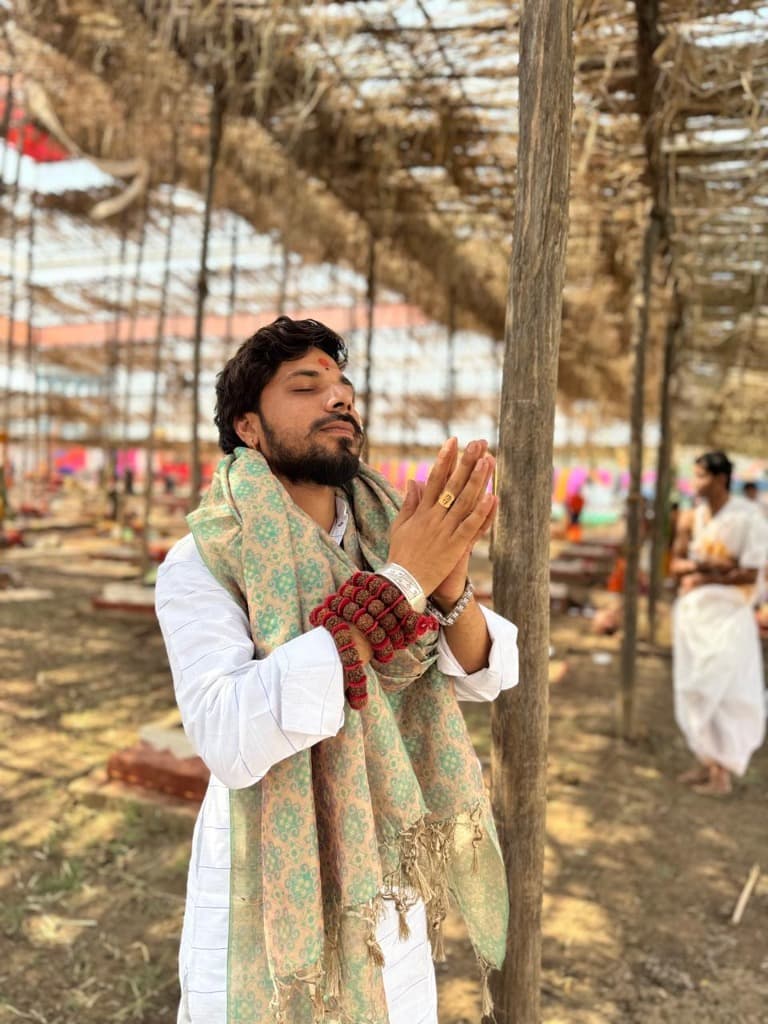
Acharya Tiwari Chetan Guru
Siddha Peethadheesh & Head Vedic Scholar
With over 15+ years of unbroken Vedic practice at Maa Baglamukhi Siddha Peeth, Nalkheda, Acharya Ji is a globally authoritative voice on Tantra Shastra, Stambhan Vidya, and Karmic Astrology. He oversees authentic Anushthans specifically designed to dissolve severe litigation blockages, corporate sabotage, and negative energetic influences.
Need Exact Hawan Cost & Shubh Muhurat?
Get direct guidance from Head Priest Acharya Tiwari Chetan Guru.