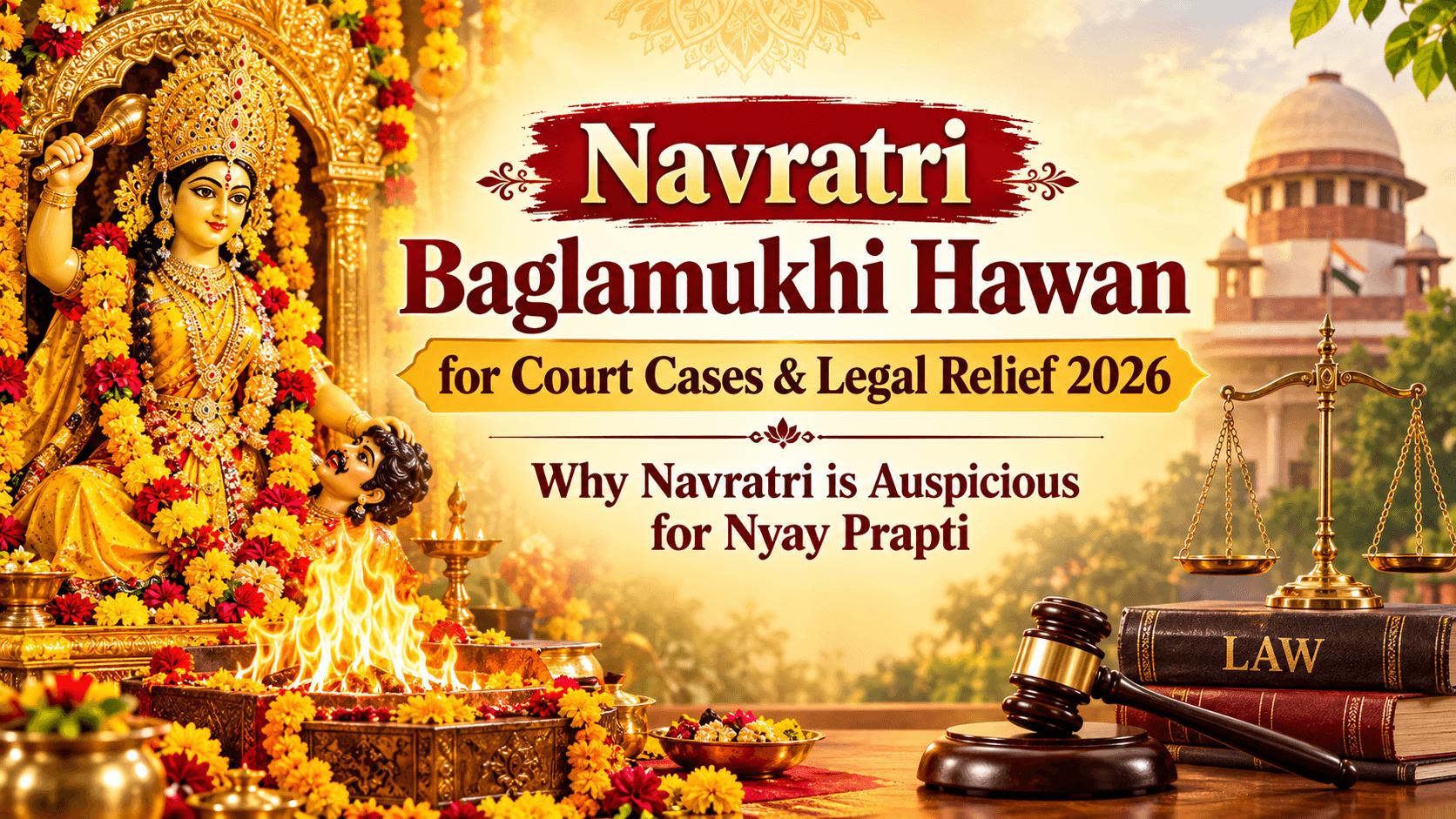

A long-pending court case does more than test your patience. It drains money, disturbs sleep, and creates a fog of anxiety that follows you into every part of life. Many devotees who have lived through this describe reaching a point where astrological remedies, legal strategy, and ordinary prayer no longer felt like enough. This is when they turn to Maa Baglamukhi, the eighth Mahavidya of the Shakta tradition, revered for centuries as the goddess of Stambhan Shakti, the power that immobilizes opposition and restores control to the one who is wronged.
Ashadha Gupt Navratri 2026 runs from 15 to 23 July, and this window is traditionally considered the most concentrated time of the year for Baglamukhi Sadhana. If you are searching for a way to strengthen your position before a hearing, weaken the influence of an opposing party, or simply feel less alone while a case drags on, this guide walks you through what the puja involves, why devotees consistently choose Nalkheda Siddha Peeth over other centres, and exactly how to arrange it, even if you live outside India.
Quick Answer: Baglamukhi Puja for court cases is a Vedic-Tantric ritual invoking Maa Baglamukhi's Stambhan Shakti to weaken opposition and support the devotee's side in litigation. Performed with personal sankalp at an authentic Siddha Peeth like Nalkheda, it is considered most powerful during Gupt Navratri, especially on Ashtami, 22 July 2026.
Key Takeaways
Timing matters: Ashadha Gupt Navratri 2026 runs 15-23 July, with Ashtami on 22 July considered Maa Baglamukhi's most powerful day of the year.
Nalkheda is a Swayambhu Siddha Peeth: a self-manifested seat of the goddess's energy, not a temple built around an installed idol.
Court cases are a classical use case: traditional texts and generations of practice associate Baglamukhi worship with litigation, disputes, and protection from adversaries.
Online participation is fully supported: sankalp by name and gotra, live WhatsApp updates, and prasad delivery are available worldwide.
No outcome is guaranteed: this is a matter of faith and tradition, and should complement, never replace, proper legal counsel.
What Is Baglamukhi Puja?
Quick Answer: Baglamukhi Puja is a Vedic-Tantric worship ritual dedicated to Maa Baglamukhi, the eighth Mahavidya, performed with sankalp, mantra chanting, and often a havan (fire ritual) to invoke her Stambhan Shakti, the power to still, silence, and control opposing forces.
The name Baglamukhi comes from 'Bagla' (bridle or control) and 'Mukhi' (face), and it describes exactly what the ritual is meant to do: still the speech, movement, and intentions of whoever or whatever is working against the devotee. A typical puja includes sankalp in the devotee's name and gotra, invocation of the goddess through her mool mantra, and, in most serious cases, a havan where offerings are placed into a sacred fire while the mantra is chanted. At Nalkheda Siddha Peeth, every step follows the ancient Baglamukhi Tantra and Vedic Shastra under the personal guidance of Acharya Tiwari Chetan Guru.
Why Devotees Perform Baglamukhi Puja for Court Cases
Quick Answer: Devotees turn to Baglamukhi Puja for court cases because her Stambhan Shakti is traditionally believed to weaken the influence, arguments, and confidence of the opposing party while strengthening the devotee's clarity, courage, and position in ongoing litigation.
Vedic tradition describes Maa Baglamukhi as being invoked specifically when a devotee is facing persistent adversaries, long-standing litigation, or situations where truth itself seems to be losing ground to manipulation or false testimony. Many devotees say the puja does not claim to change facts or evidence. What it is believed to influence is the surrounding energy: the confidence of the opposing counsel, the mental clarity of the devotee, and the pace at which a stalled case begins to move. This is why so many devotees combine Baglamukhi worship with the Shatru Nashak Puja, which is specifically structured around neutralizing adversaries and restoring balance in disputes.
Note: These are matters of traditional belief and devotional practice. No outcome in any legal proceeding can be guaranteed, and this puja is not a substitute for qualified legal representation.
Why Gupt Navratri Is Considered Spiritually Significant
Quick Answer: Gupt Navratri is one of two hidden nine-night observances of the year, dedicated to the ten Mahavidyas. Maa Baglamukhi is the eighth Mahavidya, so Ashtami, her day, is considered the most spiritually potent day of the entire festival.
Unlike Chaitra and Sharad Navratri, which are public and festive, Gupt Navratri is kept private and inward-facing, which is precisely why it is considered the correct time for serious, result-oriented sadhana rather than celebration. Ashadha Gupt Navratri 2026 begins with Ghatasthapana on Wednesday, 15 July, and concludes on Thursday, 23 July. Ashtami, Maa Baglamukhi's own day within the nine, falls on 22 July 2026. Devotees dealing with genuinely serious situations, a stuck court case, sustained black magic, or years of professional sabotage, are traditionally advised that sadhana performed by an experienced Acharya during this window carries a more concentrated effect than the same practice on an ordinary day. You can read the full breakdown of dates and daily significance in our Gupt Navratri 2026 guide.
Gupt Navratri 2026 slots for Ashtami Sadhana (22 July) are limited. Reserve Your Sankalp Now
Why Nalkheda Siddha Peeth Is Preferred for Baglamukhi Sadhana
Quick Answer: Nalkheda is a Swayambhu Siddha Peeth on the banks of the Lakhunder river in Agar Malwa, Madhya Pradesh, meaning the goddess's presence here is self-manifested rather than installed. This, combined with an unbroken line of authentic ritual practice, is why devotees consider it especially potent for court case remedies.
A Swayambhu Siddha Peeth carries a different weight in Tantric tradition than a temple built around a consecrated idol. Devotees describe Nalkheda's energy as older, less diluted by tourism, and closer to the original scriptural form of Baglamukhi worship. Acharya Tiwari Chetan Guru has personally conducted the nine-day Baglamukhi Anushthan here every Ashadha Gupt Navratri since 2010, without missing a year, which matters when the ritual is as procedurally exacting as this one is. Any error in mantra pronunciation or sequence is traditionally believed to weaken the result, so continuity of practice under one lineage is treated as a serious credential, not a marketing point. You can read more about the temple's history and significance and about the best time to visit Nalkheda for puja if you are also planning to attend in person.
It is worth being clear about one thing: Acharya Tiwari Chetan Guru is an independent Vedic ritual service provider conducting authentic pujas at the Nalkheda site, not the owner or administrator of the temple itself. This distinction matters for transparency, and devotees consistently value it.
Different Legal Situations Where Devotees Seek Baglamukhi's Blessings
Quick Answer: Devotees approach Baglamukhi Puja for a wide range of legal situations, from property and family disputes to business litigation and long-pending court cases, wherever they feel an adversary or an unfavourable pattern needs to be broken.
Property disputes: Many devotees believe Baglamukhi's Stambhan energy helps still the aggression of opposing claimants in inherited or contested property matters.
Family disputes: According to temple tradition, the puja is sought when family litigation has turned bitter and prolonged, to bring calm and restore fairness to proceedings.
Business litigation: Devotees facing partnership disputes or contractual battles often combine this puja with prayers for professional stability and protection from sabotage.
Employment matters: Wrongful termination cases, workplace disputes, and tribunal proceedings are situations where devotees traditionally seek courage and clarity through this worship.
Financial recovery: Long-pending recovery suits and loan disputes are commonly mentioned by devotees seeking to break a pattern of delay.
Government cases: Devotees involved in matters against government departments or authorities often describe feeling outmatched, and turn to this puja for inner steadiness.
Long-pending court cases: As per temple tradition, cases that have stalled for years without progress are considered a classical reason to undertake a focused Anushthan rather than a single puja.
These are presented as traditional beliefs and devotee experiences, not legal or professional guarantees of any kind.
How Baglamukhi Havan Is Performed at Nalkheda
Quick Answer: The havan begins with purification and personal sankalp in the devotee's name and gotra, followed by continuous chanting of the Baglamukhi mool mantra while ghee, turmeric, and specific samagri are offered into the sacred fire, concluding with aarti and prasad.
Sankalp: The Acharya takes a formal vow naming the devotee, their gotra, and the specific intention, such as victory or protection in a legal matter.
Purification and altar setup: The havan kund and surrounding space are purified, and an image or yantra of Maa Baglamukhi is placed facing the correct direction.
Mantra chanting: The mool mantra is chanted a fixed number of times, matched to the scale of the ritual chosen.
Ahuti (offerings): Ghee, turmeric, yellow flowers, and other prescribed samagri are offered into the fire with each repetition of the mantra.
Purna Ahuti and aarti: The havan concludes with a final, larger offering and aarti, after which prasad is prepared for the devotee.
How Online Sankalp Works
Quick Answer: Devotees anywhere in the world can book online. The Acharya takes sankalp in the devotee's name and gotra, performs the puja at Nalkheda at the correct muhurat, shares live updates and video over WhatsApp, and ships prasad to the devotee's address.
This is one of the most common questions devotees ask before booking, and understandably so: does the puja lose its power if you are not physically present? Temple tradition holds that sankalp is defined by intention, name, and gotra, not by physical location, which is why devotees from the USA, UK, Canada, Australia, and the Gulf countries regularly participate in the same manner as devotees who travel to Nalkheda in person. If you would like to understand this ritual style in more depth before booking, our page on why Navratri is the most powerful time for Baglamukhi Havan covers the reasoning in detail.
No advance payment required to start a conversation. Speak with Acharya Ji directly on WhatsApp before booking.
Who Should Consider This Puja
Quick Answer: This puja is generally considered by devotees who are facing active litigation, sustained opposition from a known or unknown adversary, or a court case that has stalled for an unusually long time without resolution.
It is also sought by devotees who feel their case is being unfairly influenced, whether through false testimony, delaying tactics, or the disproportionate resources of the opposing side. That said, this is a devotional and spiritual practice. It is best approached alongside, never instead of, sound legal counsel. Acharya Tiwari Chetan Guru typically has a conversation with each devotee first, to understand the specific situation before recommending the appropriate ritual, whether that is a single Havan, the Shatru Nashak Puja, or a full multi-day Anushthan.
What Details Are Required Before Booking
Quick Answer: Before booking, devotees typically need to share their full name, gotra (or Kashyap gotra if unknown), the nature of their legal or personal situation, preferred puja type, and a mailing address for prasad delivery.
Detail Required | Why It Is Needed |
|---|---|
Full name | Used in the sankalp to personalize the puja to the devotee |
Gotra (if known) | Traditionally included in sankalp; Kashyap gotra is used if the devotee does not know their own |
Nature of the situation | Helps the Acharya recommend the correct puja or Anushthan |
Preferred puja type | Havan, Shatru Nashak Puja, or a multi-day Anushthan, depending on severity |
Contact number (WhatsApp) | Used for live updates, sankalp confirmation, and video sharing |
Mailing address | Required for worldwide prasad delivery after the puja |
What Devotees Receive After the Puja
Quick Answer: After the puja, devotees typically receive a video or photo record of the ritual, prasad shipped to their home, and guidance from the Acharya on any follow-up practice, such as daily mantra chanting.
Video or photo documentation of the sankalp and havan
Prasad, including turmeric, sacred thread, or other blessed items, shipped worldwide with tracking
Guidance on continuing personal practice, such as daily japa of the Baglamukhi mantra
An open channel to ask follow-up questions or discuss a further Anushthan if the situation requires it
Common Mistakes Devotees Make
Quick Answer: The most common mistakes are skipping sankalp, choosing the wrong puja for the severity of the situation, attempting complex tantric rituals without guidance, and waiting too long to begin during Gupt Navratri.
Mistake | Why It Matters |
|---|---|
Skipping sankalp | Without a clear sankalp naming the devotee and intention, the ritual loses its personalized focus |
Choosing a basic puja for a severe case | Long-pending or highly contentious cases are traditionally matched with a fuller Anushthan, not a single short puja |
Attempting advanced tantric steps alone | Procedures like Uchchatan Prayog require experienced guidance and are not meant for home practice |
Waiting until the last days of Navratri | Booking close to Ashtami risks missing the most auspicious muhurat due to limited slots |
Treating it as a legal substitute | This puja supports a devotee's spiritual and mental strength; it does not replace proper legal representation |
Temple Puja vs Online Puja
Quick Answer: Both temple and online puja follow the same authentic ritual procedure at Nalkheda. Temple puja suits devotees who can travel, while online puja suits devotees anywhere in the world who want the same sankalp performed on their behalf.
Aspect | Temple (In-Person) Puja | Online Puja |
|---|---|---|
Where it happens | Physically at Nalkheda Siddha Peeth | Performed at Nalkheda on the devotee's behalf |
Sankalp | Taken in person with the devotee present | Taken in the devotee's name and gotra remotely |
Updates | Devotee witnesses the ritual directly | Live WhatsApp updates and video recording |
Prasad | Received on-site | Shipped worldwide with tracking |
Best suited for | Devotees near Madhya Pradesh or able to travel | Devotees anywhere in India or abroad |
Court Problem vs Recommended Puja
Quick Answer: Different court-related struggles are traditionally matched with different Baglamukhi rituals, ranging from a standard Havan for general legal protection to a full Anushthan for cases that have stalled for years.
Court Problem | Traditionally Recommended Puja |
|---|---|
General legal protection during an active case | Maa Baglamukhi Havan |
Facing a strong or manipulative opposing party | Shatru Nashak Puja |
Case stalled for years without progress | Multi-day Baglamukhi Anushthan |
Suspected black magic influencing the case | Anti-Black Magic Puja combined with Havan |
Government or tribunal proceedings | Havan with extended sankalp for institutional matters |
Step-by-Step Booking Process
Quick Answer: Booking takes five simple steps: reach out on WhatsApp, describe your situation, receive a puja recommendation, confirm your sankalp details, and receive live updates followed by prasad.
Step | What Happens |
|---|---|
1. Reach out | Message Acharya Ji on WhatsApp with no advance payment required |
2. Describe your situation | Share the nature of your court case or dispute in a short conversation |
3. Get a recommendation | The Acharya suggests the right puja, Havan, or Anushthan for your case |
4. Confirm sankalp details | Share your name, gotra, and address for the puja and prasad delivery |
5. Puja day | The ritual is performed at the correct muhurat with live WhatsApp updates |
6. Receive prasad | Video record and prasad are shared and shipped after completion |
Checklist Before Booking
Quick Answer: Before you book, confirm your gotra, be ready to briefly describe your case, decide between temple or online participation, keep your WhatsApp available for live updates, and note that Gupt Navratri slots are limited.
Checklist Item | Status |
|---|---|
Know your gotra (or confirm you will use Kashyap gotra) | Ready before booking |
Brief summary of your court case or dispute | Ready before booking |
Decision: temple visit or online sankalp | Decide before booking |
Active WhatsApp number for updates | Required at booking |
Mailing address for prasad | Required at booking |
Awareness that Ashtami (22 July) slots are limited | Book early |
Every situation is unique, and Acharya Ji personally conducts the puja for every devotee. Talk to Acharya Ji on WhatsApp before booking
Frequently Asked Questions
Can Baglamukhi Puja really help with a court case?
According to Vedic and Tantric tradition, Baglamukhi Puja is believed to weaken the influence of adversaries and strengthen the devotee's position through her Stambhan Shakti. Many devotees report a sense of relief and renewed clarity after the ritual. No outcome is guaranteed, and this puja should always accompany, not replace, proper legal counsel.
Why is Gupt Navratri considered the best time for this puja?
Gupt Navratri is dedicated to the ten Mahavidyas, and Maa Baglamukhi is the eighth. Her day, Ashtami, falls within this window, making it traditionally the most spiritually concentrated time of the year for her worship, especially for serious situations like litigation.
When is Ashtami during Gupt Navratri 2026?
Ashtami, Maa Baglamukhi's most powerful day within Ashadha Gupt Navratri 2026, falls on 22 July 2026. The full observance runs from 15 to 23 July 2026.
Why do devotees prefer Nalkheda over other Baglamukhi temples?
Nalkheda is regarded as a Swayambhu Siddha Peeth, meaning the goddess's presence is considered self-manifested rather than installed. Combined with an unbroken lineage of authentic ritual practice since 2010, many devotees find it especially trusted for serious remedies.
Is Acharya Tiwari Chetan Guru the owner of the Nalkheda temple?
No. Acharya Tiwari Chetan Guru is an independent Vedic ritual service provider who conducts authentic Baglamukhi pujas at the Nalkheda site. He is not the temple's owner or administrator.
Can I book this puja if I live outside India?
Yes. Devotees from the USA, UK, Canada, Australia, the UAE, and other countries regularly book online. Sankalp is taken in your name and gotra, live updates are shared over WhatsApp, and prasad is shipped to your address.
What is sankalp and why does it matter?
Sankalp is a formal vow stating the devotee's name, gotra, and intention. It personalizes the ritual to the specific devotee and situation, and is considered an essential first step in any authentic Baglamukhi puja.
What if I don't know my gotra?
If your gotra is unknown, Kashyap gotra is traditionally used as a default during sankalp. You can mention this when booking.
Which puja is best for a long-pending court case?
Cases that have stalled for years are typically matched with a multi-day Baglamukhi Anushthan rather than a single puja, since the extended ritual is considered more suited to deeply entrenched situations.
What is the difference between Havan and Anushthan?
A Havan is typically a single fire ritual completed in a few hours. An Anushthan is a multi-day ritual involving repeated mantra chanting and offerings, generally recommended for more serious or long-standing problems.
Do I need to fast or follow special rules during the puja?
Devotees are welcome to observe personal fasting or sattvic discipline if they choose, but it is not mandatory for the puja performed on your behalf by the Acharya. Guidance is provided if you would like to observe additional personal practice.
How is prasad delivered after an online puja?
Prasad, such as turmeric or a sacred thread, is packed after the ritual and shipped with tracking to the devotee's mailing address, wherever in the world that may be.
Can this puja be combined with the Shatru Nashak Puja?
Yes. Many devotees dealing with a strong or manipulative opposing party combine the standard Baglamukhi Havan with the Shatru Nashak Puja for a more complete approach to their situation.
Is there a guaranteed result from this puja?
No. This is a matter of devotional faith and centuries-old tradition. No temple or Acharya can ethically guarantee a legal outcome, and any service claiming otherwise should be approached with caution.
How do I start the booking process?
You can message Acharya Ji directly on WhatsApp with no advance payment required. After a short conversation about your situation, you will receive a recommendation for the right puja and next steps.
What mantra is used in Baglamukhi Puja for court cases?
The mool mantra, "Om Hleem Baglamukhi Sarva Dushtanam Vacham Mukham Padam Stambhaya Jivham Kilaya Buddhim Vinashaya Hleem Om Swaha," is chanted during the ritual to invoke the goddess's Stambhan Shakti.
Why should I book early during Gupt Navratri?
Acharya Ji personally conducts each puja, which naturally limits the number of devotees who can be accommodated, especially around the Ashtami muhurat on 22 July. Early booking secures your preferred date and time.
Your court case has waited long enough. Ashadha Gupt Navratri 2026 runs only until 23 July, with Ashtami Sadhana on 22 July. Reserve Your Sankalp at Nalkheda Now
CONCLUSION
A court case can feel like it is testing more than your patience. It can feel like it is testing your faith that things will ever move in your favour again. For generations, devotees carrying exactly this weight have turned to Maa Baglamukhi, and specifically to the Swayambhu energy of Nalkheda Siddha Peeth, to ask for the strength, clarity, and stillness of opposition that her Stambhan Shakti represents. Whether you choose a single Havan, the Shatru Nashak Puja, or a full nine-day Anushthan, this Gupt Navratri offers a limited but meaningful window to take that step. If you would like to understand your options fully before deciding, our puja cost and booking guide and our complete range of Baglamukhi Pujas are good places to start, or you can simply reach out through our contact page and speak with the team directly.
Book Your Gupt Navratri Baglamukhi Puja at Nalkheda Siddha Peeth Acharya Tiwari Chetan Guru personally conducts every sankalp. No advance payment to start a conversation. Book Now on WhatsApp | Talk to Acharya Ji First
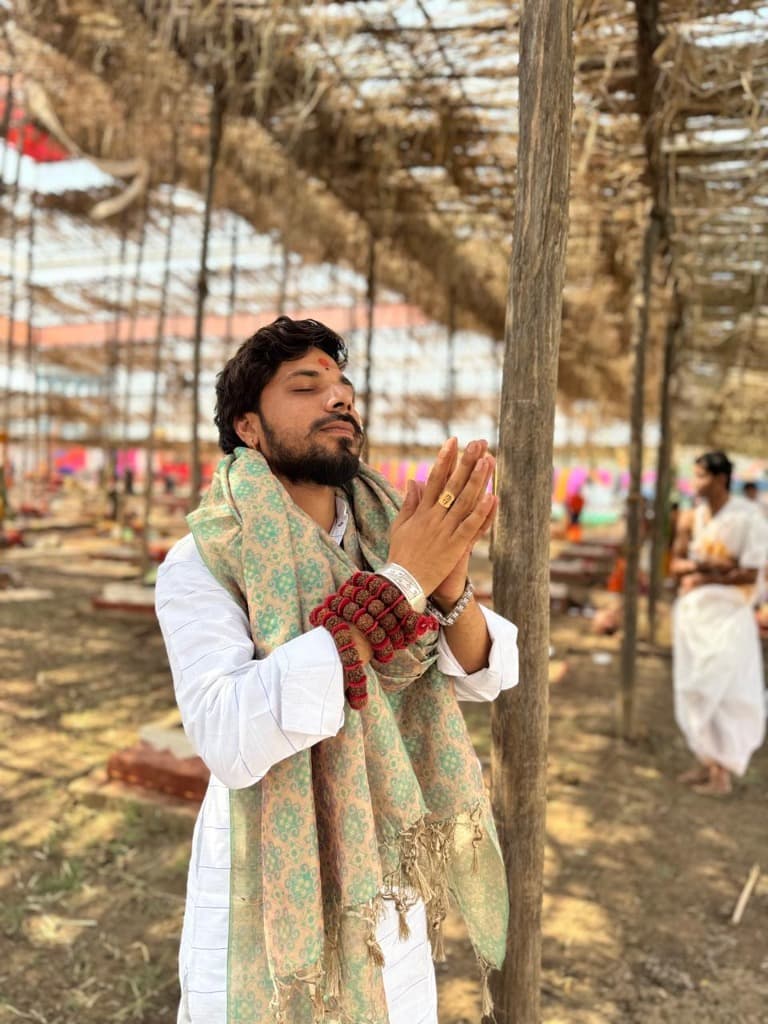
Acharya Tiwari Chetan Guru
Siddha Peethadheesh & Head Vedic Scholar
With over 15+ years of unbroken Vedic practice at Maa Baglamukhi Siddha Peeth, Nalkheda, Acharya Ji is a globally authoritative voice on Tantra Shastra, Stambhan Vidya, and Karmic Astrology. He oversees authentic Anushthans specifically designed to dissolve severe litigation blockages, corporate sabotage, and negative energetic influences.
Need Exact Hawan Cost & Shubh Muhurat?
Get direct guidance from Head Priest Acharya Tiwari Chetan Guru.