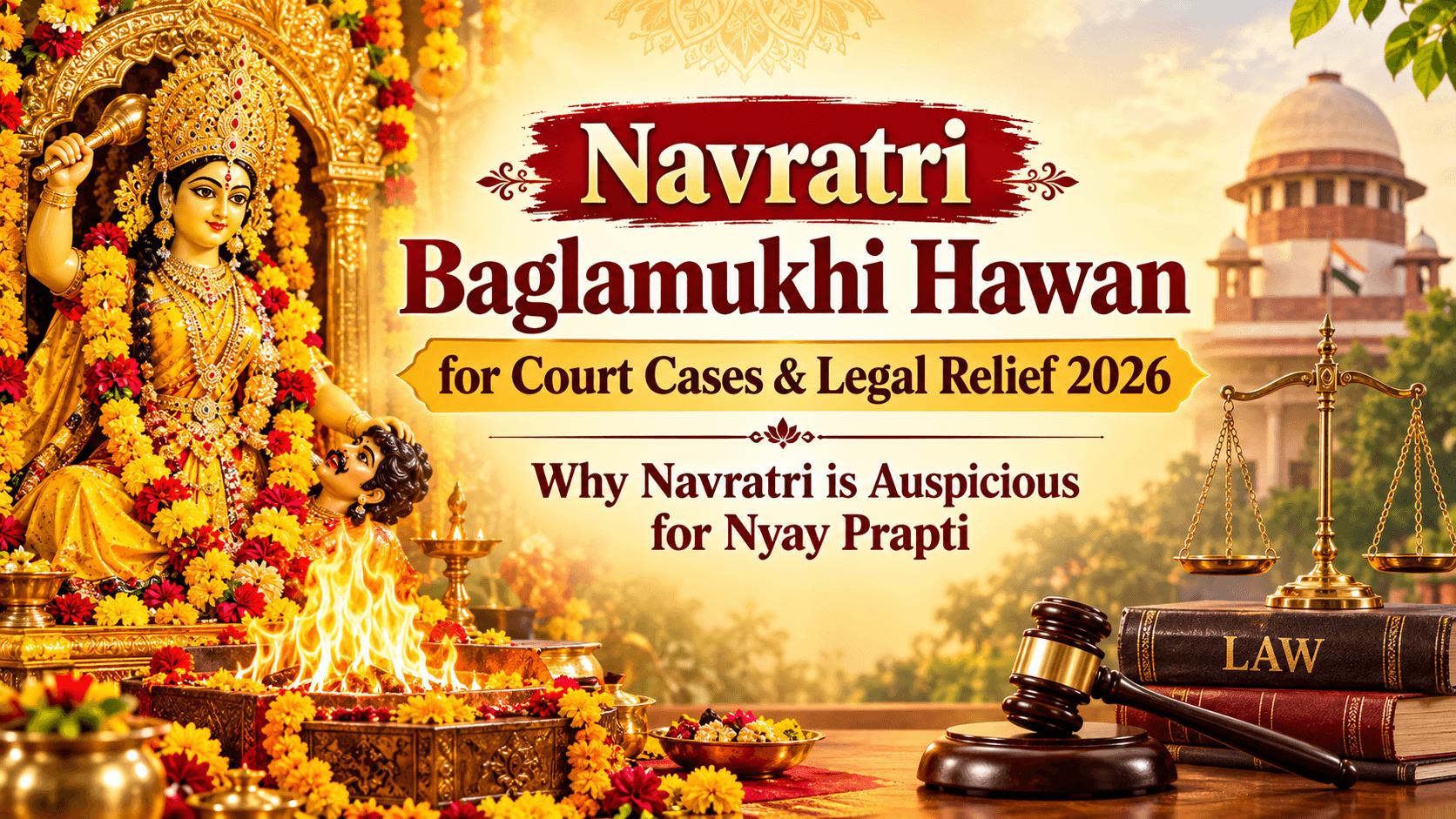
Quick Answer — Baglamukhi Havan for Court Cases During Navratri 2026
During Shardiya Navratri 2026 (beginning 11 October 2026), many devotees seek divine guidance through Maa Baglamukhi Hawan when enduring prolonged legal disputes and court proceedings. Traditionally revered as the eighth Mahavidya of Stambhan (stillness) and divine protection, Maa Baglamukhi is worshipped not to influence judicial outcomes, but to cultivate moral clarity, emotional restraint, and spiritual endurance. Because regional Panchang timings differ across India, devotees verify auspicious muhurats through authentic local calendars or consult the resident priests at Maa Baglamukhi Temple, Nalkheda for verified Vedic guidance.
What Is Maa Baglamukhi Havan?
A Vedic Havan (also referred to as Homa or Yagya) is an ancient fire ceremony in which sacred oblations (ahutis) are offered into a consecrated sacrificial fire pit (havan kunda) accompanied by precise Vedic and Tantrokta mantra chanting. In Sanatana Dharma, Agni Deva serves as the divine messenger carrying the sincere prayers of the devotee directly to the deity.
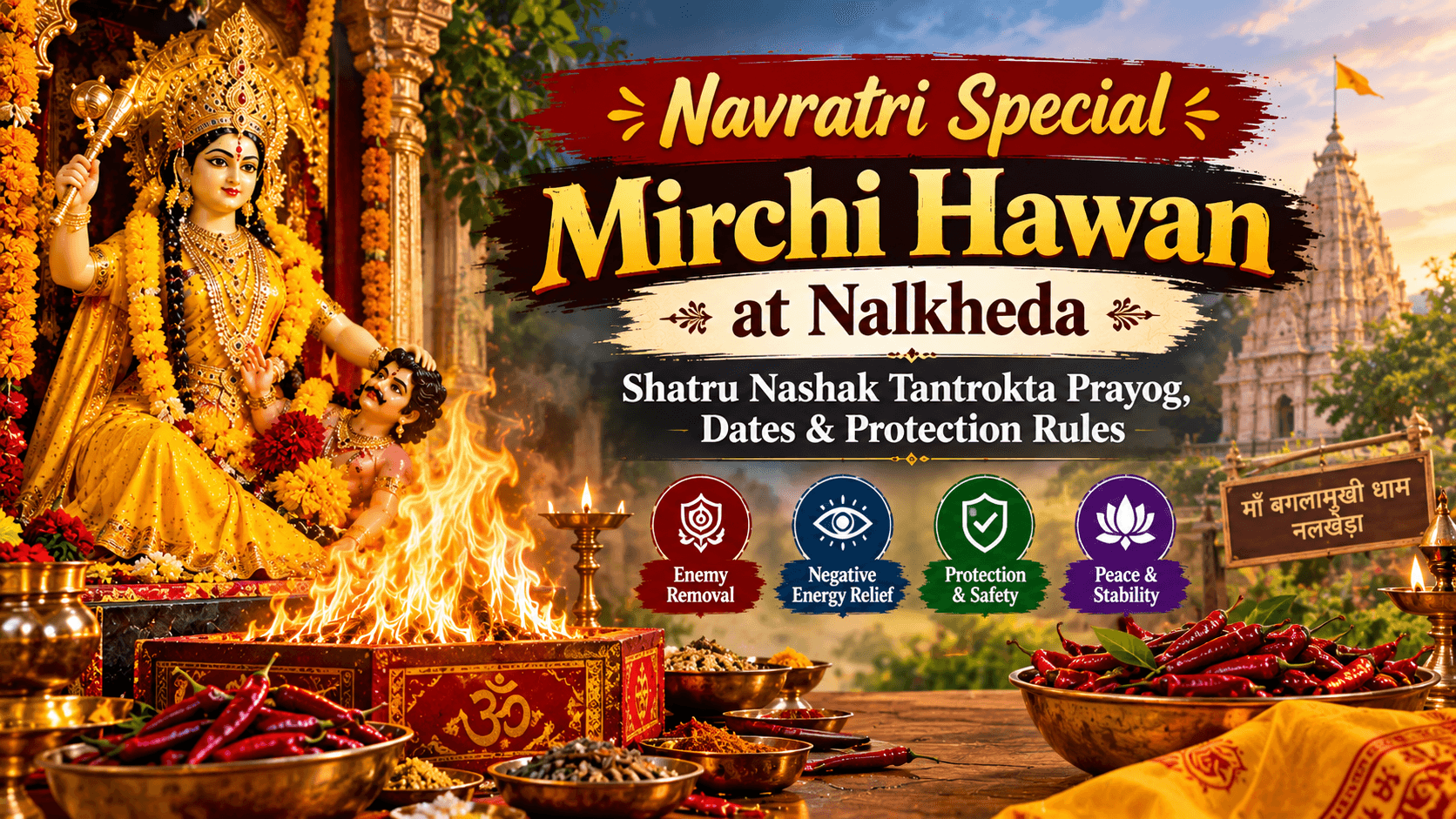
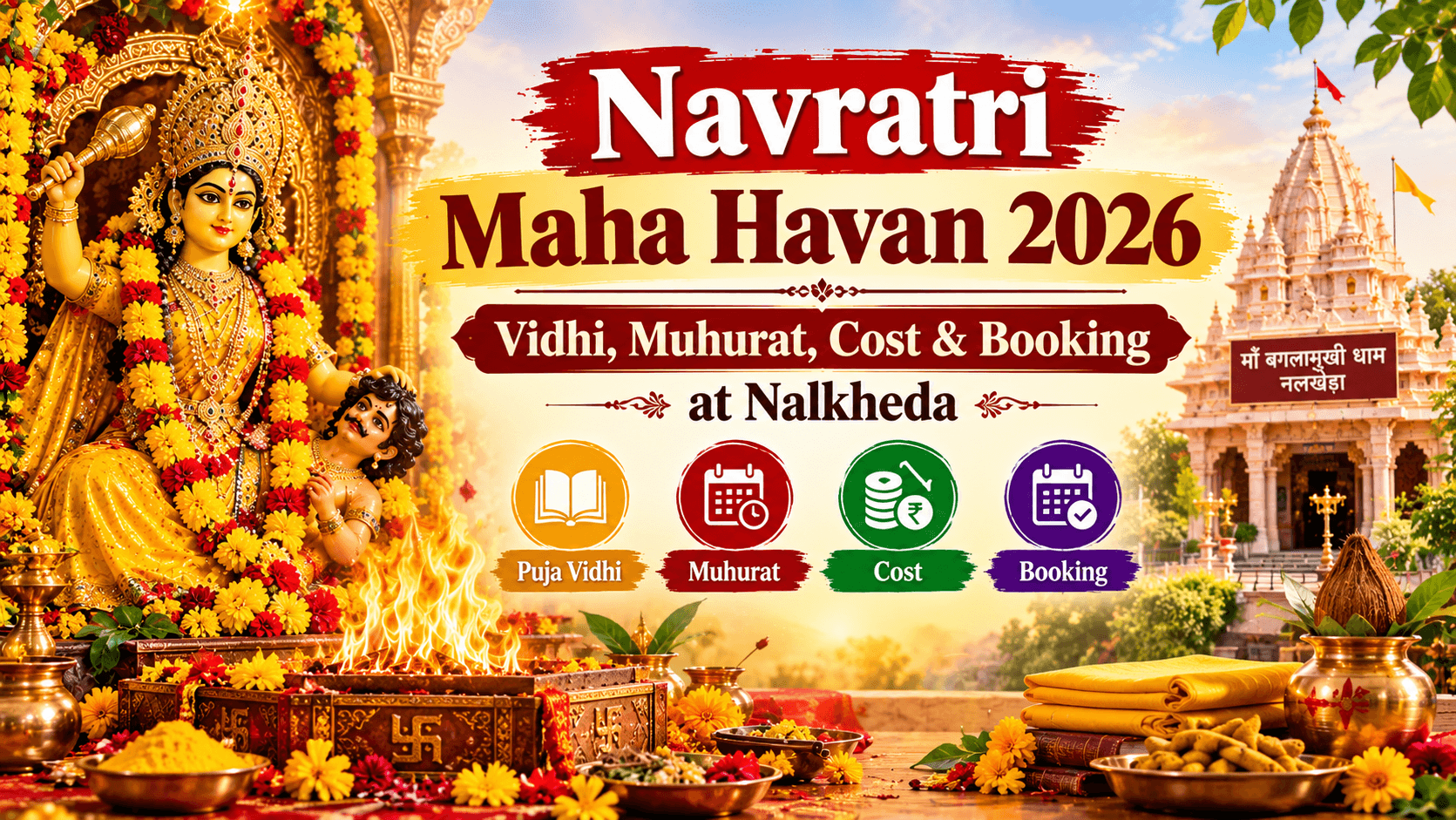
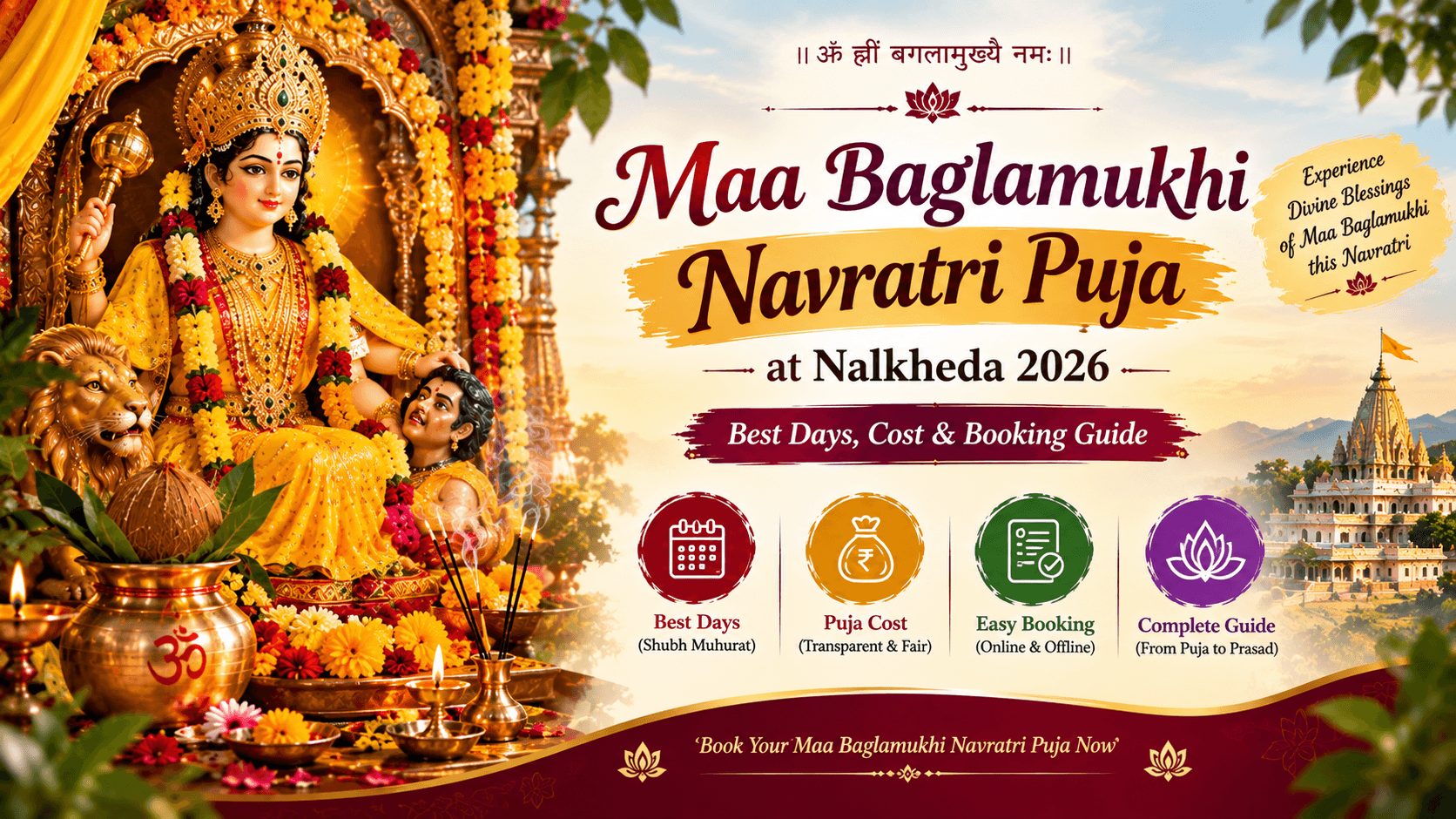
Within the sacred Shakta traditions, Maa Baglamukhi—often adored as Maa Pitambara (the golden-hued goddess)—holds a distinguished place as the eighth of the 10 Mahavidyas. Classical texts such as the Sankhyayana Tantra, Mantra Mahodadhi, and Rudra Yamala describe her divine form radiating golden lustre, seated upon a jewelled throne, holding a club in her right hand while pulling the tongue of an adverse entity with her left.
Symbolically, this iconic posture represents divine Stambhan: the spiritual power to freeze malicious gossip, silence false speech, immobilise destructive impulses, and quiet the inner turbulence of fear and anxiety. A formal Maa Baglamukhi Puja and Havan conducted under the direction of an experienced Acharya involves disciplined Sankalp, invoking holy water vessels, purifying samagri with turmeric, and offering sacred yellow ahutis into the holy flame.
It is essential to distinguish traditional devotional faith from verifiable worldly facts. In traditional theology, the sacred fire is believed to purify the karmic atmosphere and establish spiritual fortitude. In physical reality, a havan does not alter administrative court records, nor does it override legal evidence. Rather, it serves as an unbroken spiritual discipline where a devotee seeks refuge in divine Motherhood during severe worldly distress.
Why Do Devotees Worship Maa Baglamukhi During Legal Challenges?
Navigating the modern legal system is often exhausting, emotionally draining, and financially destabilising. Devotees enduring ongoing litigation, false accusations, property contestations, or protracted appeals frequently find themselves wrestling with helplessness, anxiety, sleeplessness, and frustration.
Historically, kings, householders, and spiritual seekers have turned toward Maa Baglamukhi during times of conflict, dispute, and adversarial confrontation for specific spiritual reasons:
Cultivating Emotional and Mental Restraint (Vak-Stambhan): The greatest danger during contentious legal arguments is impulsive anger, unmeasured words, and emotional reactivity. Devotees pray to Maa Baglamukhi for self-restraint and disciplined speech, asking that truth and calm dignity prevail over chaotic hostility.
Overcoming Paralyzing Fear and Panic: Protracted disputes breed profound dread. Worshipping Maa Pitambara is traditionally believed to fortify the devotee's mind with unshakeable courage, helping individuals remain composed while working alongside their legal representatives.
Seeking Divine Justice (Nyay Prapti): In Sanatana Dharma, the concept of Nyay (righteous justice) is deeply linked with Dharma. Devotees do not view the goddess as an instrument of petty vengeance; rather, they pray for the vindication of truth and the peaceful resolution of malicious opposition.
Protection Against Unseen Hostility: Lawsuits frequently involve underlying jealousy, family resentment, or commercial rivalry. Devotees seek divine protection to shield their families and livelihoods from vindictive negativity.
Important Devotional Principle:
Devotees may undertake Baglamukhi Puja or Havan as a matter of faith during a difficult legal period. Such rituals cannot guarantee a court outcome and should not replace qualified legal advice or required legal action. Worshipping the deity does not control judges, magistrates, witnesses, opposing attorneys, or judicial verdicts. Divine worship operates in the realm of internal faith and moral fortitude, while legal disputes operate strictly under statutory law and physical evidence.
Why Do Some Devotees Choose Navratri for Nyay Prapti?
While devotional prayers may be offered on any auspicious day, the nine sacred nights of Navratri are widely considered an especially potent window for deep spiritual sadhana. Across India, millions of families observe fasts, meditate, and perform sacred homas during this period.
In Shakta philosophy, Navratri is not merely a social festival; it represents the cosmic awakening of Adishakti (the Primordial Creative and Protective Energy). Devotees choose this period for several foundational reasons:
Cosmic Awakening: The veil between gross worldly challenges and subtle divine grace is traditionally held to be permeable during these nine sacred nights.
Concentrated Tapas: Devotees observe strict dietary discipline, truthfulness, and focused mental reflection, elevating the spiritual sincerity of their prayers.
Collective Spiritual Current: Hundreds of learned Brahmins perform unbroken mantra chanting at established Siddha Peeths, creating a powerful atmosphere of devotional focus.
The Triumph of Truth: Navratri culminates in Vijayadashami, affirming the timeless victory of righteousness and Dharma over deception and oppression.
According to regional tradition, performing a focused Court Case Puja during Navratri allows a distressed family to align their personal prayers with universal spiritual energies. Devotees believe that sincere prayers for Nyay Prapti (the attainment of fair, lawful justice) made during these sacred nights are received with deep maternal compassion by the Divine Mother.
Navratri Baglamukhi Havan 2026 — Dates and Suitable Days
To plan any devotional observance responsibly, devotees must consult reliable Panchang calculations. Astrological dates and tithi transitions vary depending on whether one follows the Drik Siddhanta, Surya Siddhanta, and local sunrise times across different geographical coordinates.
For Shardiya Navratri 2026, the expected pan-Indian calendar dates are:
Navratri Pratipada (Ghatasthapana): Sunday, 11 October 2026
Maha Saptami: Saturday, 17 October 2026
Maha Ashtami / Sandhi Puja: Sunday, 18 October to Monday, 19 October 2026
Maha Navami (Purnahuti): Monday, 19 October 2026
Vijayadashami (Dussehra): Tuesday, 20 October 2026
Note: Tithi start and end timings are sensitive to your specific latitude and longitude. A muhurat applicable to Ujjain or Nalkheda in Madhya Pradesh may vary by several minutes compared to New Delhi, Mumbai, Kolkata, or London. Always verify local timings with your family priest or regional Panchang.
Auspicious Days Commonly Selected for Legal Intentions
While no scriptural authority claims that a specific calendar date guarantees a worldly outcome, certain days within Navratri carry distinct theological significance:
Ghatasthapana (Day 1 - 11 October 2026): Ideal for devotees undertaking an unbroken Shardiya Navratri Maha Anushthan spanning all nine days. Taking the personal Sankalp on Day 1 anchors the prayer throughout the entire festival.
Tuesday Within Navratri (13 October 2026): Tuesdays are ruled by Mangal (Mars) and are traditionally sacred for fierce protective deities. Devotees confronting intense legal friction often request protective ahutis on this day.
Maha Ashtami (18–19 October 2026): Historically associated with Maa Mahishasuramardini and profound tantrokta sadhana. Devotees frequently schedule a dedicated Navratri Ashtami Havan to seek spiritual equilibrium and moral strength.
Maha Navami (19 October 2026): Marked by the final Purnahuti of nine-day observances, many choose a Navratri Navami Havan to conclude their prayers with gratitude, Kanya Pujan, and humble surrender.
What Types of Legal Concerns Do Devotees Pray About?
Devotees seeking spiritual refuge come from diverse backgrounds, facing varied real-world difficulties. When requesting a Vedic Sankalp, individuals articulate their specific burdens:
Protracted Civil & Property Disputes: Land title contestations, ancestral inheritance conflicts, partition suits, and commercial tenant disputes that have stalled across decades.
Corporate & Commercial Litigation: Unfair breach-of-contract claims, shareholder oppression suits, regulatory notices, insolvency challenges, or partnership dissolutions causing severe business paralysis.
Family & Matrimonial Litigation: Complex divorce proceedings, contested custody battles, and contentious maintenance hearings where emotional exhaustion threatens family well-being.
False Criminal Allegations & Defamation: Fabricated police complaints, malicious character assassination, political frame-ups, and professional disciplinary inquiries.
Appeals & Impending Judgments: Cases pending reserved orders before High Courts or the Supreme Court, where devotees pray for clear judicial insight and honest assessment of facts.
Spiritual rituals provide psychological fortitude and inner peace during these stressful life events. However, no religious ceremony can draft legal pleadings, examine witnesses, formulate statutory defence, or substitute for diligent representation by qualified legal counsel.
Baglamukhi Puja vs Havan vs Anushthan for Legal Concerns
Understanding the ritual structure prevents confusion and helps devotees set realistic expectations regarding their spiritual commitments:
Ritual Dimension | Baglamukhi Puja | Baglamukhi Havan | Baglamukhi Anushthan |
|---|---|---|---|
Primary Focus | Daily invocation, stotra recitation, shodashopachara worship | Fire oblation ceremony offering consecrated samagri into Agni | Comprehensive multi-day vow combining strict japa, havan, and tarpana |
Typical Duration | 1 to 2 hours | 2 to 4 hours | 3, 7, 9, or 11 consecutive days |
Typical Mantra Count | 1,000 to 5,000 japa | 5,000 to 11,000 japa followed by Dashansh havan | 36,000 to 1,25,000 consecrated mantra recitations |
Primary Participant Need | Devotees seeking general peace, blessings, and emotional stability | Families facing immediate legal hearings or specific disputes | High-stakes legal, political, or deep ancestral challenges |
Verified Live Offering | Available via Maa Baglamukhi Puja | Available via Maa Baglamukhi Hawan | Available via Maa Baglamukhi Anushthan |
Baglamukhi Havan Vidhi During Navratri
A genuine Vedic havan adheres to the strict canonical framework of the Agamas and Grihya Sutras. While family traditions and Acharya lineages have slight procedural variations, an authentic, priest-guided ritual follows this step-by-step progression:
Purification and Pavitri Dharanam (Shuddhikaran): The performing priest and devotee sprinkle Ganga water, wear sanctified kusha grass rings, and perform achamana (ritual sipping of water) to calm the body and focus the mind.
Ganapati & Guru Pujan (Obstacle Removal): Before invoking the fierce energy of Mahavidya Baglamukhi, Lord Ganesha is worshipped to dismantle obstructions, followed by obeisance to the spiritual lineage (Guru Parampara).
The Sacred Sankalp: The spiritual cornerstone of the ritual. The Acharya announces the exact solar month, tithi, nakshatra, and pilgrimage seat, articulating aloud the devotee’s full name, gotra, residential city, and the specific prayer for truth and legal peace.
Kalash Sthapana & Navagraha Invocation: A consecrated copper or brass kalash filled with holy waters, mango leaves, and a coconut wrapped in yellow cloth is established. The presence of Maa Baglamukhi is invoked through canonical Dhyana mantras alongside prayers to pacify astrological influences.
Mantra Recitation (Japa): Qualified Vedic pandits chant the prescribed mantras using sanctified turmeric (haldi) rosaries. The classical Baglamukhi Beej Mantra or the 36-letter Mool Mantra as detailed in the Baglamukhi Mantra Guide is vibrated with disciplined phonetics.
Sacred Fire Offerings (Ahutis): Dry wood from sacred trees (Palash, Peepal, or Khadir) is ignited with desi cow ghee. Ahutis blended with yellow mustard seed, turmeric roots, and pure herbs are systematically offered into the fire pit.
Purnahuti, Aarti & Kshama Prarthana: The ceremony concludes with the final coconut oblation (Purnahuti), the singing of the sacred Baglamukhi Aarti, and the chanting of Kshama Prarthana, seeking forgiveness for any unintended errors in ritual pronunciation or procedure.
Baglamukhi Havan Samagri for Court Case-Related Puja
In Shakta Tantra, substances offered into the sacrificial fire are selected for their specific energetic and medicinal properties. Because Maa Baglamukhi embodies the cosmic yellow principle (Peetambara), yellow-coloured herbs dominate the altar.
Essential Yellow Offerings
Peeli Sarson (Yellow Mustard Seeds): The classic scriptural offering for divine protection and boundary purification.
Haldi Gaanth (Whole Turmeric Roots): Symbolic of auspicious stability, grounded courage, and untainted truth.
Yellow Flowers: Fresh marigolds and yellow kaner blossoms honoring the deity’s preferred visual hue.
Yellow Sandalwood (Peet Chandan): Used alongside whole rice grains (akshat) tinted with turmeric paste.
Holy Oblations & Base Woods
Pure A2 Desi Cow Ghee (Go-Ghrita): The primary medium used to sustain the consecrated flame and carry offerings.
Sacred Havan Samagri Blend: A natural mixture containing guggul, loban, natural camphor, jatamansi, and dry lotus seeds.
Sacred Wood (Samidha): Clean, insect-free dry wood from Palash, Khadir, or Mango trees.
Dry Whole Coconut (Shreefal): Wrapped in unstitched yellow cloth, offered during the final Purnahuti ceremony.
Detailed preparation steps can be reviewed in our comprehensive guide to Baglamukhi Havan Samagri. When scheduling a priest-led service, always clarify whether all organic samagri, herbs, and flowers are provided within the ceremonial dakshina or if you are expected to procure items independently.
Why Do Devotees Visit Maa Baglamukhi Temple at Nalkheda?
While sincere prayer can be offered from any home sanctum, certain geographic locations in India are consecrated as Siddha Peeths—places where centuries of unbroken spiritual practice (tapasya) have energized the sacred soil.
Located in Agar Malwa district of Madhya Pradesh, on the tranquil banks of the Lakhundar River, the Maa Baglamukhi Temple at Nalkheda is considered one of the three foremost historical seats of Maa Baglamukhi in India (alongside Datia in MP and Bankhandi in Kangra, Himachal Pradesh).
Local traditions and temple lore trace the shrine's origin to the Mahabharata era. It is traditionally believed that Maharaj Yudhishthira, guided by Lord Krishna and the sage Vyasa, performed intense tapasya at this exact riverside spot to overcome insurmountable odds prior to the Kurukshetra war.
The sanctum houses an ancient Swayambhu idol flanked by Mahakali and Mahasaraswati. The presence of a perennially active havan kunda on the temple premises has made Nalkheda a revered destination for judges, attorneys, entrepreneurs, and ordinary citizens seeking spiritual clarity during high-stakes disputes.
Devotees planning a physical pilgrimage can reference the Nalkheda Temple Timings and the comprehensive How to Reach Nalkheda Guide for transport routes from Ujjain, Indore, or Kota.
Baglamukhi Havan for Court Cases — Cost and Booking
A transparent understanding of ceremonial dakshina helps devotees make informed decisions without falling prey to financial exploitation or exaggerated commercial claims.
Ceremonial costs at Siddha Peeths vary depending on several practical factors:
The Number of Vedic Brahmins: A solo priest performing a concise havan requires a different dakshina than 5, 7, or 11 Dikshit Brahmins chanting simultaneously over multiple days.
The Mantra Japa Target: Standard offerings involve 11,000 or 21,000 recitations, whereas rigorous Shatru Nashak or Court Case Anushthans require 36,000 to 1,25,000 recitations.
Quantity of Pure Samagri: Pure cow ghee, whole turmeric, saffron, and natural herbs carry tangible market procurement costs.
Duration: Single-session havans differ substantially from 9-day Navratri observances requiring daily fruit, flower, and ahuti replacements.
Devotees are encouraged to explore our dedicated overview of Baglamukhi Puja Cost and Booking Details. For bespoke requirements during Navratri 2026, connect directly with the temple team through the verified portal at Book Puja Online to receive an itemized, unhurried explanation of available options.
Can You Book Baglamukhi Havan Online?
Yes, remote participation in Vedic rituals is a recognized tradition when geographic distance, illness, urgent court schedules, or overseas residency prevent physical presence at Nalkheda.
Our live temple team coordinates authenticated distance rituals under the guidance of resident head priests through a transparent six-step process:
Initial Consultation: You discuss your current dispute background and upcoming court dates with the temple coordinators.
Muhurat Selection: Resident Acharyas evaluate your janma nakshatra and local Panchang to designate an auspicious ritual window.
Sankalp Submission: You provide your full legal name, father’s/husband’s name, Gotra, residential address, and specific legal intention.
Live Video Participation: You connect 1-on-1 via secure video call to witness the formal recitation of your Name and Gotra Sankalp.
Ceremonial Updates & Recordings: You receive ongoing updates and full unedited recordings of the Purnahuti and final prayers.
Prasad Dispatch: Consecrated Raksha Sutra, havan bhasma, and energized temple prasad are dispatched directly to your physical address.
Through this transparent process, devotees living across India or overseas (including the USA, UK, Canada, Australia, and UAE) can witness their name and gotra spoken before the holy fire at Nalkheda.
What Should You Know Before Booking a Court Case-Related Havan?
Before engaging any religious service provider or committing funds for a ceremonial havan, consider these essential guidelines:
Insist on Transparent Identification: Confirm that your ritual is conducted by an authentic, verified priest associated with a real temple institution, such as Acharya Tiwari Chetan Guru.
Demand Unedited Video Proof: Ensure that live video access or continuous HD recordings of your exact Sankalp and ahutis will be provided. Beware of generic, pre-recorded stock videos.
Reject Guarantees of Court Victory: Any individual or agency promising that a havan will "force the judge to dismiss your case" or "guarantee a victory within 11 days" is engaging in unethical misrepresentation. Run away from such claims.
Maintain Realistic Balance: Continue fulfilling all procedural legal obligations. Attend your court hearings, consult your attorneys, compile evidence, and preserve documents diligently.
Clarify What Dakshina Covers: Always verify whether the stated dakshina covers all Brahmin honorariums, flowers, wood, ghee, prasad courier charges, and government temple fees.
Frequently Asked Questions
1. Can Baglamukhi Havan be performed for ongoing court cases?
Yes. Devotees traditionally perform Maa Baglamukhi Hawan during legal trials, property disputes, and arbitration to pray for mental peace, truthful outcomes, clarity of speech, and protection from malicious adversaries.
2. Why do devotees worship Maa Baglamukhi for Nyay Prapti?
Maa Baglamukhi represents the cosmic power of Stambhan (silencing deceit and stilling negative forces). Devotees seek her shelter to overcome overwhelming anxiety and pray that righteousness (Dharma) triumphs over false allegations.
3. Is Navratri considered a suitable time for Baglamukhi Havan?
Yes. Navratri is universally revered in Shakta tradition as a period of heightened spiritual vibration. Devotees believe prayers offered during these nine holy nights benefit from concentrated collective sadhana.
4. When is Shardiya Navratri 2026?
Shardiya Navratri 2026 begins on Pratipada, Sunday, 11 October 2026, with Maha Ashtami and Maha Navami falling on 18 and 19 October 2026, culminating in Vijayadashami on Tuesday, 20 October 2026. Always confirm local sunrise times.
5. Which Navratri day is suitable for Baglamukhi Havan?
Devotees commonly choose Day 1 (Ghatasthapana) for starting an unbroken 9-day vow, Tuesdays for confronting fierce opposition, or Maha Ashtami and Navami for conclusive Purnahuti ceremonies.
6. Can Baglamukhi Havan guarantee a favourable court judgment?
No. No religious ceremony can guarantee a legal verdict or override the evidence before a judge. Rituals provide spiritual strength, emotional balance, and divine solace; legal decisions rest solely with the court.
7. What is the difference between Baglamukhi Puja and Havan?
A puja involves meditative prayers, water offerings, flowers, and mantra recitation seated before an idol or yantra. A havan involves offering consecrated herbs, grains, and ghee directly into the sanctified fire pit.
8. What is a Baglamukhi Anushthan?
An Maa Baglamukhi Anushthan is an intensive spiritual discipline spanning 3 to 11 days involving fixed mantra counts (often 36,000 to 1,25,000 japa), daily havan, celibacy, and strict dietary vows.
9. How much does Court Case Victory Havan cost at Nalkheda?
Ceremonial costs depend on the number of participating Vedic pandits, the volume of samagri, and the total mantra recitation count. Devotees should consult the temple team for an itemized estimate.
10. Can I book Baglamukhi Havan online?
Yes. Devotees unable to travel to Nalkheda can book remote havans with live video streaming during their personal Sankalp via the official portal at Book Puja Online.
11. Can a Havan be performed on behalf of someone involved in a court case?
Yes. Family members (such as parents, a spouse, or siblings) frequently take the Sankalp on behalf of a relative who is detained, ill, or unable to participate directly.
12. What details are required for taking a legal Sankalp?
The devotee must provide their full legal name, father’s/husband’s name, Gotra, date and place of birth, residential city, and a concise summary of the legal challenge.
13. Is Havan Samagri included in the booking cost?
On authentic temple portals, quoted dakshina options generally cover all necessary puja samagri, pure cow ghee, sacred wood, and pandit honorariums. Always verify inclusions prior to confirmation.
14. Can I participate remotely if I live outside Madhya Pradesh or abroad?
Yes. Devotees across Indian states and international residents from the USA, UK, Canada, Australia, and UAE participate seamlessly via live video calls.
15. Does performing Baglamukhi Havan replace legal representation?
Never. A Vedic ritual is an act of spiritual faith and personal psychological support. It must never substitute for hiring qualified lawyers, filing timely pleadings, and complying with court directions.
16. Can Baglamukhi Puja be performed right before an important court hearing?
Many devotees choose to organize a havan or recite the Baglamukhi Kavach 24 to 48 hours prior to cross-examinations or final arguments to steady their mind and eliminate nervous anxiety.
17. How can I enquire about an authentic Havan at Nalkheda?
You can connect directly with the resident temple administration through official WhatsApp or phone at +91 90743 42490 or submit your inquiry through the official Contact Page.
18. What should I verify before confirming a Puja booking?
Verify the identity of the head priest, ensure the temple has a physical presence at Nalkheda, confirm that live unedited video proof is provided, and reject any provider making fraudulent promises of guaranteed victory.
Final Thoughts — Devotion, Patience and Responsible Action
Litigation is among life’s most gruelling trials. It tests financial stability, strains human relationships, and drains personal energy. In these taxing moments, turning toward the divine feet of Maa Baglamukhi offers immense psychological respite, re-establishing inner peace and renewing faith in ultimate truth.
However, true spirituality walks hand-in-hand with worldly diligence. Divine worship fortifies the heart with fortitude, clarity, and patience; worldly responsibility demands sound legal strategy, meticulous evidence gathering, and adherence to judicial decorum. By combining genuine legal preparation with sincere spiritual devotion during Shardiya Navratri 2026, devotees can face life's courtroom battles with quiet dignity, courageous truth, and unshakeable inner peace.
Enquire About Maa Baglamukhi Havan at Nalkheda During Navratri 2026
If you or your family are enduring the stress, uncertainty, and emotional toll of a prolonged legal dispute, taking a sacred Sankalp during Shardiya Navratri 2026 can bring profound spiritual calm and clarity. We invite you to explore our traditional Vedic offerings conducted directly at the ancient sanctum of Maa Baglamukhi Siddha Peeth on the banks of the Lakhundar River in Nalkheda, Madhya Pradesh.
Our resident head priests, led by Acharya Tiwari Chetan Guru, guide each devotee through personalized, scriptural rituals with complete transparency, unedited live video call participation, and consecrated prasad delivery. Please note that our pujas are devotional observances performed with reverence; we make no false claims or promises of guaranteed judicial outcomes.
Discuss Your Puja Booking & Muhurat on WhatsApp: Connect Directly with Pandit Ji
Direct Official Helpline: +91 90743 42490
Online Booking Portal: Book Authentic Puja Online | Explore Court Case Puja Offerings
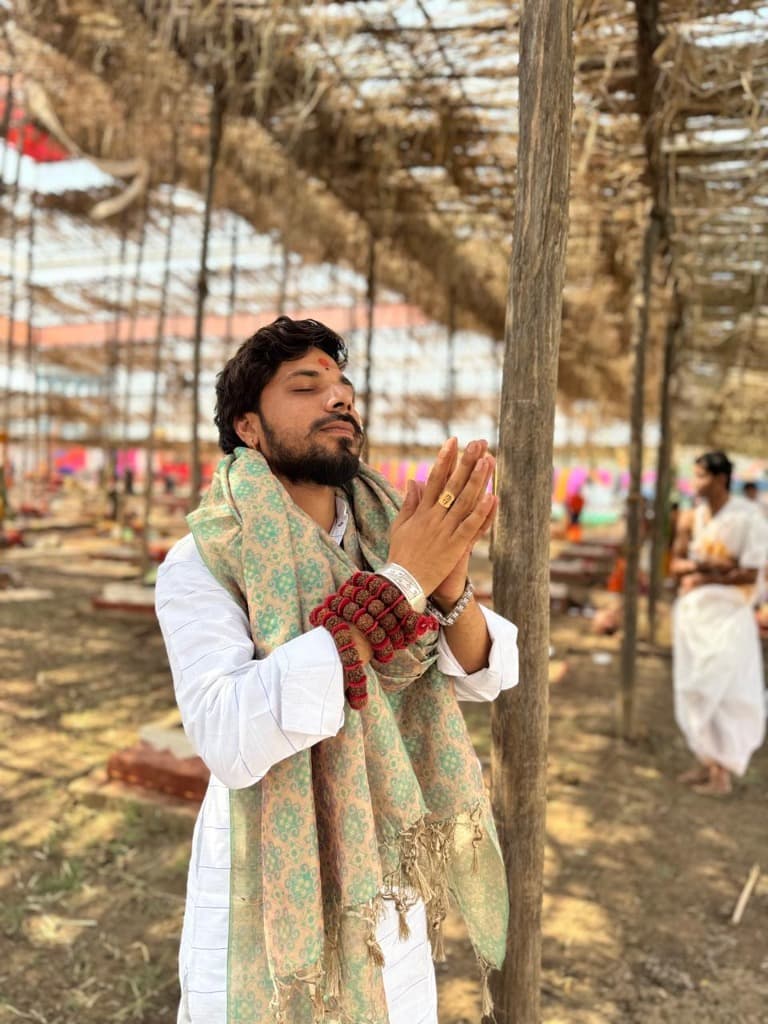
Acharya Tiwari Chetan Guru
Siddha Peethadheesh & Head Vedic Scholar
With over 15+ years of unbroken Vedic practice at Maa Baglamukhi Siddha Peeth, Nalkheda, Acharya Ji is a globally authoritative voice on Tantra Shastra, Stambhan Vidya, and Karmic Astrology. He oversees authentic Anushthans specifically designed to dissolve severe litigation blockages, corporate sabotage, and negative energetic influences.
Need Exact Hawan Cost & Shubh Muhurat?
Get direct guidance from Head Priest Acharya Tiwari Chetan Guru.