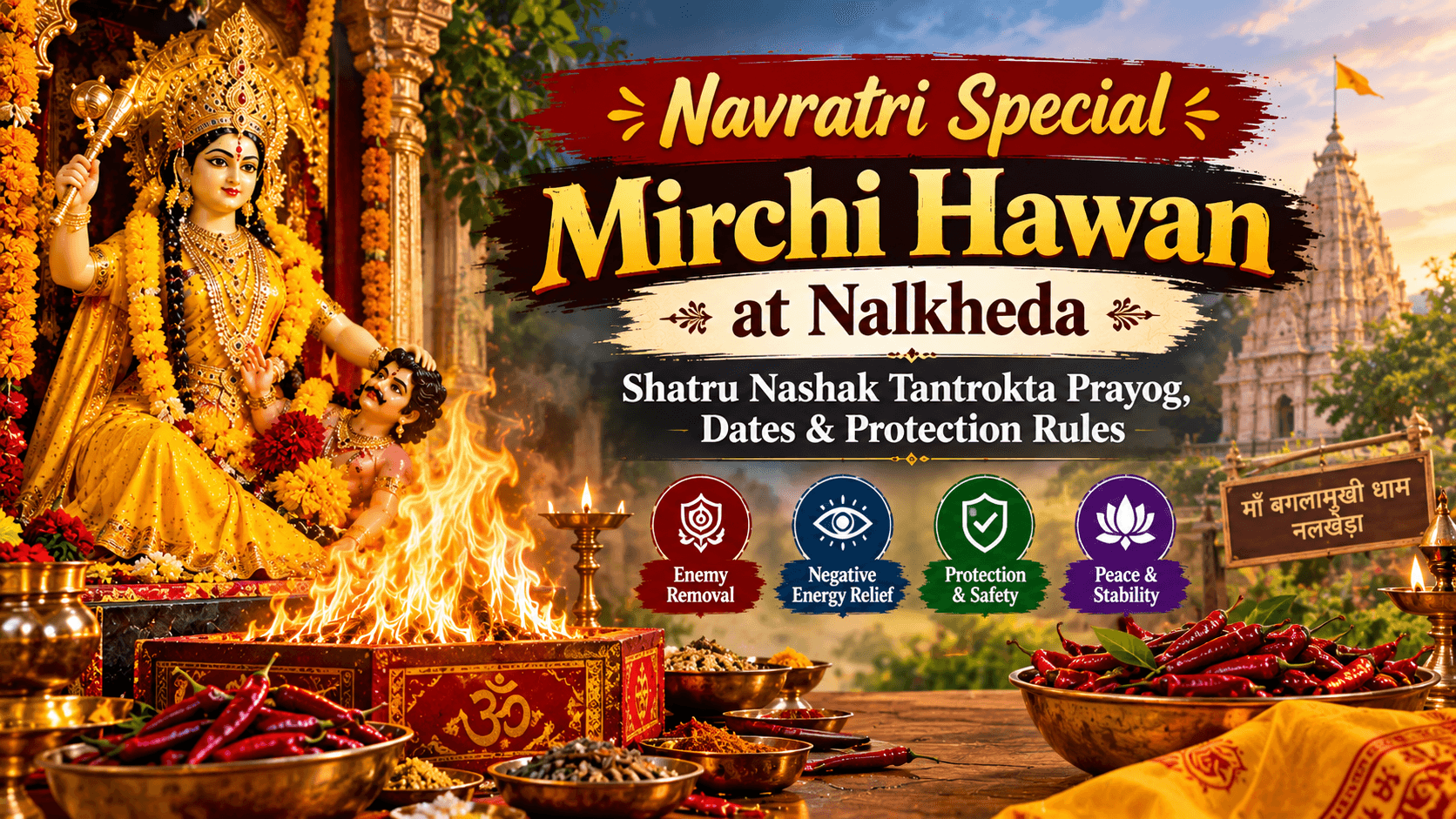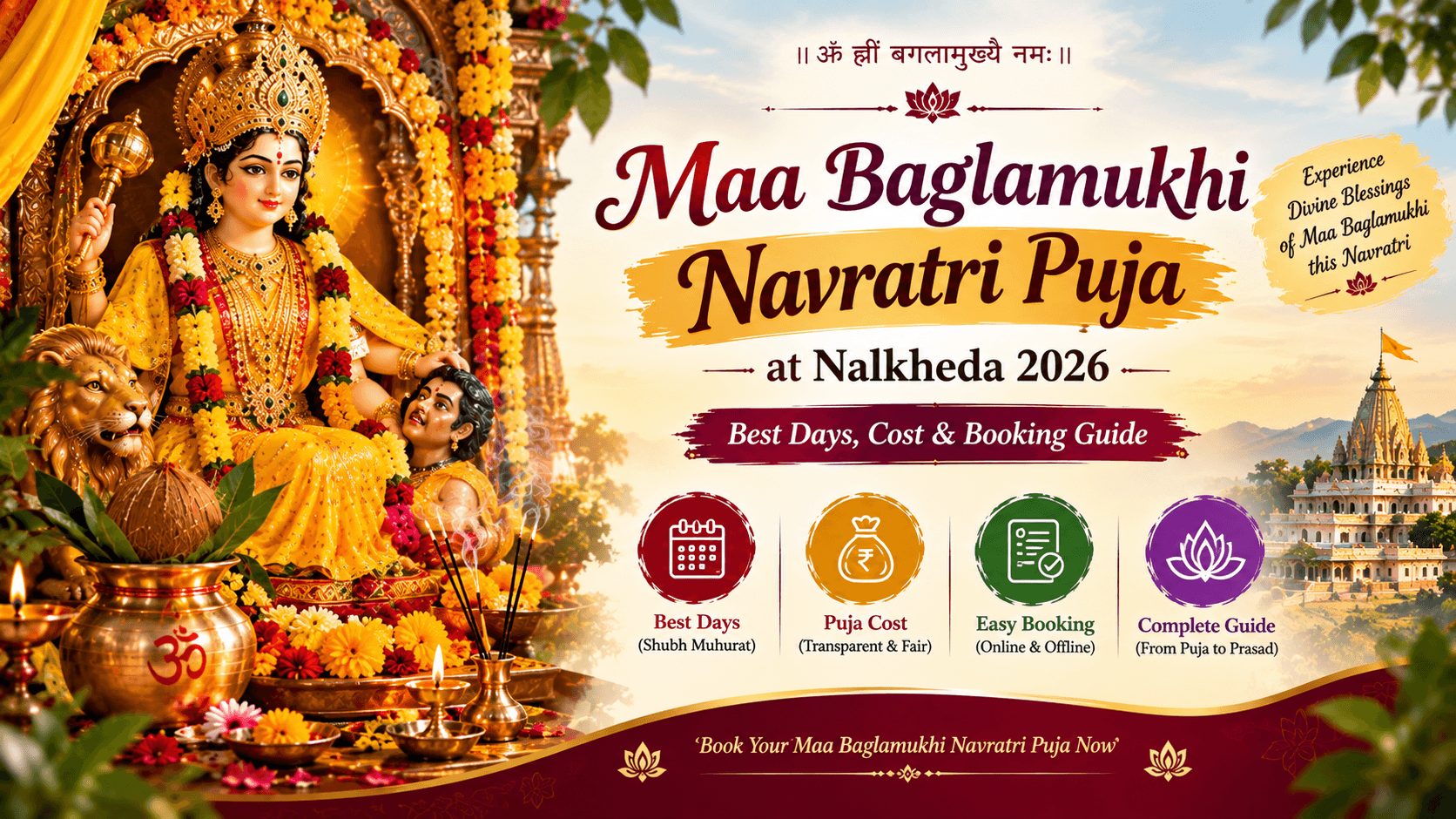
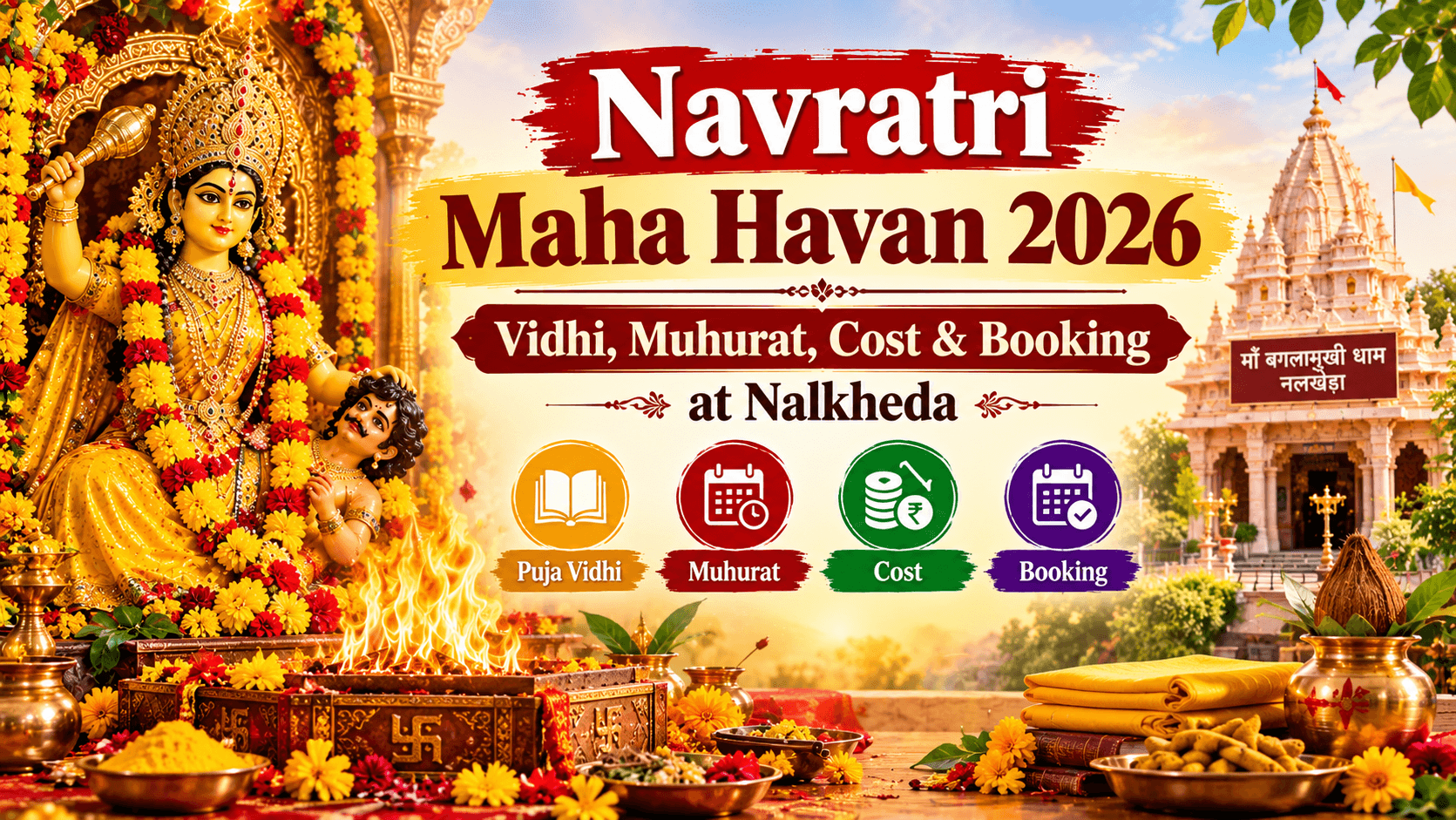
Navratri Maha Havan 2026 is a larger, priest-guided fire ritual that devotees may arrange during Shardiya Navratri, which runs from 11 to 19 October 2026 in most calendars, with Vijayadashami on 20 October. At Maa Baglamukhi Temple, Nalkheda, the Maha Hawan is currently listed as a one-day ritual at ₹21,000, inclusive of samagri, pandit dakshina and prasad, and it can be arranged in person or online.
Navratri Maha Havan 2026 at a Glance
Detail | Information |
|---|---|
Festival | Shardiya Navratri 2026 |
Navratri period | 11 to 19 October 2026 in most calendars; Vijayadashami on 20 October. Verify with your local Panchang |
Ritual | Maha Havan (listed on the website as Maa Baglamukhi Maha Hawan) |
Location | Maa Baglamukhi Temple, Nalkheda, Agar Malwa, Madhya Pradesh |
Suitable day | Depends on ritual tradition, Sankalp and the confirmed Panchang; no single day is mandatory |
Vidhi | According to the performing Acharya and ritual tradition |
Cost | ₹21,000 as listed on the temple page (checked 10 October 2026); includes samagri, dakshina and prasad |
Booking |
What Is Navratri Maha Havan?
A Maha Havan is generally understood as a larger, more elaborate form of the Vedic fire ritual, with fuller mantra chanting and a wider set of offerings than an ordinary Havan. There is no single universal definition, and the scale and procedure vary by temple, tradition and Acharya.
On this website, Maa Baglamukhi Maha Havan at Nalkheda is described as a grand Vedic fire ceremony performed with a personalised Sankalp, sacred offerings and traditional temple rituals. The page presents it as more elaborate than a regular Maa Baglamukhi Havan, and as a ritual that devotees often consider for important life milestones.
It helps to keep four terms apart. A Puja is worship through invocation, offerings and aarti. A Havan adds fire offerings accompanied by mantras. A Maha Havan is the larger form of that fire ritual. An Anushthan is a structured, multi-day discipline of mantra practice. Names alone do not fix the exact procedure, so the service details should always be confirmed.
Why Do Devotees Perform Havan During Navratri?
According to Hindu devotional traditions, Navratri is a nine-night period set aside for the worship of Devi in her many forms. In Havan, Agni is traditionally regarded as the messenger that carries each offering and prayer to the deity, which is why many families choose fire worship to mark or conclude the festival.
Many devotees observe Havan on Ashtami or Navami, while others choose another day according to family custom. Maa Baglamukhi is worshipped as one of the ten Mahavidyas within the wider Shakta tradition, so devotees with a personal connection to her sometimes dedicate a Havan to her during this period. Practices differ by region, family and lineage. A Havan is a devotional act, and no temple or priest can promise a specific outcome. For a seasonal overview, see Baglamukhi Havan during Navratri 2026.
Navratri Maha Havan 2026 - Date and Muhurat
Shardiya Navratri 2026 begins on 11 October and runs to 19 October in most calendars, with Vijayadashami on 20 October. Ashtami and Navami are compressed this year, and several calendars place both on 19 October. A Maha Havan has no single universal Muhurat, so the exact day and time should be confirmed with the performing Acharya.
PanchangBodh’s computation for New Delhi shows Ashtami present at sunrise on 19 October and ending at 10:53 AM, after which Navami continues until 12:52 PM on 20 October. IBTimes India likewise reports Durga Ashtami and Maha Navami on 19 October, followed by Vijayadashami on 20 October. Calendars are not unanimous. SmartPuja counts the first day of Navratri as 12 October, and Dekho Panchang lists Maha Navami on 20 October under the sunrise rule.
These differences arise because a tithi is a lunar day that does not start or end at midnight. Most calendars observe a festival on the day the tithi prevails at local sunrise, and sunrise changes from city to city. Timings published for Delhi or Mumbai therefore cannot be applied to Nalkheda, and no Nalkheda-specific Maha Havan Muhurat has been published for this article.
Suitable timing can also depend on the specific ritual and Sankalp. Before booking, check your local Panchang, then ask the Acharya which tithi window will be followed for your date. On the Maha Hawan service page, the Acharya reviews your requirement and selects the Muhurat during consultation. For the tithi detail, see the Ashtami and Navami dates for Shardiya Navratri 2026.
Why Do Devotees Choose Nalkheda for Maa Baglamukhi Maha Havan?
Nalkheda, in Agar Malwa district of Madhya Pradesh, is home to Maa Baglamukhi Temple, Nalkheda, traditionally revered as a Baglamukhi Siddha Peeth. The temple stands near the Lakhundar River, and devotees come for darshan, prayer, mantra practice and arranged rituals.
Local tradition links Maa Baglamukhi worship at Nalkheda with the Mahabharata era and holds that Yudhishthira sought the Goddess’s blessings here. These are traditional accounts and have not been independently verified as history. Many devotees choose Nalkheda simply because of their family’s faith in this Peeth, which is a personal matter.
The website states that rituals are performed by experienced Acharyas following temple traditions, and that Acharya Pandit Chetan Tiwari has been associated with the temple’s rituals since 2010. The temple page lists darshan hours as 6:00 AM to 9:00 PM, though timings can change during festivals, so confirm before travelling. October Navratri is described there as a peak season for visits, so plan travel and stay early, using the guide to reach Nalkheda. Please also observe the temple’s dress and conduct guidelines. No claim is made here that Nalkheda is superior to other Baglamukhi temples, or that a ritual performed here guarantees any result.
Navratri Maha Havan Vidhi - Step by Step
The exact Vidhi depends on the ritual, tradition and performing Acharya. The broad structure below follows what is commonly seen in a priest-guided Havan and what the Maha Hawan service page describes.
Preparation of the Puja area. The space and Havan Kund are cleaned and made ready, and the devotee prepares through bathing and clean clothing.
Arranging the Samagri. Offerings and ritual items are set out within reach of the Kund.
Sankalp. The devotee’s name, Gotra (if known) and prayer intention are stated before Maa Baglamukhi.
Invocation and Puja. A Kalash is established, Lord Ganesha and other deities are invoked, and Maa Baglamukhi is welcomed through Vedic mantras.
Mantra recitation. Mantras are chanted according to the chosen tradition. The service page says a larger number of Baglamukhi Beej Mantras are chanted in a Maha Hawan, without stating a fixed count. Devotees can read about the Baglamukhi Beej Mantra separately, and Beej mantras are best practised under proper guidance.
Havan offerings. The sacred fire is established, and Ahutis are offered into it.
Prayers and concluding rites. The main fire ritual continues with sustained chanting, followed by prayers for general welfare.
Purnahuti. The final offering concludes the Havan.
Prasad. Blessed Prasad is prepared, and dispatched where delivery services are available.
No secret procedure or mandatory mantra count is implied here. For a general reference, see the Baglamukhi Havan Vidhi guide. A Baglamukhi Havan should not be attempted independently from an online description alone.
Navratri Maha Havan Samagri List
Commonly used Havan materials, according to widely published devotional guides, include:
Havan Kund
Dry wood such as mango wood, or other fuel the tradition prescribes
Pure ghee
Prepared Havan Samagri
Black sesame seeds, camphor and akshat
Roli or kumkum
Flowers
A Kalash with water
A coconut or similar item for Purnahuti, where the tradition uses one
These are general Havan items. For the Maha Havan at Nalkheda, the service page mentions traditional Hawan Samagri, turmeric, ghee and yellow mustard seeds among the offerings. The performing priest specifies any further items, and the full list varies by tradition. For an itemised reference, see the Baglamukhi Havan Samagri guide, and for a home Havan, the Navratri Havan Vidhi and Samagri article.
If you book a priest-performed service, ask whether samagri is included in the quoted cost. For the temple booking below, the price list states that it is.
Navratri Maha Havan Cost 2026
The Nalkheda temple page currently lists Maa Baglamukhi Maha Hawan at ₹21,000 as a one-day ritual. The same page states that listed prices include puja samagri, pandit dakshina and prasad, and that custom requirements are quoted separately. No separate Navratri-specific price is published, so confirm whether festival dates change the quotation.
This figure comes from the Havan Price List 2026 on the Maa Baglamukhi Temple, Nalkheda page, checked on 10 October 2026. The Maha Hawan service page itself does not display a price. Prices can be revised, so treat the amount as a reference point and confirm the current figure with the team before paying.
The listed inclusions are samagri, pandit dakshina and prasad. The website also describes a personalised Sankalp and ritual updates as part of the service. It does not publish the number of priests, the duration in hours or travel and stay costs, so confirm these directly. The reasons quotations differ between providers are explained in the Baglamukhi Havan price guide.
What Is the Difference Between Puja, Havan, Maha Havan and Anushthan?
Durations and prices below are those listed on the temple page. “1 Day” is the listed format, and the hours are not published. The descriptions are general.
Ritual | General Description | Duration | Cost/Booking |
|---|---|---|---|
Maa Baglamukhi Puja (Basic) | Worship with invocation, offerings and aarti | 1 day | ₹5,100 |
Maa Baglamukhi Havan (Standard) | Fire ritual with mantra-based Ahutis | 1 day | ₹11,000 |
Maa Baglamukhi Maha Hawan | Larger, more elaborate fire ritual | 1 day | ₹21,000 |
Structured multi-day mantra practice | 3 days | ₹31,000 | |
Sampurna Anushthan | Extended multi-day Anushthan | 11 days | ₹51,000 |
Online Havan (on your behalf) | Havan performed at Nalkheda in your name | 1 day | Starting ₹5,100 |
The name of a ritual alone does not establish its exact procedure or duration. A one-day Maha Havan and a multi-day Anushthan are different commitments, so confirm the service details before booking.
Can You Book Navratri Maha Havan Online?
Yes. The Maha Hawan service page states that devotees can book the Maha Hawan from anywhere in India or abroad. The ritual is performed at Nalkheda with your personalised Sankalp, and the team provides updates through the ceremony. The page also mentions live video availability, and blessed Prasad prepared for dispatch wherever delivery services are available.
To book, the page asks for your name, Gotra if known, contact details and the purpose of your Sankalp. If you do not know your Gotra, the temple team assists. The date is confirmed after the Acharya reviews your requirement.
The temple page describes live WhatsApp video and courier delivery for its Online Havan. Confirm whether the same format applies to the Maha Hawan on your date. The website does not describe an automated online payment flow, so confirm the payment method directly. Devotees abroad can also see the NRI online puja booking page, and a wider overview is in online Navratri Puja booking.
How to Book Maa Baglamukhi Maha Havan at Nalkheda
The process below follows the booking steps published on the website.
Open the Maha Havan service page and then the Puja booking page.
Contact the team through the WhatsApp or phone options published on the site, and enquire about the Maha Hawan.
Discuss your preferred date and Sankalp. The Acharya reviews your needs and selects the Muhurat.
Confirm the duration and the current price.
Check what is included, including samagri, dakshina and Prasad.
Confirm how you will take part, whether in person at Nalkheda or remotely.
If you are unsure whether a Havan, Maha Havan or Anushthan suits your Sankalp, a consultation with the Acharya is the recommended first step. Availability and the final quotation should be confirmed with the service provider.
Who May Consider a Navratri Maha Havan?
A Maha Havan may interest devotees who already hold a personal or family connection to Maa Baglamukhi and wish to mark Navratri with a larger ritual. Some consider it before an important milestone, such as a new venture, a move or a family occasion, and some wish to offer a Havan on behalf of their family.
It is not presented as a requirement of Navratri observance, and nobody needs to perform it. It is not medically, financially or legally necessary, and it is traditionally approached alongside, never instead of, professional advice. Faith and family tradition decide whether to undertake it.
Important Things to Check Before Booking
The exact ritual and the purpose of your Sankalp
Confirmed date and timing, checked against your local Panchang
Current price, in writing
Duration of the ritual
Samagri and other inclusions
Prasad arrangements and delivery, where applicable
In-person or remote participation, and what updates you will receive
Booking confirmation, payment method and contact details
Be cautious of any provider that promises guaranteed outcomes such as certain victory, wealth or the removal of a problem. No genuine tradition can assure a result, and honest providers describe the ritual, the cost and the inclusions clearly.
Frequently Asked Questions
1. What is Navratri Maha Havan?
It is a larger, priest-guided Vedic fire ritual performed during Navratri, with extended mantra chanting and offerings. The scale varies by temple and tradition. At Nalkheda, the website describes the Maa Baglamukhi Maha Hawan as a grand ceremony with personalised Sankalp and a concluding Purnahuti.
2. When is Navratri Maha Havan in 2026?
There is no single fixed date. Shardiya Navratri runs from 11 to 19 October in most calendars, with Vijayadashami on 20 October. The day for your Maha Havan depends on tradition, Sankalp and the Panchang, so confirm it with the Acharya.
3. What is the suitable Muhurat for Navratri Maha Havan?
No universal Muhurat exists, and none has been published for Nalkheda for this article. Timing is calculated from local sunrise and the active tithi. Ask the performing Acharya to confirm the window for your chosen date before you finalise the booking.
4. Can Maha Havan be performed on Ashtami?
Yes, many families and temples perform Havan on Ashtami according to tradition. In 2026 several calendars show Ashtami ending on the morning of 19 October, so check which tithi window will be followed for your location.
5. Can Maha Havan be performed on Navami?
Yes. Many devotees conclude Navratri with Havan and Purnahuti on Navami. Some calendars place Navami on 19 October and others on 20 October, so confirm the day with your Panchang and Acharya.
6. What is the Vidhi for Navratri Maha Havan?
In outline: preparation, Sankalp, Kalash and deity invocation, Maa Baglamukhi’s Aavahan, Agni establishment, Ahutis with mantras, Purnahuti and Prasad. The exact sequence depends on the ritual and the performing Acharya.
7. What Samagri is needed for Maha Havan?
Commonly a Havan Kund, wood, ghee, Havan Samagri, sesame, camphor, flowers and a Kalash. The Nalkheda service page also mentions turmeric and yellow mustard seeds. The priest specifies the final list, which varies by tradition.
8. How much does Navratri Maha Havan cost?
The Nalkheda temple page currently lists the Maa Baglamukhi Maha Hawan at ₹21,000 for one day. No separate Navratri price is published, and custom requirements are quoted separately. Confirm the current figure before paying.
9. What is the difference between Havan and Maha Havan?
A Havan is a fire ritual with mantra-based offerings. A Maha Havan is a larger, more elaborate version. On the website, the standard Hawan is listed at ₹11,000 and the Maha Hawan at ₹21,000, both as one-day rituals.
10. What is the difference between Maha Havan and Anushthan?
A Maha Havan is a single, extended fire ritual. An Anushthan is a multi-day practice built around sustained mantra Jaap. The temple lists Anushthan formats of three and eleven days, so the commitment and cost differ.
11. Can I book Maa Baglamukhi Maha Havan at Nalkheda?
Yes. The service page lists it as performed at Nalkheda Siddha Peeth. Use the booking page or consultation to enquire. Availability for your date and the final quotation are confirmed with the team.
12. Can I book a Havan online?
Yes. The website states that the Maha Hawan can be booked from anywhere in India or abroad, with updates during the ceremony. Confirm the participation format, such as live video, and the payment method when you enquire.
13. Is Havan Samagri included in the price?
According to the temple’s price list, listed prices include puja samagri, pandit dakshina and prasad. Custom requirements are quoted separately. Ask for the inclusions in writing, because they can differ between rituals.
14. How long does a Maha Havan take?
The temple lists it as a one-day ritual, but the duration in hours is not published. The time depends on the Muhurat, the mantra chanting and the Acharya’s procedure, so ask the team for the expected timing.
15. Can a Havan be arranged on behalf of a devotee?
Yes. The website describes an Online Havan performed at Nalkheda in the devotee’s name, and the Maha Hawan page describes remote booking with a personalised Sankalp. Share your name, Gotra and Sankalp accurately.
16. Is Navratri a suitable time for Maa Baglamukhi worship?
Many devotees consider it so, since Navratri is already a period of Devi worship. It is a matter of faith and not an obligation. Maa Baglamukhi is also worshipped on other days, and the choice rests with you.
Final Thoughts
Navratri Maha Havan is one traditional way for devotees to extend their Navratri worship through fire offerings and sustained mantra chanting. The most useful preparation is practical: confirm the ritual and its purpose, verify the date against your local Panchang, and ask the Acharya to fix the timing for your Sankalp.
For Nalkheda, the listed one-day Maha Hawan, its current price and its inclusions should all be confirmed at the time of booking. Choose with clarity and faith, and be wary of any promise of guaranteed results.
Plan Your Navratri Maha Havan at Maa Baglamukhi Temple, Nalkheda
If you wish to perform a Maa Baglamukhi Maha Havan this Navratri, you are welcome to enquire about the available ritual, the current cost, your preferred date, the duration and what the booking includes. The team at Nalkheda can guide you gently, without pressure, and you can take time to decide.
If you cannot travel, the website states that online participation is available, with your Sankalp performed at Nalkheda on your behalf. You may also read more about Maa Baglamukhi Temple, Nalkheda before you decide.
Enquire About Maa Baglamukhi Maha Havan →
baglamukhihawan.com/puja/maa-baglamukhi-maha-hawan
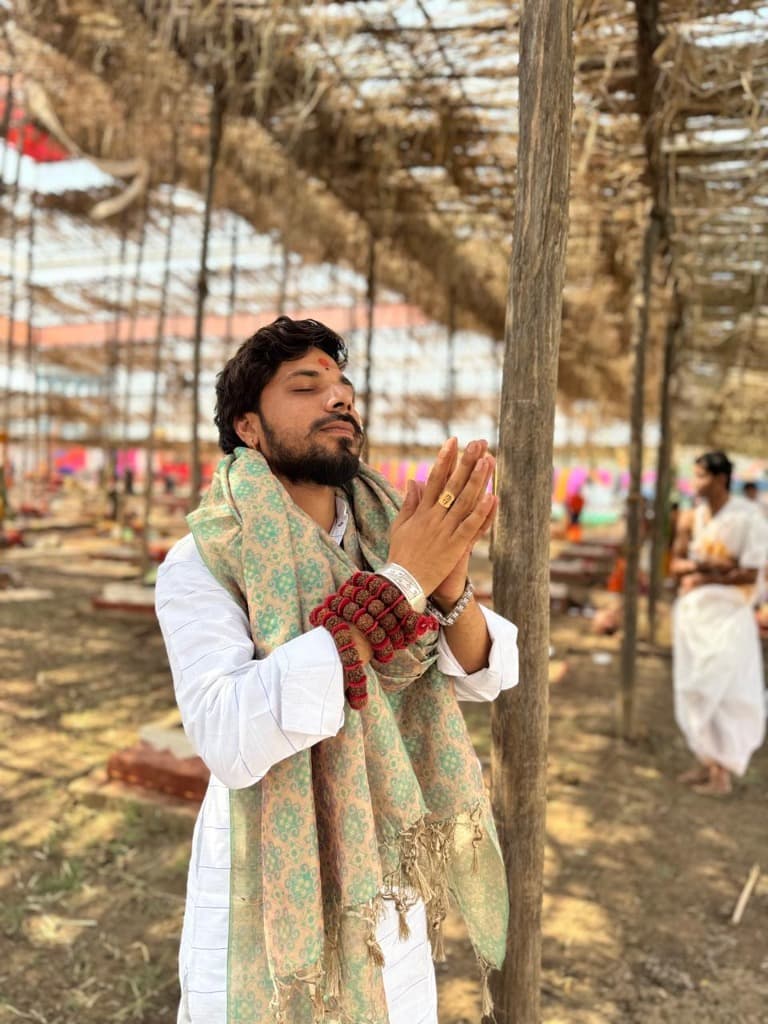
Acharya Tiwari Chetan Guru
Siddha Peethadheesh & Head Vedic Scholar
With over 15+ years of unbroken Vedic practice at Maa Baglamukhi Siddha Peeth, Nalkheda, Acharya Ji is a globally authoritative voice on Tantra Shastra, Stambhan Vidya, and Karmic Astrology. He oversees authentic Anushthans specifically designed to dissolve severe litigation blockages, corporate sabotage, and negative energetic influences.
Need Exact Hawan Cost & Shubh Muhurat?
Get direct guidance from Head Priest Acharya Tiwari Chetan Guru.