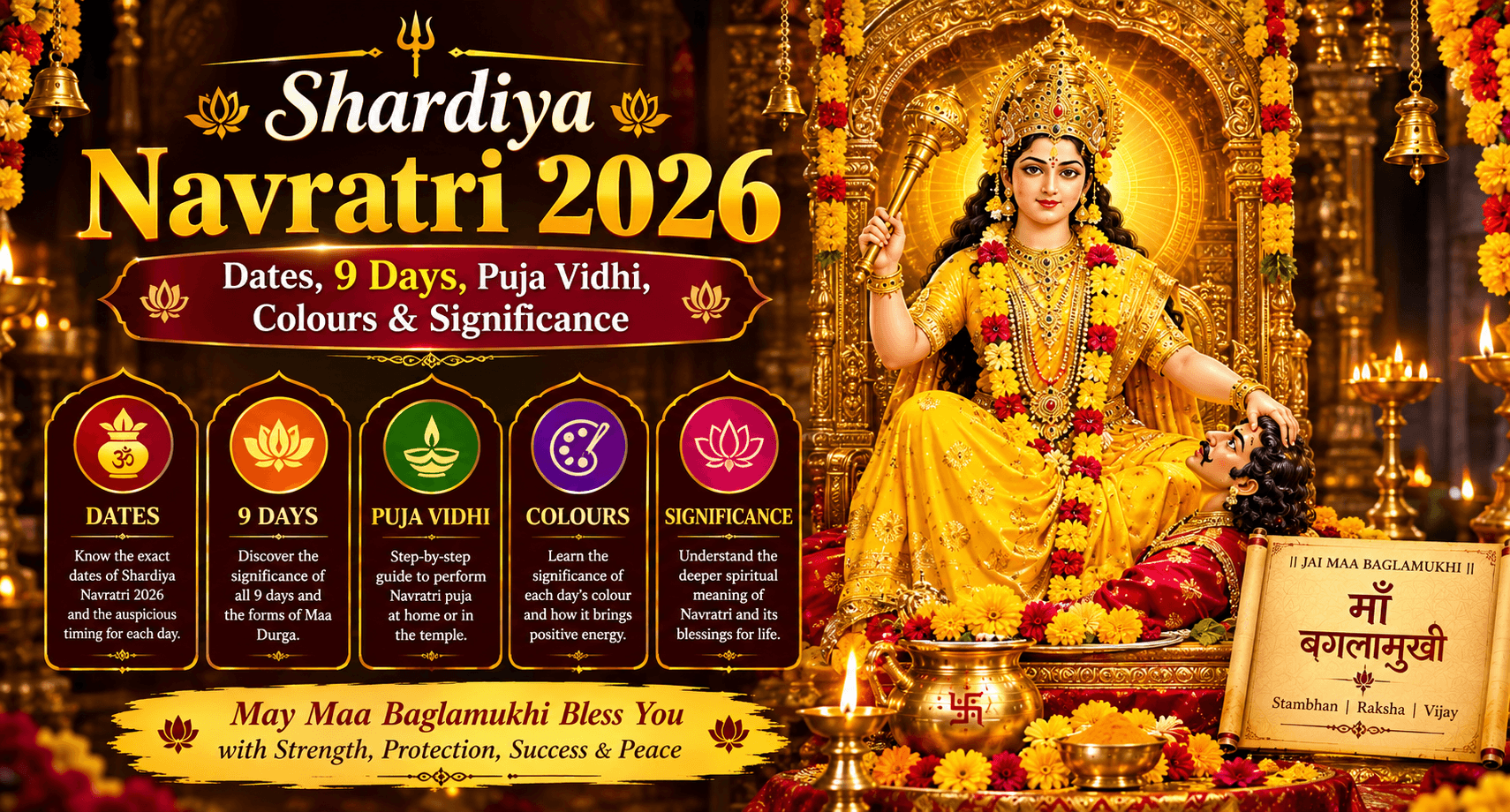

If you have been searching for a straight answer on "Baglamukhi Havan price," you have probably noticed something frustrating: most pages either quote a random number with no context, or avoid the topic entirely. Neither approach actually helps you plan.
This guide takes a different route. Instead of handing you a made-up figure, it explains exactly what determines the cost of a Baglamukhi Havan, so you can understand your own situation, ask the right questions, and get a quote that genuinely reflects what you need, not a generic listing price copied across a hundred websites.
🪔Quick Answer
There is no single fixed price for a Baglamukhi Havan. The cost of a Baglamukhi Havan depends on factors such as the type of Havan, location, samagri, number of Pandits, duration of the ritual, and individual spiritual requirements. A short, standard Havan naturally costs less than a multi-day Anushthan involving several priests and an extended mantra count. For accurate pricing based on your specific need, it is best to contact the temple team directly rather than relying on a generic number found online.
Quick Pricing Factors
Factor | How It Influences the Cost |
|---|---|
Type of Havan | A simple, single-sitting Havan costs less than a multi-day Anushthan |
Number of Pandits | More priests chanting together generally increases the overall cost |
Havan Samagri | Quality and quantity of offerings (ghee, herbs, turmeric, mango wood, etc.) affect pricing |
Location | Performing the ritual at a Siddha Peeth versus at home or online can change costs |
Duration | A one-day Havan is priced differently from a 3, 9, or 11-day ritual |
Additional Rituals | Extra elements like Kanya Pujan, Havan Samagri delivery, or a personal Sankalp add to the total |
Mode | Online (remote) Havan and offline (in-person) Havan are typically structured differently |
Note: This table explains the variables that shape pricing. It does not represent fixed rates. The cost of a Baglamukhi Havan depends on factors such as the type of Havan, location, samagri, number of Pandits, duration of the ritual, and individual spiritual requirements. Contact our team for accurate pricing.
What Is Baglamukhi Havan?
Featured Snippet Answer: Baglamukhi Havan is a Vedic fire ritual dedicated to Maa Baglamukhi, the eighth Mahavidya, performed by offering ghee, turmeric, mango wood and other sacred items into a consecrated fire while chanting her mantra. It is traditionally associated with Stambhan Shakti, the power to still or restrain disturbance, and is performed for protection, clarity and resolution of difficult situations.
A Havan, at its core, is an offering ritual. Sacred items are placed into a fire while specific mantras are chanted, and the fire is treated as a medium that carries the offering and the devotee's intention forward. In Baglamukhi worship, this fire ritual usually follows or accompanies mantra jaap and is considered the more complete form of the practice compared to chanting alone.
The ritual is rooted in Tantric-Vedic tradition and is typically performed by a trained Acharya who understands the correct sequence: Sankalp (stating intention), Ganesh Puja (removing obstacles before the main ritual), invocation of the Goddess, the mantra-accompanied fire offerings, and a closing Purnahuti (final offering). You can explore the full ritual on the Baglamukhi Havan page.
What Is the Cost of Baglamukhi Havan?
Featured Snippet Answer: The cost of a Baglamukhi Havan depends on factors such as the type of Havan, location, samagri, number of Pandits, duration of the ritual, and individual spiritual requirements. There is no single published rate that applies to every devotee, since each ritual is scoped to the specific need. Contact our team for accurate pricing.
This is the honest answer, and it is worth explaining why, rather than simply stating it. Unlike a fixed retail product, a Havan is a personalized service. Two devotees asking for "a Baglamukhi Havan" might actually need very different things: one might want a short, one-time protective ritual, while another might need a multi-day Anushthan with a specific mantra count tied to a serious legal or financial matter. Quoting one number for both would either overcharge the first devotee or undercharge the effort the second one genuinely requires.
If you come across a website listing an exact rupee figure for "the" Baglamukhi Havan price with no explanation of what it includes, treat that number cautiously. It is either a starting estimate for the most basic version of the ritual, or it is not tied to any specific, verifiable package at all.
Why Is There No Fixed Price?
Featured Snippet Answer: Baglamukhi Havan does not have a fixed, universal price because each ritual is scoped individually, based on the devotee's specific situation, the scale of the Havan, the number of priests involved, and the samagri required. Traditions also vary by Guru and Sampradaya, so what one lineage includes in a "standard" Havan can differ from another.
Vedic ritual pricing has never worked like a fixed price list, and this is intentional rather than a gap in transparency. A priest scoping a Havan needs to know the purpose of the Sankalp, whether it is a single sitting or part of an extended Anushthan, how many priests are needed to chant the required mantra count within the available time, and what samagri the specific form of the ritual calls for. All of this is decided during a conversation with the devotee, not from a generic menu.
It is also worth noting, respectfully, that practices and inclusions can vary according to Guru, Sampradaya and lineage. A Havan performed under one tradition's guidance may include elements that another tradition considers optional, or vice versa. This is a normal part of Vedic diversity, not an inconsistency.
Factors Affecting the Cost
Featured Snippet Answer: The main factors affecting Baglamukhi Havan cost are the type of Havan, number of Pandits involved, quality and quantity of Havan Samagri, location of the ritual, duration, any additional rituals included, and whether it is performed online or offline. Each factor changes the scope of work required, which is why pricing is individually assessed.
Type of Havan
A short, single-sitting Havan performed for general protection or peace of mind is a smaller undertaking than a full Anushthan involving a structured mantra count over several days. The "type" of Havan you need should match your actual situation, not the other way around, so this is usually the first thing discussed with an Acharya.
Number of Pandits
Some Havans are performed by a single experienced priest. Others, particularly those tied to a specific high mantra count within a limited time window, require multiple priests chanting together. More priests naturally means more time and coordination, which factors into the overall scope.
Havan Samagri
The offerings placed into the fire, mango wood, ghee, turmeric, yellow mustard, specific herbs and other items, vary in both quantity and quality depending on the scale of the ritual. A longer or more intensive Havan simply requires more samagri. If you want to understand the mantra recitation that accompanies these offerings, see the Baglamukhi Mantra Jaap Rules.
Location
Performing a Havan at a recognized Siddha Peeth, at a devotee's home, or entirely online (with the priest performing it on the devotee's behalf) each involves a different setup. Temple-based rituals may involve additional logistics compared to a home or remote Havan.
Duration
A one-day Havan is a different commitment from a 3-day, 9-day, or 11-day ritual performed as part of a larger Anushthan. Duration directly affects how much priest time and samagri the ritual requires.
Additional Rituals
Some devotees choose to add elements such as Kanya Pujan, an extended Sankalp process, or specific supplementary pujas alongside the main Havan. Each addition is its own component of the overall scope.
Online vs Offline Havan
Online Havan, where the priest performs the ritual on the devotee's behalf and shares a recording along with prasad delivery, is structured differently from an in-person Havan where the devotee is physically present at the temple. Both are valid and widely practiced, but they involve different logistics.
What Is Usually Included in a Baglamukhi Havan Package?
Featured Snippet Answer: A typical Baglamukhi Havan package generally includes the Sankalp process, Havan Samagri, the fire ritual itself with mantra chanting, Purnahuti, aarti, and prasad. Depending on the provider, it may also include a video recording (for online participation) and prasad delivery to the devotee's address.
Element | What It Typically Covers |
|---|---|
Sankalp | Stating the devotee's name, gotra (if known) and intention before the Acharya begins |
Havan Samagri | Ghee, turmeric, mango wood, yellow mustard and other prescribed offerings |
Mantra Chanting | Recitation of the Baglamukhi Mantra during the fire offerings |
Purnahuti | The final, concluding offering that completes the ritual |
Aarti | Closing worship performed after the Havan |
Prasad | Blessed items such as turmeric or a Raksha Sutra, given or shipped to the devotee |
Recording (if online) | A video of the ritual for devotees who could not attend in person |
Exact inclusions can differ between providers and traditions, which is another reason a personalized conversation matters more than a generic checklist.
Preparation Before Havan
Featured Snippet Answer: Preparing for a Baglamukhi Havan typically involves bathing beforehand, wearing clean (preferably yellow) clothing, following a sattvik diet for a day or two prior, sharing accurate Sankalp details (name and gotra) with the priest, and confirming the date, purpose and mode (online or offline) in advance.
Preparation Step | Why It Matters |
|---|---|
Bathe before the ritual | Traditional cleanliness before approaching the sacred fire |
Wear clean, yellow or light-coloured clothing | Yellow is associated with Maa Baglamukhi |
Follow a sattvik diet beforehand | Supports the discipline the ritual is meant to reflect |
Share correct Sankalp details | Name and gotra ensure the intention is stated accurately |
Confirm date and purpose in advance | Helps the priest scope the correct type and duration of Havan |
Decide online or offline participation | Determines logistics, recording, and prasad delivery arrangements |
Who Should Perform Baglamukhi Havan?
Featured Snippet Answer: Baglamukhi Havan is generally performed by devotees facing prolonged legal disputes, persistent obstacles, career or business setbacks, or those seeking protection and mental clarity. It can be performed by any sincere adult devotee, though those attempting it for the first time benefit from guidance on correct Sankalp and procedure.
There is no restrictive eligibility list for who "may" perform this Havan. In practice, it is most commonly sought by people going through a specific, often difficult, situation, legal proceedings, career instability, family disputes, or a general sense of stagnation, where a structured spiritual practice offers a sense of discipline and direction alongside whatever practical steps they are also taking.
First-time participants are encouraged to have the ritual guided by an experienced Acharya rather than attempting the full procedure independently, since correct Sankalp and sequencing matter for a Havan in a way that a simple mantra jaap does not require.
Benefits of Baglamukhi Havan
Featured Snippet Answer: Baglamukhi Havan is traditionally associated with protection from obstacles, mental clarity, relief in prolonged disputes, and a sense of stability during difficult periods. These are traditional and experiential associations rather than guaranteed outcomes, and results vary based on individual circumstances, sincerity and consistency of practice.
Benefit Area | Traditional Association |
|---|---|
Protection | A sense of shield against ongoing conflict, rivalry or negative influence |
Mental clarity | Reduced confusion and improved focus during a difficult decision-making period |
Legal and dispute matters | Devotees often perform this Havan alongside, not instead of, their legal process |
Stability | A structured ritual that many devotees find grounding during uncertain times |
Discipline | The preparation and process itself builds consistency and intention |
These benefits are described in traditional and devotional terms, not as guaranteed or measurable outcomes. A Havan is a spiritual practice, and its value is generally understood alongside, not as a replacement for, appropriate legal, medical or professional support where relevant.
How to Book Baglamukhi Havan
Featured Snippet Answer: Booking a Baglamukhi Havan typically involves contacting the temple or Acharya's team, sharing your purpose and preferred dates, confirming whether you want an online or in-person ritual, and finalizing the Sankalp details before the scheduled date.
Step | What Happens |
|---|---|
1. Initial enquiry | Reach out with your general requirement (protection, legal matter, business, etc.) |
2. Discussion with Acharya | The type, scale and duration of Havan suited to your situation is discussed |
3. Date and mode confirmation | You confirm a suitable date and whether it will be online or offline |
4. Sankalp details shared | Your name, gotra (if known) and intention are recorded accurately |
5. Havan performed | The ritual is conducted, with a recording provided if you are participating remotely |
6. Prasad dispatched | Blessed prasad is shared or shipped to your address |
You can also review Baglamukhi Puja options, or reach the team directly via Contact Us.
Why Choose Experienced Vedic Pandits?
Featured Snippet Answer: Experienced Vedic Pandits matter because correct pronunciation, sequencing and Sankalp are considered essential to a Havan's authenticity. An experienced Acharya can also correctly scope the ritual to your actual need, rather than offering a one-size-fits-all package.
A Havan is not simply a set of items placed into a fire; the sequence, the mantra recitation, and the intention behind each offering are all part of what the tradition considers meaningful. An inexperienced or unqualified priest may skip steps, mispronounce the mantra, or fail to guide the devotee through an accurate Sankalp, any of which is traditionally considered to weaken the ritual's integrity.
Choosing a priest or Acharya with a documented, consistent practice, rather than the lowest quoted price, is generally considered more important in Vedic tradition than price comparison alone. To learn the mantras used in these rituals, see the Baglamukhi Beej Mantra, Baglamukhi Mool Mantra, and Baglamukhi Gayatri Mantra. Devotees seeking success across all areas of life can also explore the Baglamukhi Sarva Karya Siddhi Mantra puja.
Frequently Asked Questions
FAQ Summary Table
Question | Short Answer |
|---|---|
Does Baglamukhi Havan have a fixed price? | No, it depends on type, samagri, priests, duration and location |
Can I get an exact quote online? | Only after sharing your specific requirement with the team |
Is online Havan as effective as offline? | Both are traditionally accepted; the mode does not change the sincerity of the ritual |
Do I need to be present physically? | No, remote participation with a recording is commonly available |
What is included in the price? | Typically Samagri, Sankalp, mantra chanting, Purnahuti, aarti and prasad |
How long does a Havan take? | From a few hours for a simple ritual to several days for an Anushthan |
Can I request a specific date? | Yes, subject to the Acharya's availability and muhurat considerations |
Is advance payment required? | This varies by provider; confirm directly during booking |
1. What is the Baglamukhi Havan price in India?
There is no single fixed price across India. The cost of a Baglamukhi Havan depends on factors such as the type of Havan, location, samagri, number of Pandits, duration of the ritual, and individual spiritual requirements. Contact our team for accurate pricing.
2. Why do different websites show different Baglamukhi Havan costs?
Because each website may be describing a different scope of ritual, different samagri quality, or a different number of priests. Without a clearly defined package, quoted figures are not directly comparable.
3. Is Baglamukhi Havan expensive?
It depends entirely on the scale you choose. A simple, single-sitting Havan is a modest undertaking, while a multi-day Anushthan with several priests naturally involves more resources.
4. Can I book a Baglamukhi Havan online?
Yes, online Havan booking is common. The priest performs the ritual on your behalf, and you can typically join via video call or receive a recording afterward, along with prasad delivery.
5. What is included in the Havan Samagri?
Samagri generally includes items such as mango wood, ghee, turmeric, yellow mustard and other prescribed offerings, chosen according to the specific form of the ritual.
6. How many Pandits are needed for a Baglamukhi Havan?
This depends on the mantra count and duration involved. A simple Havan may require a single priest, while an intensive Anushthan may need several priests chanting together.
7. Does the location of the Havan affect the cost?
Yes. A Havan performed at a Siddha Peeth, at your home, or entirely online each involves different logistics, which can affect the overall scope and cost.
8. Is there a difference between Baglamukhi Puja and Baglamukhi Havan pricing?
Yes, generally. A Puja without a fire ritual is typically a smaller undertaking than a Havan, which includes the fire offering component and usually more samagri and priest time.
9. Can I request a personalized Havan for a specific problem?
Yes. Most devotees approach a Havan for a specific purpose, such as a legal matter, career obstacle, or general protection, and the Sankalp is tailored accordingly.
10. How do I get an accurate price for my specific situation?
Share your requirement, purpose, and preferred dates directly with the Acharya's team. They will confirm scope and pricing based on your actual need rather than a generic listing.
11. Do I need to pay the full amount in advance?
Payment terms vary by provider. It is best to confirm this directly during your booking conversation.
12. Is a longer Havan always more effective than a shorter one?
Not necessarily. Duration should match the nature of the concern and the Acharya's guidance, rather than being assumed as automatically "more powerful."
13. What happens if I cannot travel to the temple?
You can opt for an online or remote Havan, where the ritual is performed on your behalf with a recording and prasad delivery, so physical presence is not mandatory.
14. Are the rituals different across Guru Paramparas?
Yes, inclusions and specific procedures can vary by Guru, Sampradaya and lineage. If you follow a particular tradition, its guidance should take priority.
15. Who can I contact for a genuine, accurate quote?
You can reach out directly through the temple's Contact Us page to discuss your requirement and receive pricing suited to your specific situation.
Conclusion
A trustworthy answer to "how much does a Baglamukhi Havan cost" is not a single number, it is an understanding of what actually shapes that number: the type of ritual, the samagri, the number of priests, the duration, and your specific purpose. Any source offering a flat, no-questions-asked price for something this personalized is worth approaching with a healthy amount of skepticism.
The more useful step is a direct conversation. Share your situation, ask what a suitable Havan would involve, and get a quote that reflects your actual need rather than a generic listing price.
If you are ready to move forward, the Nalkheda Siddha Peeth team, guided by Acharya Tiwari Chetan Guru, can walk you through the right type of Baglamukhi Havan for your situation and provide accurate, personalized pricing. Reach out via Contact Us.
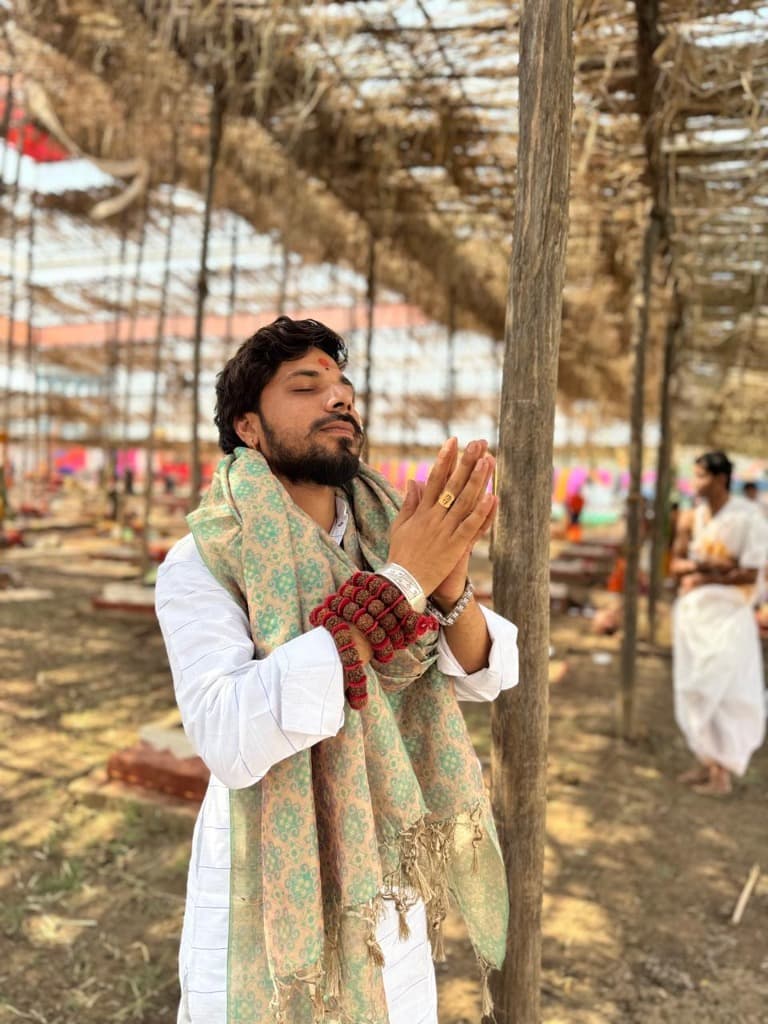
Acharya Tiwari Chetan Guru
Siddha Peethadheesh & Head Vedic Scholar
With over 15+ years of unbroken Vedic practice at Maa Baglamukhi Siddha Peeth, Nalkheda, Acharya Ji is a globally authoritative voice on Tantra Shastra, Stambhan Vidya, and Karmic Astrology. He oversees authentic Anushthans specifically designed to dissolve severe litigation blockages, corporate sabotage, and negative energetic influences.