Career uncertainty can be difficult, whether you are waiting for a promotion, preparing for an important interview, considering a job change, or dealing with disagreements at work. Alongside practical efforts, some Hindu devotees turn to Maa Baglamukhi Puja as a meaningful way to seek blessings, spiritual strength and clarity.
Maa Baglamukhi Puja for career growth refers to worship offered with a personal Sankalp related to professional progress or challenges. The chosen ritual may involve prayers, mantra recitation, traditional offerings and, where appropriate, a Havan performed under the guidance of an Acharya.
This guide explains the traditional significance of the Puja, its general Vidhi, commonly used Samagri, factors affecting cost and how to enquire about arrangements at Nalkheda.
The Puja is a devotional practice. It does not guarantee employment, promotion, a salary increase or any particular professional result.
Maa Baglamukhi Puja for Career Growth at a Glance
Detail | Quick answer |
|---|---|
Puja | Maa Baglamukhi Puja, Havan or a selected career-related ritual |
Purpose | Seeking blessings during career uncertainty and professional challenges |
Traditional significance | Protection, spiritual strength and Stambhan Shakti |
Vidhi | Sankalp, prayers, worship, mantra and optional Havan |
Samagri | Customary offerings and ritual-specific materials |
Cost | Depends on the selected Puja and confirmed inclusions |
Location | Nalkheda, Madhya Pradesh, where applicable |
Online booking | Enquiry form, telephone or provider's booking channel |
Expected outcome | A matter of personal faith; career results cannot be promised |
Devotees should first understand the chosen ritual rather than assume that every form of Baglamukhi worship follows the same procedure.
For a general introduction, explore the Maa Baglamukhi Puja service.
What Is Maa Baglamukhi Puja for Career Growth?
Maa Baglamukhi is traditionally revered as one of the ten Mahavidyas within Hindu Shakta traditions. Her worship is particularly associated with Stambhan Shakti, commonly understood as the power of restraint or stilling harmful forces.
In devotional interpretation, worshippers may seek her blessings while facing uncertainty, conflict or fear. Some relate these themes to professional life, including difficult decisions, workplace disagreements and hopes for career advancement.
There is an important distinction between this religious understanding and a promise about employment.
A devotee may perform a Puja while sincerely hoping for promotion. However, an employer's decision depends on professional circumstances, performance, organizational requirements and other factors.
Understanding the role of Sankalp
A Sankalp is a deliberate statement of intention made as part of worship.
For a career-related Puja, the devotee might express a wish for wisdom, stability, confidence, ethical progress or the ability to overcome personal difficulties.
A respectful intention could be:
May I receive the strength, understanding and right opportunities needed to fulfil my professional responsibilities with honesty and confidence.
The exact words and ritual form should follow the officiating tradition. A Sankalp need not involve wishing harm upon colleagues, employers or professional competitors.
For further guidance, devotees can explore the Maa Baglamukhi Puja Vidhi.
Why Do Some Devotees Perform Maa Baglamukhi Puja for Career Concerns?
People approach devotional worship for many different reasons. The same Puja may hold a different personal significance for someone seeking a first job and someone navigating a difficult stage in an established career.
1. Career uncertainty
A person may be unsure whether to change jobs, pursue additional education or continue in their current profession.
Prayer can provide a meaningful opportunity for reflection and patience while they evaluate their options.
2. Workplace disagreements
Disagreements with colleagues or supervisors may cause frustration or anxiety.
Some devotees turn to Maa Baglamukhi worship when seeking composure and a peaceful resolution. Worship should not be understood as a method of controlling another person's behavior.
3. Hopes for job promotion
Promotion is a common professional aspiration, especially after years of sincere work.
A devotee may include this aspiration in a Sankalp while continuing to improve performance, document achievements and discuss progression with their manager.
4. Job changes and interviews
Searching for a job can involve repeated applications, uncertainty and rejection.
Devotional practice may help believers maintain hope and a consistent spiritual routine. Interview preparation and relevant qualifications remain essential.
5. Important professional decisions
Accepting a new opportunity, changing industries or pursuing self-employment can require careful judgment.
A person may pray for clarity while examining the financial, personal and professional consequences of the decision.
6. Seeking emotional steadiness
Professional difficulties sometimes affect confidence and concentration.
For believers, worship can be a source of personal reassurance. Where stress is severe or persistent, practical support from trusted people or qualified professionals also matters.
Traditional Benefits of Maa Baglamukhi Puja for Career and Professional Life
The benefits associated with Baglamukhi worship are primarily expressed through devotional belief rather than measurable guarantees.
Within Hindu traditions, worshippers may regard the Puja as an opportunity to:
Seek the Goddess's blessings for righteous efforts.
Reflect on troubling circumstances with greater patience.
Maintain faith during uncertain periods.
Pray for protection and peaceful resolutions.
Develop discipline through regular worship.
Approach important responsibilities with humility.
These are traditional spiritual intentions, not assured employment outcomes.
Some people find that taking time for prayer encourages reflection and helps them approach challenges more calmly. Others may experience devotional worship differently.
It is therefore more useful to understand the Puja as a meaningful religious practice than as a transaction that promises professional success.
Maa Baglamukhi Puja Vidhi for Career Growth
A customary Maa Baglamukhi Puja may involve preparation, preliminary prayers, Sankalp, offerings, mantra recitation and concluding worship. A Havan is included only when it forms part of the selected ritual.
The following overview is educational, not a mandatory procedure for every lineage.
Step 1: Prepare a respectful worship space
Begin by ensuring that the worship area is clean and suitable for prayer.
A devotional image or representation may be placed according to household custom. A diya and other appropriate offerings can be arranged safely.
Step 2: Arrange the Puja Samagri
Prepare the items advised for the intended worship.
Common household offerings may include flowers, Akshat, water, incense, a diya and other materials used in the family's tradition.
Specialized arrangements should be confirmed with the officiating Acharya.
Step 3: Begin with preliminary prayers
Some traditions begin with prayers to Lord Ganesha or other customary invocations.
The order, wording and inclusion of preliminary rites can differ.
Step 4: State the Sankalp
The Sankalp expresses the worshipper's intention.
In a career-related context, this might concern guidance during a job search, confidence in professional responsibilities or blessings for ethical advancement.
The officiating priest may request the devotee's name, Gotra where known, and other customary details.
Step 5: Perform worship of Maa Baglamukhi
Traditional offerings are made according to the selected Vidhi.
Yellow-colored offerings are associated with many forms of Baglamukhi worship, although the precise requirements are not identical in every tradition.
Step 6: Recite the prescribed mantra
Mantra recitation may form part of the worship.
The selection of mantra and its manner of recitation depend on the tradition and guidance received.
Do not assume that a particular mantra count is compulsory for every devotee.
Step 7: Perform Havan when included
A Havan involves making prescribed offerings into a properly prepared sacred fire.
The materials, sequence and mantras vary according to the ritual.
A priest-led fire ceremony requires appropriate equipment, ventilation, fire precautions and qualified supervision.
Readers seeking a deeper explanation can consult the Maa Baglamukhi Havan Vidhi guide.
Step 8: Complete the concluding worship
The ceremony may conclude with customary prayers, Aarti and other prescribed observances.
Step 9: Receive or distribute Prasad
Prasad may be offered or distributed according to the arrangement and tradition.
If booking a service, confirm whether Prasad is included and how it will be provided.
Is a specialized ritual compulsory?
No single career-related circumstance automatically requires an elaborate ceremony.
Simple personal prayer may be meaningful for a devotee. More structured Puja, Havan or Anushthan arrangements are separate choices that should be understood before booking.
The Maa Baglamukhi Havan service offers further context about a priest-led arrangement.
Maa Baglamukhi Mantra for Career-Related Prayers
Mantra recitation has an important place in many forms of Maa Baglamukhi worship.
The tradition includes different mantras, devotional practices and methods of instruction. Some are used in general worship, while more specialized practices may be taught within particular lineages.
Devotees considering mantra recitation should first understand which form is appropriate to their practice.
What is the Beej Mantra?
A Beej Mantra is a sacred seed syllable or sound used in particular mantra traditions.
The syllable commonly transliterated as Hleem (ह्लीं) is associated with Maa Baglamukhi in the site's existing devotional resources.
Its role and manner of use should be understood within the relevant tradition rather than presented as a guaranteed method of obtaining employment.
The Maa Baglamukhi Beej Mantra guide provides dedicated information.
Can chanting guarantee a promotion?
No.
A mantra may hold devotional significance for the practitioner, but chanting a particular number of repetitions does not guarantee an employer's decision, a government appointment or a salary increase.
For detailed mantra wording and traditional context, refer to the site's Maa Baglamukhi Mantra resource.
Maa Baglamukhi Puja Samagri for Career-Related Worship
The precise Samagri depends on whether the devotee is arranging simple worship, a priest-led Puja or a Havan.
It is helpful to distinguish common household offerings from materials required for a particular ceremony.
Common Puja items
Depending on the tradition, a simple worship arrangement may include:
Clean water for customary offerings
Flowers
Akshat or unbroken rice
Roli or kumkum, where appropriate
A diya and suitable fuel
Incense
A clean plate for offerings
Prasad or fruit, according to custom
These items are examples rather than a universal compulsory list.
Havan items
A priest-led Havan may require a prepared Havan Kund, prescribed wood, ghee, Havan Samagri and ritual-specific offerings.
The selection and quantities should be confirmed with the priest conducting the ceremony.
The existing Baglamukhi Havan Samagri guide provides further background.
Additional requirements
Before buying materials, ask whether the provider supplies everything necessary.
For home worship, clarify which items are essential, which are optional and whether specialized procedures should be performed only with guidance.
Purchasing a large quantity of offerings does not itself make a ceremony more meaningful or ensure a particular outcome.
Maa Baglamukhi Puja Cost for Career Growth
There is no single universal price for every career-related Maa Baglamukhi Puja. Costs depend on the actual ritual, its duration, materials, arrangements and the services included.
The site's current Puja catalogue describes several rituals, including Naukri Siddhi Puja, with custom-based pricing.
What affects the cost?
Cost factor | What to confirm |
|---|---|
Type of ritual | Simple Puja, Havan or another agreed arrangement |
Duration | Estimated time and date |
Priest arrangements | Who conducts the ceremony and what is included |
Samagri | Whether required materials are provided |
Participation | In-person, remote or other available arrangement |
Prasad | Inclusion and any delivery charges |
Additional services | Any optional arrangements and their separate costs |
How much should you budget?
Request a written quotation for the specific Puja.
A general price mentioned elsewhere on a website may apply to a different service or package. It should not automatically be treated as the price of a career-related Puja.
A useful quotation should identify the ritual, its inclusions, total amount, any extra charges and the confirmation process.
Does a more expensive Puja guarantee better results?
No. There is no reliable basis for promising that a larger payment or a longer ceremony will cause a promotion or job offer.
Choose an arrangement that is personally meaningful, clearly explained and financially comfortable.
Avoid borrowing money or paying under pressure because someone promises a particular result.
How to Book Maa Baglamukhi Puja Online
The website provides a Maa Baglamukhi Puja booking page, where devotees can enquire about a ritual, share their requirements and discuss arrangements before confirmation.
The general process is as follows.
Step 1: Review the available Puja
Explore the site's Puja options and determine whether you are interested in general worship, Havan or a career-focused service.
The Maa Baglamukhi Naukri Siddhi Puja is a directly relevant offering for a career-related enquiry.
Step 2: Explain your intention
Describe the reason for your enquiry briefly and respectfully.
You may mention that you are seeking blessings during a job search, a professional transition or consideration for promotion.
Step 3: Share the necessary details
The provider's booking information describes collection of details such as name, Gotra and prayer intention.
Confirm any additional information required before sharing sensitive personal details.
Step 4: Discuss the ritual and date
Ask which Puja is proposed, why it is considered appropriate within the tradition, and what duration and date are available.
Step 5: Confirm the cost and inclusions
Request the final quotation before making a payment.
Check whether Samagri, participation arrangements, Prasad or delivery involve additional charges.
Step 6: Obtain booking confirmation
Follow the provider's stated confirmation procedure and retain the details of the agreed service.
Booking enquiry
If you wish to explore a career-related devotional arrangement, review the verified booking and enquiry page and request details of the ritual, cost and available participation options before confirming.
What Should You Confirm Before Booking?
Before arranging a priest-led Puja, consider the following checklist.
What is the exact name of the Puja?
Is Havan included?
Which Vidhi or tradition will be followed?
What details are required for the Sankalp?
Where will the ceremony take place?
What are the proposed date and duration?
What materials and priest services are included?
Is live or remote participation available for this ritual?
Will Prasad be provided?
Are courier or other charges additional?
What is the total cost?
How will the booking be confirmed?
What happens if the date needs to change?
These questions help avoid assumptions. A provider may offer additional features, but they should be confirmed for the exact arrangement rather than inferred from another service.
Maa Baglamukhi Puja at Nalkheda
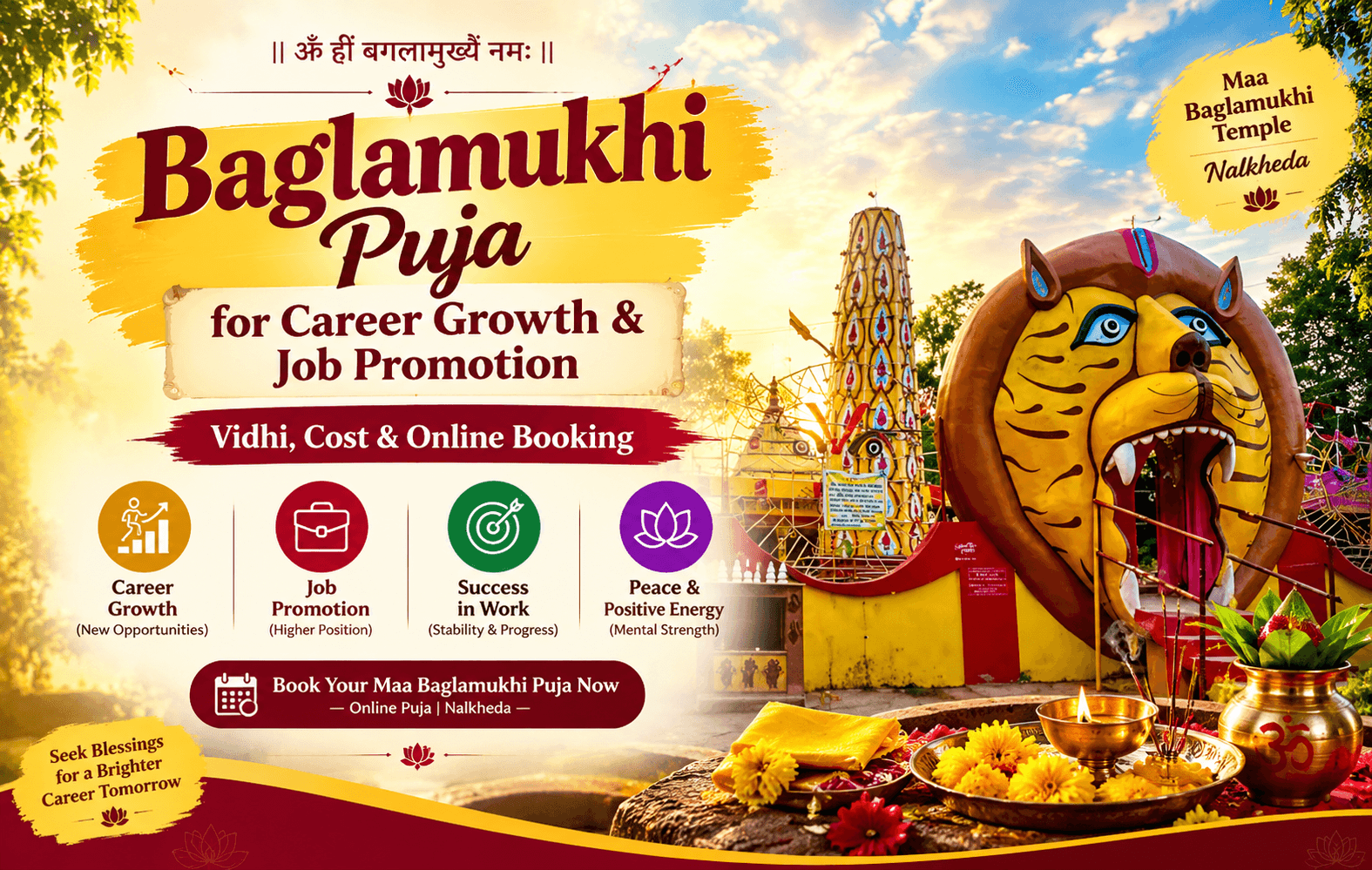
Nalkheda, located in the Agar Malwa district of Madhya Pradesh, is associated with a revered temple dedicated to Maa Baglamukhi.
Devotees visit Nalkheda for darshan, prayer and traditional religious observances. Its significance is connected with the worship of Maa Baglamukhi within Hindu devotional traditions.
For someone considering a career-related Sankalp, the location may have personal spiritual importance.
However, visiting a temple for darshan and booking a separate priest-led service are not necessarily the same process.
Travel arrangements, temple administration, ritual permissions and independent service bookings should be understood separately.
The site's Maa Baglamukhi Temple at Nalkheda guide provides more information about the location.
Devotees considering a larger ritual can also review the Maa Baglamukhi Maha Hawan, while confirming whether that option is appropriate for their individual intention.
Can Maa Baglamukhi Puja Be Arranged Without Visiting Nalkheda?
Yes, the website describes remote booking and Sankalp arrangements for devotees who cannot travel.
Its published service information also describes live video participation and Prasad delivery in certain arrangements. Availability, timing, geographical coverage and specific inclusions should still be confirmed for the selected ritual.
Remote participation should not be confused with an assurance of equivalent spiritual or professional outcomes. Such interpretations are matters of personal religious belief.
Devotees living elsewhere in India or abroad should confirm the following before booking: whether their presence is required at any stage, which details are needed, whether the ceremony can be viewed remotely and whether delivery is available to their location.
Those seeking guidance before choosing a ritual can use the site's spiritual consultation page.
Devotional Worship and Practical Career Planning
Religious devotion and professional development can have different but complementary places in a person's life.
Someone who finds meaning in prayer may choose to maintain that practice while taking concrete steps toward career progress.
Consider these actions alongside any devotional routine.
Improve relevant skills
Identify the technical, communication or leadership skills required for your next professional step.
Use training, mentoring or practical assignments to build them.
Review your performance
Keep a record of completed projects, responsibilities and measurable contributions.
This information can support an informed discussion about promotion.
Prepare for opportunities
Update your résumé, practise interview questions and research potential employers.
A thoughtful application strategy matters more than submitting the same application repeatedly without review.
Communicate professionally
Address disagreements with factual, respectful communication.
If a workplace issue involves harassment, discrimination or contractual concerns, seek appropriate support rather than relying solely on spiritual remedies.
Make realistic decisions
Consider financial obligations, career prospects, personal well-being and family circumstances before making major professional changes.
A devotional practice may be personally meaningful during this process, but it does not replace preparation, professional guidance or responsible action.
Frequently Asked Questions
1. What is Maa Baglamukhi Puja for career growth?
Maa Baglamukhi Puja for career growth is devotional worship performed with an intention related to professional life. A devotee may seek blessings, clarity and spiritual strength while navigating a job search, workplace challenge or career transition. Its traditional significance should not be confused with a guarantee of employment or advancement.
2. Why do devotees perform Baglamukhi Puja during career challenges?
Some devotees associate Maa Baglamukhi with protection, restraint of harmful influences and spiritual reassurance. During difficult professional periods, they may turn to her worship as part of their religious practice. The actual resolution of workplace difficulties also depends on communication, circumstances, appropriate advice and practical action.
3. Can Maa Baglamukhi Puja be performed with the intention of seeking job promotion?
Yes. A devotee may include hopes for ethical professional advancement or recognition in a personal Sankalp. However, the Puja cannot guarantee a promotion. Decisions about advancement generally depend on workplace policies, available positions, performance and management considerations. Devotional worship can accompany efforts to develop the skills and experience required.
4. What is the traditional Baglamukhi Puja Vidhi?
The general Vidhi may involve preparation, preliminary prayers, Sankalp, offerings to Maa Baglamukhi, prescribed mantra recitation and concluding worship. Some arrangements also include Havan. Exact instructions vary by tradition and the selected ritual. The website's dedicated Puja Vidhi resource provides additional background for devotees seeking more detail.
5. What Samagri is required for Maa Baglamukhi Puja?
Common worship items may include flowers, Akshat, water, a diya, incense and other traditional offerings. Havan requires additional materials according to the ceremony. There is no single universal list for every Baglamukhi Puja. Confirm the complete requirements with the officiating Acharya before purchasing any specialized Samagri.
6. How much does Maa Baglamukhi Puja for career growth cost?
The final price depends on the chosen ritual, duration, materials and service arrangements. The website's Puja catalogue identifies career-related services with custom-based pricing. Ask for a quotation that clearly states the total amount and inclusions before booking. Do not assume that a general Puja or Havan price applies to every service.
7. How can I book Maa Baglamukhi Puja online?
You can submit an enquiry through the website's booking page or use its listed contact options. Explain your intended Sankalp, discuss the available ritual, and confirm the date, cost and participation arrangements. A submitted enquiry should not be treated as a confirmed booking until the provider communicates the confirmation details.
8. Can Maa Baglamukhi Puja be arranged at Nalkheda?
The website advertises Maa Baglamukhi Puja and Havan arrangements associated with Nalkheda, Madhya Pradesh. Confirm the exact performance location, whether personal attendance is available and which arrangements are managed by the service provider. Temple darshan, temple-administration reservations and separately arranged ceremonies may involve different procedures.
9. What information is required for the Sankalp?
The website's booking guidance commonly mentions the devotee's name, Gotra and prayer intention. Additional information may depend on the selected ritual. Ask why any further details are required and share information through an appropriate booking channel. If you do not know your Gotra, discuss the procedure with the officiating priest.
10. Which Maa Baglamukhi mantra is associated with devotional worship?
Maa Baglamukhi worship includes different mantra traditions, including forms associated with the Beej syllable Hleem. The appropriate recitation depends on the individual's tradition and guidance. Rather than selecting a mantra solely because it is advertised for career success, consult a reliable devotional resource or qualified teacher.
11. Is a specific mantra count compulsory for everyone?
No universal repetition count should be assumed for all devotees and every form of worship. Some traditions prescribe particular counts within structured practices, while simpler devotional routines may differ. The appropriate method should be confirmed with the person providing spiritual instruction. No number of repetitions guarantees a job or promotion.
12. Can Baglamukhi Puja be considered during workplace challenges?
Yes, some devotees consider worship during professional disagreements or uncertainty. Their intention may be to seek spiritual strength, patience and a peaceful resolution. The ceremony should not be presented as a way to harm or control colleagues. Serious workplace disputes should also be addressed through appropriate organizational or legal channels.
13. Can Maa Baglamukhi Puja guarantee a job promotion?
No. No responsible provider can guarantee promotion, employment, salary increases or examination results through a Puja. These outcomes depend on many external factors. The religious significance of worship lies in the devotee's beliefs and intentions, not in an assured professional result or a promise that payment will change someone else's decision.
14. Can I enquire about Puja arrangements without visiting Nalkheda?
Yes. The provider offers online enquiry channels for people who cannot visit in person. You can explain your interest, request guidance and confirm which arrangements are available remotely. Before proceeding, ask about the location, Sankalp, participation requirements, total charges and what happens after the ceremony.
15. Is online participation available?
The website describes live video and remote Sankalp options among its services. However, inclusion in a specific career-related Puja should be confirmed before booking. Ask whether participation is live, whether recordings are provided and whether any additional charges apply. Availability may depend on the ritual and scheduling arrangements.
16. Is Prasad included in the booking?
The website advertises Prasad arrangements for some Puja and Havan services. However, the specific inclusion, quantity and delivery process should be confirmed for the chosen ceremony. If you live outside India, ask whether delivery is available to your country and whether courier charges or restrictions apply.
17. What should I confirm before booking the Puja?
Confirm the ritual name, intended Vidhi, location, duration, Sankalp requirements and date. Obtain a clear quotation specifying Samagri, priest services, participation, Prasad and additional charges. Also ask how payment and booking confirmation work. This helps you understand what is being arranged without relying on general promotional descriptions.
18. Where can I check the current Maa Baglamukhi Puja cost?
Start with the website's current booking and service information. If the selected Puja does not display a confirmed price, request an individualized quotation. Prices from other services or older guides may not apply. Make sure the amount quoted relates to the exact Puja, date and arrangements you intend to book.
Final Thoughts
Maa Baglamukhi Puja for career growth is a devotional practice that some worshippers choose during periods of professional uncertainty, important decisions and hopes for advancement.
Understanding the traditional significance of the Puja is only one part of making an informed choice. Devotees should also know which Vidhi will be followed, whether Havan is included, what Samagri is required and how the final booking arrangement works.
Above all, religious faith should coexist with ethical conduct, practical career preparation and realistic expectations.
For guidance about an appropriate ritual, its current cost and booking arrangements, visit the Maa Baglamukhi Puja booking page and request the relevant details before confirming.
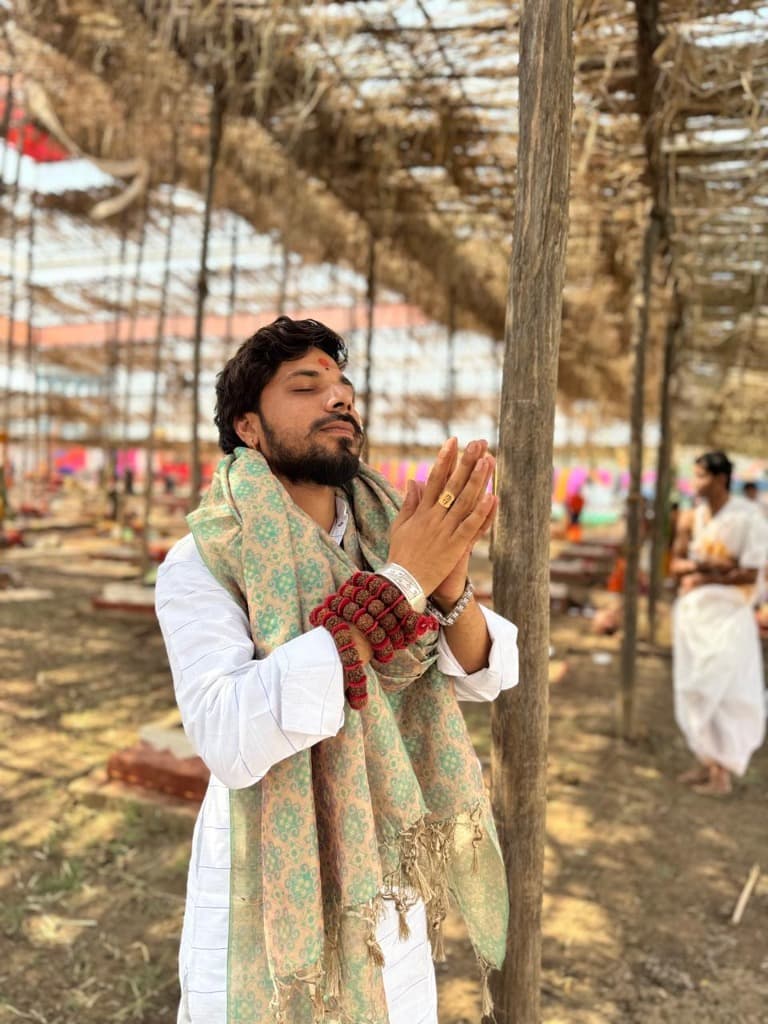
Acharya Tiwari Chetan Guru
Siddha Peethadheesh & Head Vedic Scholar
With over 15+ years of unbroken Vedic practice at Maa Baglamukhi Siddha Peeth, Nalkheda, Acharya Ji is a globally authoritative voice on Tantra Shastra, Stambhan Vidya, and Karmic Astrology. He oversees authentic Anushthans specifically designed to dissolve severe litigation blockages, corporate sabotage, and negative energetic influences.
Need Exact Hawan Cost & Shubh Muhurat?
Get direct guidance from Head Priest Acharya Tiwari Chetan Guru.