Few ritual names raise as many questions as Uchchatan. Devotees often meet the word on a service list, find no plain explanation, and are left unsure what the ritual stands for or what they are being asked to book. This guide is written to close that gap.
It explains what the Maa Baglamukhi Sampurna Uchchatan Prayog service page describes, how the term Uchchatan is understood in Hindu ritual traditions, how it relates to other Baglamukhi worship, and what to confirm before you enquire about a puja at the Maa Baglamukhi Temple at Nalkheda. Everything here is framed as religious belief and customary practice. Nothing in it is a promise of any outcome.
Maa Baglamukhi Sampurna Uchchatan Prayog at a Glance
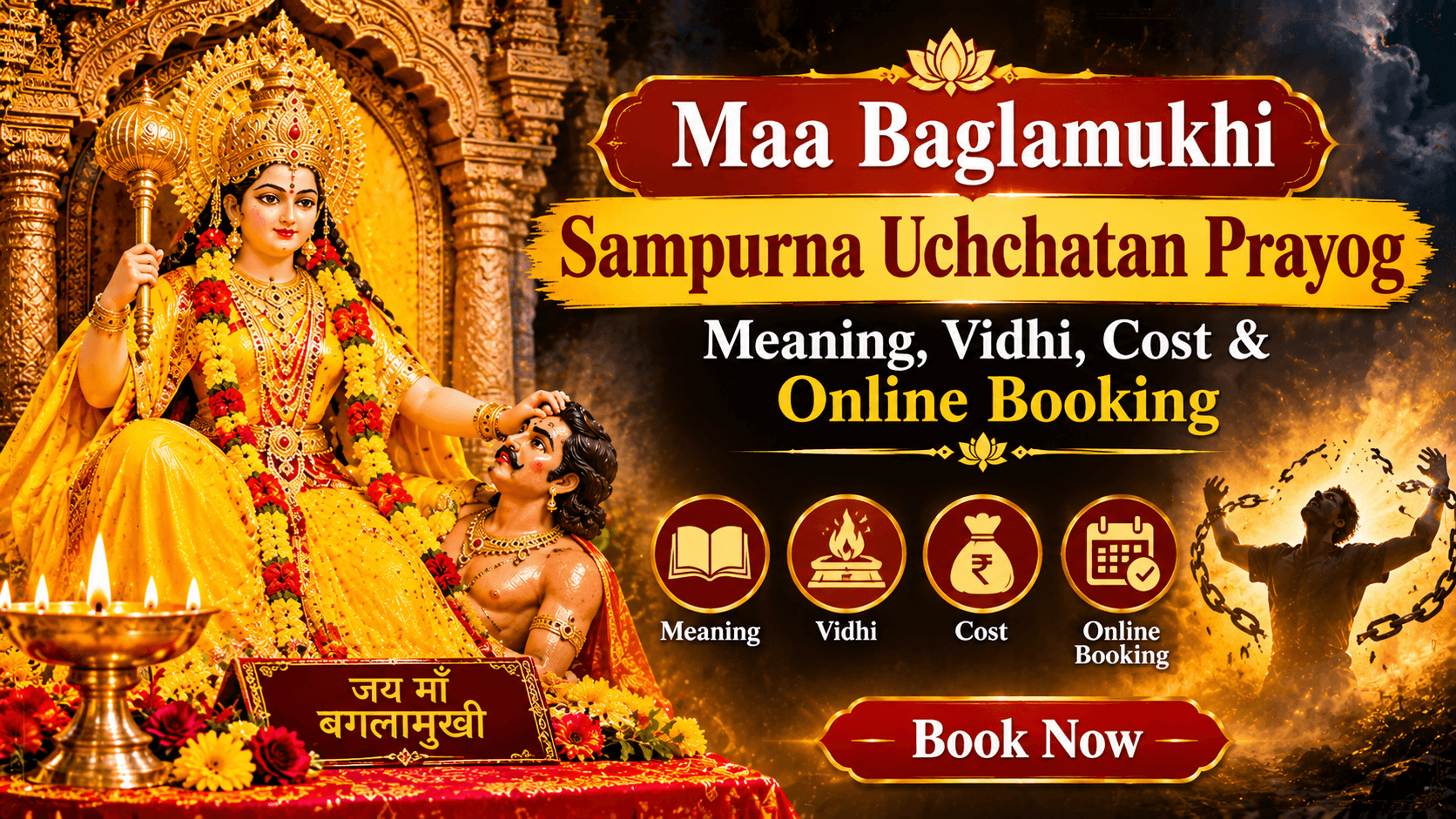
Quick answer: Maa Baglamukhi Sampurna Uchchatan Prayog is a Tantric-tradition ritual offered at Nalkheda Siddha Peeth and dedicated to Maa Baglamukhi. The temple describes it as a prayer to dislodge persistent negative influences and obstacles. It is listed as a 2-3 hour ritual performed with a personal Sankalp. It is a devotional practice, not a guaranteed solution.
Detail | Information |
|---|---|
Puja name | Maa Baglamukhi Sampurna Uchchatan Prayog |
Traditional context | Uchchatan is one of six Tantric “Shatkarma” actions in many ritual frameworks. The temple presents it as a specialised prayog within Baglamukhi Vidya |
Main purpose | Devotees pray for protection, relief from persistent obstacles and negative influences, and inner strength |
Vidhi | Purification, Kalash Sthapana with Sankalp, then main puja and havan. The exact sequence is set by the performing priest |
Samagri | Not itemised on the service page. The booking page states that complete havan samagri is included. Confirm the list when you enquire |
Cost | No price is published for this ritual. The initial consultation is stated to be free, and dakshina is discussed after a ritual is recommended |
Duration | Listed as 2-3 hours on the site’s puja listings |
Location | Nalkheda Siddha Peeth, Agar Malwa, Madhya Pradesh |
Booking | Booking form, WhatsApp or phone, followed by consultation, Muhurat selection and a live Sankalp |
Important note | Customs and procedures vary by tradition and priest. Belief is not a guaranteed outcome |
What Is Uchchatan Prayog?
Quick answer: Uchchatan Prayog is a ritual practice drawn from Tantric tradition. The Sanskrit word Uchchatan is commonly translated as “rooting out” or “driving away”. In Baglamukhi worship it is understood devotionally as a prayer for dislodging persistent negative influences, obstacles and unrest.
“Prayog” means an application or practice, and “Sampurna” means complete. The service name therefore suggests a full-format ritual. However, the service page does not itemise what makes this prayog “sampurna”, so it is reasonable to ask the priest what the complete form includes and how it differs from a standard puja or havan.
This guide uses the devotional reading of the term. It does not treat Uchchatan as a method to control, harm or remove any particular person, and no responsible reading of a temple prayer should.
Traditional Meaning of Uchchatan in Hindu Rituals
Quick answer: In Tantric literature, Uchchatan is commonly listed as the fifth of six ritual actions called the Shatkarma. The word means to uproot or displace. Explanations differ between texts, lineages and modern providers.
The six actions are usually named as Shanti (pacification), Vashikaran (influence), Stambhan (halting), Vidveshan (creating discord), Uchchatan (uprooting) and Maran. Descriptions of how each is used differ widely. Some older descriptions present Uchchatan as driving an adversary away from a place or path. Many modern devotional providers read it more gently, as dispersing negativity, agitation or obstruction.
One point causes frequent confusion. The word Shatkarma also names the six cleansing practices of Hatha Yoga, such as Neti and Trataka. These are an entirely separate framework and have no connection with Tantric Uchchatan.
Classification also varies. One widely read online reference associates Uchchatan with fiercer deities such as Dhumavati or Bhairava. Baglamukhi traditions, including the Nalkheda service, place it within her own Vidya. So practices and explanations vary by tradition, and a reader should not assume that every website means the same thing by the same word.
Finally, all of this is a matter of religious belief. It is not scientifically established, and it should never be presented as a guaranteed outcome. Because the term carries so many shades of meaning, understanding the specific service being offered matters more than the name on the list.
Maa Baglamukhi and the Devotional Context of Uchchatan
Quick answer: Maa Baglamukhi, the eighth Mahavidya, is worshipped in yellow as Pitambara Devi and is associated with Stambhan, the power to still or silence. Devotees approach her for protection, composure and clarity.
Her name is often traced to the Sanskrit “valga”, meaning bridle or rein. Traditions describe her emerging from the Haridra Sarovar, a lake of turmeric, which is one reason yellow cloth, turmeric and yellow flowers feature so strongly in her worship. In her best known iconography she holds the tongue of a demon, an image that many devotees read as the stilling of harmful speech and restless thought.
Within this setting, Uchchatan is understood by some practitioners as a more specialised prayog under her Vidya. Her worship generally places weight on mantra, Yantra, havan and the guidance of a guru or experienced priest. Readers who want to understand her worship before choosing a ritual can begin with the Maa Baglamukhi Mantra guide.
Sampurna Uchchatan Prayog: Traditional Purpose and Beliefs
Quick answer: Devotees traditionally perform this ritual to pray for protection, relief from lingering obstacles and negative influences, and steadiness of mind. Whether it helps is a matter of personal faith and cannot be promised.
The service page describes the ritual as invoking Maa Baglamukhi to remove obstacles, disperse negative energies and build a protective shield and inner strength. It lists concerns for which devotees pray, such as legal matters, workplace difficulty, business growth, career, peace of mind and spiritual strength.
A few points are worth holding together:
The ritual is framed as a prayer, not a technique that compels any result.
Devotees may find value in the structure, discipline and focus that a sincere ritual gives, which some describe as emotional steadiness. That is personal experience, not evidence of a supernatural effect.
The service page positions it for situations that feel entrenched, and recommends speaking with the Acharya to judge whether it suits a person’s situation.
A devotee who approaches the ritual with realistic expectations, and who continues to act sensibly in practical matters, is approaching it in the manner the tradition itself describes.
Uchchatan Prayog and Shatru Nashak Puja: What Is the Difference?
Quick answer: On this temple’s website, Shatru Nashak Puja is described as a prayer for protection from enemies, opposition and legal obstacles. Uchchatan Prayog is described as a specialised ritual for deeply entrenched negative influences that other remedies have not eased. In popular use the two overlap, so definitions vary.
Aspect | Sampurna Uchchatan Prayog | |
|---|---|---|
Stated focus | Protection from enemies, opposition, legal obstacles and negative influences | Stubborn, entrenched negative influences that have resisted other remedies |
Published Vidhi | Eight-step outline on the service page | Three-stage overview on the service page |
Listed duration | 2-3 hours | 2-3 hours |
Online participation | Available | Available |
Consultation | Advised before booking | Advised before booking |
The listings alone do not show a deep operational difference, and this article does not invent one. The honest position is that terminology and service definitions vary between providers. If you are unsure which ritual fits your situation, ask the Acharya to explain in plain words what each involves and why one is recommended over the other. For general worship, the Maa Baglamukhi Puja service is the broader starting point.
Maa Baglamukhi Sampurna Uchchatan Prayog Vidhi
Quick answer: The service page outlines three stages: preparation and purification, Kalash Sthapana with a personal Sankalp, and the main puja with havan. Devotees are asked to observe Satvik conduct. The detailed procedure is performed by the priest and varies.
This guide deliberately does not publish a step-by-step Tantric procedure. Rituals of this nature are traditionally performed by trained priests, and the mantra count, sequence and offerings differ by tradition, priest and Sankalp. A fixed public recipe would be inaccurate and could mislead.
It helps to separate two things:
Devotee preparation: Satvik conduct, which the service page describes as avoiding alcohol and non-vegetarian food and keeping body and mind pure. Many devotees also keep regular worship, such as reciting the Chalisa, and share accurate details with the priest.
The priest’s procedure: The Sankalp, invocation, mantra and havan performed at Nalkheda. The provider decides this, and you should ask them to describe it.
For general worship practices that are openly shared, see the Baglamukhi Puja Vidhi and Baglamukhi Havan Vidhi guides. These describe devotional worship in general and are not the specific Uchchatan procedure.
Uchchatan Prayog Samagri: What May Be Used?
Quick answer: The service page does not publish an Uchchatan-specific Samagri list. The booking page states that complete havan samagri is included. Baglamukhi worship generally features yellow items, but the exact list for this ritual should be confirmed with the provider.
Items commonly associated with Baglamukhi worship in general, which depend on tradition and are not a confirmed Uchchatan list, include:
Turmeric, yellow flowers and yellow cloth
Kumkum, fruits and sweets
Ghee, havan wood and herbs
A lamp and incense
If you book an online puja, the temple states that samagri is part of the booking. It is still sensible to ask who arranges it and whether any item is expected from you. A general reference is the Baglamukhi Havan Samagri guide, which explains materials used in havan worship. Please treat it as background reading rather than the final list for this prayog.
How Is the Ritual Traditionally Prepared and Conducted?
Quick answer: Traditionally, a suitable Muhurat is chosen, the Sankalp is taken with the devotee’s name and gotra, the deity is invoked, mantra and havan are performed, and the ritual closes with a final offering, Aarti and Prasad.
At Nalkheda, the booking page describes the sequence in practical terms. The Acharya reviews the devotee’s situation, selects a Muhurat, and performs the Sankalp, with the devotee’s name and gotra chanted, during the havan. Devotees who book online are described as joining the Sankalp through a live video call. After the final offering, Prasad is packed and dispatched.
Some devotees choose a different format for similar concerns. The Maa Baglamukhi Hawan and the multi-day Maa Baglamukhi Anushthan are separate services with their own scope. Ask the Acharya which format suits your situation, and do not assume they are interchangeable.
Maa Baglamukhi Sampurna Uchchatan Prayog Cost
Quick answer: No price for Sampurna Uchchatan Prayog is published on the service page or the booking page, so this guide does not quote one. The temple states that the first consultation is free and that dakshina is discussed after the Acharya recommends a ritual. Ask for a current, written quotation.
Prices quoted by third-party websites for similar rituals vary widely, and they describe different scopes, so comparing numbers across sites tells you little. Compare what is included instead. The temple’s own Baglamukhi Puja cost and booking process guide explains how the temple approaches pricing in general, though it does not give a figure for this ritual.
A practical approach is to ask for the amount, what it covers, and any conditions in writing before you confirm.
What Can Affect the Puja Cost?
Quick answer: The temple’s cost guide names the type of ritual, duration, number of priests and the quality and quantity of samagri as the main factors. How these apply to Uchchatan Prayog specifically is not published, so ask.
The factors stated for Baglamukhi rituals in general are:
Type and scale of ritual: A short Sankalp puja, a havan and a multi-day anushthan are priced differently.
Duration: A single-day ritual differs from an extended one.
Number of priests: More priests generally means a larger arrangement.
Samagri: The quality and quantity of ghee, herbs and other havan material.
Online or in person: The guide states that online pricing is generally similar, since the same ritual is performed at the temple and updates are shared remotely.
Because the service name suggests a complete format, ask whether the quoted figure is for a single-day ritual or whether an extended format is being recommended.
Online Booking at Nalkheda: Process and Enquiry
Quick answer: You can enquire through the booking form, WhatsApp or phone. The temple then holds a free consultation, selects a Muhurat, performs the Sankalp live over video and shares updates and Prasad, as described on its booking page.
The booking process described on the Book Puja page runs as follows:
Choose the ritual, or select the option for guidance if you are unsure.
Share your details through the form, WhatsApp or phone.
Speak with the Acharya, who reviews your needs and suggests the right ritual and Muhurat.
Join the Sankalp live by video, with your name and gotra chanted.
Receive updates, and Prasad by courier as described by the temple.
Details requested are your full name, gotra if known, date of birth and a short description of your concern. The temple states that its team assists if you do not know your gotra. If you would like to speak first, use the consultation page. Devotees outside India can use the international puja booking page. Rituals are described as being performed under the guidance of Acharya Tiwari Chetan Guru.
The temple address is Maa Baglamukhi Temple Road, Nalkheda, Agar Malwa, Madhya Pradesh, 465445, and the listed phone number is +91 90743 42490.
[ ➜ Enquire About Sampurna Uchchatan Prayog ]
(gold-filled button, white bold text)
Link path: baglamukhihawan.com/book-puja
What Should Devotees Confirm Before Booking?
Quick answer: Confirm the exact ritual name and scope, duration, format, written price and inclusions, samagri arrangement, how the Sankalp is worded, how online participation works, and what happens if dates change.
A short checklist can prevent most misunderstandings:
Scope: Is this a single-day ritual, or is a longer format being recommended, and why?
Price: What is the total, what does it include, and is it confirmed in writing?
Samagri: Is the full list included, and is anything expected from you?
Sankalp: How will your prayer be worded? It should be a prayer for your own protection and peace, not for harm to a named person.
Participation: How will the live video work, and what time zone will the Muhurat follow?
Updates and Prasad: What will you receive, and how is it dispatched?
Changes: The site does not state a rescheduling or refund policy, so ask before paying.
Asking these questions is a normal part of choosing a ritual service, and a reputable provider will answer them without pressure.
Important Religious and Practical Considerations
Quick answer: Treat the ritual as a devotional practice rather than a guaranteed solution. It does not replace legal, medical, financial or mental health help, and it should never be used to harm, threaten or control anyone.
Several considerations deserve emphasis:
Belief versus fact: Claims about Uchchatan are matters of religious belief. They are not scientifically proven, and no provider can honestly guarantee a result.
Practical help still matters: If you face a legal dispute, workplace conflict or health concern, continue to work with a qualified lawyer, doctor or counsellor.
Safety comes first: If you are being threatened, harassed or stalked, contact the police or a legal professional. A ritual is not a substitute for protection.
Be cautious of fear: Be wary of anyone who uses fear, urgency or dire warnings to push a booking.
Personal worship: Devotees who wish to keep a daily practice often turn to the Baglamukhi Kavach, and some families choose a larger Maa Baglamukhi Maha Hawan for important occasions. Neither is a guarantee of an outcome.
Frequently Asked Questions
1. What is Maa Baglamukhi Sampurna Uchchatan Prayog?
It is a Tantric-tradition ritual dedicated to Maa Baglamukhi and offered at Nalkheda Siddha Peeth. The temple describes it as a prayer to disperse persistent negative influences and obstacles. It is a devotional practice, and no outcome is guaranteed.
2. What does Uchchatan mean in traditional Hindu rituals?
Uchchatan means “rooting out” or “driving away”. In Tantric frameworks it is one of six ritual actions. Interpretations differ, and many devotional providers today read it as dispersing negativity rather than acting against any person.
3. What is the traditional purpose of Uchchatan Prayog?
Devotees traditionally pray for protection, relief from lingering obstacles and negative influences, and steadiness of mind. These are matters of faith. The ritual is understood as a prayer, not a method to compel results.
4. How is Uchchatan Prayog different from Shatru Nashak Puja?
The temple describes Shatru Nashak Puja as protection from enemies and opposition, and Uchchatan as a specialised ritual for entrenched negative influences. The listings overlap, and definitions vary by provider, so ask the Acharya to explain the difference in your case.
5. What is the Vidhi of Sampurna Uchchatan Prayog?
The service page outlines purification, Kalash Sthapana with Sankalp, and the main puja with havan. The detailed procedure is performed by the priest and varies by tradition and Sankalp. This guide does not publish a step-by-step method.
6. Which Samagri may be used?
No Uchchatan-specific list is published. The temple says complete havan samagri is included in bookings. Baglamukhi worship commonly features turmeric, yellow flowers and cloth, ghee and havan material. Confirm the exact list with the provider.
7. How much does Sampurna Uchchatan Prayog cost?
No price is published for this ritual. The temple states that the first consultation is free and that dakshina is discussed after a ritual is recommended. Ask for a written quotation that lists what is included.
8. Can the Puja be booked online?
Yes. The service page states that devotees can book from anywhere, with the Sankalp performed in their name. The booking page describes a live video Sankalp, updates and Prasad delivery.
9. Where is the Puja performed?
The service page states that it is performed at the Nalkheda Siddha Peeth, at Maa Baglamukhi Temple Road, Nalkheda, Agar Malwa, Madhya Pradesh. Online devotees join the Sankalp remotely while the ritual takes place at the temple.
10. What should I confirm before booking?
Confirm the ritual scope, duration, written price and inclusions, samagri arrangement, Sankalp wording, how online participation works, and the rescheduling policy. A reputable provider will answer these questions clearly and without pressure.
11. Is the ritual performed according to a specific Sankalp?
Yes. The temple describes a personalised Sankalp in which the devotee’s name and gotra are chanted before the deity, with the prayer shaped by the concern shared during consultation. Ask how your Sankalp will be worded.
12. Do procedures vary by tradition?
Yes. Mantra count, sequence, offerings and even the classification of Uchchatan differ between lineages, priests and regions. For this reason, rely on what your chosen provider explains, not on a single online description.
13. What details are needed for an enquiry?
The booking page asks for your full name, gotra if known, date of birth and a short description of your concern. If you do not know your gotra, the temple states that its team will assist you.
14. Is a specific result guaranteed?
No. Ritual outcomes are matters of faith, and no honest provider can promise a result. Be cautious of anyone offering guarantees, instant results or fear-based warnings. Treat the ritual as a prayer.
15. How should readers approach religious claims about Uchchatan?
With respect and with care. Treat claims as belief and tradition, not as proven fact. Ask the provider to explain the ritual plainly, keep seeking practical help for real-world problems, and decline any ritual aimed at harming another person.
16. Where can readers find verified booking information?
Use the temple’s official Book Puja page and consultation page, or contact the listed temple phone number. Confirm price and inclusions directly rather than relying on third-party listings.
Final Thoughts
Uchchatan is a term that carries many meanings, and the most useful step a devotee can take is to understand the specific ritual on offer before booking. The Sampurna Uchchatan Prayog at Nalkheda is presented as a devotional prayer to Maa Baglamukhi for relief from persistent obstacles and negative influences. Its price, samagri and detailed procedure are best confirmed directly with the Acharya.
If you would like to understand the ritual better, you are welcome to start with a consultation. You can also read the Maa Baglamukhi Sampurna Uchchatan Prayog service page for the temple’s own description.
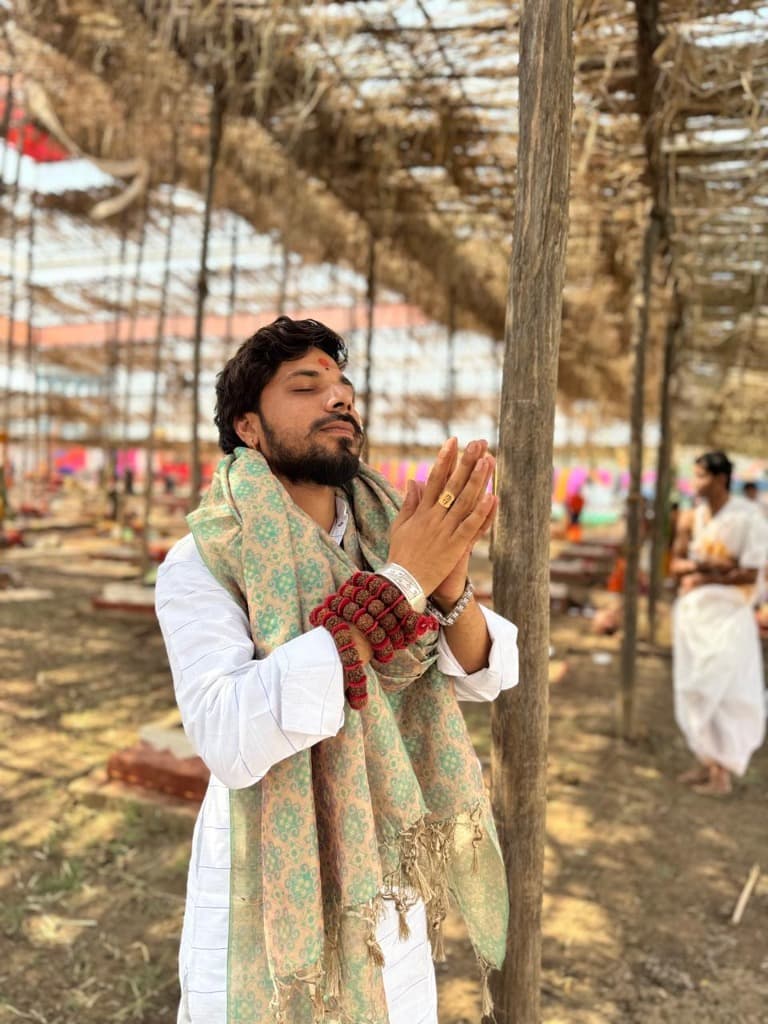
Acharya Tiwari Chetan Guru
Siddha Peethadheesh & Head Vedic Scholar
With over 15+ years of unbroken Vedic practice at Maa Baglamukhi Siddha Peeth, Nalkheda, Acharya Ji is a globally authoritative voice on Tantra Shastra, Stambhan Vidya, and Karmic Astrology. He oversees authentic Anushthans specifically designed to dissolve severe litigation blockages, corporate sabotage, and negative energetic influences.
Need Exact Hawan Cost & Shubh Muhurat?
Get direct guidance from Head Priest Acharya Tiwari Chetan Guru.