Sharadiya Navratri 2026 begins on Sunday, 11 October, and concludes on Monday, 19 October. For many families, these nine days are the most important period of the year for Devi worship. Devotees who cannot travel to Madhya Pradesh often ask the same practical questions: can a puja be arranged in my name, which ritual suits my purpose, and how early should I book?
This guide answers those questions for Maa Baglamukhi Siddha Peeth, Nalkheda, in the Agar Malwa district of Madhya Pradesh. It explains the difference between a Puja, a Havan and an Anushthan, how online participation works, what information the temple team needs, and how to plan your booking around the nine days. Everything is presented in the spirit of traditional belief and practice.
Navratri 2026 at a Glance
Detail | Information |
|---|---|
Festival | Sharadiya (Shardiya) Navratri 2026 |
Begins | Sunday, 11 October 2026 (Ghatasthapana) |
Concludes | Monday, 19 October 2026 (Navami) |
Vijayadashami | Tuesday, 20 October 2026 |
Place of worship | Maa Baglamukhi Siddha Peeth, Nalkheda, Agar Malwa, Madhya Pradesh |
Ways to participate | In person at the Peeth, or online through a live Sankalp |
The exact Ghatasthapana muhurat depends on your location. Please confirm it with your local Panchang before placing the Kalash at home. Tithi timings can also shift the day on which Ashtami and Navami are observed in your city.
Why Navratri Bookings Should Be Planned Early
Navratri is the busiest period of the ritual calendar. Temples and priests receive many requests within a short window, and each puja, havan or anushthan needs preparation: a confirmed date, a Sankalp in your name, samagri arrangements and a scheduled time slot.
There are three practical reasons to book early:
Slot availability. Acharya-led rituals have limited capacity, and popular days such as Ashtami fill first.
Sankalp accuracy. Early booking gives time to verify your name, gotra and intention without haste.
Start-date alignment. A nine-day Anushthan must begin on Ghatasthapana. Once that day passes, a full nine-day sequence generally cannot be started for that Navratri.
If you are considering a ritual for Navratri 2026, it is wise to enquire at least a week or two before 11 October.
Maa Baglamukhi Siddha Peeth, Nalkheda: The Setting
Nalkheda lies on the banks of the Lakhundar River, a tributary of the Narmada, in Agar Malwa district. The temple is regarded as one of the most revered seats of Maa Baglamukhi, the eighth of the ten Mahavidyas. According to tradition, the idol here is Swayambhu, believed to have manifested naturally. Maa Tara and Maa Matangi are also worshipped in the same sanctum, and devotees consider the presence of three Mahavidyas together to be uncommon.
Maa Baglamukhi is worshipped as Pitambara, the goddess of yellow attire, associated in tradition with Stambhan Shakti, the power to still and restrain negative forces. This is why yellow flowers, turmeric, gram and yellow cloth feature prominently in her worship.
Rituals at the Peeth are guided by Acharya Pandit Chetan Tiwari, known to devotees as Acharya Tiwari Chetan Guru, who has served as the Principal Acharya of the Siddha Peeth since 2010. The temple's ritual services are offered through Baglamukhi Hawan at Nalkheda, with both offline and online participation.
Puja, Havan and Anushthan: Understanding the Difference
Many devotees use these three terms interchangeably, but they differ in scope, duration and depth of commitment.
Baglamukhi Puja
A puja is the foundation of Devi worship. It usually includes Sankalp, invocation of the deity, offerings of yellow flowers, turmeric, kumkum and prasad, mantra recitation and aarti. It is the most accessible option and suits devotees who wish to offer worship during Navratri without committing to a multi-day discipline.
Baglamukhi Havan
A havan is a fire ritual in which sanctified offerings are placed into the consecrated fire with mantras. Havan is traditionally considered a more elaborate form of worship than a simple puja, because the fire is regarded as the carrier of the devotee's offerings to the deity. You can read the ritual details on the Maa Baglamukhi Hawan page.
Baglamukhi Anushthan
An Anushthan is a disciplined, multi-day observance built around mantra japa (repeated chanting), daily worship and a concluding Purna Ahuti. During Navratri, the nine-day format follows the festival itself: it begins on Ghatasthapana and concludes on Navami. The complete format is described in the Maha Hawan and Sampurna Hawan Anushthan page.
Quick Comparison
Feature | Puja | Havan | Anushthan |
|---|---|---|---|
Nature | Devotional worship with offerings | Fire ritual with mantra offerings | Multi-day disciplined observance |
Typical duration | Short session | A few hours | Several days up to the nine days of Navratri |
Sankalp | Yes | Yes | Yes, taken at the start |
Mantra japa | Included as guided | Included with the offerings | Central element |
Suits | First-time devotees, annual worship | Specific intentions and family occasions | Devotees seeking a deeper, sustained sadhana |
Choosing the Right Ritual for Navratri 2026
There is no single correct choice. The right ritual depends on your intention, your available time and the guidance of the Acharya.
Consider a Puja if you wish to mark Navratri with sincere worship and prasad, or if this is your first time arranging a ritual at Nalkheda.
Consider a Havan if you have a specific family purpose, such as a new beginning, a period of difficulty, or gratitude for a completed task, and you wish for a fire ritual to be performed in your name.
Consider an Anushthan if you want a sustained nine-day sadhana aligned with the full festival.
Devotees often ask which ritual is "most effective." Traditional texts and practitioners emphasise faith, discipline and correct procedure rather than a fixed ranking. The most suitable option is best decided after a conversation with the Acharya about your circumstances. Ritual costs depend on the ritual selected and are confirmed after consultation.
Book Your Navratri 2026 Puja at Nalkheda ➜
Speak with the temple team and reserve your Sankalp.
baglamukhihawan.com/temple-booking
(Button: Book Now ➜)
How Online Puja Booking Works, Step by Step
You do not have to be physically present at Nalkheda for your name to be included in the ritual. The process generally follows these steps.
Enquiry. Contact the temple team through the booking page, by phone or on WhatsApp. Share your purpose in a few words.
Consultation. The team, guided by the Acharya, recommends a Puja, Havan or Anushthan that suits your intention and dates. No fixed price is quoted without understanding your request.
Confirmation of details. You provide the information listed in the next section.
Sankalp. The Sankalp is taken in your name at the appointed time. For a full nine-day Anushthan, this takes place on Ghatasthapana, 11 October, through a live video call.
Ritual performance. The priests perform the ritual at the Peeth according to the chosen format.
Updates. Devotees may receive progress updates during the ritual period, including photographs where the format includes them.
Purna Ahuti and prasad. After the concluding offering, prasad can be dispatched to your address, including internationally.
The temple booking page shows the available services and current booking options.
Information You Should Keep Ready
A correct Sankalp depends on accurate details. Before you enquire, please prepare:
Full name of the person for whom the ritual is to be performed
Father's or husband's name, as your family tradition requires
Gotra, if known (if you do not know your gotra, the priest can suggest a traditional alternative)
Place of residence and time zone
The purpose or intention, stated in simple, sincere words
Preferred participation mode: live video call, recorded update or in person
A complete postal address for prasad, if you wish to receive it
Keep the intention truthful and free of ill will toward others. Traditional teaching holds that worship offered with a clean purpose is the foundation of any sadhana.
Day-Wise Planning Across the Nine Days
Each day of Sharadiya Navratri is dedicated to one form of Maa Durga. The sequence below follows the traditional calendar for 2026. Please confirm tithi timings with your local Panchang.
Day | Date | Form of Devi |
|---|---|---|
1 | 11 October | Maa Shailputri (Ghatasthapana) |
2 | 12 October | Maa Brahmacharini |
3 | 13 October | Maa Chandraghanta |
4 | 14 October | Maa Kushmanda |
5 | 15 October | Maa Skandamata |
6 | 16 October | Maa Katyayani |
7 | 17 October | Maa Kalaratri |
8 | 18 October | Maa Mahagauri (Ashtami) |
9 | 19 October | Maa Siddhidatri (Navami) |
For Baglamukhi devotees, Ashtami holds particular importance, since Maa Baglamukhi is the eighth Mahavidya. Many devotees therefore choose a one-day Ashtami puja or havan even when they cannot commit to nine days. Those who wish to understand how this same tradition unfolds in the hidden Navratri may read the Gupt Navratri 2026 guide and the Gupt Navratri Puja page.
A suggested planning approach:
Ghatasthapana (11 October): ideal for taking the Sankalp for a nine-day Anushthan.
Mid-Navratri (13 to 16 October): suitable for a Puja or a Havan if you prefer a single sitting.
Ashtami (18 October): the preferred day for a special Baglamukhi Puja or Havan.
Navami (19 October): the day of Purna Ahuti for the Anushthan and of Kanya Pujan in many households.
Booking from Outside India
Devotees in the United States, the United Kingdom, Canada, Australia, the Gulf countries and elsewhere regularly take part through online Sankalp. Three points are worth planning for:
Time zones. The live Sankalp is conducted in Indian Standard Time. The team can help convert the schedule to your local time.
Prasad dispatch. Prasad is dispatched after the ritual is completed. Delivery time depends on customs and courier services, so please allow extra days.
Festival dates abroad. Local Panchang timings may differ slightly from Indian dates. Ask the Acharya which date and muhurat should guide your home observance.
Arrange an Online Puja from Anywhere in the World ➜
Share your name, gotra and intention with the temple team.
baglamukhihawan.com/temple-booking
(Button: Start Your Booking ➜)
Preparing Your Home for Navratri
Your own devotion at home complements the ritual performed at Nalkheda. Simple preparations include:
Cleaning the puja space before Ghatasthapana and keeping it tidy throughout the nine days
Installing the Kalash according to your family tradition, and keeping a lamp lit safely
Offering yellow flowers, turmeric, gram and simple bhog to Maa Baglamukhi, if your household worships her
Reciting the Durga Saptashati or your regular Devi mantras as your tradition allows
Observing the vrat you are comfortable with, in a manner suited to your health and routine
Maintaining calm speech and conduct, as many traditions advise during Navratri
Family customs differ across regions, and the temple team can guide you if you are unsure about any step.
Transparency and Traditional Belief
The rituals described here are offered in the framework of traditional Hindu belief. Devotees participate out of faith, and the outcomes people hope for are personal matters of belief and grace. No priest or platform can promise a specific worldly result, and you should be cautious of anyone who does. A reliable service explains the ritual, confirms the Sankalp details, and communicates clearly about schedule and costs.
For legal, medical or financial concerns, please continue to seek qualified professional advice. Spiritual practice is best treated as a support alongside sensible action, not a substitute for it.
A Practical Booking Timeline
When | What to do |
|---|---|
Now to 1 October | Decide your intention, choose the ritual type and contact the temple team |
2 to 8 October | Confirm Sankalp details, participation mode and prasad address |
9 to 10 October | Check the local Ghatasthapana muhurat and prepare the puja space |
11 October | Ghatasthapana; live Sankalp for an Anushthan |
18 October | Ashtami puja or havan |
19 October | Navami and Purna Ahuti |
Devotees who have arranged rituals for earlier festivals, including Baglamukhi Jayanti 2026 and the ritual described in the Jayanti Hawan guide, will find the process familiar.
Frequently Asked Questions
1. When does Sharadiya Navratri 2026 begin and end?
It begins on Sunday, 11 October 2026, and ends on Monday, 19 October 2026. Vijayadashami follows on 20 October.
2. What is the Ghatasthapana date for 2026?
Ghatasthapana is on 11 October. The exact muhurat varies by location, so please check your local Panchang.
3. Can I book a Navratri puja at Nalkheda online?
Yes. Online participation is available, depending on the ritual selected. Your Sankalp is taken in your name, and you may join by live video call.
4. What is the difference between a Puja, a Havan and an Anushthan?
A puja is devotional worship, a havan is a fire ritual with mantra offerings, and an Anushthan is a multi-day disciplined observance built around mantra japa and a concluding Purna Ahuti.
5. Which ritual should I choose?
The choice depends on your intention and available time. The Acharya can recommend a suitable option after a short consultation.
6. Do I need to travel to Nalkheda?
No. Travel is optional. Devotees may participate online or visit the Peeth in person, as they prefer.
7. How early should I book for Navratri 2026?
Ideally one to two weeks before 11 October. A nine-day Anushthan must begin on Ghatasthapana, so late bookings may not be possible for that format.
8. What details are required for the Sankalp?
Your full name, family name as per tradition, gotra if known, place of residence, a clear intention and your preferred mode of participation.
9. What if I do not know my gotra?
Please inform the temple team. Tradition provides an alternative that the priest can suggest for the Sankalp.
10. Can one puja be performed for family members?
Yes. A family Sankalp can include names of family members. Please share these details at the time of booking.
11. Is Ashtami special for Maa Baglamukhi?
Devotees regard Ashtami as especially significant because Maa Baglamukhi is the eighth Mahavidya. Many choose a special Puja or Havan on that day.
12. Will I receive prasad if I book online?
Prasad can be dispatched to your address after the ritual, including to international destinations. Delivery time depends on courier services.
13. Can NRIs take part in Navratri rituals at Nalkheda?
Yes. NRIs regularly participate through online Sankalp. Time-zone coordination is handled through the temple team.
14. How much does a Navratri puja cost?
Costs depend on the ritual, duration and format, and are confirmed after consultation. No fixed price is quoted without understanding your request.
15. Are results guaranteed?
No. The rituals are offered within traditional belief and devotion. No specific worldly outcome can be promised.
16. Should I observe a fast during Navratri?
Fasting is a personal and family choice. Please follow the form of vrat that suits your health and tradition.
17. Can I perform a Baglamukhi puja at home during Navratri?
Yes, according to your family tradition. Many devotees offer yellow flowers, turmeric and simple bhog. For a formal ritual, guidance from a priest is advisable.
18. How can I contact the temple team?
You may use the temple booking page or call +91 90743 42490.
Reserve Your Navratri 2026 Sankalp Today ➜
Speak directly with Acharya Ji's team before slots close.
baglamukhihawan.com/temple-booking
(Button: Book Puja, Havan or Anushthan ➜)
Closing Note
Navratri 2026 offers nine days of focused devotion. Whether you choose a simple Puja, a Havan or a full Anushthan, the essentials remain the same: a sincere intention, accurate Sankalp details, correct procedure and steady faith. Planning early gives you time to choose calmly and to prepare your home and mind for the festival.
If you are ready to begin, explore Baglamukhi Puja and Havan booking at Nalkheda and speak with the temple team about the option that suits you.
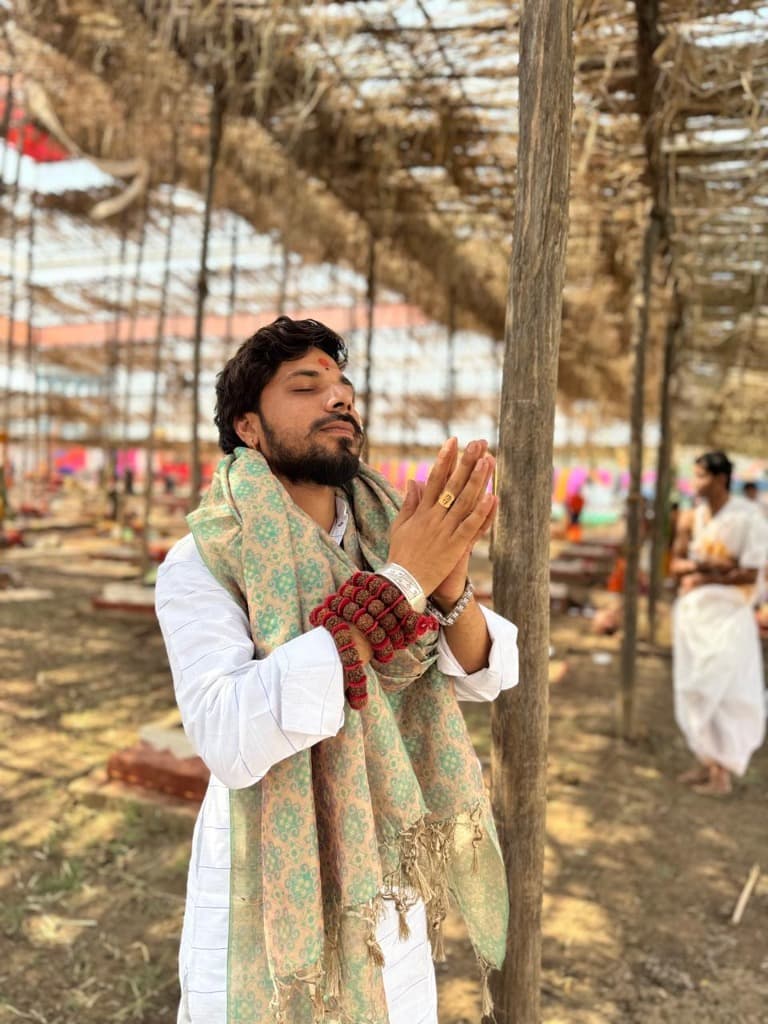
Acharya Tiwari Chetan Guru
Siddha Peethadheesh & Head Vedic Scholar
With over 15+ years of unbroken Vedic practice at Maa Baglamukhi Siddha Peeth, Nalkheda, Acharya Ji is a globally authoritative voice on Tantra Shastra, Stambhan Vidya, and Karmic Astrology. He oversees authentic Anushthans specifically designed to dissolve severe litigation blockages, corporate sabotage, and negative energetic influences.