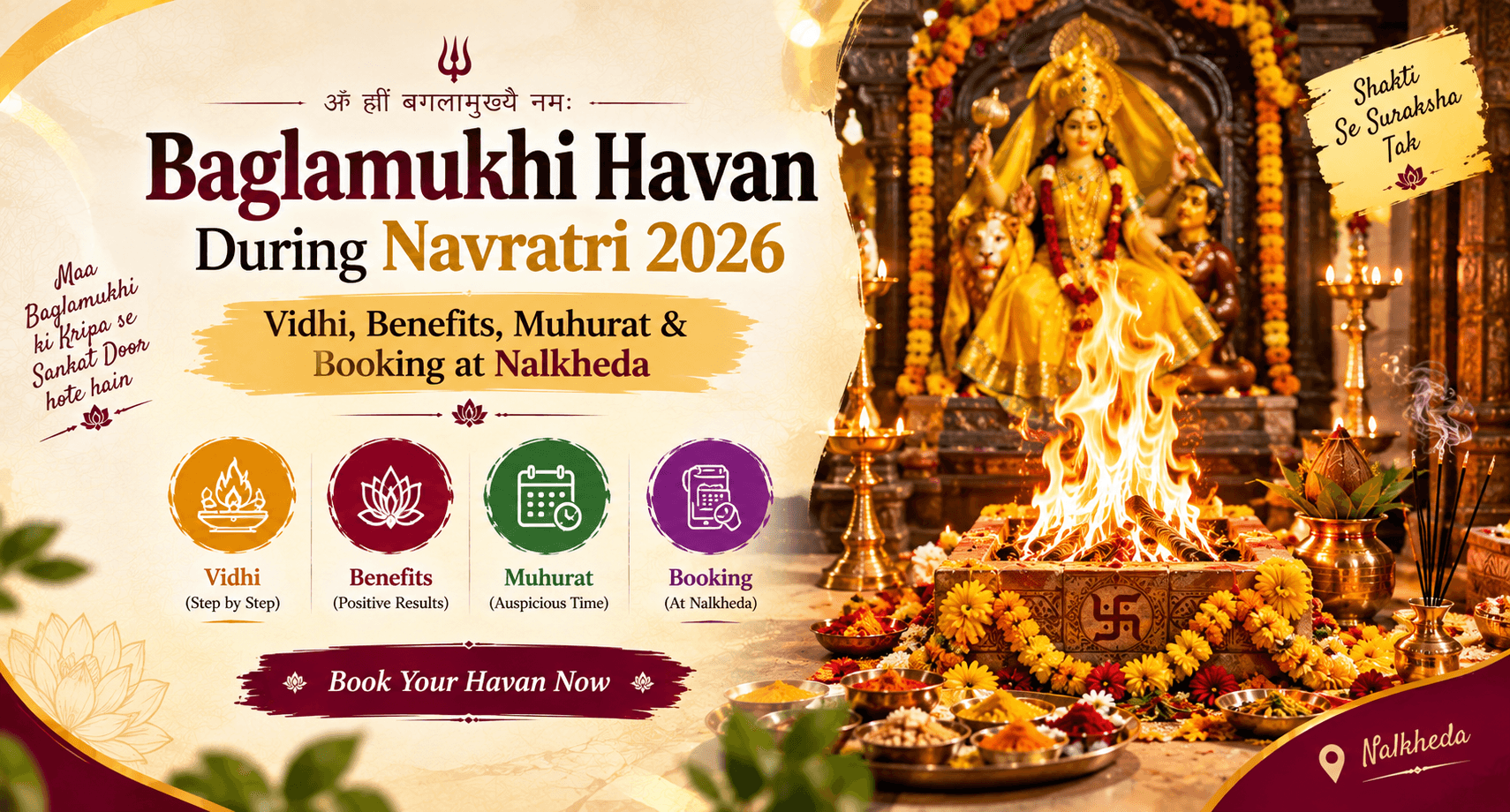
Yes, Baglamukhi Havan can be performed during Navratri, and many devotees who already hold a connection to Maa Baglamukhi choose this nine-day period for exactly that reason. Navratri is a dedicated window for Devi worship, and Maa Baglamukhi — the eighth of the Dasha Mahavidya — is traditionally included in that wider Shakta practice alongside the Navadurga. Devotees with a pending court matter, prolonged opposition, or a general wish for protection and clarity often choose this period, and Nalkheda, home to the Maa Baglamukhi Siddha Peeth, is where many such rituals are arranged. Sharad Navratri 2026 runs from 11 to 19 October, and this guide covers when during that window a Baglamukhi Havan is traditionally performed, the Vidhi, the Samagri, and how the ritual can actually be booked.
Quick Answer: Is Baglamukhi Havan Performed During Navratri?
Yes. Devotees may perform a Baglamukhi Havan during Navratri according to their family tradition and the guidance of the officiating Acharya. It is not tied to one fixed day — some devotees choose Ashtami, others Navami, and some perform it across the full nine-day Anushthan depending on their Sankalp. The exact Muhurat depends on the Tithi active in your city and should be confirmed with a local Panchang or, for a temple-arranged ritual, with the Acharya at the time of booking. At Nalkheda, the ritual is arranged through the standard booking or consultation process described further below, and devotees who cannot travel may enquire about a remote arrangement.
Why Perform Baglamukhi Havan During Navratri?
Navratri is traditionally understood as a period when Devi worship, in all its forms, is given particular attention. Maa Baglamukhi, worshipped within the Dasha Mahavidya tradition, is regarded in Shakta practice as the stambhana shakti — the power traditionally associated with stilling opposition, hostility and obstruction. Because Navratri is already a period devotees set aside for structured Devi Sankalp, some choose to extend that same period to a dedicated Baglamukhi Havan or Anushthan rather than treating the two practices as separate.
A Havan itself is a fire ritual in which mantra, ghee and samagri are offered into Agni as an act of devotion. In devotional practice, Agni is regarded as the medium that carries the offering, and the mantra recited during each ahuti is considered central to the ritual's meaning. Devotees traditionally believe that sincere, correctly performed worship — not the ritual alone — is what the tradition asks for.
It's worth being direct about one thing: a Havan is a devotional and traditional practice, not a guaranteed mechanism for a specific outcome. No temple or Acharya can promise that a Havan will end a court case, remove an enemy, or produce a specific financial result. What tradition holds is that sincere worship, performed correctly, is considered worthwhile in itself — and Navratri is simply a period many devotees consider especially suited to it.
When Is Baglamukhi Havan Performed During Navratri 2026?
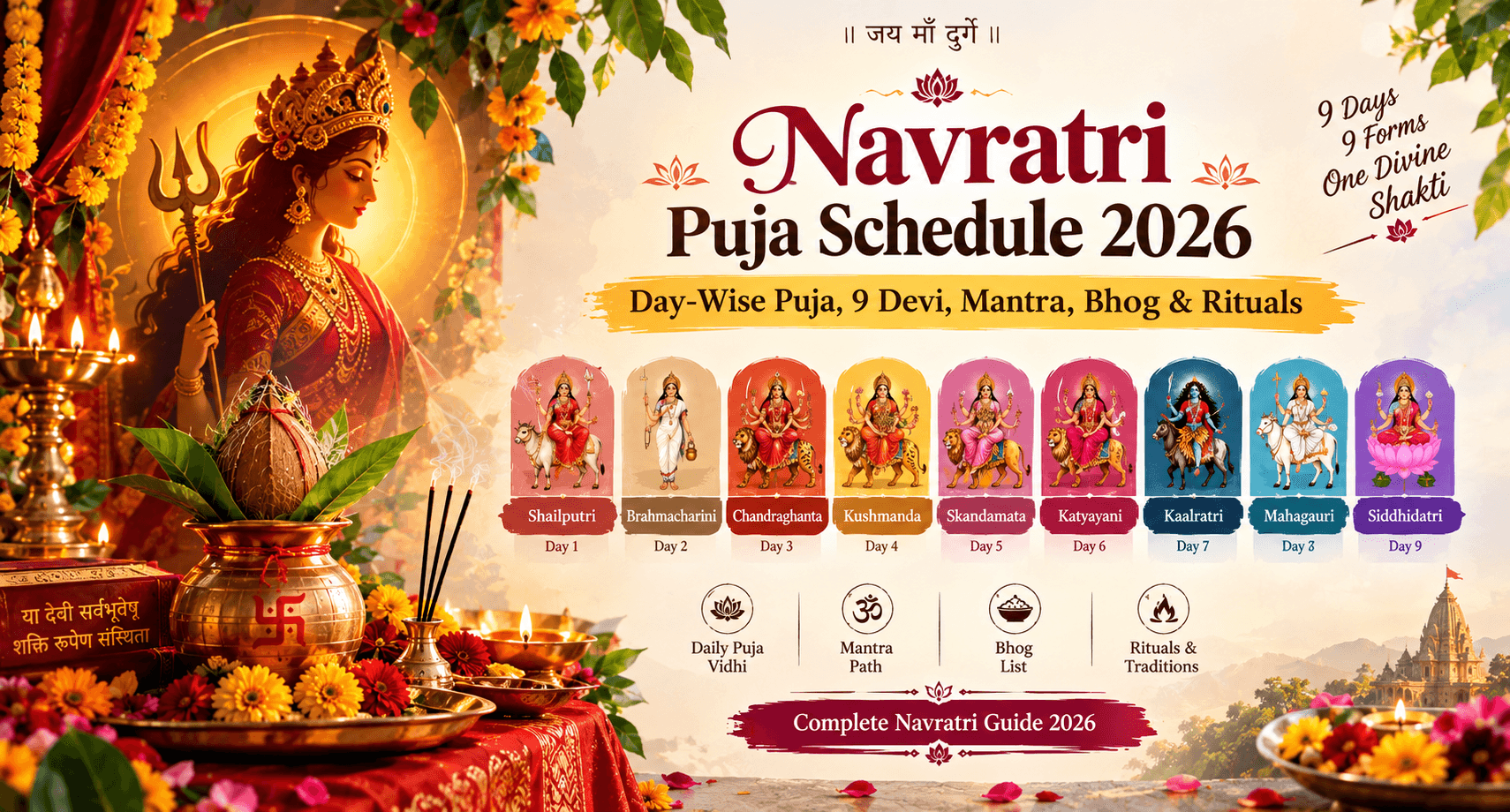
Sharad Navratri 2026 begins on 11 October and the nine days of Devi worship run through 19 October, followed by Vijayadashami on 20 October. Within this window, a Baglamukhi Havan is not tied to a single mandatory day — it can be performed on any day a devotee's Sankalp specifies, though certain days carry stronger traditional association.
↔ Swipe horizontally to view the complete table
Occasion | Date 2026 | What It Means | Havan/Puja Relevance |
|---|---|---|---|
Ghatasthapana | 11 October | Kalash installed, Navratri begins | Sankalp for a nine-day Anushthan is typically taken today |
Saptami | 17 October | Seventh day, Maa Kalaratri | Some devotees perform a protective Havan on this night |
Maha Ashtami | 18 October (most Panchangs) | Eighth day, Maa Mahagauri | Some households and temples perform Havan today, often with Kanya Pujan |
Maha Navami | 19 October (most Panchangs) | Ninth day, Maa Siddhidatri | Most common day for a concluding Havan and Purnahuti |
Vijayadashami | 20 October | Conclusion of Navratri | Not typically a Havan day; Anushthans usually conclude by Navami |
A genuine 2026 complication is worth flagging clearly: because the Ashtami Tithi runs from the morning of 18 October into the late morning of 19 October before Navami begins, a smaller number of Panchangs that apply the sunrise rule strictly at that transition point observe both Ashtami and Navami together on 19 October. This is a documented feature of lunar Tithi reckoning, not an inconsistency, but it does mean the civil date and the Tithi date can genuinely differ depending on which Panchang your family or temple follows. Always check the relevant local Panchang for your city, or confirm with the Acharya conducting the ritual, rather than relying on a single generic date.
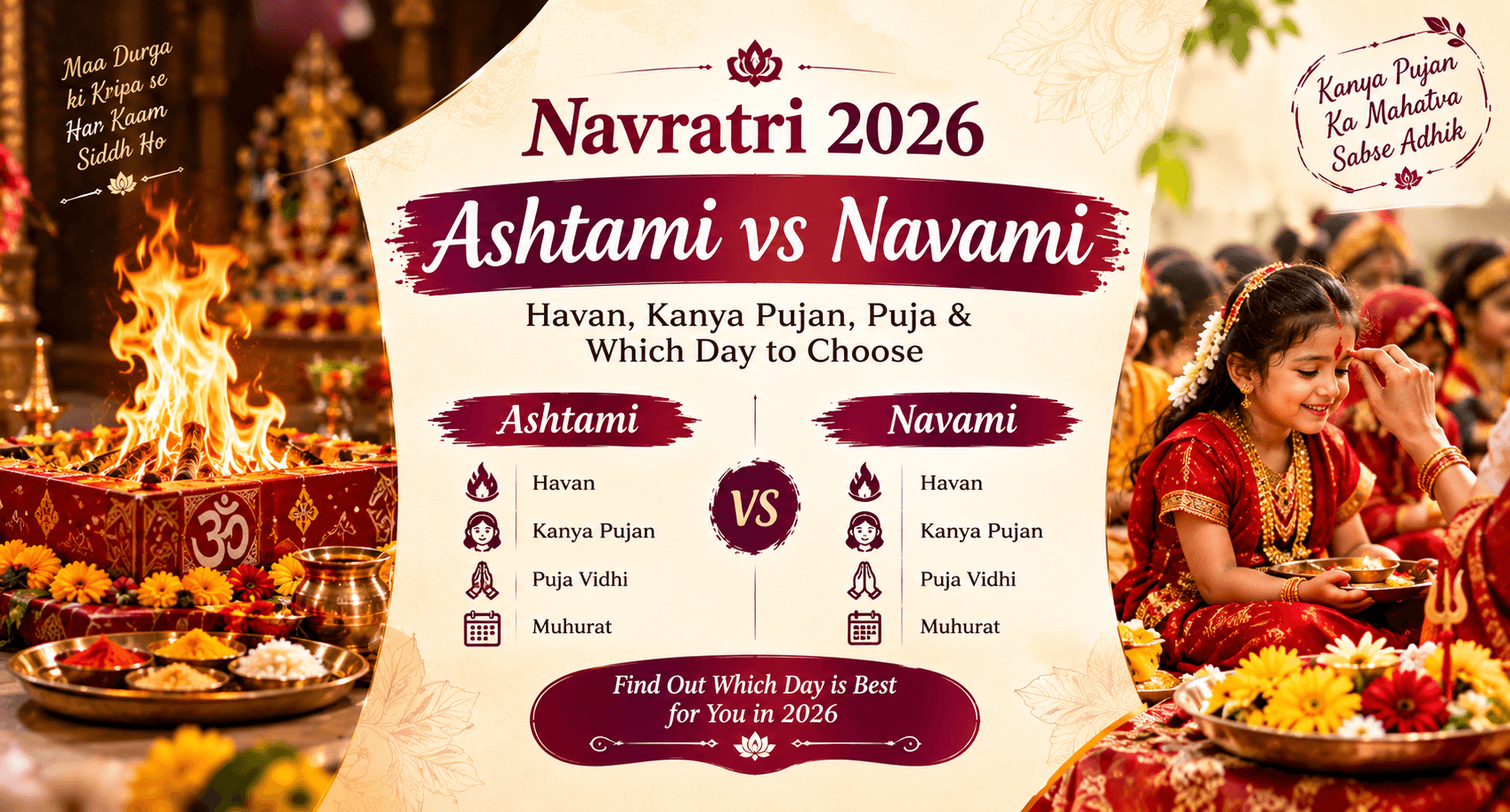
Baglamukhi Havan on Ashtami vs Navami
Because this website already covers Ashtami and Navami separately in detail, this section stays focused on how the choice specifically applies to a Baglamukhi Havan, rather than repeating the full comparison.
↔ Swipe horizontally to view the complete table
Factor | Ashtami | Navami |
|---|---|---|
Tithi | 18 October in most Panchangs | 19 October in most Panchangs |
Devi association | Maa Mahagauri | Maa Siddhidatri |
Havan tradition | Performed by some households and temples, often alongside Kanya Pujan | More commonly the day for a concluding Havan and Purnahuti |
Kanya Pujan relevance | Common on this day in Ashtami-tradition households | Equally common where the household's fast concludes this day |
When devotees may choose it | When family tradition ties Devi worship to Ashtami, or ahead of a Navami conclusion | When concluding a nine-day Anushthan, or where family tradition favours this day |
Neither day is universally "correct" for a Baglamukhi Havan. The appropriate choice depends on your Sankalp, the Tithi active in your location, your family's tradition, and the guidance of the Acharya conducting the ritual. For the detailed date-and-Tithi explanation behind this table, see Shardiya Navratri 2026 Ashtami & Navami: Date, Puja Vidhi & Kanya Pujan, and for the general Havan sequence that applies across these days, see Navratri Havan 2026: Vidhi, Samagri, Mantra & Rules. If you are still weighing the two days for your own situation, the fuller decision framework is at Navratri 2026 Ashtami vs Navami: Havan, Kanya Pujan & Which Day to Choose.
Baglamukhi Havan Muhurat During Navratri 2026
It helps to keep three things separate: the Navratri date (the civil calendar day), the Tithi (the lunar day, which can span two civil dates), and the Havan Muhurat (the specific auspicious window within a given Tithi, calculated from local sunrise). A date tells you which day of Navratri it is; it does not by itself tell you the correct clock time to begin a Havan.
Muhurat calculations are sunrise-based and genuinely differ by city — a Muhurat published for Delhi, Mumbai or Ujjain will not be identical to the correct window for Nalkheda or Agar Malwa. This website does not publish a single, fixed Nalkheda Havan Muhurat because none is officially standardised across every Havan and every date — the appropriate window depends on the specific day, the specific ritual, and the Acharya's own calculation for that Sankalp. Havan timing should be confirmed at the time of booking, because ritual schedules and Panchang timings can vary.
Baglamukhi Havan Vidhi During Navratri
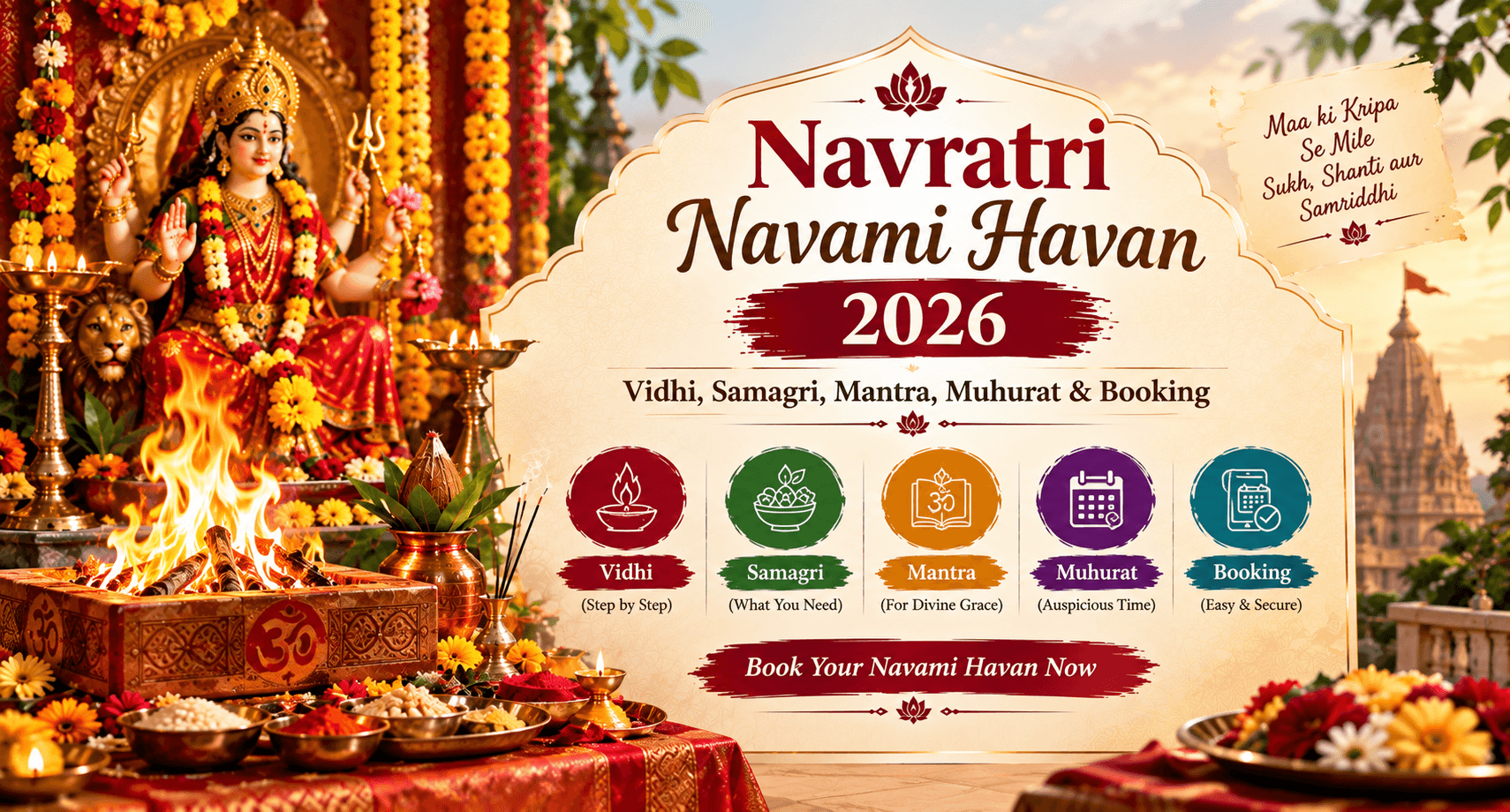
The general devotional sequence followed for a Havan during Navratri typically includes the following steps. This is the broad devotional structure; the specific mantra and offering sequence used for a Baglamukhi Havan is a specialised ritual tradition that should be performed under the guidance of a qualified Acharya rather than attempted independently from a generic online description.
Consultation and Sankalp preparation — the devotee's name, gotra and the purpose of the ritual are recorded ahead of the Havan.
Purification — the devotee and the ritual space are prepared according to standard puja practice.
Preliminary worship — Ganesh puja or other preliminary invocations, where the officiating tradition includes them.
Kalash and Devi invocation — performed according to the specific ritual tradition being followed.
Maa Baglamukhi worship — invocation with yellow flowers, turmeric and the day's naivedya.
Mantra jaap — recitation appropriate to the ritual, guided by the Acharya.
Havan Kund preparation — the fire pit is set up and consecrated.
Agni invocation — the sacred fire is invoked as the medium for the offering.
Ahuti — offerings of ghee and samagri are made into the fire with accompanying mantra.
Baglamukhi mantra offerings — the specific Baglamukhi-related ahutis, performed under the officiating priest's guidance.
Purnahuti — the final, complete offering that concludes the Havan.
Prasad and blessings — the concluding distribution of Prasad to those present.
Devotees interested in the underlying mantra and Havan structure in more depth can refer to the site's Baglamukhi Havan Vidhi guide, and to the Baglamukhi Mantra reference for the mantras used in formal worship. Beej-based Mahavidya mantras of this kind are traditionally advised to be practised under proper guidance rather than independently.
Baglamukhi Havan Samagri for Navratri
The samagri required for a Havan varies by the specific ritual and the officiating Acharya's Vidhi, but commonly used items include:
Havan Kund (fire pit) and dry wood/samidha
Havan Samagri (the prepared herb and wood mixture offered into the fire)
Pure ghee
Yellow flowers, since yellow is closely associated with Baglamukhi worship
Turmeric and kumkum
Akshat (unbroken rice)
A Kalash with water
Fruits and naivedya for the concluding offering
Items for Prasad distribution
This is a general list rather than an exhaustive one — the precise samagri for a specific Havan or Anushthan depends on the ritual being performed and the Acharya's own Vidhi. A fuller, itemised reference is available at Baglamukhi Havan Samagri on this site.
Baglamukhi Havan Benefits During Navratri
The following are traditional and devotional associations, not guaranteed outcomes. In devotional practice, a Baglamukhi Havan during Navratri is traditionally associated with:
A prayer for protection during a period of prolonged difficulty or opposition
Seeking clarity and steadiness of mind while a difficult matter is ongoing
Spiritual discipline and structured Sankalp-based worship during a dedicated nine-day window
Devotional focus and a sense of peace and confidence for the devotee
Traditionally seeking strength during disputes, litigation or professional obstruction
Where a devotee is dealing with a court case, business obstacle or family dispute, the Havan is traditionally approached as a devotional practice performed alongside — never instead of — appropriate legal, medical or professional guidance. No claim is made here that a Havan produces a specific legal, financial or medical result.
Consult the Acharya about a Navratri Sankalp → baglamukhihawan.com/book-consultation
Why Nalkheda Is Associated With Maa Baglamukhi
Nalkheda, in Agar Malwa district, Madhya Pradesh, is home to the Maa Baglamukhi Temple, one of the Siddha Peeths traditionally associated with Maa Baglamukhi worship, alongside other Baglamukhi shrines elsewhere in India. Devotees travel to Nalkheda specifically to perform Puja, Havan and Anushthan connected to Maa Baglamukhi, and the temple is a recognised destination within the broader Dasha Mahavidya and Shakta pilgrimage tradition.
Rituals at Nalkheda are conducted under the guidance of the temple's Acharya and Purohits, following traditional Vedic procedure. If you are planning a visit around Navratri, the site's best time to visit Nalkheda guide and Nalkheda temple timings page cover practical travel details.
Can You Book Baglamukhi Havan at Nalkheda During Navratri?
Yes. Devotees can enquire about and arrange a Baglamukhi Havan for Navratri through this website's booking and consultation process. In practice this means: browsing the available Puja and Havan options, choosing the ritual that fits your intention (a single Havan, a Maha Havan, or a structured Anushthan), and submitting your Sankalp details — typically your name, gotra where applicable, and the purpose of the worship — so the Acharya can confirm the appropriate day and Muhurat for your Sankalp.
Enquire about a Navratri Havan booking → baglamukhihawan.com/book-puja
If you are unsure which ritual is appropriate for your situation, a consultation with the Acharya before booking is the recommended first step, so the day, the specific Havan, and the Sankalp can be discussed directly rather than guessed at from a general description online.
Online Baglamukhi Havan During Navratri
For devotees who cannot travel to Nalkheda, the platform supports online and remote arrangements for the ritual, alongside the option of visiting in person. In practice, this involves submitting your Sankalp details remotely — name, gotra and the purpose of worship — after which the ritual is performed at the temple by the officiating Purohit, with the devotee's participation arranged as agreed at the time of booking. Devotees enquiring remotely should confirm directly, as part of the booking or consultation process, exactly what form of participation and Prasad arrangement applies to their specific ritual, since this can vary by the Havan or Anushthan chosen.
Devotees based outside India can also refer to the site's dedicated pages for NRI puja arrangements, including region-specific guidance for the USA, the UK, Canada, Australia and Dubai.
Who May Consider Baglamukhi Havan During Navratri?
Devotees who already hold a personal or family connection to Maa Baglamukhi commonly consider this ritual during Navratri — particularly those traditionally seeking spiritual protection, clarity during a difficult period, strength while facing prolonged opposition or a legal dispute, or simply a structured devotional Sankalp during the nine-day window. This is not presented as a requirement of Navratri observance, and it is not suggested that everyone facing a difficulty should purchase a ritual. It remains a matter of personal faith and family tradition whether to undertake it at all.
Baglamukhi Havan vs Baglamukhi Puja vs Anushthan
↔ Swipe horizontally to view the complete table
Ritual | General Purpose | Duration | Suitable For |
|---|---|---|---|
Maa Baglamukhi Puja | Standard Devi worship with invocation, offerings and aarti | Typically a single sitting | Devotees seeking a straightforward, one-time worship |
Maa Baglamukhi Havan | Fire ritual with mantra-based ahuti, offered for a specific Sankalp | A single day's ritual | Devotees seeking a more structured, fire-based offering |
Maa Baglamukhi Anushthan | A structured, multi-day sequence of worship building toward a concluding Havan | Typically spans several days, often the nine days of Navratri | Devotees pursuing a sustained Sankalp over the full Navratri period |
If you are unsure which of these fits your situation, consult the Acharya before choosing, rather than booking the largest or smallest option by guesswork. Details on the specific services are available at Maa Baglamukhi Puja, Maa Baglamukhi Hawan and Maa Baglamukhi Anushthan.
What Should You Do If You Cannot Decide Between Ashtami and Navami?
Check the local Panchang for your own city rather than a generic national listing.
Identify the actual Tithi active on the day you intend to perform the ritual.
Consider what your Sankalp requires — a single Havan, a Kanya Pujan-linked ritual, or a concluding Anushthan offering each have different customary timings.
Follow your family or community tradition where one exists.
Ask the Acharya conducting your ritual to confirm the correct day and Muhurat before the booking is finalised.
Frequently Asked Questions
1. Can Baglamukhi Havan be done during Navratri?
Yes. Devotees may perform a Baglamukhi Havan during Navratri according to their family tradition and Sankalp, with the specific day and Muhurat confirmed through a local Panchang or the officiating Acharya.
2. Which day is best for Baglamukhi Havan during Navratri?
No single day is universally best. Some devotees choose Ashtami, others Navami, and some structure a full nine-day Anushthan. The right choice depends on Sankalp, family tradition and local Tithi timing.
3. Can Baglamukhi Havan be done on Ashtami?
Yes. Some households and temples perform a Baglamukhi Havan on Ashtami, often alongside the day's Kanya Pujan, depending on family and ritual tradition.
4. Can Baglamukhi Havan be done on Navami?
Yes. Navami is the more commonly followed day for a concluding Havan and Purnahuti, including for a Baglamukhi Havan tied to a nine-day Anushthan.
5. What is Baglamukhi Havan Muhurat in 2026?
There is no single fixed Muhurat for every city. Timing is calculated from local sunrise and the active Tithi, so it should be confirmed with a local Panchang or the Acharya conducting the ritual at the time of booking.
6. What Samagri is required for Baglamukhi Havan?
Common items include a Havan Kund, prepared Havan Samagri, ghee, yellow flowers, turmeric, kumkum, akshat and naivedya. The exact list can vary by the specific ritual and the Acharya's Vidhi — see the full Baglamukhi Havan Samagri guide.
7. Can Baglamukhi Havan be booked at Nalkheda?
Yes, through baglamukhihawan.com/book-puja, or by booking a consultation first if you are unsure which ritual suits your situation.
8. Can I book Baglamukhi Havan online?
Yes, enquiries and bookings can be made online, with the actual ritual performed at the Nalkheda temple by the officiating Purohit.
9. Can I perform the Havan if I cannot visit Nalkheda?
Devotees who cannot travel can enquire about a remote arrangement, submitting their Sankalp details for the ritual to be performed at the temple on their behalf. Confirm the exact participation and Prasad process at the time of booking.
10. How long does a Baglamukhi Havan take?
A single Havan is typically completed within one sitting on the chosen day, while a full Anushthan spans multiple days building toward a concluding Havan and Purnahuti. Exact duration depends on the specific ritual booked.
11. What is the difference between Baglamukhi Puja and Havan?
A Puja is standard Devi worship with invocation and offerings; a Havan adds a fire ritual with mantra-based ahuti for a specific Sankalp. An Anushthan is a longer, multi-day sequence building toward a concluding Havan.
12. Is Baglamukhi Havan suitable during Navratri?
Many devotees consider Navratri a suitable period for it, since it is already a dedicated window for Devi Sankalp. It is a matter of personal and family tradition rather than a fixed requirement.
13. What should I do if Ashtami and Navami fall on the same date? Check your local Panchang, confirm the active Tithi during your intended ritual window, and if booking a priest-guided Havan, ask the Acharya to confirm the correct day before finalising.
14. How early should Navratri Havan be booked?
Navratri is a high-demand period at Nalkheda, so enquiring a few weeks ahead of 11 October is generally advisable to secure your preferred date and Sankalp discussion with the Acharya.
15. Can I consult an Acharya before booking?
Yes. A consultation is available for devotees who want to discuss which ritual — Puja, Havan or Anushthan — and which day suits their specific Sankalp before committing to a booking.
Navratri is a dedicated period for Devi worship, and a Baglamukhi Havan performed during it is one traditional way devotees extend that Sankalp to Maa Baglamukhi specifically. Whether Ashtami, Navami or the full nine days suit your situation depends on your family's tradition, your local Panchang, and the specific ritual you intend to perform — none of it is fixed by a single universal rule. Nalkheda remains the primary destination for this worship, with the Acharya confirming the correct Tithi and Muhurat for each Sankalp individually. If you are ready to take this forward, or simply want to understand which ritual fits your situation, the next step is a straightforward one.
Book your Navratri Havan or speak with the Acharya first → baglamukhihawan.com/book-puja · baglamukhihawan.com/book-consultation
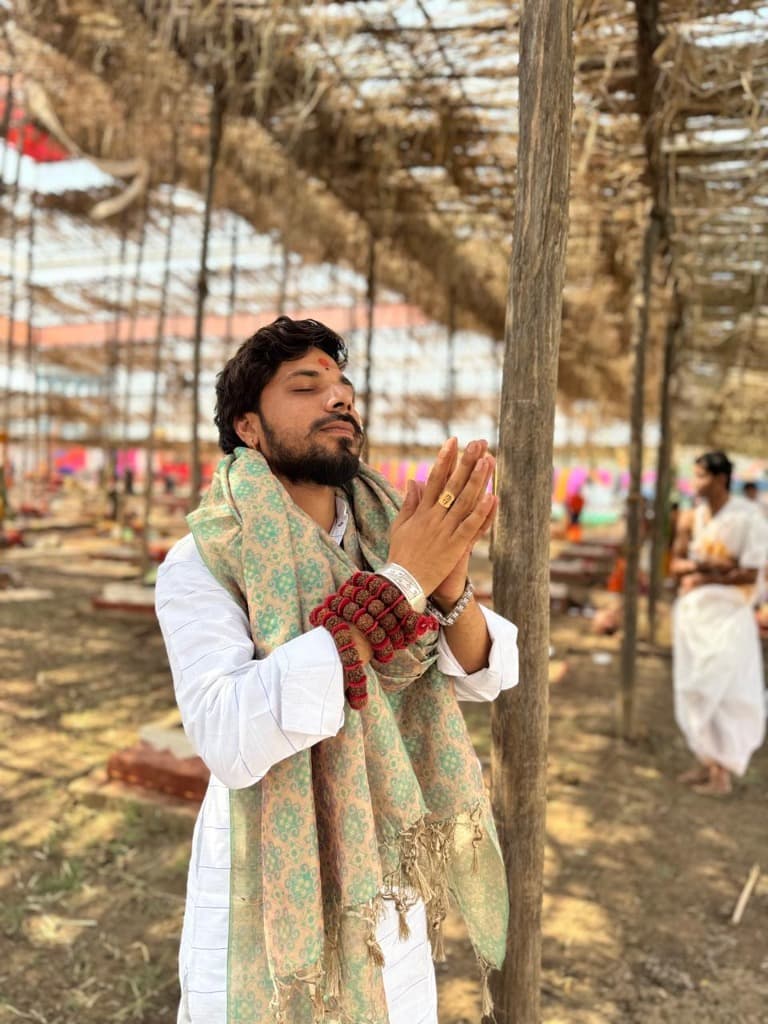
Acharya Tiwari Chetan Guru
Siddha Peethadheesh & Head Vedic Scholar
With over 15+ years of unbroken Vedic practice at Maa Baglamukhi Siddha Peeth, Nalkheda, Acharya Ji is a globally authoritative voice on Tantra Shastra, Stambhan Vidya, and Karmic Astrology. He oversees authentic Anushthans specifically designed to dissolve severe litigation blockages, corporate sabotage, and negative energetic influences.