Quick Answer:
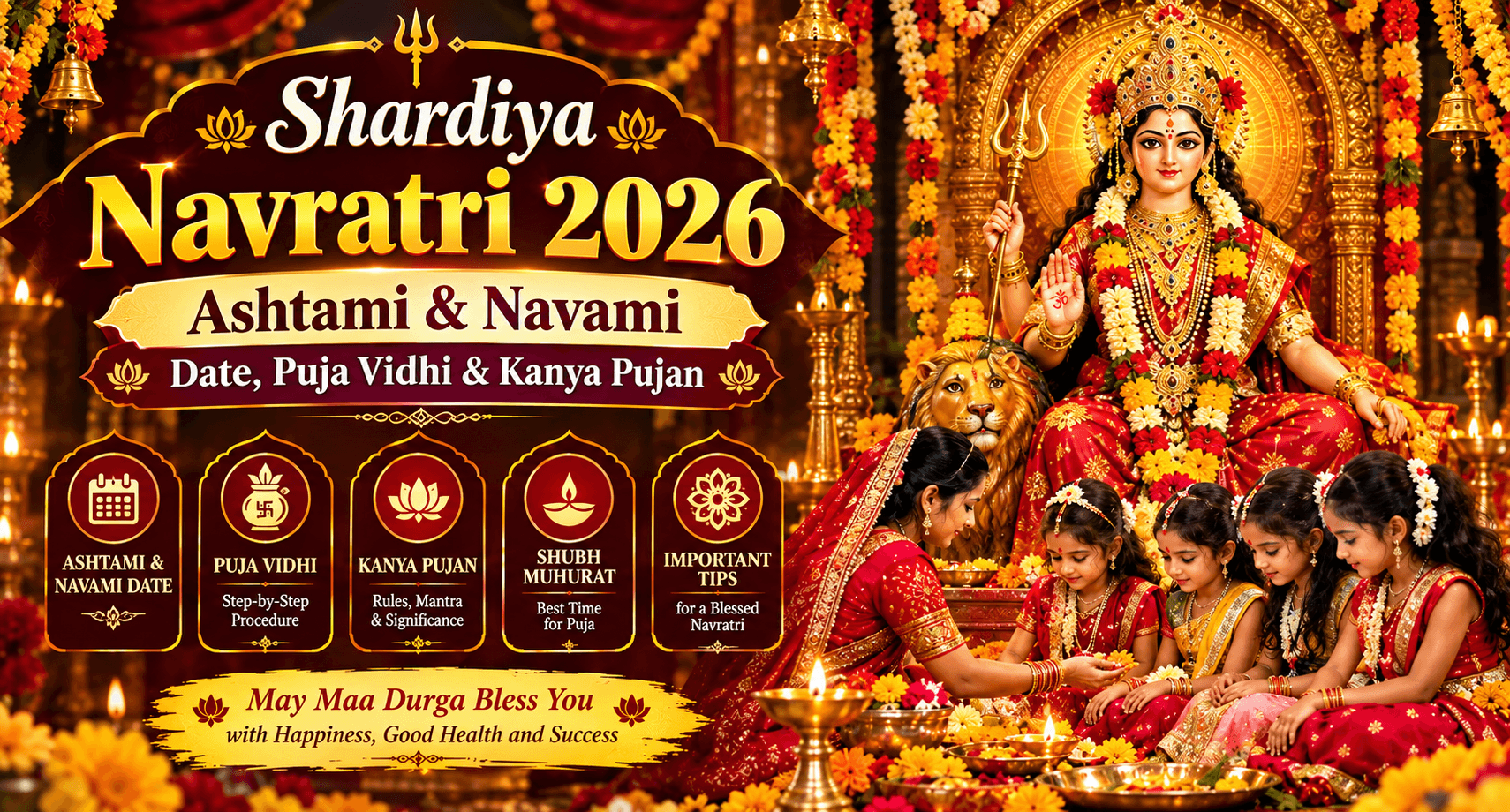
In Shardiya Navratri 2026, Maha Ashtami falls on Sunday, 18 October, and Maha Navami falls on Monday, 19 October, with Vijayadashami on Tuesday, 20 October. Most households perform Kanya Pujan on either of these two days, based on family tradition. Because the Ashtami tithi runs on into the late morning of 19 October, a few Panchangs that follow a strict sunrise-tithi rule observe Ashtami and Navami together on the 19th - so if your local priest or community gives you a slightly different date, this is why, and it is not an error.
Shardiya Navratri, the most widely observed of the four Navratris, moves toward its two most significant days as the nine nights draw to a close. Maha Ashtami and Maha Navami are when the fasting reaches its peak, Sandhi Puja is performed in many traditions, and most families welcome young girls home for Kanya Pujan. Because these two tithis fall so close together on the lunar calendar, questions about the exact date come up every single year, and 2026 is no exception. This guide lays out the verified 2026 dates, explains simply why Ashtami and Navami sit so close together this year, and walks through the complete Puja Vidhi for both days, along with a full, practical guide to Kanya Pujan - its timing, Vidhi, Samagri, bhog, and the traditions around age and numbers of girls.
Puja Vidhi, fasting rules, and exact Muhurat can vary by region, Panchang, and family custom, so this article presents the widely followed structure for Madhya Pradesh and North India while being clear about where practices differ elsewhere.
Shardiya Navratri 2026 Ashtami Date
Maha Ashtami, also called Durga Ashtami, falls on Sunday, 18 October 2026, the eighth day of Shardiya Navratri. This is the day dedicated to Maa Mahagauri, the eighth form of the Navadurga, and it is widely regarded as the height of the nine-night observance.
According to Panchang calculations for North India, the Ashtami tithi begins on the morning of 18 October and continues into the late morning of 19 October, before Navami tithi takes over. Because Ashtami is the prevailing tithi through the day on the 18th, most Panchangs - including the calendar followed on this site - mark Maha Ashtami as Sunday, 18 October. Devotees traditionally observe the following on this day:
Continuing or intensifying the Navratri fast, with many households breaking a strict fast only after this day's rituals
Special worship of Maa Mahagauri with white or light-coloured offerings
Kanya Pujan, in the many families that follow the Ashtami tradition
Sandhi Puja, in regions and communities that observe this junction ritual (more common in Bengal, Assam, Odisha and parts of eastern India, though increasingly followed elsewhere too)
Because tithi timings are calculated from sunrise and shift with location, some cities and some Panchangs place the Ashtami observance a few hours differently. If you are performing a time-sensitive ritual, always confirm the exact tithi window for your own city before proceeding.
Maha Navami 2026 Date
Maha Navami, the ninth and concluding day of Devi worship, falls on Monday, 19 October 2026. This day is dedicated to Maa Siddhidatri, the ninth and final form of the Navadurga, believed to grant spiritual accomplishment (Siddhi) to sincere devotees.
Navami is significant for several reasons:
It is the day most commonly associated with concluding Havan and Purnahuti (the final, complete offering into the sacred fire)
Many households that could not perform Kanya Pujan on Ashtami do so on this day instead
The nine-day Navratri fast is traditionally broken (Parana) after the Navami rituals are complete, in households that observe a full fast
Ayudha Puja, the worship of tools, vehicles, and instruments of one's trade, is associated with this day in parts of South India
Why Are Ashtami and Navami So Close Together in 2026?
This is one of the most common points of confusion every Navratri, and 2026 is a good example of why. Hindu festival dates follow the Tithi (lunar day), not the solar calendar date, and a Tithi does not always align neatly with a 24-hour civil day. It can begin partway through one day and end partway through the next.
In 2026, the Ashtami Tithi begins on the morning of 18 October and runs all the way into the late morning of 19 October, at which point Navami Tithi begins immediately. Because most North Indian Panchangs assign a festival to the day on which its tithi is prevailing at sunrise, and Ashtami is prevailing at sunrise on the 18th, Ashtami is observed on 18 October and Navami, taking over from late morning, is observed the next day on the 19th.
However, a small number of Panchangs and calculation methods apply the sunrise rule more strictly to the transition point itself. Since the Ashtami Tithi is also the tithi present at sunrise on 19 October (right up until it ends mid-morning), some traditions treat Ashtami and Navami as effectively merging into a single day of observance on 19 October, with both the Ashtami rituals and the Navami rituals, including Sandhi Puja, performed together that day.
This is not a mistake on anyone's part - it is the normal, well-documented behaviour of tithi reckoning, and it happens periodically in most years to some degree. The practical takeaway is simple:
Occasion | Date (most Panchangs) | Note |
|---|---|---|
Maha Ashtami | Sunday, 18 October 2026 | Mahagauri Puja, Kanya Pujan (Ashtami tradition) |
Maha Navami | Monday, 19 October 2026 | Siddhidatri Puja, Havan, Kanya Pujan (Navami tradition) |
Vijayadashami | Tuesday, 20 October 2026 | Confirmed across all Panchangs |
A minority of Panchangs following a stricter sunrise-tithi calculation for the transition point observe Ashtami and Navami together on 19 October. Vijayadashami on 20 October is consistent across sources.
Follow whichever date your family priest, community Panchang, or local temple announces. Both are correct within their own calculation method, and the difference reflects genuine regional and Panchang variation rather than an error in either source.
Maha Ashtami Puja Vidhi 2026
The general Vidhi followed for Maha Ashtami includes the following steps. As with all Navratri rituals, the exact sequence can vary by family and regional tradition.
Preparation: Clean the puja area and altar early in the morning. Bathe and wear clean clothes, ideally in the day's traditional colour.
Sankalp: Take a brief spoken intention (Sankalp) for the day's worship, stating your name, gotra, and purpose, either mentally, aloud, or with a priest's guidance.
Devi Puja: Invoke Maa Mahagauri with kumkum, akshat (unbroken rice), flowers - especially white or red blooms - and a lit diya.
Offerings: Offer fruits, coconut, and traditional Ashtami bhog. Many households also read from the Durga Saptashati or recite the Argala Stotram on this day.
Mantra and prayer: Chant Maa Mahagauri's mantra or the Durga Chalisa with focused devotion.
Bhog: Prepare and offer kheer, halwa, or other satvik sweets, along with the items also used for Kanya Pujan if it is being performed the same day.
Aarti: Perform the evening Aarti with the household gathered together.
Fasting considerations: Those observing a strict fast typically take only fruits, milk, or specific fasting foods through the day. Many households that have fasted for all nine days choose to break their fast only after Kanya Pujan, whether that falls on Ashtami or Navami.
Important rules: Avoid non-vegetarian food and alcohol in the household through the day, and maintain a calm, disciplined household atmosphere, as is customary through all nine nights.
Devotees who wish to combine Ashtami worship with a structured Vedic Puja for Maa Baglamukhi, one of the ten Mahavidyas traditionally worshipped during Navratri, can explore the Maa Baglamukhi Puja performed with proper Sankalp at Nalkheda Siddha Peeth.
Maha Navami Puja Vidhi 2026
Navami worship follows a similar structure to Ashtami, with a few additions specific to the day:
Puja preparation: As on Ashtami, begin with a clean altar and a fresh Sankalp for the day.
Devi worship: Invoke Maa Siddhidatri with peacock-green or festive offerings, flowers, and a lit diya.
Bhog: Offer sweets, fruits, and the traditional Navami bhog, often including til (sesame) based sweets in some regional traditions.
Homa/Havan: Many families and most temple traditions perform the concluding Havan on Navami, with a final Purnahuti (complete offering) marking the end of the nine-day Anushthan. This is also the day many devotees choose for a formal Maa Baglamukhi Hawan alongside their Navratri observance.
Aarti: Conclude with a full Aarti, often more elaborate than on the preceding days.
Parana (breaking the fast): Households observing a full nine-day fast typically break it after the Navami rituals and Kanya Pujan are complete, usually with a simple satvik meal.
Kanya Pujan 2026 - Date, Timing & Significance
Kanya Pujan, also called Kanjak in parts of North India, is the ritual worship of young girls as living representations of the Devi. It is one of the most anticipated parts of Navratri for many families, and it is also one of the areas where tradition varies the most from household to household.
When is it performed? Most families perform Kanya Pujan on either Ashtami (18 October 2026) or Navami (19 October 2026). Some communities and regional traditions also perform it on Saptami, or across all nine days in the case of certain temple traditions, though this is less common in home settings.
Why the choice between Ashtami and Navami? There is no single rule that applies to every Hindu household. Some families follow their regional Panchang's designation of Ashtami as the primary Kanya Pujan day; others follow Navami because that is when their fast concludes; and many simply follow whichever day is more convenient for gathering the children and completing the ritual with proper attention. Neither choice is more correct than the other - both are well-established parts of the broader Navratri tradition.
What does the 2026 tithi situation mean for timing? Because Ashtami tithi extends into the late morning of 19 October in many Panchangs, some families performing Kanya Pujan on the 19th may find that the morning hours still technically fall within Ashtami tithi before Navami begins. This does not usually change how the ritual is performed - it simply means the household should decide in advance which day they are observing, based on their own Panchang or family custom, rather than trying to time the ritual to the exact tithi transition.
Do regional traditions differ? Yes, significantly. In much of North India, Kanya Pujan on Ashtami or Navami is a near-universal home ritual. In Bengal and the east, where Durga Puja traditions place more emphasis on Kumari Puja at pandals (often performed on Ashtami), the home version of Kanya Pujan is less central. In South India, the equivalent focus during these days often shifts toward Ayudha Puja and Saraswati Puja. If you are unsure which tradition your family follows, the most reliable approach is to ask an elder or your family priest rather than defaulting to a generic online timing.
Kanya Pujan Vidhi 2026 - Step-by-Step
A respectful, practical Kanya Pujan generally follows these steps:
Preparation: Set up a clean, comfortable space with seating for the girls, and have all the Puja Samagri and bhog ready in advance.
Welcoming the girls: Invite typically nine young girls, and in many households one young boy as well, representing Bhairav or Langoor. Welcome them warmly at the door.
Washing the feet: Gently wash the feet of each girl with water, a gesture of respect that treats them as embodiments of the Devi, and dry them with a clean cloth.
Tilak: Apply a tilak of kumkum or roli on each girl's forehead, and tie a Raksha Sutra (sacred thread) around the wrist if this is part of your family's custom.
Puja: Offer a short prayer or Aarti in front of the seated girls, with the household gathered to participate.
Bhog: Serve the traditional meal - most commonly puri, kala chana (black chickpeas), and halwa - with warmth and care.
Feeding: Ensure each girl is comfortably fed before moving to the next step; this is considered an essential part of honouring them as the Devi's living form.
Dakshina and gifts: Offer Dakshina (a small monetary gift) along with items such as bangles, a small gift, or clothing, according to what the family can comfortably offer. There is no fixed "correct" amount - sincerity matters more than the sum.
Blessings and farewell: Touch their feet respectfully or seek their blessings, and see them off with warmth and gratitude.
Kanya Pujan Samagri List
Category | Common Items |
|---|---|
Essential | Kumkum, roli, akshat (rice), a diya with pure ghee or oil, incense (dhoop/agarbatti) |
Essential | Fresh flowers, a small plate or thali for each girl |
Essential | Bhog ingredients - puri, kala chana, halwa (or the family's traditional variant) |
Essential | A clean cloth or towel for washing and drying feet |
Essential | Dakshina (coins or notes, as per family custom) |
Optional | Raksha Sutra (Mauli), bangles, hair clips, or a small gift |
Optional | A Kalash or Devi idol/photo on the altar nearby, if part of the household's broader Navratri Puja |
Optional | Chunri (a small red or festive cloth) for each girl |
Samagri can be simplified or expanded depending on family means and tradition - the essential items above cover what most households consider necessary; everything else is a matter of personal devotion and regional custom.
What Food Is Offered During Kanya Pujan?
The most widely followed Kanya Pujan bhog across North India consists of:
Puri - deep-fried whole wheat bread, usually the centrepiece of the meal
Kala Chana - black chickpeas, typically soaked overnight and cooked with simple spices
Halwa - most commonly a semolina (suji) halwa made with ghee and sugar
Some families also include seasonal fruit, a sweet such as kheer, or region-specific items like coconut-based sweets. In parts of western and southern India, the offerings can differ considerably, sometimes including items more common to those regions' festive cuisine. If your family follows a different bhog tradition, that is entirely valid - the puri-chana-halwa combination is a widespread North Indian custom rather than a universal scriptural requirement.
Kanya Pujan Age & Number of Girls
The commonly followed tradition is to invite nine young girls, generally under the age of ten, symbolically representing the nine forms of the Navadurga, along with one young boy representing Bhairav or Langoor in many households.
That said, this is a widely followed custom rather than a rigid, universal rule:
Some families invite as few as two or five girls, based on availability and household capacity
The age range considered appropriate also varies - some traditions specify below age ten, others are more flexible and welcome slightly older girls
Certain regional and family customs place more emphasis on inviting girls from within the extended family, while others prioritise inviting girls from the neighbourhood
If arranging nine girls of a specific age is not practical, most priests and elders agree that sincere devotion and respectful treatment of however many girls are invited matters far more than matching an exact number.
Sandhi Puja 2026
Sandhi Puja is the ritual performed at the precise junction between the end of Ashtami Tithi and the beginning of Navami Tithi - a window traditionally understood as the final 24 minutes of Ashtami combined with the first 24 minutes of Navami, roughly 48 minutes in total.
This moment is considered especially significant in the Bengali Durga Puja tradition and increasingly observed elsewhere too, associated with the belief that the Goddess took the form of Chamunda at this juncture to overcome the demons Chanda and Munda.
Because Sandhi Puja depends entirely on the precise end and start times of the Ashtami and Navami tithis for a given location, its clock time changes every year and differs city by city. Given that the Ashtami-Navami transition in 2026 falls in the late morning hours according to most North Indian Panchangs, devotees wishing to observe Sandhi Puja should confirm the exact 48-minute window for Nalkheda, Agar Malwa, or their own city through a current local Panchang or a qualified priest, rather than relying on a generic online timing that may be calculated for a different city.
Ashtami vs Navami - What Should You Observe?
Ritual | Ashtami (18 Oct) | Navami (19 Oct) |
|---|---|---|
Presiding Devi | Maa Mahagauri | Maa Siddhidatri |
Kanya Pujan | Common, especially in families that follow the Ashtami tradition | Equally common, especially where the fast concludes this day |
Sandhi Puja | Falls at the tail end of this tithi | Begins with this tithi |
Havan / Purnahuti | Performed by some households | Most common day for the concluding Havan |
Fast Parana (breaking fast) | Some households break the fast after Ashtami rituals | Most households break the fast after Navami |
Best for | Families following regional Ashtami custom | Families concluding a full nine-day Anushthan |
There is no universally "correct" choice between the two - follow your family's established custom, and if you do not have one, either day is considered appropriate for Kanya Pujan and concluding worship.
Common Mistakes to Avoid During Kanya Pujan
Following a random online timing without checking your local Panchang. Tithi timings genuinely shift by city; a Muhurat quoted for Delhi or Mumbai may not apply to Nalkheda or your own town.
Treating one regional tradition as the only correct one. Ashtami-only, Navami-only, and even Saptami customs are all valid depending on family and region.
Rushing through the ritual. Kanya Pujan is meant to be unhurried - washing feet, applying tilak, and feeding the girls properly all take genuine time and attention.
Treating it as a formality rather than an act of devotion. The spiritual intent behind the ritual matters more than performing it quickly to "complete" Navratri.
Overspending on elaborate arrangements out of social pressure. A simple, sincere Kanya Pujan is considered just as complete as an elaborate one; unnecessary expense is not a requirement of the tradition.
Ignoring the comfort of the children themselves. Long waits, excessive formality, or expecting very young children to sit still for extended periods can take away from the spirit of the ritual.
Baglamukhi Worship During Ashtami & Navami
Navratri is traditionally regarded as one of the most significant windows for Devi worship, and many devotees extend this practice to the ten Mahavidyas, of which Maa Baglamukhi is one of the most revered. For devotees who already hold a personal or family connection to Maa Baglamukhi, Ashtami and Navami - the two most spiritually charged days of the nine - are commonly chosen for a dedicated Maa Baglamukhi Puja or Baglamukhi Havan, performed with proper Sankalp taken in the devotee's name and gotra.
At the Maa Baglamukhi Siddha Peeth in Nalkheda, such rituals are conducted under traditional Vedic procedure by the temple's Purohits. Devotees who wish to structure their practice across the full nine days, culminating in Ashtami and Navami, can also explore a Baglamukhi Anushthan timed to the Navratri period, or refer to the complete Baglamukhi Puja Vidhi and Havan Samagri guides for the underlying ritual structure.
Book Ashtami-Navami Puja or Havan → baglamukhihawan.com/shardiya-navratri
For devotees who wish to combine their Ashtami-Navami practice with a specific personal or professional concern, such as an ongoing legal matter, guidance is available through a dedicated Court Case Puja, performed alongside proper legal counsel, since a Puja is a devotional practice and not a substitute for legal advice. Families wishing to include a prayer for children's wellbeing alongside their Kanya Pujan may also find the Santan Sukh Prapti Puja relevant.
This connection is offered as a traditional devotional option for those already inclined toward Baglamukhi worship, and is not presented as a requirement of Navratri observance itself, nor as a guarantee of any specific worldly outcome.
Speak with Acharya before booking → baglamukhihawan.com/book-consultation
Frequently Asked Questions
When is Ashtami in Navratri 2026?
Maha Ashtami falls on Sunday, 18 October 2026, according to most North Indian Panchangs.
When is Navami in Navratri 2026?
Maha Navami falls on Monday, 19 October 2026.
Are Ashtami and Navami on the same day in 2026?
In most Panchangs, no - they fall on 18 and 19 October respectively. However, because the Ashtami tithi extends into the late morning of the 19th, a smaller number of Panchangs that apply the sunrise rule strictly to the transition observe both together on 19 October. Vijayadashami on 20 October is consistent across all sources.
When is Kanya Pujan in 2026?
Most families perform Kanya Pujan on either 18 October (Ashtami) or 19 October (Navami), depending on family and regional tradition.
When is Kanjak in 2026?
Kanjak, another name for Kanya Pujan used mainly in North India, follows the same dates - 18 or 19 October 2026, depending on family custom.
Should Kanya Pujan be done on Ashtami or Navami?
Either is correct. The choice depends on regional and family tradition rather than a single universal rule.
What is the best time for Kanya Pujan?
Most households perform it in the morning, after the day's main Devi Puja, though there is no single scripturally mandated clock time. Morning is preferred mainly for practical reasons, so the children can be fed before midday.
How many girls are worshipped during Kanya Pujan?
The common tradition is nine girls, representing the Navadurga, along with one young boy in many households. Some families invite fewer, based on availability.
What age should Kanya Pujan girls be?
Generally under ten years old, though this varies by family and is not a strict rule.
What food is prepared for Kanya Pujan?
The most common bhog is puri, kala chana, and halwa, though regional variations exist.
What is Kanya Pujan Vidhi?
It involves washing the girls' feet, applying tilak, offering a short puja, feeding them the traditional bhog, giving Dakshina and small gifts, and seeking their blessings.
What is Sandhi Puja?
Sandhi Puja is performed at the junction of the last 24 minutes of Ashtami Tithi and the first 24 minutes of Navami Tithi, considered a highly auspicious 48-minute window in several regional traditions, especially in Bengal.
When is Sandhi Puja in 2026?
The exact clock time depends on the Ashtami-Navami tithi transition for your specific city. Devotees should confirm this through a local Panchang or priest rather than a generic online time.
Can Kanya Pujan be done at home?
Yes, it is very commonly performed at home, and does not require a temple setting.
What is offered to girls during Kanjak?
Traditional bhog (puri, kala chana, halwa), a tilak, Dakshina, and often small gifts such as bangles or clothing.
What is the significance of Maha Ashtami?
Maha Ashtami honours Maa Mahagauri and is considered one of the most spiritually potent days of Navratri, marked by intensified worship, fasting, and in many traditions, Sandhi Puja.
What is the significance of Maha Navami?
Maha Navami honours Maa Siddhidatri and traditionally marks the concluding rituals of the nine-day observance, including the final Havan and Parana.
Is Navami Homa performed on Navami?
Yes, many households and most temple traditions perform the concluding Havan or Homa on Navami, with a final Purnahuti.
When does Shardiya Navratri end in 2026?
The nine days of Devi worship conclude on Monday, 19 October 2026, with Vijayadashami following on Tuesday, 20 October.
Can Baglamukhi Puja be performed on Ashtami or Navami?
Yes, some devotees choose these two spiritually significant days to perform a dedicated Maa Baglamukhi Puja or Havan alongside their Navratri observance, according to proper Sankalp and guidance.
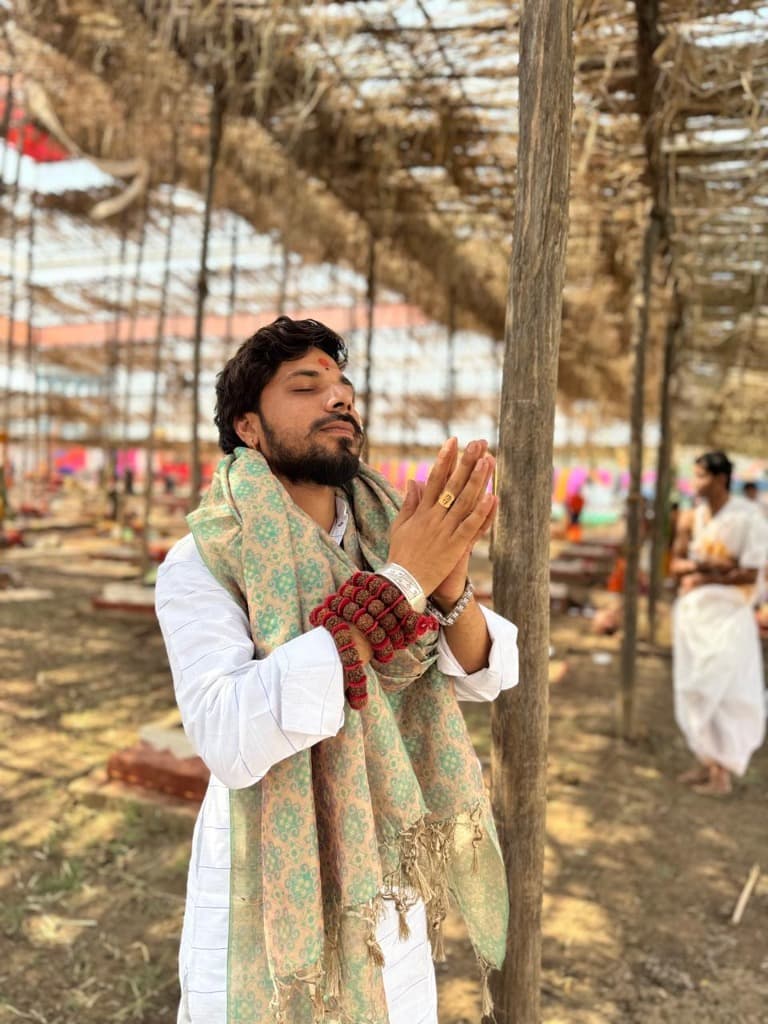
Acharya Tiwari Chetan Guru
Siddha Peethadheesh & Head Vedic Scholar
With over 15+ years of unbroken Vedic practice at Maa Baglamukhi Siddha Peeth, Nalkheda, Acharya Ji is a globally authoritative voice on Tantra Shastra, Stambhan Vidya, and Karmic Astrology. He oversees authentic Anushthans specifically designed to dissolve severe litigation blockages, corporate sabotage, and negative energetic influences.