
Shardiya Navratri 2026 begins on Sunday, 11 October in most calendars. Devotees who want Maa Baglamukhi Puja at Nalkheda usually ask the same practical questions. Which day should I choose? What will it cost? What does the ritual include? Can someone book it without travelling?
This guide answers those questions using what the Baglamukhi Hawan team currently publishes. For the festival itself, the Shardiya Navratri 2026 puja guide covers all nine days. Here we stay on Baglamukhi worship at Nalkheda. Everything is described as devotional belief and practice, and no outcome is promised.
Maa Baglamukhi Navratri Puja at Nalkheda 2026 at a Glance
Detail | Quick Answer |
|---|---|
Festival | Shardiya Navratri 2026 |
Navratri Begins | 11 October 2026* |
Puja Location | Nalkheda, Agar Malwa district, Madhya Pradesh |
Deity | Maa Baglamukhi, traditionally the eighth Mahavidya |
Suitable Days | Any Navratri day, according to Sankalp and tradition; Ashtami and Navami are important ritual days |
Puja Type | Puja, Havan, Maha Havan or Anushthan, depending on the service selected |
Cost | Published prices run from ₹5,100 to ₹51,000 by ritual; final quote after consultation |
Booking | Booking form, WhatsApp or phone, followed by a consultation |
Muhurat | According to the local Panchang and the selected ritual |
*Festival dates and ritual timings should be confirmed according to the Panchang followed at the place where the Puja is performed.
What Is Maa Baglamukhi Puja During Shardiya Navratri?
In Shakta tradition, Maa Baglamukhi is worshipped as one of the ten Mahavidyas. She is associated with stambhan shakti, the power traditionally linked to stilling opposition and obstruction. Her colour is yellow. That is why turmeric, yellow flowers and mustard seeds feature in her worship.
Navratri is the nine-night period when many Hindu households set time aside for structured Devi worship. Some devotees extend that period to Maa Baglamukhi specifically, especially if she is their family or personal deity.
General Navratri Puja honours the nine forms of Durga, one on each day. A Baglamukhi Puja is more specialised. It is built around a personal Sankalp and Baglamukhi mantras, and it follows a priest's prescribed sequence. Customs and procedures vary by lineage, so the Acharya conducting the ritual decides the exact method.
Why Devotees Choose Nalkheda for Maa Baglamukhi Puja During Navratri
Nalkheda is a town in Agar Malwa district, Madhya Pradesh, on the banks of the Lakhundar River. The Maa Baglamukhi Temple at Nalkheda is regarded by devotees as one of the Siddha Peeths associated with Maa Baglamukhi worship. Devotional accounts describe the idol as swayambhu, meaning self-manifested.
Local tradition connects the site to the Mahabharata era. By that account, Yudhishthira sought the Goddess's blessings here before the war. This is a traditional account, not documented history. The site's Nalkheda temple history page gives more of the story.
Devotees give several reasons for choosing Nalkheda:
Having the Sankalp taken at a place they hold sacred.
Wanting priest-guided ritual rather than attempting a specialised procedure alone.
Treating Navratri as a period of heightened Devi worship.
Rituals booked through Baglamukhi Hawan are conducted under Acharya Tiwari Chetan Guru. The website describes him as the Principal Acharya of the Siddha Peeth since 2010. That is the organisation's own description. Whether Nalkheda suits you is a matter of faith, and no temple can promise a result.
Best Days for Maa Baglamukhi Puja During Shardiya Navratri 2026
No single day is universally best. The appropriate day can depend on the devotee's Sankalp, tradition and Panchang. Here is how each part of the festival is traditionally approached.
The first days. Many devotees begin on Pratipada, 11 October, with Ghatasthapana. A nine-day Anushthan is typically started on this day. A late start generally rules out the full nine-day format for this Navratri.
Mid-Navratri. A single-sitting Puja or Havan can be scheduled on other days. These depend on the Acharya's availability and the Panchang. The site's day-wise Navratri puja schedule shows which form of Devi is worshipped each day. The site's temple guide lists Tuesday and Thursday as traditional weekdays for Baglamukhi worship. Other sources name Tuesday and Friday, so family tradition should guide you. In 2026, 13 October is a Tuesday and 15 October is a Thursday.
Ashtami. The eighth day is associated with Maa Mahagauri, and it is when many devotees intensify worship. Some choose it for a major Puja or Havan, and some link it to Maa Baglamukhi being the eighth Mahavidya. See the dedicated Navratri Ashtami Havan 2026 guide.
Navami. The ninth day, associated with Maa Siddhidatri, is the traditional day for concluding rituals. Many households and temples perform the final Havan and Purnahuti then. Details are in the Navratri Navami Havan 2026 guide.
For a deeper treatment of Baglamukhi Havan on these days, see the Baglamukhi Havan Navratri 2026 article.
Maa Baglamukhi Puja on Ashtami or Navami: Which Day Can You Choose?
Both days are established traditions, and neither is "more correct." The confusion in 2026 comes from tithi timing.
Several calendars based on Delhi-area calculations give these figures:
Ashtami begins around 8:27 AM on 18 October.
Ashtami ends around 10:51 AM on 19 October.
Navami follows from that point.
A tithi is a lunar day. It does not start at midnight, and it can run across two civil dates.
Because of this, some calendars place Ashtami on 18 October and Navami on 19 October. Others place both on 19 October. Regional and family traditions may differ, and clock times shift by city with local sunrise.
According to the Panchang followed at the place of worship, the practical Puja window can differ from a generic online date. Many North and Central Indian calendars agree on Vijayadashami as 20 October. A Delhi-based timing should not be treated as universal for Nalkheda.
Here is how to choose:
Follow your family tradition first.
Identify which ritual you are doing: a Puja, a Havan or the concluding Purnahuti of an Anushthan.
Ask the Acharya to confirm the muhurat for your Sankalp.
For the detailed comparison, see Ashtami vs Navami 2026 and the Ashtami, Navami and Kanya Pujan date guide.
Maa Baglamukhi Puja Cost at Nalkheda in 2026
These are the prices published on the live temple page, checked in early October 2026:
Ritual | Duration | Published Price |
|---|---|---|
Maa Baglamukhi Basic Puja | 1 day | ₹5,100 |
Maa Baglamukhi Hawan (Standard) | 1 day | ₹11,000 |
Maa Baglamukhi Maha Hawan | 1 day | ₹21,000 |
Shatru Nashak Havan | 1 day | ₹11,000 |
Court Case Victory Havan | 1 day | ₹15,000 |
Maa Baglamukhi Anushthan | 3 days | ₹31,000 |
Sampurna Anushthan | 11 days | ₹51,000 |
Online Havan (on your behalf) | 1 day | Starting ₹5,100 |
The page states that prices include puja samagri, pandit dakshina and prasad. Online Havan includes live WhatsApp video and prasad by courier.
A dedicated nine-day Navratri Anushthan is offered, but no price is published for it. Contact the booking team for the current price. Pricing may change, so confirm before you pay.
Cost depends on:
The ritual type.
The duration.
Your Sankalp.
Any specialised requirements.
The priest arrangements.
For a custom requirement, the site says to ask for an exact quote.
Planning Maa Baglamukhi Puja at Nalkheda during Shardiya Navratri 2026?
Confirm the available Puja/Havan options, current pricing and preferred date before booking.
→ Check Maa Baglamukhi Puja Booking Options
What Is Included in Maa Baglamukhi Puja at Nalkheda?
Based on the booking and temple pages, the confirmed inclusions are:
A personalised Sankalp with your name and gotra.
Rituals performed at Nalkheda by the temple's Acharyas.
Traditional mantras.
Havan samagri for Havan services.
Live video participation for selected services, plus photo and video updates.
Prasad, Vibhuti and Raksha Sutra, couriered to your address.
Ask which of these apply to the specific ritual you choose, because live participation is offered for selected services. For samagri detail, see the Baglamukhi Havan Samagri guide.
Maa Baglamukhi Puja vs Havan vs Anushthan: What Is the Difference?
Ritual | General Nature | Duration | Booking Consideration |
|---|---|---|---|
Puja | Devotional worship: Sankalp, invocation, offerings, aarti | 1 day | Selected Puja; see Maa Baglamukhi Puja |
Havan | Fire ritual with mantra offerings | 1 day | Havan type and date; see Maa Baglamukhi Hawan |
Maha Havan | A more extensive Havan | 1 day | Ritual requirements and date; see Maa Baglamukhi Maha Hawan |
Anushthan | Structured worship over a defined period, with mantra japa and a concluding offering | 3 days, 11 days, or the nine days of Navratri | Duration and Sankalp; see Maa Baglamukhi Anushthan |
These are different scopes, not ranks. The right one depends on your intention and time. Many devotees speak to the Acharya before choosing.
Maa Baglamukhi Puja Vidhi During Navratri
The exact procedure varies by the ritual selected and the priest's tradition. The site describes this broad sequence:
Purification. Clean clothes and a calm mind; the space and materials are purified.
Kalash Sthapana. The Kalash is established, and the idol or Yantra is placed.
Sankalp. Your name, gotra and intention are stated.
Invocation (Aavahan). Maa Baglamukhi is invoked through mantras.
Offerings. Turmeric, yellow flowers, mustard seeds and ghee are offered.
Main Puja, and Havan if included. A Havan ends with Purnahuti, the concluding offering.
Aarti and prayers.
Prasad.
Specialised mantra procedures are performed under a qualified Acharya's guidance, and this article does not describe them. For the general order of worship, the site has a Baglamukhi Puja Vidhi page.
What Should You Prepare Before Maa Baglamukhi Puja at Nalkheda?
Confirm your preferred date and the tithi or muhurat with the Acharya.
Decide between a Puja, Havan or Anushthan.
Have your full name, gotra (if known), date of birth and a clear intention ready. If you do not know your gotra, the team says it can help.
Decide whether you will attend in person or join remotely.
Confirm the current cost and what is included.
Provide a complete address if you want prasad delivered.
For multi-day Anushthans, expect to observe sattvik rules, such as avoiding alcohol and non-vegetarian food.
If you plan to visit the temple, read the Baglamukhi temple rules first. Navratri fasting guidance is in the Navratri vrat rules 2026 guide.
How to Book Maa Baglamukhi Navratri Puja at Nalkheda
This process follows what the website describes. It does not describe an online checkout, and none is claimed.
Choose the ritual. Browse the Puja, Havan and Anushthan options, or start with a consultation if you are unsure.
Contact the team. Use the booking form, WhatsApp or phone (+91 90743 42490).
Free initial consultation. The site says the first consultation is free, and that dakshina is discussed after the Acharya recommends a ritual.
Share your details. Full name, gotra if known, date of birth and your intention.
Confirm the Navratri date and muhurat with the Acharya.
Confirm the ritual and the current cost. Ask how payment is made, because the site does not describe a payment process.
Live Sankalp. The Sankalp is taken in your name, with live video for online participants.
Prasad. Prasad is couriered after the ritual.
Can Maa Baglamukhi Puja or Havan Be Booked Online?
Booking online and participating online are different things.
Online booking. Yes. You can enquire through the form, WhatsApp or phone, from anywhere.
Online participation. The temple page says Acharya Ji performs the complete ritual at Nalkheda on your behalf, with live WhatsApp video. The Havan page says live participation is available for selected Havans. So confirm it for your specific ritual.
Sankalp, timing and what you receive. Your name and gotra are chanted in the Sankalp, and the team confirms the date and the video-call time. The site says devotees receive live updates, photos and videos, plus prasad by courier. Prasad is dispatched internationally where delivery is available. Time zones follow Indian Standard Time, and the team can help convert the time.
Devotees abroad can also see the international booking page.
Why Consider Booking Navratri Puja in Advance?
These are practical reasons, not urgency:
Priests and temple schedules are busiest in the nine days.
Popular days such as Ashtami and Navami may be sought after.
A nine-day Anushthan has to begin on the first day.
Sankalp details need time to verify.
Online coordination across time zones takes planning.
The site's Nalkheda travel guidance rates October as a peak season and advises booking early. For nine-day formats, enquire as early as possible. No slot count is published, so I do not claim one.
Planning a Visit to Nalkheda for Navratri Puja
Confirm temple and Puja timings before you travel, using the Nalkheda temple timings page and the team.
Check how to get there on the how to reach Nalkheda page, and where to stay near Nalkheda if you need accommodation.
Ask whether your chosen ritual needs your physical presence or can be done remotely. The booking form offers both a live video call and a visit.
Read the Nalkheda darshan guide.
The site says its team can help with taxis and accommodation. Confirm before relying on that.
Maa Baglamukhi Puja and Other Shardiya Navratri Rituals
A Baglamukhi Puja can sit alongside the festival's other observances:
Ghatasthapana and Kalash Sthapana. See the Kalash Sthapana guide.
Daily Devi puja and home worship. See Navratri Puja at Home 2026.
Mantra japa. See the Navratri mantra list.
Bhog. See the Navratri bhog list.
Puja samagri. See the Navratri puja samagri list.
Havan. See Navratri Havan 2026.
Kanya Pujan. See the Kanya Pujan 2026 guide.
For more on Navratri booking, see Navratri Puja Booking 2026.
Frequently Asked Questions
1. When is Shardiya Navratri 2026?
It begins on 11 October 2026 in most calendars and runs through Navami, with Vijayadashami on 20 October. One calendar I found lists 12 October, so confirm Ghatasthapana with your local Panchang.
2. When can Maa Baglamukhi Puja be performed during Navratri?
On any day your Sankalp specifies. Some devotees choose Ghatasthapana or Ashtami, some choose Navami, and some choose a nine-day Anushthan. The Acharya confirms the muhurat.
3. Can Baglamukhi Puja be performed on Ashtami?
Yes. Some households and temples choose Ashtami, according to family tradition. The timing depends on the tithi at your location.
4. Can it be performed on Navami?
Yes. Navami is the more common day for concluding rituals and the final offering, but it is a matter of tradition, not a rule.
5. Which day is suitable?
No day is universally best. It depends on Sankalp, tradition and Panchang.
6. How much does Maa Baglamukhi Puja cost at Nalkheda?
Published prices run from ₹5,100 for a Basic Puja to ₹51,000 for an 11-day Anushthan. Confirm the current price with the team before booking.
7. How can I book?
Use the booking form, WhatsApp or phone. A free consultation comes first, and then the ritual, date and cost are confirmed.
8. Can it be booked online?
Yes, enquiry and booking are online. Online participation depends on the ritual, so confirm it for yours.
9. Can Havan be performed during Shardiya Navratri?
Yes. Devotees may choose a Havan on a Navratri day according to their Sankalp and tradition.
10. What is included?
Per the site: personalised Sankalp, Acharya-led ritual, mantras, samagri and prasad. Live video applies to selected services. Confirm the inclusions for your ritual.
11. How long does it take?
The site says a standard puja generally takes about 2–5 hours, depending on the ritual. Anushthans run over days.
12. What details are needed?
Full name, gotra if known, date of birth and a clear intention. Add an address if you want prasad.
13. Can I book without visiting?
Yes, the ritual can be performed on your behalf, with live video where offered.
14. How do Puja and Havan differ?
A Puja is devotional worship, and a Havan adds a fire ritual with mantra offerings.
15. How do Havan and Anushthan differ?
A Havan is typically a one-day fire ritual. An Anushthan is a multi-day observance with mantra japa and a concluding offering.
16. Should I book in advance?
It is practical to. Navratri is busy, and a nine-day Anushthan must start on the first day.
17. Can Kanya Pujan and Baglamukhi Puja both be done in the same Navratri?
Yes. They are separate observances. Households often do Kanya Pujan on Ashtami or Navami, according to tradition.
18. What should I confirm before booking?
The date and muhurat, the ritual, the current cost, what is included, how you will participate, and how payment works.
Plan Your Shardiya Navratri Puja at Nalkheda
Plan Your Shardiya Navratri Puja at Nalkheda
If you are planning Maa Baglamukhi Puja, Havan or Anushthan during Navratri, contact the team to confirm the ritual type, date, current cost and booking requirements.
→ Enquire About Navratri Puja at Nalkheda
Rituals are offered within traditional belief. They are not a substitute for legal, medical, financial or other professional advice.
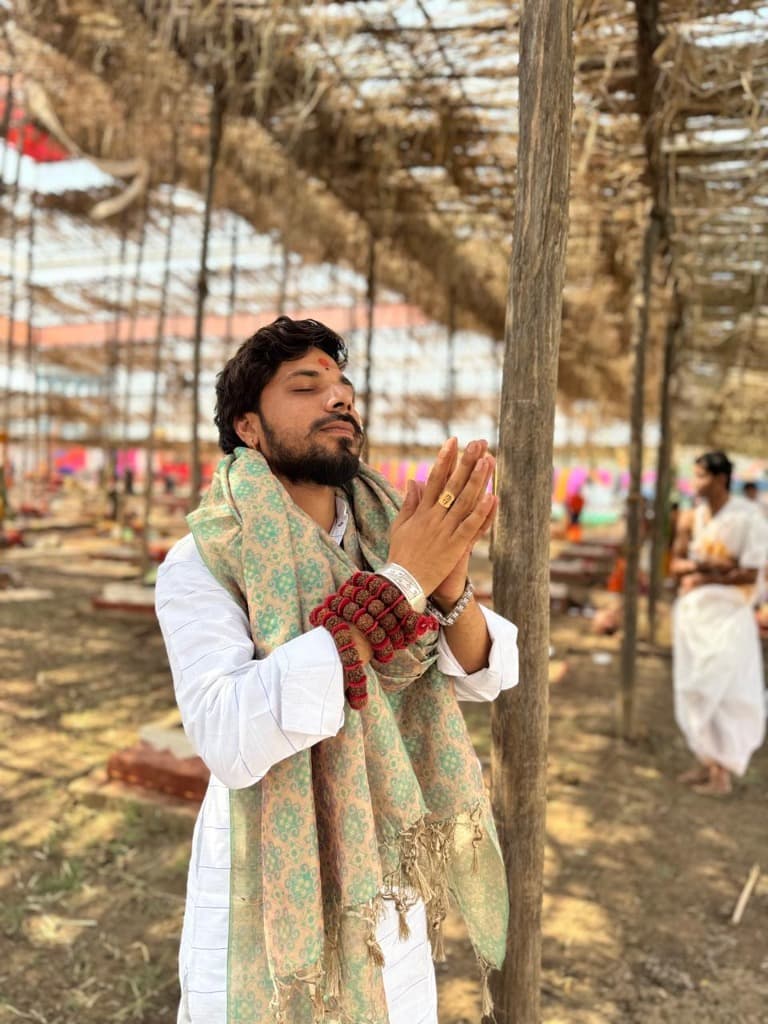
Acharya Tiwari Chetan Guru
Siddha Peethadheesh & Head Vedic Scholar
With over 15+ years of unbroken Vedic practice at Maa Baglamukhi Siddha Peeth, Nalkheda, Acharya Ji is a globally authoritative voice on Tantra Shastra, Stambhan Vidya, and Karmic Astrology. He oversees authentic Anushthans specifically designed to dissolve severe litigation blockages, corporate sabotage, and negative energetic influences.