Every Navratri, the same practical questions come up in almost every household: what can actually be eaten during the fast, what should be kept off the plate, and when exactly should the fast be broken? This guide answers all three in detail for 2026, organised as a genuinely usable reference rather than a generic list of do's and don'ts.
Navratri fasting practices vary considerably by region, family, and how strictly a household chooses to observe the vrat, so this article presents the commonly followed North and Central Indian tradition while being clear about where practices differ.
Quick Answer: What Are the Navratri Vrat Rules 2026?
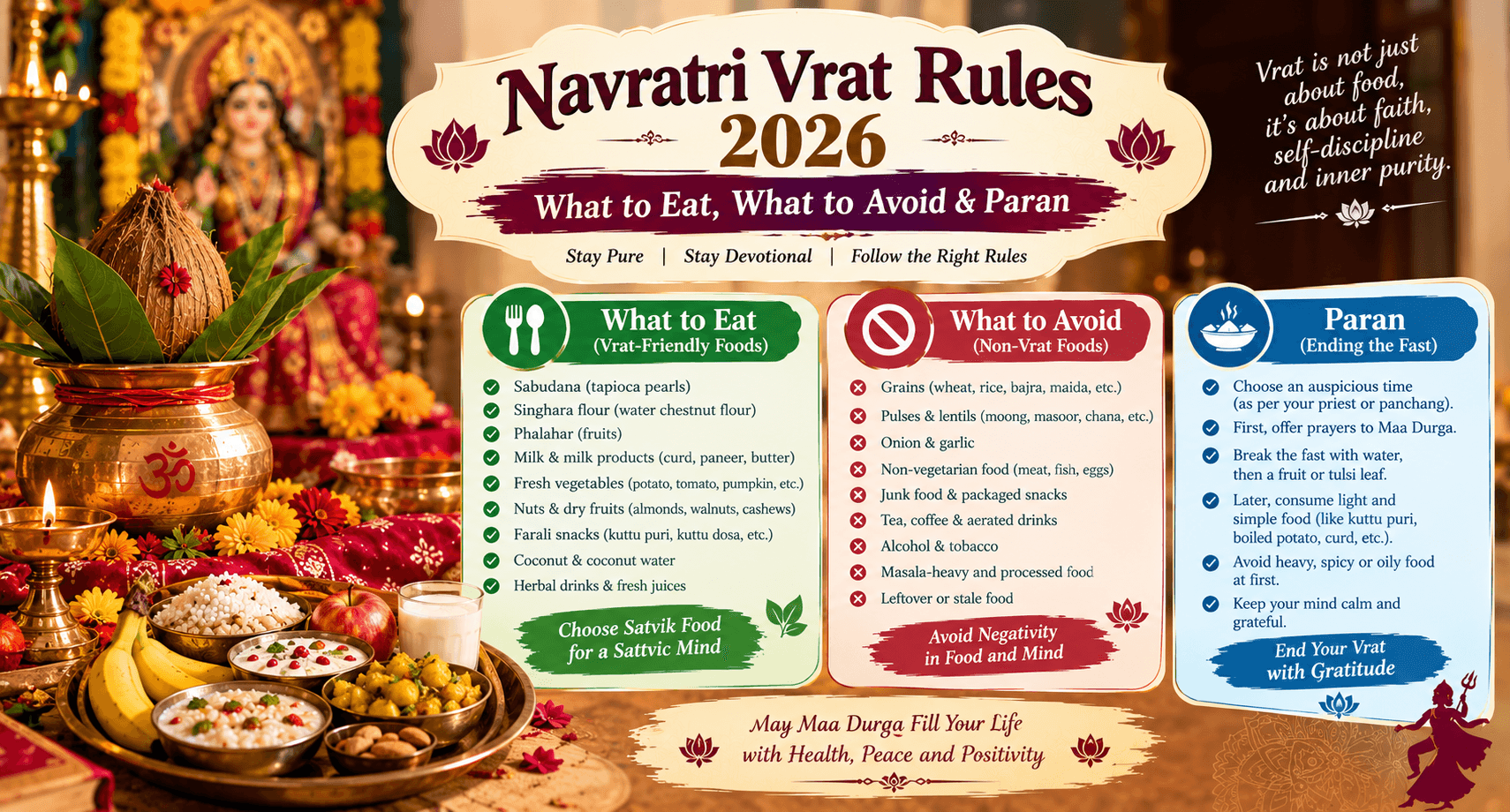
Commonly followed Navratri fasting practices allow fruits, milk and dairy, sabudana, kuttu atta, singhara atta, rajgira, samak or vrat rice, potatoes and certain vrat-friendly vegetables, makhana, dry fruits, and sendha namak (rock salt) in place of regular salt. Foods commonly avoided include wheat, regular rice, pulses and lentils, onion, garlic, non-vegetarian food, alcohol, and ordinary table salt.
These are widely followed guidelines, not a universal rulebook. Navratri fasting rules vary by region, family tradition, and how strict a particular household's vrat is, so treat this as a starting point and adjust according to your own family's practice.
What Is Navratri Vrat?
Navratri Vrat is the fasting observance many devotees undertake across the nine days of Navratri, traditionally regarded as an act of devotion and discipline dedicated to Devi. Rather than a single fixed practice, it takes several different forms depending on the household:
Full fasting, where only water or specific fasting foods are consumed through the day
Phalahar, a fruit-and-dairy-based diet followed for some or all of the nine days
One meal a day, with a single main meal and light fasting food otherwise
Partial fasting, where certain foods are avoided but regular meal timing continues
Family-specific traditions, where the exact practice has been followed by a household for generations
Devotees traditionally regard fasting as a way to bring focus and discipline to worship during this period. This article does not make medical or scientific claims about fasting; it should not be read as detoxifying the body, curing any condition, or producing guaranteed health outcomes. Anyone considering how to approach the vrat should weigh it against their own health and circumstances.
Do You Have to Fast for All 9 Days?
No, fasting for all nine days is not a universal requirement, and practice varies widely across households. Common approaches include:
Fasting on all nine days
Fasting only on the first and last day
Fasting on selected days, such as Ashtami and Navami
Eating one meal a day for the full period
Following a fruit-based (phalahar) diet throughout
A lighter, partial vrat that avoids specific foods without full fasting
Which approach a family follows depends on religious custom, health, age, and personal circumstance. None of these is treated as more correct than another; the shared thread across all of them is the devotional intent behind the practice, not a specific number of days.
What Can You Eat During Navratri Vrat 2026?
Vrat-Friendly Flours
The most commonly used fasting flours are:
Kuttu atta (buckwheat flour), used for puri, paratha, and pakoras
Singhara atta (water chestnut flour), also used for roti and puri
Rajgira atta (amaranth flour), often used for roti, laddoo, or thickening
These flours are widely used because they are not derived from the grains generally avoided during the vrat, and they lend themselves to the same kind of preparations, puri, paratha, and khichdi, that a household might otherwise make with wheat.
Vrat-Friendly Grains and Alternatives
Samak rice, also called vrat ke chawal or barnyard millet, is the most widely used rice substitute during Navratri. Ordinary rice and wheat are generally avoided in many fasting traditions because they are classified as regular grains outside the vrat diet, while samak rice, being a different grass species altogether, is traditionally treated as suitable for fasting.
Fruits
Fruits are considered universally suitable for fasting across nearly every tradition. Practical everyday choices include:
Banana
Apple
Papaya
Pomegranate
Orange
Coconut
Seasonal fruits available locally
Dairy
Milk, curd, paneer, buttermilk, and ghee are commonly consumed through the vrat and are a useful source of protein and energy for those fasting for extended periods. Individual family traditions can vary slightly on specifics, such as whether store-bought paneer is preferred over homemade, so it is worth checking your own household's practice.
Nuts and Seeds
Almonds, cashews, walnuts, peanuts, makhana (fox nuts), raisins, and dates are all widely used, both as standalone snacks and as ingredients in vrat dishes such as kheer or roasted namkeen.
Vegetables
Vegetable | Commonly Allowed? | Tradition Note |
|---|---|---|
Potato | Yes | The most widely used vrat vegetable, used in nearly every preparation style |
Sweet potato | Yes | Commonly boiled or roasted |
Pumpkin | Yes | Used in sabzi and some sweet preparations |
Bottle gourd (lauki) | Yes | Common in lighter vrat meals |
Cucumber | Yes | Usually eaten raw |
Raw banana | Yes, in many traditions | Used for tikki or sabzi in several households |
Tomato | Varies | Allowed in many households, avoided in some stricter traditions |
Onion | Generally avoided | Considered a tamasic food in many fasting traditions |
Garlic | Generally avoided | Same reasoning as onion |
Brinjal (eggplant) | Generally avoided | Not typically used in vrat cooking |
Cauliflower | Generally avoided | Falls outside the commonly used vrat vegetable list |
Mushroom | Generally avoided | Not typically used in vrat cooking |
Not every vegetable in this list is treated identically in every home. Some families are comfortable using tomato freely, while others avoid it during a stricter vrat; the safest approach is to check what your own family's tradition allows rather than assuming this table applies universally.
Which Spices Can You Eat During Navratri Vrat?
Commonly used fasting-friendly spices and seasonings include cumin (jeera), black pepper, green chilli, ginger, cinnamon, and cardamom. These are generally considered acceptable across most fasting traditions and form the base flavouring for the majority of vrat recipes.
Spice rules do vary between households, and this is a point many generic articles skip over. Ingredients such as turmeric, asafoetida (hing), and mustard seeds are avoided in some fasting traditions but included in others. It is also worth noting that packaged masala blends, including some labelled specifically for vrat cooking, can sometimes contain ingredients that stricter households prefer to avoid, so checking the label rather than assuming is a sensible habit during Navratri.
Can You Eat Salt During Navratri Fast?
Sendha namak, also called rock salt, is the salt most commonly used during Navratri fasting, and it is generally preferred over ordinary table salt in most vrat traditions. Ordinary table salt is avoided in many fasting households because it is processed differently from rock salt, which is considered more suitable for vrat cooking in traditional practice.
This is a widely followed convention rather than a rule observed identically in every home; some families are more flexible on this point than others.
What Should You Avoid During Navratri Vrat?
Food / Ingredient | Usually Avoided During Vrat? | Why / Tradition Note |
|---|---|---|
Wheat | Commonly avoided | Considered a regular grain outside the vrat diet |
Regular rice | Commonly avoided | Replaced with samak rice in most vrat traditions |
Maida (refined flour) | Commonly avoided | Treated the same as wheat in most households |
Dals and pulses | Commonly avoided | Legumes are generally excluded from vrat cooking |
Beans | Commonly avoided | Same category as dals in most traditions |
Onion | Commonly avoided | Considered a tamasic food in many fasting traditions |
Garlic | Commonly avoided | Same reasoning as onion |
Regular table salt | Commonly avoided | Rock salt (sendha namak) is generally preferred instead |
Non-vegetarian food | Commonly avoided | Not consistent with the sattvic diet followed during the vrat |
Alcohol | Commonly avoided | Considered inconsistent with the devotional nature of the fast |
Packaged and processed foods | Commonly avoided | May contain prohibited grains, onion, or garlic in ingredients |
Ordinary snacks (chips, biscuits) | Commonly avoided | Usually made with wheat, maida, or non-vrat oils |
These items are traditionally avoided in many households rather than universally forbidden by scripture; a small number of families follow a more relaxed version of the vrat, and that is treated as an equally valid personal or family choice.
Can You Eat These During Navratri Vrat?
Can you eat potatoes? Yes. Potato is one of the most widely used vrat vegetables and appears in nearly every style of fasting cooking.
Can you eat tomatoes? This varies. Many households use tomato freely in vrat cooking, while some stricter traditions avoid it; check your own family's practice.
Can you eat onion? Generally avoided. Onion is considered a tamasic food in most fasting traditions.
Can you eat garlic? Generally avoided, for the same reason as onion.
Can you eat rice? Regular rice is commonly avoided; samak rice (vrat ke chawal) is used instead in most traditions.
Can you eat wheat? Wheat is commonly avoided; kuttu, singhara, or rajgira flour are used in its place.
Can you eat dal? Dals and pulses are commonly avoided during the vrat in most households.
Can you eat bread? Ordinary bread, being made from wheat, is commonly avoided.
Can you eat biscuits? Most packaged biscuits contain wheat or maida and are commonly avoided; some vrat-specific biscuits made with permitted flours are an exception in a few households.
Can you eat corn? Practice varies; some traditions avoid corn along with other regular grains, while others treat it more leniently.
Can you eat paneer? Yes, paneer is a dairy product and is widely eaten during the vrat.
Can you eat curd? Yes, curd is commonly consumed and is considered a suitable vrat food.
Can you drink tea? Practice varies by household; some devotees continue their usual tea, while others avoid it, particularly if it is taken with regular sugar or alongside restricted snacks.
Can you drink coffee? Similarly variable; some fasting traditions avoid coffee, particularly during a stricter vrat, while others do not restrict it specifically.
Can you eat sugar? Yes, sugar is commonly used in vrat sweets and preparations.
Can you eat jaggery? Yes, jaggery is a widely accepted sweetener during the vrat.
Can you eat honey? Yes, honey is commonly used, particularly in fruit-based preparations.
Can you eat chocolate? This depends on the household; plain chocolate is acceptable in some traditions, while others prefer to stick to traditional vrat sweets.
Can you eat outside food? This varies considerably; many devotees prefer home-cooked vrat food to be certain of the ingredients, since restaurant or packaged food can unintentionally include onion, garlic, or regular grains.
What to Eat During 9 Days of Navratri?
This is intended as a practical planning framework, not a mandatory menu. Adjust it freely to your own family's preferences and fasting style.
Day | Breakfast / Fruit | Main Meal | Evening Option |
|---|---|---|---|
Day 1 | Fruit bowl with milk | Kuttu ki puri with vrat aloo sabzi | Roasted makhana |
Day 2 | Sabudana khichdi | Singhara atta paratha with curd | Fruit chaat |
Day 3 | Fruit and dry fruits | Samak rice khichdi | Buttermilk |
Day 4 | Vrat ke aloo tikki | Rajgira roti with pumpkin sabzi | Coconut water |
Day 5 | Milk and banana | Kuttu paratha with lauki sabzi | Roasted peanuts |
Day 6 | Sabudana vada | Samak rice with vrat kadhi | Fruit bowl |
Day 7 | Fruit and makhana | Singhara paratha with curd | Dry fruits |
Day 8 (Ashtami) | Simple fruit or milk | Vrat khichdi, per Kanya Pujan or household fast custom | Light phalahar |
Day 9 (Navami) | Fruit or light phalahar | A simple pre-Paran meal | Paran meal, per family tradition |
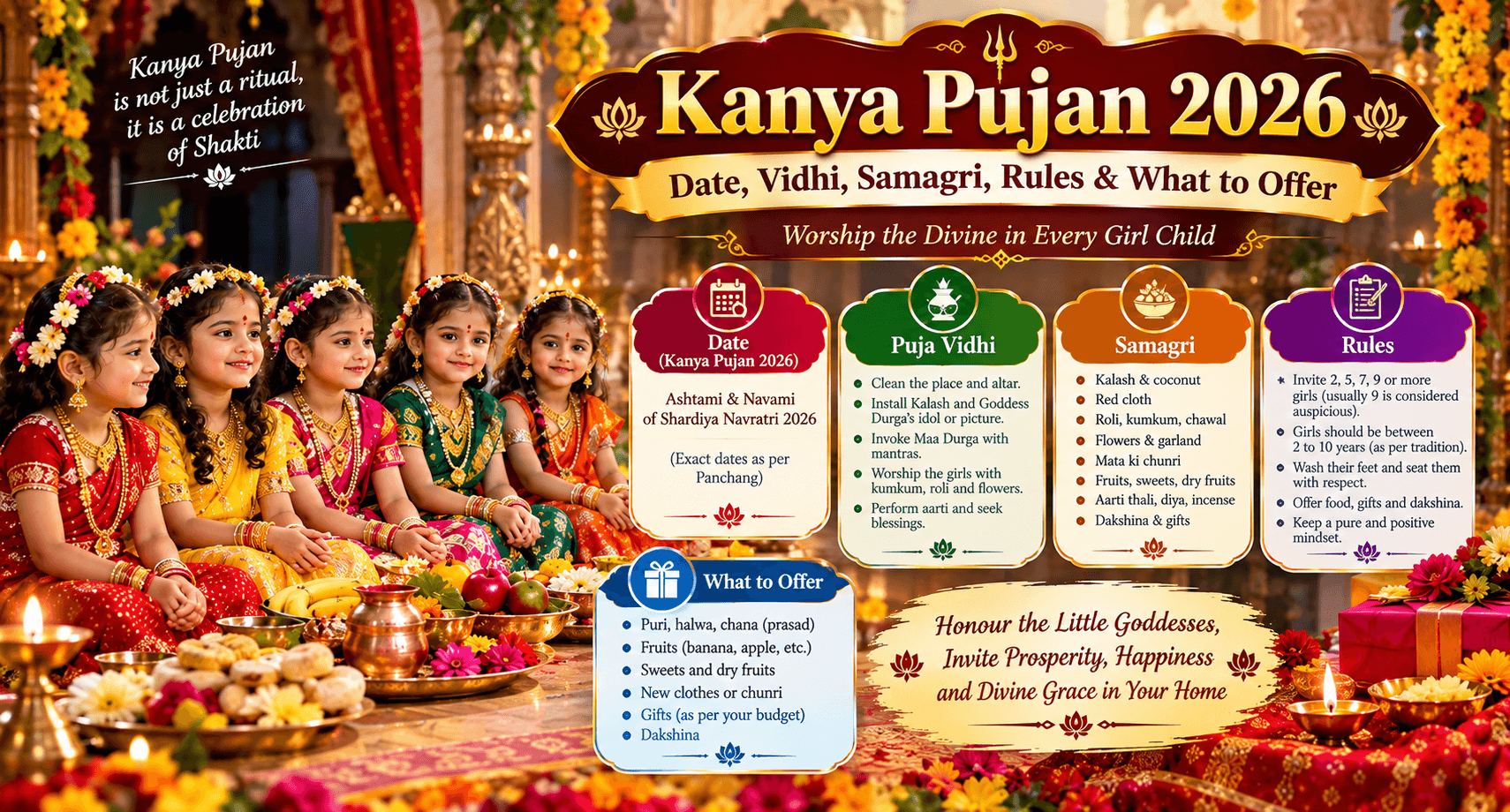
The final two days often shift depending on whether the household performs Kanya Pujan on Ashtami or Navami, since many families choose to break their fast only after that ritual is complete.
Navratri Vrat and Daily Puja
Fasting and puja are closely related devotional practices during Navratri, but they are not necessarily identical requirements for every household. Many families combine both, while some perform the daily puja without a strict fast, and others fast without an elaborate daily ritual. A simple daily routine followed by many households looks like this:
Wake up and bathe
Clean the puja area
Take Sankalp (a brief spoken intention for the day's worship)
Perform Maa Durga puja
Chant the day's mantra or japa
Offer bhog or naivedya
Perform aarti
Follow the household's chosen fasting practice for the rest of the day
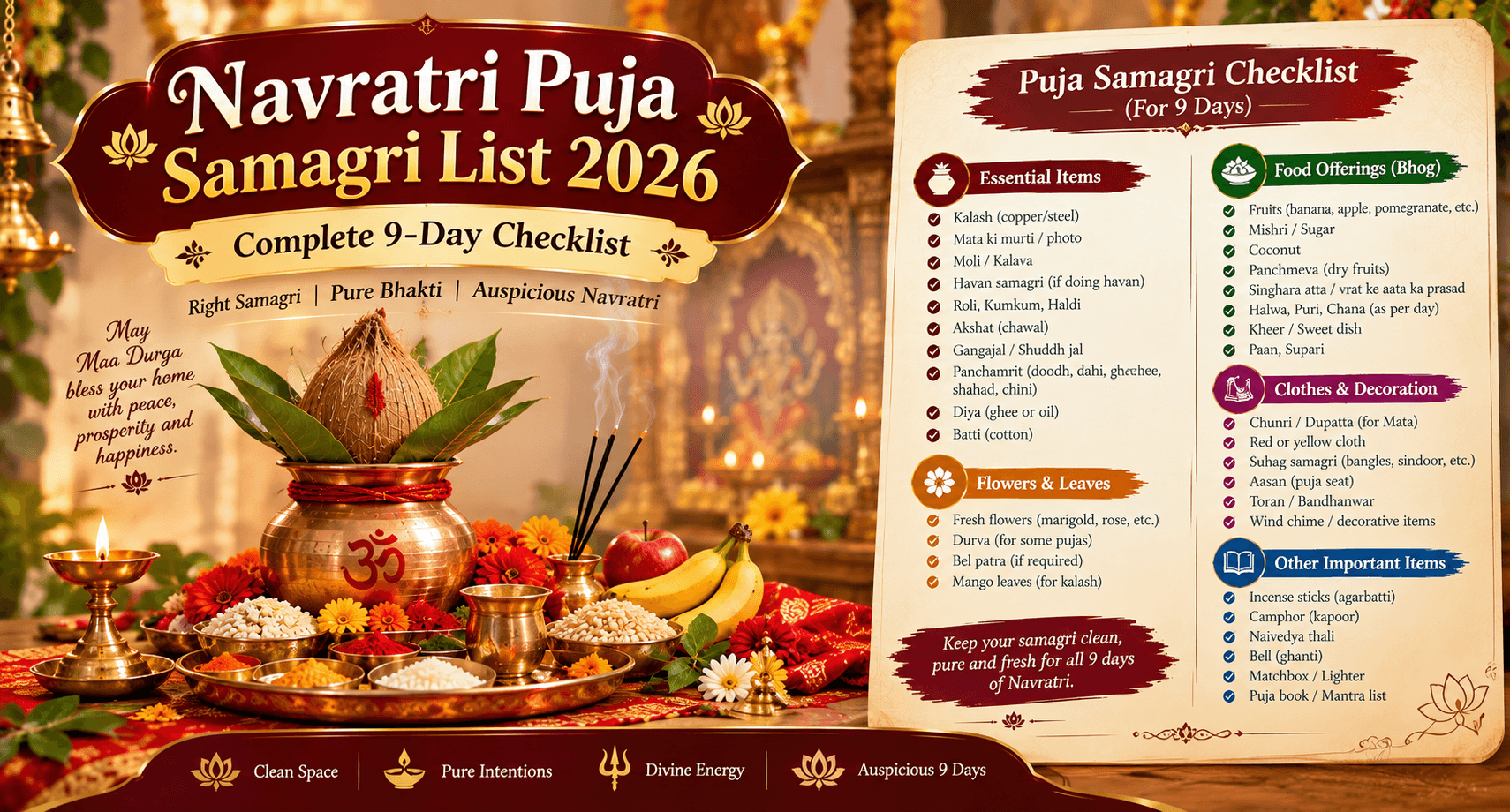
For the mantra associated with each of the nine forms of Devi, the Navratri 2026 Mantra List is a useful daily reference, and the Navratri Puja Samagri List 2026 sets out everything needed to prepare for the daily puja alongside the vrat. (Editor's note: confirm this article's live URL before publishing, as it is a recently drafted piece.)
Navratri Vrat Paran 2026: When and How to Break the Fast
Paran refers to the formal breaking of the Navratri fast, generally performed after the household's chosen fasting period concludes, most commonly after Navami or Ashtami, depending on family tradition.
When is Paran generally performed? Most households that fast for the full nine days break their fast after completing the Navami rituals, including Kanya Pujan where this is part of their custom. Families that follow an Ashtami-based tradition may instead perform Paran a day earlier. The exact clock time is not fixed by a single universal rule; it depends on the household's chosen tithi and, for those following a stricter timing, the specific muhurat indicated by the local Panchang.
Why does timing vary by location? Tithi transitions shift by city because they are calculated from local sunrise, the same reason Ghatasthapana and other Navratri timings vary across India. For the verified 2026 dates for Ashtami, Navami, and Vijayadashami, see the Shardiya Navratri 2026 Ashtami and Navami guide. If your family follows a specific Paran muhurat, it is best confirmed through your local Panchang or a family priest rather than a generic online time.
What foods are traditionally suitable when breaking the fast? A light, simple meal is generally preferred over a heavy one immediately after a long fast. Many households start with fruit, a light phalahar dish, or a small serving of prasad before gradually returning to a regular diet over the following meal or two.
Simple Navratri Paran Checklist
Complete the day's puja, if this is part of your household's practice
Offer bhog to the Devi before the family eats
Offer a short prayer of gratitude
Drink water first, especially after a long or strict fast
Eat a light, simple meal rather than a heavy one immediately
Gradually return to a regular diet over the next meal or two, rather than all at once
Common Mistakes During Navratri Vrat
Assuming every family follows an identical set of rules
Eating packaged food without checking the ingredient label for onion, garlic, or regular grains
Using ordinary table salt out of habit instead of sendha namak
Forgetting that some spice mixes, even those marketed for vrat cooking, may contain restricted ingredients
Accidentally consuming regular grains hidden in processed snacks
Treating partial fasting and strict fasting as interchangeable within the same household
Ignoring hydration, particularly during a stricter, longer fast
Copying another family's fasting tradition exactly, rather than following one's own household custom
Not checking the local Panchang for Paran timing before planning the day
Overcomplicating the fast with elaborate cooking when a simple approach would serve just as well
Regional and Family Variations
Navratri fasting is not observed identically across India, and this article presents commonly followed practices rather than a single universal rulebook. Variations show up across:
North India, where the kuttu, singhara, and sabudana-based vrat diet described in this guide is most widely followed
Central India, generally following a similar pattern with some local variation in preferred vegetables and snacks
Western India, where certain households include additional items or follow slightly different spice conventions
Eastern India, where Durga Puja traditions bring a somewhat different emphasis around food and fasting
Different families, since many households have followed a specific version of the vrat for generations, sometimes differing in small but meaningful ways from a neighbour's practice
Different religious or community traditions, which can shape which foods are treated as suitable for the vrat
If your own family's practice differs from what is described here, following your household's established custom is entirely appropriate.
Who Should Modify or Avoid Strict Fasting?
This article is informational and is not medical advice. People with medical conditions, those taking regular medication, pregnant or breastfeeding individuals, children, elderly people, or anyone who has been advised against fasting should follow appropriate medical guidance rather than adopting a strict fasting routine based on a general online guide. A lighter or partial vrat, or continuing a regular diet while still participating in the puja, is a widely accepted alternative in many households for exactly this reason.
Relevant Baglamukhi Puja and Havan Guidance
Fasting and daily worship during Navratri are, for many devotees, part of a broader devotional period that extends to the ten Mahavidyas, including Maa Baglamukhi. Devotees who already hold a personal or family connection to Maa Baglamukhi, and who would like a structured Puja or Havan performed with proper Sankalp alongside their vrat, can explore the Maa Baglamukhi Puja or Maa Baglamukhi Hawan conducted at the Nalkheda Siddha Peeth.
Devotees who would like to plan this around their own Navratri vrat and puja schedule can book a puja online or speak with the temple's Acharya beforehand. This is offered as a devotional option for those already inclined toward Baglamukhi worship, not as a requirement of the Navratri vrat itself, and no specific outcome is guaranteed by any puja or havan performed.
Frequently Asked Questions
What are the rules of Navratri fasting?
Commonly followed rules include eating fruits, dairy, sabudana, kuttu, singhara, rajgira, and samak rice, while avoiding wheat, regular rice, pulses, onion, garlic, non-vegetarian food, and alcohol. Practice varies by family and region.
What can I eat during Navratri fast?
Fruits, milk and dairy products, sabudana, kuttu and singhara atta, rajgira, samak rice, potatoes and select vegetables, makhana, and dry fruits are commonly eaten.
What should I avoid during Navratri fast?
Wheat, regular rice, maida, pulses and lentils, onion, garlic, non-vegetarian food, alcohol, and ordinary table salt are commonly avoided.
Can I eat rice during Navratri?
Regular rice is commonly avoided; samak rice (vrat ke chawal) is the widely used substitute.
Can I eat wheat during Navratri?
Wheat is commonly avoided; kuttu, singhara, or rajgira flour are used instead in most vrat cooking.
Can I eat onion and garlic?
Both are generally avoided during the vrat, as they are considered tamasic foods in most fasting traditions.
Can I eat potato during Navratri?
Yes, potato is one of the most widely used vrat vegetables.
Can I eat tomato during Navratri?
This varies by household; many use it freely, while some stricter traditions avoid it.
Can I drink tea during Navratri fast?
Practice varies; some devotees continue drinking tea, while others avoid it during a stricter vrat.
Which salt is used during Navratri?
Sendha namak, or rock salt, is the salt most commonly used in place of regular table salt.
Can I eat paneer during Navratri?
Yes, paneer is a dairy product and is widely eaten during the vrat.
Can I eat fruits during Navratri?
Yes, fruits are considered suitable for fasting across nearly every Navratri tradition.
Is sabudana allowed during Navratri?
Yes, sabudana is one of the most commonly used vrat ingredients, used in khichdi, vada, and kheer.
Is kuttu allowed during Navratri?
Yes, kuttu atta (buckwheat flour) is a widely used vrat flour for puri, paratha, and pakoras.
Is singhara atta allowed during Navratri?
Yes, singhara atta (water chestnut flour) is commonly used alongside kuttu for vrat cooking.
Do I have to fast for all 9 days?
No, this is not a universal requirement. Many households fast on selected days, such as the first and last, rather than all nine.
When is Navratri Paran 2026?
Paran is generally performed after Navami or, in some traditions, after Ashtami, depending on family custom. The exact date and timing depend on your household's tradition and the local Panchang; see the Ashtami and Navami 2026 dates for the verified tithi calendar.
How should Navratri fast be broken?
With a light, simple meal after completing the day's puja and bhog, followed by a gradual return to a regular diet rather than a single heavy meal.
Can Navratri Puja be done without fasting?
Yes, many households perform the daily puja and worship without observing a strict fast; fasting and puja are related but not identical requirements.
Can children or elderly people follow the same fasting rules?
Not necessarily. A lighter or partial vrat, or continuing a regular diet while still participating in the puja, is a widely accepted alternative for children, elderly individuals, and anyone with a health condition that makes strict fasting unsuitable.
Conclusion
Navratri Vrat rules are best treated as a flexible, traditional framework rather than a rigid checklist. Once the core vrat-friendly ingredients, kuttu, singhara, sabudana, samak rice, fruits, dairy, and sendha namak, are in place, most households find it straightforward to plan meals across the nine days while staying true to their own family's practice. For devotees who would also like a guided Puja or Havan performed alongside their Navratri observance, the temple's Maa Baglamukhi Puja and Havan services remain available throughout the festival.
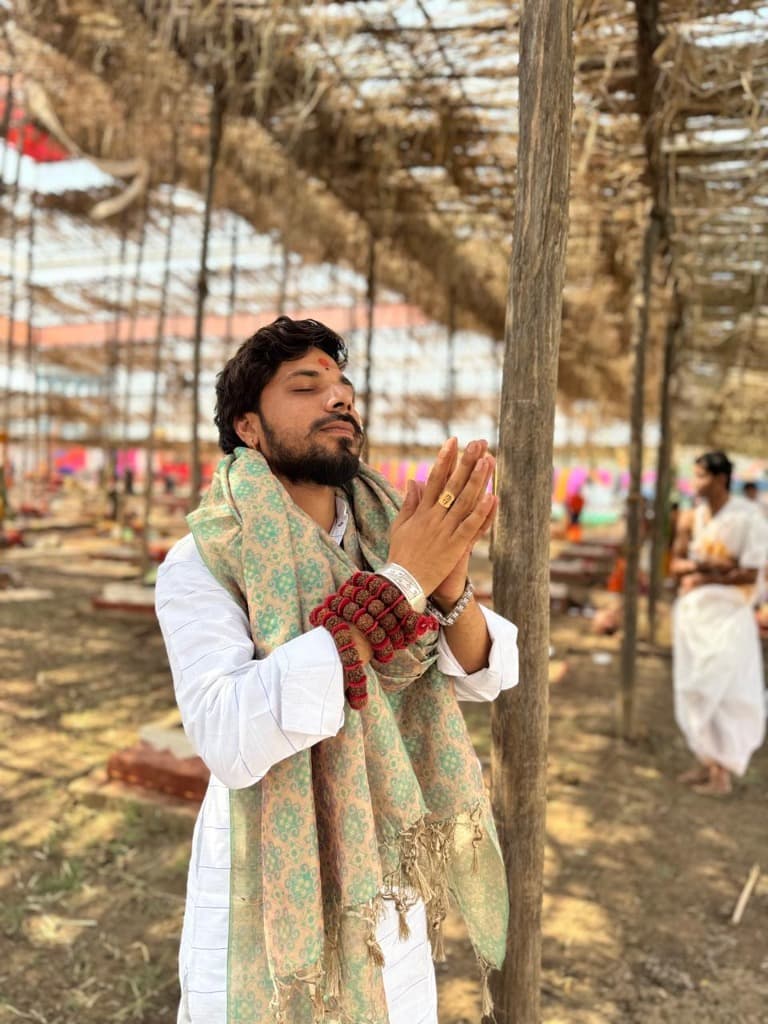
Acharya Tiwari Chetan Guru
Siddha Peethadheesh & Head Vedic Scholar
With over 15+ years of unbroken Vedic practice at Maa Baglamukhi Siddha Peeth, Nalkheda, Acharya Ji is a globally authoritative voice on Tantra Shastra, Stambhan Vidya, and Karmic Astrology. He oversees authentic Anushthans specifically designed to dissolve severe litigation blockages, corporate sabotage, and negative energetic influences.