Kanya Pujan is one of the most eagerly awaited rituals of Shardiya Navratri, and every year the same questions return: is it done on Ashtami or Navami, how many girls should be invited, what age is considered traditional, and what should actually be offered? This guide answers all of it for 2026, drawing on verified Panchang dates and long-standing North Indian household custom, while being clear that practices vary by region and family.
This article is a dedicated companion to the Shardiya Navratri 2026 Ashtami and Navami guide, which covers the broader date and ritual picture for both days. Here, the focus stays entirely on Kanya Pujan itself: the practical, step-by-step guide families actually search for.
Kanya Pujan 2026 at a Glance
Detail | Information |
|---|---|
Festival | |
Kanya Pujan days | Sunday, 18 October (Ashtami) or Monday, 19 October (Navami) 2026 |
Governing tithi | Depends on family tradition and local Panchang |
Main purpose | Traditional worship of young girls as living forms of Devi |
Traditional age | Commonly 2 to 10 years, with regional flexibility |
Number of girls | Traditionally nine, though fewer is widely accepted |
Main bhog | Halwa, puri, and kala chana |
Main puja items | Tilak, flowers, chunri, food, dakshina and gifts |
Best time | Morning, after the day's main Devi puja, per chosen tithi |
What Is Kanya Pujan?
Kanya Pujan is the traditional worship of young girls, who are regarded in many Hindu households as living representations of the Devi during Navratri. The girls are welcomed, seated with respect, offered tilak and food, and given dakshina and small gifts before the family seeks their blessings. The practice is deeply tied to Shakti worship, the same devotional current that runs through the nine days of Navadurga puja observed through Shardiya Navratri.
The ritual goes by several names depending on region: Kanjak or Kanjika in North India, Kumari Puja in Bengal and parts of the east, and Kanya Bhoj where the shared meal is emphasised. Devotees traditionally regard these as variations of the same underlying custom rather than separate rituals, and the terminology a family uses often simply reflects where they are from.
Kanya Pujan 2026 Date: Ashtami or Navami?
This is the single most common question every year, and 2026 is no exception. According to the Panchang followed across most of North and Central India, Maha Ashtami falls on Sunday, 18 October 2026, and Maha Navami falls on Monday, 19 October 2026, with Vijayadashami on Tuesday, 20 October 2026.
Because the Ashtami tithi runs into the late morning of 19 October before Navami takes over, some Panchangs that follow a strict sunrise-tithi rule for the transition point mark Ashtami and Navami on the same day. This is not an error on anyone's part; it is simply how lunar tithis behave when they do not divide neatly across a 24-hour civil day.
In practical terms, this means:
Families that follow the Ashtami tradition perform Kanya Pujan on 18 October, honouring Maa Mahagauri.
Families that follow the Navami tradition, or whose fast concludes on the ninth day, perform it on 19 October, honouring Maa Siddhidatri.
Neither choice is more correct than the other. According to the Panchang used in your location, one day may be emphasised over the other, so it is worth checking with your family priest or a local Panchang if you are uncertain.
For the complete breakdown of how these two tithis interact this year, along with Sandhi Puja timing, see the Shardiya Navratri 2026 Ashtami and Navami dates guide.
Question | Quick Answer |
|---|---|
Kanya Pujan 2026 date | 18 October (Ashtami) or 19 October (Navami), per family tradition |
Ashtami or Navami? | Depends on family custom and local Panchang, not a fixed rule |
How many girls? | Traditionally nine, but fewer is widely accepted |
Common age | Generally 2 to 10 years, with regional variation |
Main bhog | Halwa, puri, and kala chana |
Main gifts | Dakshina, fruits, chunri, or a suitable small gift |
How Many Girls Are Worshipped in Kanya Pujan?
The most widely followed custom is to invite nine young girls, representing the Navadurga, the nine forms of Devi honoured across the nine days of Navratri. In many households, one young boy is also invited alongside them, representing Bhairav or Langoor, who is traditionally regarded as the guardian accompanying the Devi.
That said, nine is a widely followed custom rather than a fixed requirement:
Some families invite as few as one, two, or five girls, depending on availability in the neighbourhood or extended family.
A small number of temple and community traditions spread the worship across all nine days, adding one girl on each successive day rather than gathering all nine on a single occasion.
What matters more than the exact count, according to most priests and elders, is that the girls who are present are treated with genuine warmth and respect.
If arranging nine girls is not practical for your household this year, performing the ritual sincerely with however many you can gather is considered entirely valid.
What Is the Traditional Age for Kanya Pujan?
Most households look for girls roughly between 2 and 10 years old, generally before the onset of puberty, since this age range is traditionally associated with the innocence and purity the ritual seeks to honour.
Some older textual traditions even assign a name to each age within this range, treating each year as a distinct form:
Age | Traditional Name |
|---|---|
2 years | Kumarika |
3 years | Trimurti |
4 years | Kalyani |
5 years | Rohini |
6 years | Kali |
7 years | Chandika |
8 years | Shambhavi |
9 years | Durga |
10 years | Subhadra |
Families are not expected to match every age in this table. It is shared as a point of traditional interest, not a checklist. A girl slightly younger or older than this range is not treated as invalidating the puja; regional and family customs vary, and sincerity of devotion is considered central to the ritual, not exact adherence to an age chart.
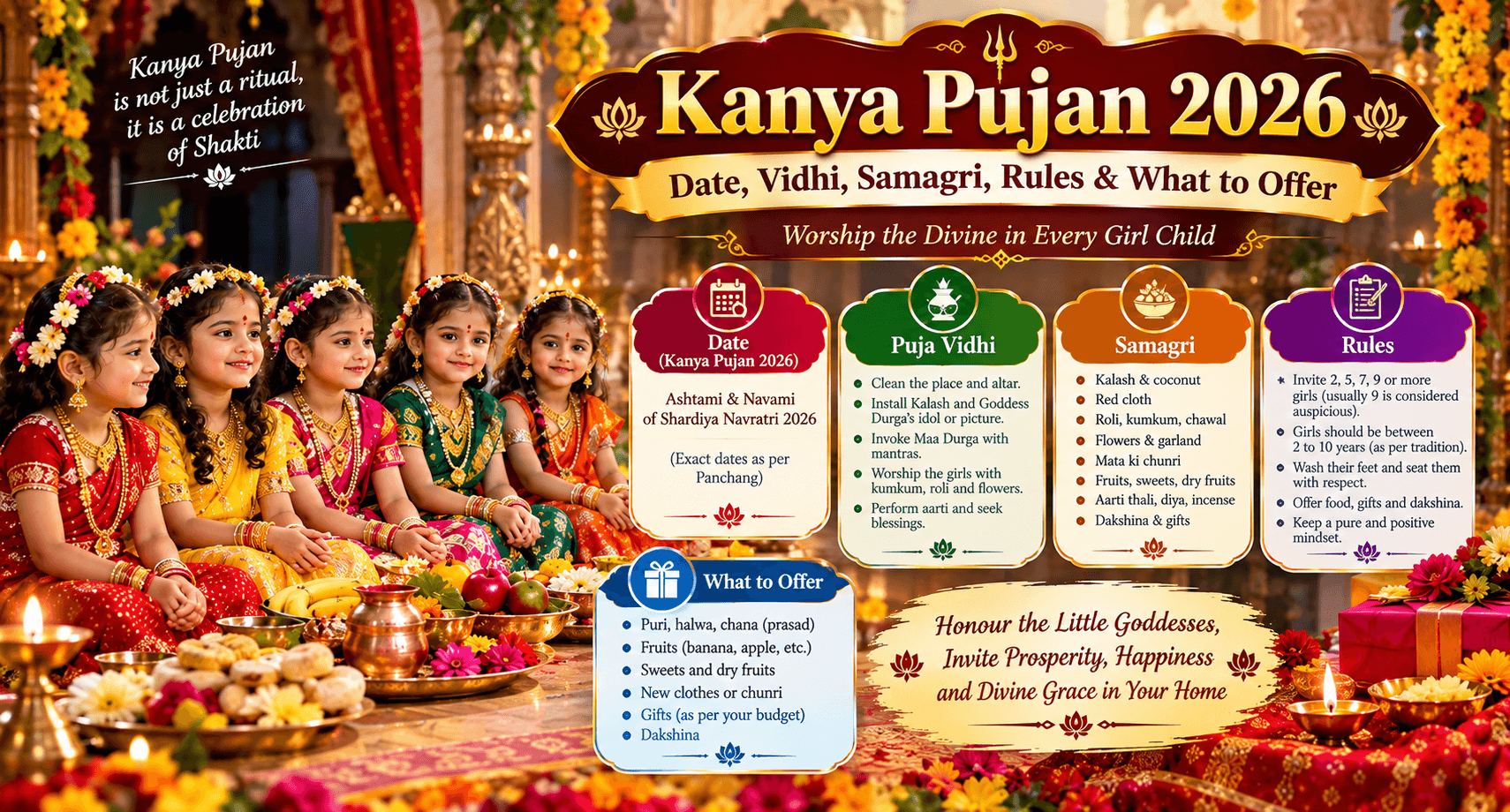
Kanya Pujan Samagri 2026
A little advance preparation makes the ritual smoother for both the host family and the visiting children. Here is a practical, categorised checklist.
Essential Puja Items
Roli or kumkum, for tilak
Akshat (unbroken rice)
Fresh flowers
A diya with ghee or oil
Incense (dhoop or agarbatti)
Clean water and a small vessel
A clean cloth or towel, for washing and drying feet
A thali or plate for each girl
Chunri, where this is part of the family's custom
Food and Bhog
Puri
Kala chana (black chickpeas)
Halwa (commonly semolina, made with ghee)
Seasonal fruit or a sweet such as kheer, where the family tradition includes it
Gifts and Dakshina
Dakshina (a small monetary offering)
Fruits
Chunri or a small piece of clothing
Bangles or hair clips
A small devotional item or toy
Treat the essential items as the core of the ritual, and the gift list as optional additions shaped by what the family can comfortably offer. There is no fixed "correct" amount of dakshina; sincerity matters more than the sum.
What to Offer During Kanya Pujan?
Traditional Bhog
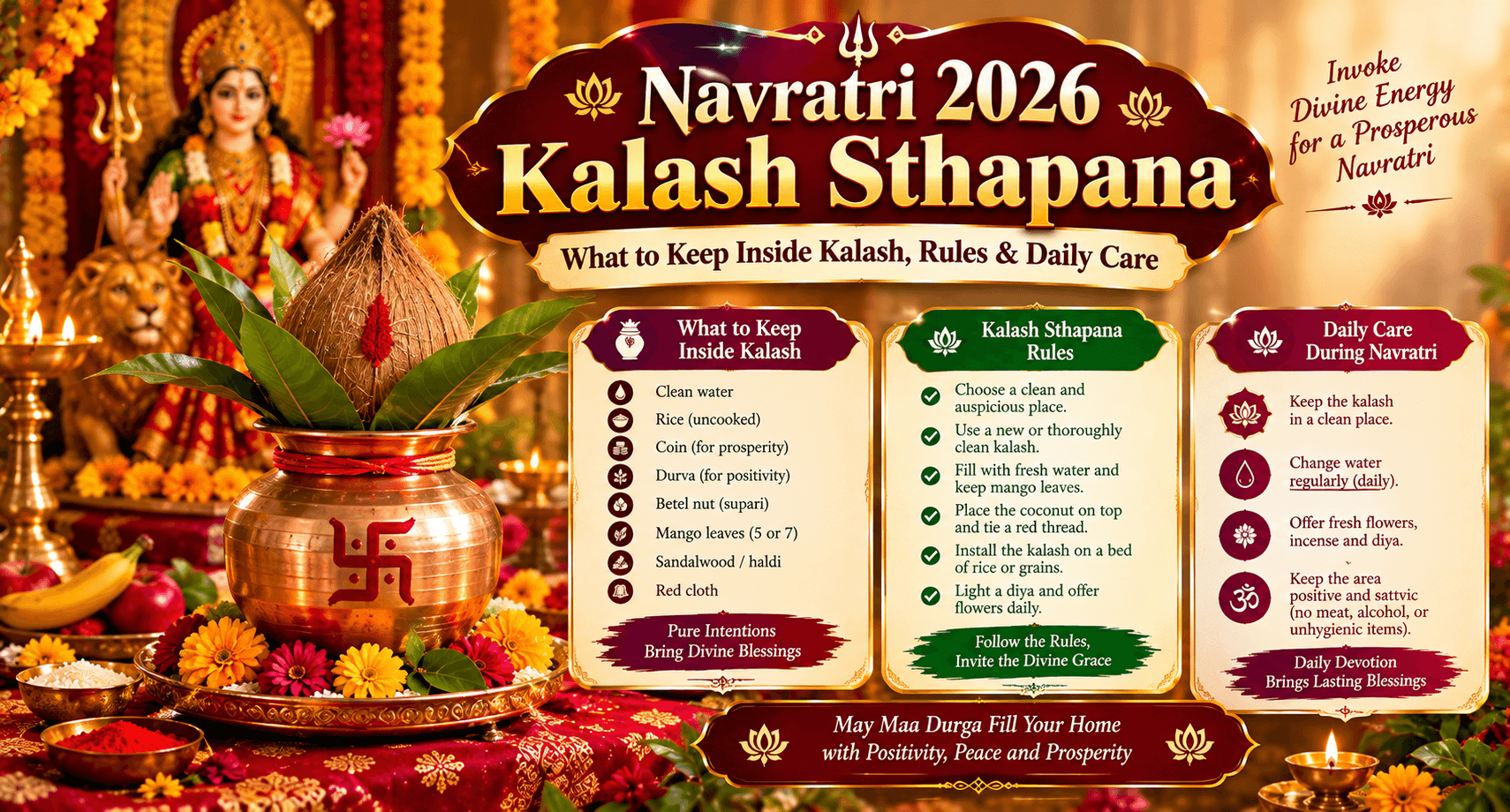
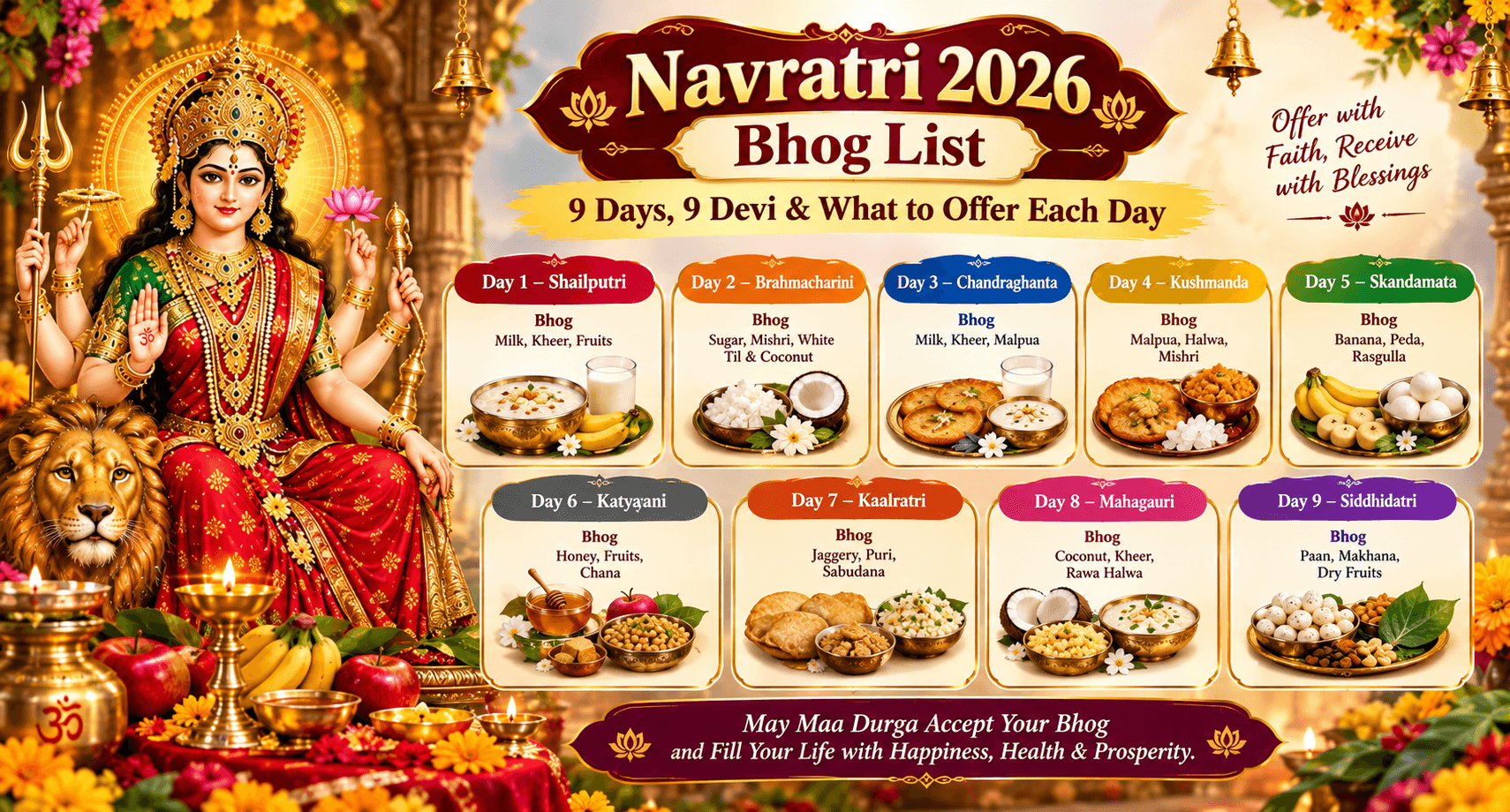
The most widely followed North Indian bhog for Kanya Pujan is the combination of puri, kala chana, and halwa. This same trio is generally offered as part of the broader Navratri bhog tradition; the full Navratri 2026 Bhog List sets out what is traditionally prepared across all nine days if you would like to plan the household's meals around the festival as a whole.
Beyond the Core Bhog
Many families also add:
Fresh fruit, especially banana or apple
Coconut, offered whole or as prasad
A sweet such as kheer, boondi, or a regional mithai
Devotees traditionally regard these as complementary offerings rather than replacements for the core puri-chana-halwa combination, and what is included beyond the essentials generally reflects the family's own regional cuisine.
Kanya Pujan Bhog: Why Halwa, Puri and Kala Chana?
This combination is one of the most consistently cited Kanya Pujan customs across North Indian households, and current sources commonly identify it as the traditional Navami and Kanya Puja bhog. Puri and halwa are considered festive, satvik foods suitable for an auspicious occasion, while kala chana is associated with strength and is a staple of Navratri fasting cuisine more broadly.
It is worth being clear that this is a widespread North Indian custom, not the only acceptable offering. Families that follow a different regional tradition, whether that includes coconut-based sweets, different lentils, or an entirely different festive meal, are following an equally valid form of the same devotional intent.
Kanya Pujan Vidhi 2026: Step-by-Step
A respectful, unhurried Kanya Pujan generally follows these steps, though the exact sequence can vary by family:
Clean the puja area. Prepare a comfortable, clean space with seating for the girls before they arrive.
Prepare the bhog in advance. Have the puri, kala chana, halwa, and any other offerings ready so the children are not left waiting.
Welcome the girls respectfully. Greet them warmly at the door, as honoured guests.
Seat them appropriately. Offer comfortable seating, ideally on a clean cloth or mat.
Wash their feet, where this is part of household tradition. This gesture is a mark of respect, treating the girls as embodiments of the Devi.
Apply tilak. Use roli or kumkum on each girl's forehead, and tie a raksha sutra on the wrist if the family follows this custom.
Offer flowers or chunri as appropriate. This step varies by family; include it if it is part of your tradition.
Perform aarti. A short aarti with the household gathered around the seated girls.
Offer bhog. Present the prepared food with care.
Serve the meal respectfully. Make sure each girl is comfortably fed before moving on.
Offer dakshina and gifts. Give whatever the family has decided on, with warmth rather than obligation.
Seek blessings. Touch the girls' feet or otherwise seek their blessings, according to family custom.
Distribute prasad. Share the remaining prasad with the rest of the household.
Complete the remaining rituals. Continue with any fasting or puja steps specific to your family's Navratri observance.
Not every household follows every step in this exact order, and that is entirely normal. The sequence above reflects the widely followed structure rather than a mandatory script.
Kanya Pujan Gifts and Dakshina: What Should You Offer?
Beyond the meal itself, most families send the girls home with a small token of the occasion. Common choices include:
Dakshina, a modest cash gift, the amount left to the family's own means
Fruits, often given alongside the prasad
Chunri, a small piece of red or festive cloth
Bangles, a widely appreciated small gift
Sweets, in addition to the bhog already served
A small devotional or useful item, such as a notebook, hair accessory, or small toy
Keep this practical and respectful rather than competitive. A simple, sincere gift is considered just as meaningful as an elaborate one, and this should not become a commercial checklist to complete.
Kanya Pujan Rules 2026: What to Do and Avoid
Maintain cleanliness in the puja space and while preparing the bhog.
Treat the girls with genuine warmth, not as a formality to be rushed through.
Prepare food hygienically and in advance, so the meal is fresh and the children are not kept waiting.
Check the tithi for your chosen day against a local Panchang, since exact timings shift by city.
Keep the puja space simple and clean, rather than elaborate for its own sake.
Follow your own family tradition on dress, tilak, and chunri, since these details vary widely.
Offer dakshina according to your means, without pressure to match what other households give.
Never force a child to sit still for long periods or push through discomfort; their comfort matters more than ritual precision.
Maintain food safety, especially when several children are eating at once.
Practices vary, and families traditionally follow their own customs rather than a single universal rulebook. If a step does not match your family's usual way of doing things, following your own tradition is entirely appropriate.
Can You Perform Kanya Pujan Before Breaking Your Navratri Fast?
Yes, and in fact many families specifically structure their fast around this. Households that observe a full nine-day fast commonly choose to break it (parana) only after Kanya Pujan is complete, whether that falls on Ashtami or Navami. The logic is straightforward: the ritual is considered an act of devotion in its own right, and completing it before eating is seen as giving it due priority within the day's worship.
That said, this is a household custom rather than a medical or scriptural requirement, and fasting practices differ considerably by family, health, and personal capacity. Anyone with health considerations around fasting should make decisions in consultation with their own judgement or a medical professional rather than following a general online guideline.
10 Common Kanya Pujan Mistakes to Avoid
Choosing the date without checking the local Panchang. A muhurat quoted for one city may not apply to yours.
Ignoring the Ashtami and Navami tithi difference, and assuming both fall identically every year.
Treating one regional custom as universal, when Kanjak, Kumari Puja, and Kanya Bhoj traditions genuinely differ.
Not preparing food in advance, leaving children waiting unnecessarily.
Forgetting dakshina or gifts, where this is part of the family's usual practice.
Making the ritual stressful for children, through excessive formality or long waits.
Overlooking hygiene while preparing or serving food to several children.
Using fear-based interpretations of small, accidental mistakes in the ritual.
Forgetting to connect the ritual with the rest of the household's Navratri worship, such as the day's main Devi puja.
Confusing Kanya Pujan with unrelated rituals, rather than understanding it on its own terms.
Kanya Pujan Traditions Across Different Regions
In much of North India, Kanjak on Ashtami or Navami is a near-universal home ritual, closely tied to the Ghatasthapana that begins the nine days.
In Bengal, Assam, and parts of the east, Kumari Puja is often performed more formally at pandals, commonly on Ashtami, alongside Durga Puja.
In South India, the emphasis around Ashtami and Navami often shifts toward Ayudha Puja and Saraswati Puja, and home-style Kanya Pujan is less central.
The choice between Ashtami and Navami is generally a matter of family tradition, and the same household may even alternate between the two across different years depending on convenience.
This is a brief overview rather than a full regional history; the practical takeaway is that there is no single "correct" version of the ritual across India, and following your own family's established custom is the most reliable approach.
Maa Baglamukhi Worship During Navratri
Navratri is traditionally regarded as one of the most spiritually significant windows for Shakti worship, and this extends, for many devotees, to the ten Mahavidyas, of which Maa Baglamukhi is one of the most revered. Kanya Pujan itself is a home ritual centred on the girls as embodiments of the Devi, and it does not require any additional ritual to be complete. For devotees who already hold a personal or family connection to Maa Baglamukhi, however, the same days set aside for Kanya Pujan, Ashtami and Navami, are commonly chosen for a dedicated Maa Baglamukhi Puja or Maa Baglamukhi Hawan, performed with proper Sankalp.
At the Maa Baglamukhi Siddha Peeth in Nalkheda, such rituals are conducted under traditional Vedic procedure. Devotees who wish to arrange a puja or havan around this year's Navratri dates can book a puja online, or speak with the temple's Acharya beforehand to plan the Sankalp and timing.
This connection is offered as a traditional devotional option for those already inclined toward Baglamukhi worship. It is not presented as a requirement of Kanya Pujan itself, nor as a guarantee of any specific outcome.
Frequently Asked Questions
When is Kanya Pujan in 2026?
Kanya Pujan is performed on either Sunday, 18 October 2026 (Ashtami) or Monday, 19 October 2026 (Navami), depending on family and regional tradition.
Is Kanya Pujan on Ashtami or Navami in 2026?
Both days are considered valid. Families following the Ashtami tradition observe it on 18 October, and those following the Navami tradition, or whose fast concludes on the ninth day, observe it on 19 October.
What is the best time for Kanya Pujan 2026?
Most households perform it in the morning, after the day's main Devi puja, mainly so the children can be fed before midday. There is no single scripturally fixed clock time.
How many girls are needed for Kanya Pujan?
The common tradition calls for nine girls, representing the Navadurga, along with one young boy in many households. Fewer than nine is widely accepted where arranging nine is not practical.
What is the age of girls for Kanya Pujan?
Generally between 2 and 10 years, though this varies by family and is not treated as a strict cut-off.
Can Kanya Pujan be done with fewer than nine girls?
Yes. Sincerity and respectful treatment of however many girls are present matters more than matching an exact number.
What is Kanya Pujan called in different regions?
It is known as Kanjak or Kanjika in North India, Kumari Puja in Bengal and the east, and Kanya Bhoj where the shared meal is emphasised.
What Samagri is needed for Kanya Pujan?
Essentials include roli, akshat, flowers, a diya, incense, a cloth for washing feet, and the bhog ingredients: puri, kala chana, and halwa. Chunri, bangles, and dakshina are common additional items.
What food is offered during Kanya Pujan?
The most common bhog is puri, kala chana, and halwa, with fruit, coconut, or a sweet such as kheer added in some households.
Why are halwa, puri and kala chana offered?
This combination is a long-standing North Indian Navratri and Kanya Puja custom, associated with satvik, festive food. Regional variations exist and are equally valid.
What should be given to girls after Kanya Pujan?
Dakshina, fruits, chunri, bangles, or a small devotional gift are the most common choices, according to what the family can comfortably offer.
Is dakshina necessary?
It is a widely followed custom rather than a strict requirement. The amount matters far less than the sincerity behind it.
Can Kanya Pujan be done at home?
Yes, it is very commonly performed at home and does not require a temple setting.
Can Kanya Pujan be done before breaking Navratri fast?
Yes, many households specifically break their fast only after completing Kanya Pujan, whether on Ashtami or Navami.
Can Kanya Pujan be done on Navami?
Yes, this is one of the two most common days, particularly among families whose fast concludes on the ninth day.
Can Kanya Pujan be done on Ashtami?
Yes, this is equally common, particularly in households that follow the Ashtami tradition tied to Maa Mahagauri's puja.
What if I cannot invite nine girls?
Performing the ritual sincerely with however many girls you can gather is considered valid; the exact number is a custom, not a fixed rule.
What should I do if the chosen date differs from another calendar? This usually reflects genuine tithi variation between Panchangs rather than an error. Follow your family's usual Panchang or your local priest's guidance.
Can a family follow its traditional Kanya Pujan method even if it differs from what is described here?
Yes. This guide describes widely followed North Indian custom; your own family or regional tradition should always take priority.
What should be avoided during Kanya Pujan?
Rushing the ritual, poor food hygiene, forcing children to sit through excessive formality, and treating one regional custom as the only correct version are the main points to avoid.
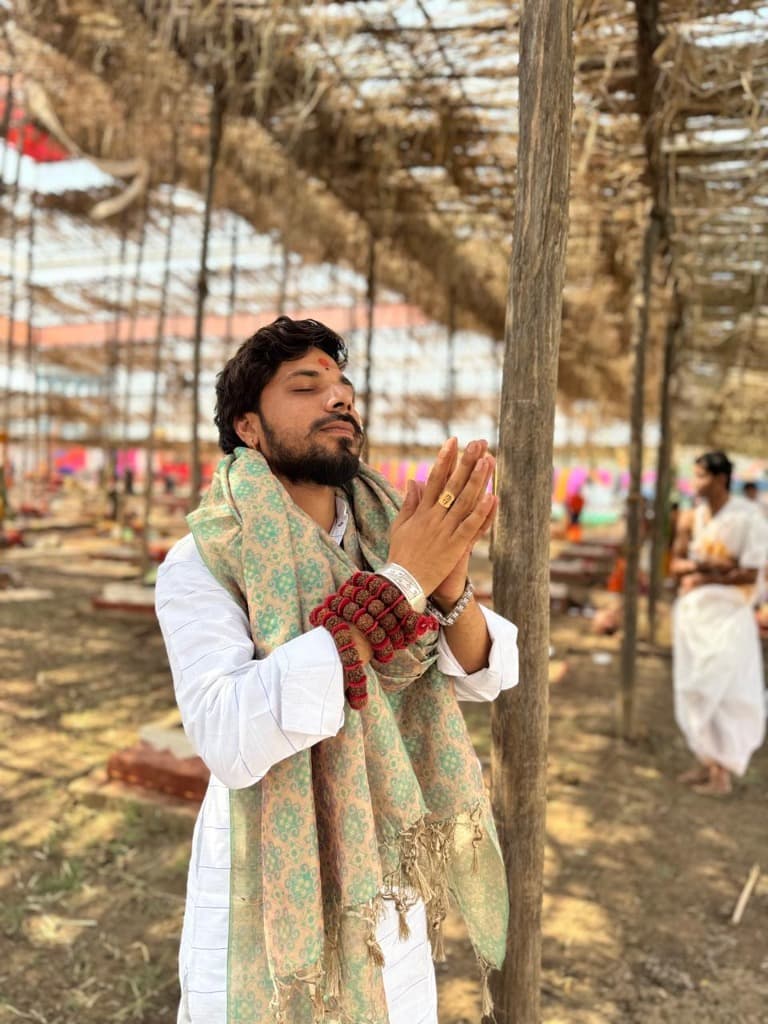
Acharya Tiwari Chetan Guru
Siddha Peethadheesh & Head Vedic Scholar
With over 15+ years of unbroken Vedic practice at Maa Baglamukhi Siddha Peeth, Nalkheda, Acharya Ji is a globally authoritative voice on Tantra Shastra, Stambhan Vidya, and Karmic Astrology. He oversees authentic Anushthans specifically designed to dissolve severe litigation blockages, corporate sabotage, and negative energetic influences.