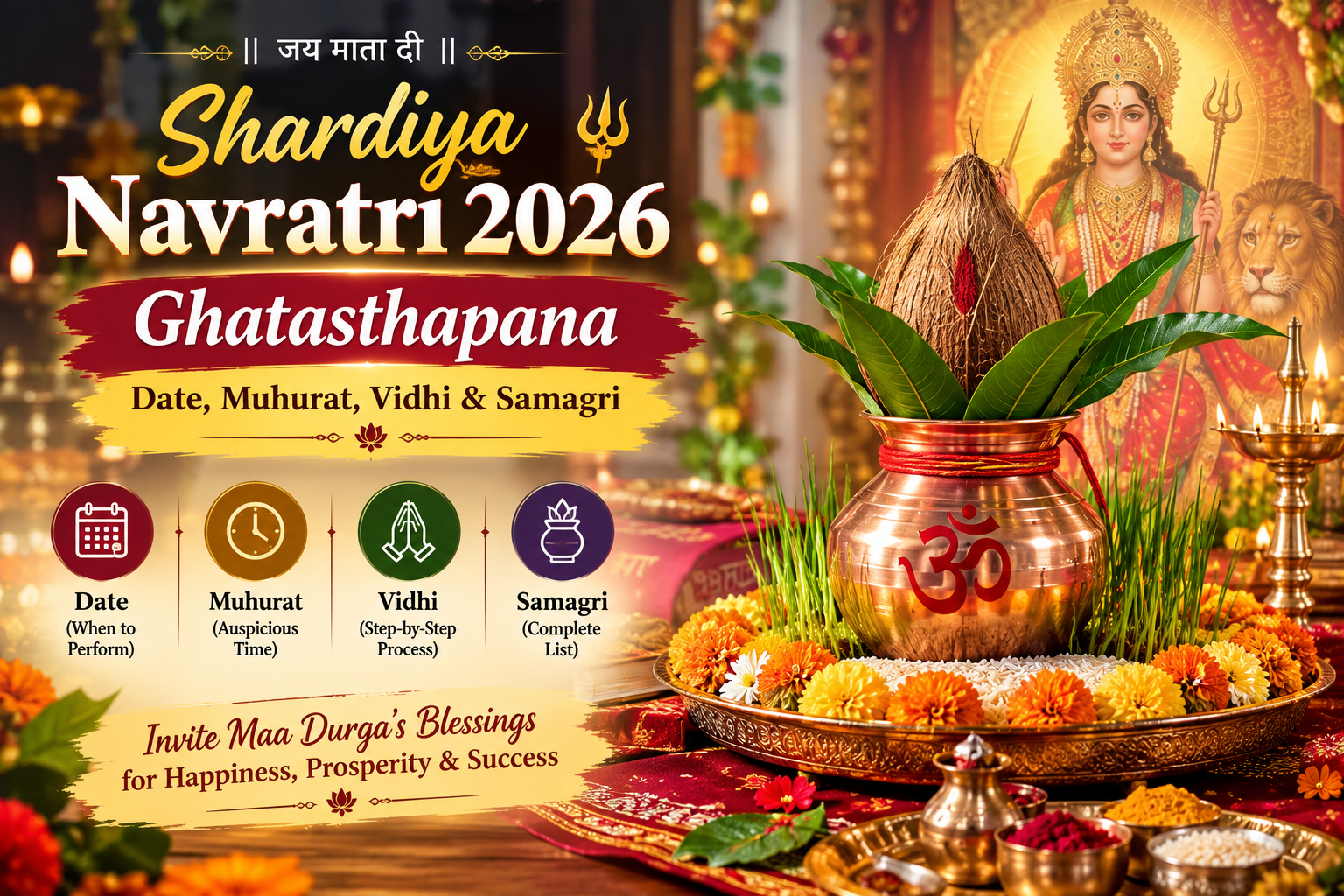
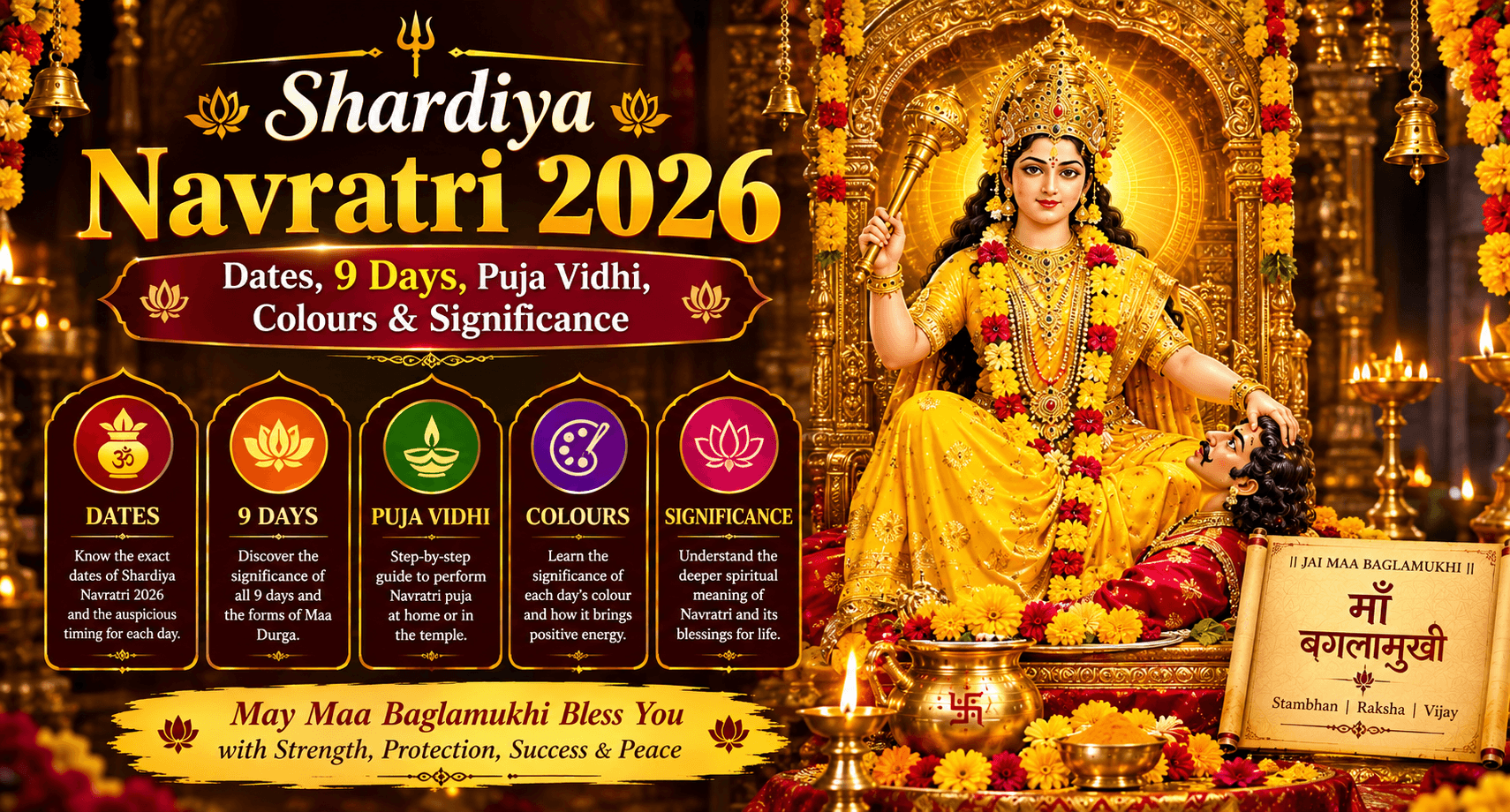
Shardiya Navratri is the most widely celebrated of the four Navratris observed in the Hindu calendar, falling in the autumn month of Ashwin. For nine nights, devotees across India turn their homes and temples toward the worship of Maa Durga's nine forms, known as the Navadurga. Every year, the same questions surface in the days leading up to the festival: when does it begin, how many days does it run, which colour belongs to which day, and what is the correct Puja Vidhi to follow. This guide answers all of that for Shardiya Navratri 2026 in one place - verified dates, the nine-day and nine-Devi structure, the colour calendar, a practical Puja Vidhi overview, Ghatasthapana guidance, fasting traditions, and the festival's broader significance, along with its connection to Maa Baglamukhi worship at Nalkheda.
In 2026, Shardiya Navratri begins on Sunday, 11 October, with Ghatasthapana, and the nine days of Devi worship continue through Monday, 19 October, followed by Vijayadashami on Tuesday, 20 October. Over these nine nights, devotees worship a different form of Maa Durga each day, observe fasting according to family and regional custom, and often follow a daily colour tradition connected to each form. Puja Vidhi, fasting rules, and exact Muhurat timings can vary by region, Panchang, and family tradition, so this guide presents the widely followed structure while noting where practices commonly differ. Devotees are encouraged to confirm location-specific timings before performing time-sensitive rituals such as Ghatasthapana.
Shardiya Navratri 2026 Dates
Shardiya Navratri 2026 begins with Ghatasthapana on Sunday, 11 October, and continues for nine days of Devi worship through Monday, 19 October. Vijayadashami, also known as Dussehra, falls on Tuesday, 20 October 2026. Some Panchangs show slight variation because the Saptami tithi can extend across two days in certain calendars, which occasionally shifts the observance for Ashtami and Navami by a few hours depending on location. Devotees who wish to perform Ashtami or Navami rituals at a specific time should confirm the tithi timing for their own city and Panchang before proceeding.
Event | Date | Day |
|---|---|---|
Pratipada / Ghatasthapana | 11 October 2026 | Sunday |
Day 2 | 12 October 2026 | Monday |
Day 3 | 13 October 2026 | Tuesday |
Day 4 | 14 October 2026 | Wednesday |
Day 5 | 15 October 2026 | Thursday |
Day 6 | 16 October 2026 | Friday |
Ashtami | 18 October 2026 | Sunday |
Navami | 19 October 2026 | Monday |
Vijayadashami | 20 October 2026 | Tuesday |
Some Panchangs record Saptami extending across 17 and 18 October, which can shift the exact Ashtami and Navami timing in certain regions. Please verify with your local Panchang for time-sensitive rituals.
You can find the complete day-by-day schedule for Shardiya Navratri 2026 puja and booking at Nalkheda if you're planning a Baglamukhi ritual alongside your Navratri observance.
Shardiya Navratri 2026 - 9 Days and 9 Devi
Each of the nine days of Shardiya Navratri is dedicated to one form of the Navadurga. Traditionally, the sequence moves from the awakening of spiritual consciousness on Day 1 to the attainment of spiritual accomplishment on Day 9.
Day | Date | Devi Worshipped | Traditional Significance |
|---|---|---|---|
1 | 11 Oct | Maa Shailputri | Stability, grounding, beginning of the spiritual journey |
2 | 12 Oct | Maa Brahmacharini | Devotion, discipline, penance |
3 | 13 Oct | Maa Chandraghanta | Courage, protection, inner strength |
4 | 14 Oct | Maa Kushmanda | Creative energy, vitality |
5 | 15 Oct | Maa Skandamata | Compassion, motherhood, care |
6 | 16 Oct | Maa Katyayani | Strength, removal of obstacles |
7 | 17 Oct | Maa Kalaratri | Protection from fear and negativity |
8 | 18 Oct | Maa Mahagauri | Purity, peace, clarity |
9 | 19 Oct | Maa Siddhidatri | Spiritual accomplishment, divine blessings |
Day 1 - Maa Shailputri
Maa Shailputri, "daughter of the mountains," is worshipped on the opening day alongside Ghatasthapana. According to Hindu tradition, she represents groundedness and marks the formal beginning of the nine-day sadhana. Read the full Day 1 Vidhi.
Day 2 - Maa Brahmacharini
Maa Brahmacharini is associated with penance, patience, and unwavering devotion. Many devotees observe this day as one of quiet discipline. Read the full Day 2 Vidhi.
Day 3 - Maa Chandraghanta
Traditionally linked to courage and spiritual protection, Maa Chandraghanta's worship is said to help devotees build inner strength. Read the full Day 3 Vidhi.
Day 4 - Maa Kushmanda
Maa Kushmanda represents the creative force believed to have brought the universe into being, and this day is associated with vitality. Read the full Day 4 Vidhi.
Day 5 - Maa Skandamata
As the mother of Skanda, this form of the Devi represents compassion and maternal care. Read the full Day 5 Vidhi.
Day 6 - Maa Katyayani
Maa Katyayani is traditionally worshipped for courage and the removal of obstacles. Read the full Day 6 Vidhi.
Day 7 - Maa Kalaratri
This fierce form of Shakti is associated with protection from fear and negative influences. Read the full Day 7 Vidhi.
Day 8 - Maa Mahagauri
Maha Ashtami falls on this day in most Panchangs, and Maa Mahagauri represents purity and spiritual clarity. Read the full Day 8 Vidhi.
Day 9 - Maa Siddhidatri
Maa Siddhidatri, worshipped on Navami, is traditionally regarded as the giver of spiritual accomplishments. Read the full Day 9 Vidhi.
Shardiya Navratri 2026 Colours - 9 Days Colour List
The daily colour tradition is a popular but non-universal custom, and the sequence changes each year because it follows the weekday on which Navratri begins. According to several widely referenced 2026 colour calendars, the commonly followed sequence this year is as follows. Colour traditions can differ by region and by the source consulted, so treat this as a popular guide rather than a fixed rule.
Day | Devi | Traditional Colour |
|---|---|---|
1 | Maa Shailputri | Orange |
2 | Maa Brahmacharini | White |
3 | Maa Chandraghanta | Red |
4 | Maa Kushmanda | Royal Blue |
5 | Maa Skandamata | Yellow |
6 | Maa Katyayani | Green |
7 | Maa Kalaratri | Grey |
8 | Maa Mahagauri | Purple |
9 | Maa Siddhidatri | Peacock Green |
Shardiya Navratri Puja Vidhi
The general Puja Vidhi followed during Shardiya Navratri includes the following steps, though the exact procedure often varies by family tradition, region, and the specific Sankalp being taken.
Cleaning and preparing the Puja area or home temple before Ghatasthapana
Taking a Sankalp (a spoken intention) for the nine days of worship
Ghatasthapana, or the installation of the sacred Kalash, on Day 1
Daily invocation of the day's form of Durga with flowers, kumkum, and traditional offerings
Lighting a diya, ideally kept burning through the nine days according to many family traditions
Daily Aarti, morning and evening in many households
Concluding rituals around Ashtami, Navami, and Kanya Pujan in traditions that observe it
This is a general overview rather than the only correct method. For a step-by-step Vedic Puja Vidhi that also covers Maa Baglamukhi worship, you can refer to the Baglamukhi Puja Vidhi guide.
Ghatasthapana During Shardiya Navratri 2026
Ghatasthapana, also called Kalash Sthapana, is the ritual that formally opens Navratri on Day 1. According to Hindu tradition, it represents the invocation of the Goddess into the home and into the devotee's heart, and it is generally performed during the Pratipada tithi, ideally before midday. Because the exact Muhurat window shifts by location, this article does not prescribe a single timing. Devotees planning Ghatasthapana at home should confirm the Muhurat for their own city through a current Panchang or a qualified priest before the day arrives.
Shardiya Navratri Fasting Rules
Fasting during Navratri varies considerably across households and regions. Some devotees observe a fast for all nine days, taking only fruits, milk, or specific fasting foods such as sabudana and singhare ka atta. Others fast only on select days such as the first and the eighth or ninth. Many people, especially those managing health conditions, observe a lighter or symbolic form of fasting instead. In some regions, a full fast is uncommon and devotional practice is expressed through worship and Kanya Pujan rather than through dietary restriction. This is not medical advice - anyone with health concerns should consult a qualified doctor before undertaking or modifying a fast.
What to Do During Shardiya Navratri?
Perform daily worship of the corresponding form of Durga
Maintain cleanliness in the home and the Puja area
Follow family and regional traditions passed down through generations
Attend temple Puja or community celebrations where appropriate
Practise charity and giving during the nine days
Observe the festival with a spirit of respect and quiet discipline
What Not to Do During Shardiya Navratri?
Restrictions during Navratri differ widely by family, region, and individual tradition, so there is no single universal list of prohibitions. Many households avoid non-vegetarian food and alcohol during the fasting period, and some avoid cutting hair or nails, though these customs are far from universal. Rather than following a generic list found online, it is best to follow the specific customs observed in your own family or community.
Shardiya Navratri Significance
Shardiya Navratri holds a central place in the Hindu festival calendar as a period dedicated to the worship of Shakti, the divine feminine force. Traditionally, the nine days are also seen as an opportunity for devotees to begin a new spiritual practice, deepen an existing Sankalp, or set aside time for reflection and prayer amid daily life. Vijayadashami, which follows the nine days, is widely associated with the victory of good over evil, most commonly recalled through the story of Durga's triumph over Mahishasura. As with all traditional beliefs discussed here, these are matters of faith and devotion rather than claims of a guaranteed result.
Baglamukhi Puja During Shardiya Navratri 2026
Navratri is traditionally regarded as one of the most significant periods for Devi worship, and many devotees extend this practice to the ten Mahavidyas, of which Maa Baglamukhi is one of the most revered. Devotees who already have a personal or family connection to Maa Baglamukhi sometimes choose to combine their Navratri observance with a dedicated Maa Baglamukhi Puja or Baglamukhi Havan, performed according to proper guidance and Sankalp.
At the Maa Baglamukhi Siddha Peeth in Nalkheda, such rituals are performed under traditional Vedic procedure, with the Sankalp taken in the devotee's name and gotra. Devotees interested in a more structured practice across the nine days can also explore a Baglamukhi Anushthan timed to the Navratri period.
Book Baglamukhi Puja for Navratri 2026 → baglamukhihawan.com/shardiya-navratri
This connection is offered as a traditional devotional option for those already inclined toward Baglamukhi worship, not as a requirement of Navratri observance itself.
For devotees who wish to combine their nine-day practice with a specific personal or professional concern, such as an ongoing legal matter, guidance is available through a dedicated Court Case Puja performed alongside proper legal counsel, since a Puja is a devotional practice and not a substitute for legal advice.
Speak with Acharya before booking → baglamukhihawan.com/book-consultation
Frequently Asked Questions About Shardiya Navratri 2026
When does Shardiya Navratri 2026 start?
Shardiya Navratri 2026 starts on Sunday, 11 October, with Ghatasthapana marking the beginning of the nine-day observance.
When does Shardiya Navratri 2026 end?
The nine days of Devi worship conclude on Monday, 19 October 2026, with Vijayadashami following on Tuesday, 20 October.
How many days is Shardiya Navratri?
Shardiya Navratri is observed over nine nights, each dedicated to a different form of Maa Durga, followed by Vijayadashami on the tenth day.
Which Devi is worshipped on the first day?
Maa Shailputri is worshipped on Day 1, alongside the Ghatasthapana ritual that opens the festival.
What are the 9 Devi names during Navratri?
The nine forms are Shailputri, Brahmacharini, Chandraghanta, Kushmanda, Skandamata, Katyayani, Kalaratri, Mahagauri, and Siddhidatri.
What are the Shardiya Navratri colours for 2026?
The commonly followed 2026 sequence is orange, white, red, royal blue, yellow, green, grey, purple, and peacock green, though this can vary by source and region.
What is Ghatasthapana?
Ghatasthapana, or Kalash Sthapana, is the ritual installation of the sacred Kalash that formally opens Navratri and, according to tradition, invokes the Goddess into the home.
Can Ghatasthapana be performed at home?
Yes, many households perform Ghatasthapana at home, generally during the Pratipada tithi and ideally before midday, following the family's usual procedure.
What are the basic Puja steps during Navratri?
A general Vidhi includes Sankalp, Ghatasthapana, daily Devi worship with offerings, Aarti, and concluding rituals around Ashtami and Navami, though the exact steps vary by tradition.
What is the significance of Shardiya Navratri?
Shardiya Navratri is traditionally observed as a period of Shakti worship, spiritual renewal, and the beginning of a new Sankalp, concluding with the symbolic victory of good over evil at Vijayadashami.
Can Navratri fasting traditions vary?
Yes, fasting practices differ widely, from a strict nine-day fast to selective fasting on specific days, and some families do not fast at all.
What happens on Ashtami?
Ashtami, generally falling on 18 October 2026 in most Panchangs, is associated with Maa Mahagauri and is a significant day for Kanya Pujan in many households.
What happens on Navami?
Navami, generally 19 October 2026, is dedicated to Maa Siddhidatri and often marks the concluding rituals of the nine-day observance.
When is Vijayadashami 2026?
Vijayadashami falls on Tuesday, 20 October 2026, the day after the nine-day Navratri period concludes.
Can Baglamukhi Puja be performed during Navratri?
Yes, some devotees choose to combine their Navratri practice with a dedicated Maa Baglamukhi Puja or Havan, performed according to proper Sankalp and guidance.
How can I follow the correct Navratri traditions?
The most reliable approach is to follow the customs of your own family or region, and to consult a qualified priest for any ritual you are unfamiliar with.
Can Puja traditions vary by region?
Yes, Puja Vidhi, fasting rules, colour sequences, and even the exact dates for Ashtami and Navami can vary by region and Panchang.
Where can I get guidance for Baglamukhi Puja or Havan?
Guidance is available through Acharya Tiwari Chetan Guru at Nalkheda Siddha Peeth, who can be contacted for Navratri Puja and Havan bookings.
Book Baglamukhi Puja or Havan During Shardiya Navratri 2026
Shardiya Navratri comes once a year, and for devotees already drawn to Maa Baglamukhi, it is a meaningful time to consider a personalised Puja, Havan, or Anushthan at Nalkheda Siddha Peeth. Whether your interest is a simple Sankalp-based Puja, a full Havan, or a structured multi-day Anushthan, the ritual can be discussed and arranged according to your specific intention, including for devotees unable to travel to Nalkheda in person.
Explore Navratri Puja & Havan options → baglamukhihawan.com/shardiya-navratri
Puja and Havan are devotional practices performed with faith and tradition; they are not presented here as a guarantee of any specific worldly outcome.
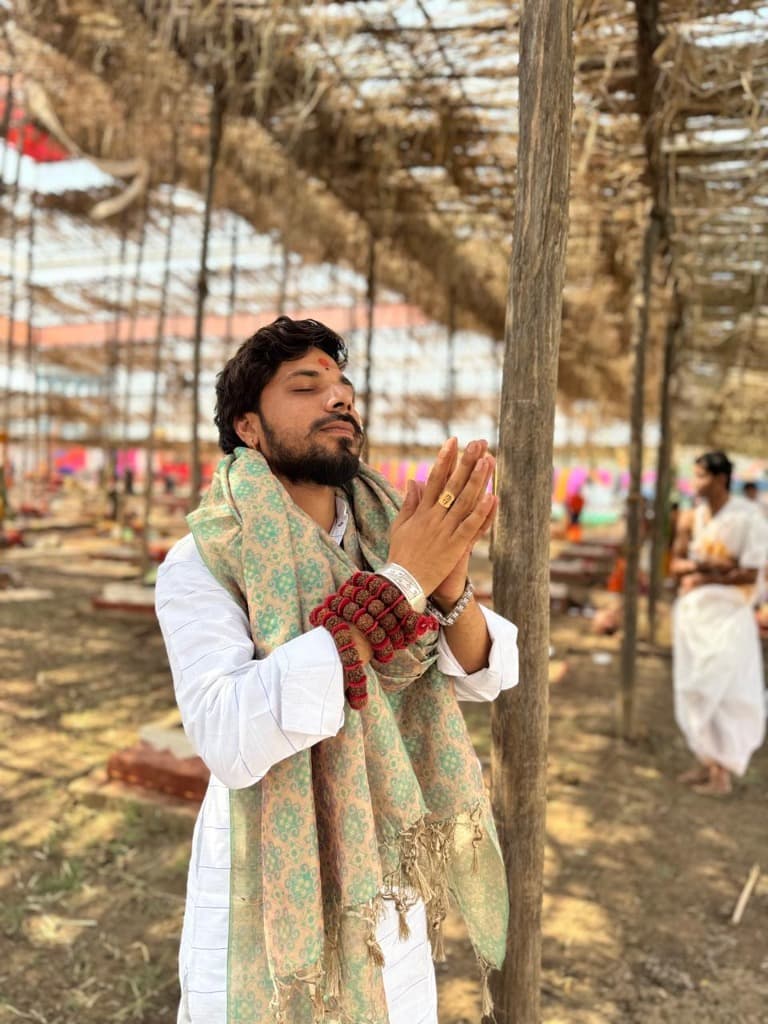
Acharya Tiwari Chetan Guru
Siddha Peethadheesh & Head Vedic Scholar
With over 15+ years of unbroken Vedic practice at Maa Baglamukhi Siddha Peeth, Nalkheda, Acharya Ji is a globally authoritative voice on Tantra Shastra, Stambhan Vidya, and Karmic Astrology. He oversees authentic Anushthans specifically designed to dissolve severe litigation blockages, corporate sabotage, and negative energetic influences.