Getting Navratri puja samagri together at the last minute is one of the most common sources of stress before the festival begins. This guide brings every category of item into one place: what is needed for Ghatasthapana, what is needed daily across the nine days, what Akhand Jyoti requires, and what changes if a family performs Kanya Pujan or Havan. The aim is simple: a checklist you can genuinely shop from, not just read.
Samagri traditions vary by region and family, so this guide presents the widely followed North and Central Indian list while being clear about which items are essential and which are optional additions.
Quick Answer: What Is Needed for Navratri Puja?
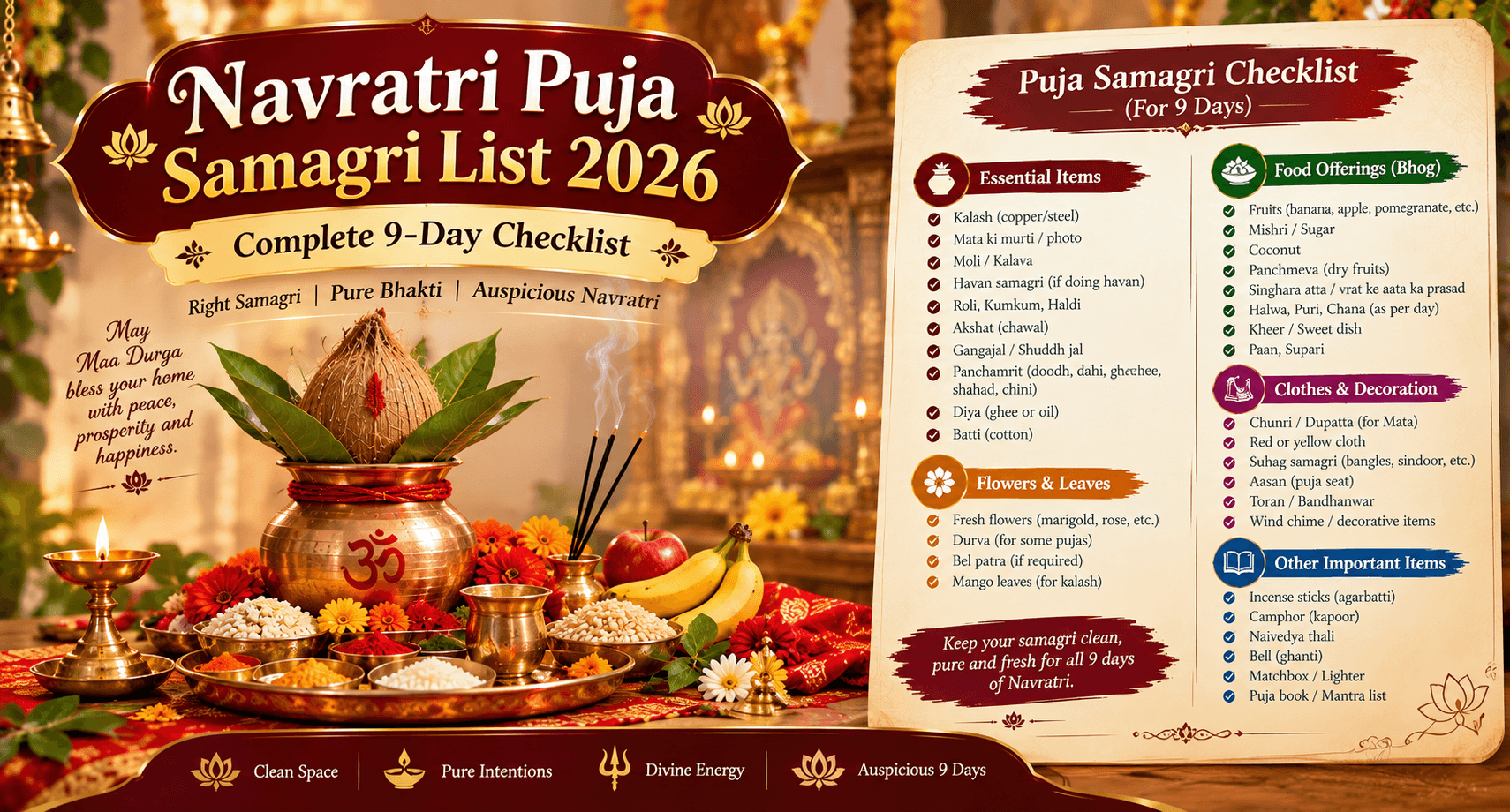
At a basic level, Navratri puja needs a Kalash, coconut, mango or Ashoka leaves, jau (barley) with clean soil, roli or kumkum, akshat, moli (kalava), flowers and a garland, a diya with oil or ghee and cotton wicks, dhoop, incense and camphor, fruits and prasad, a Durga idol or photo, chunari or red cloth, basic puja utensils, and Kanya Pujan items if the family performs Kanya Pujan on Ashtami or Navami. Havan-specific items are needed only if a Havan is planned.
This is the practical core; the sections below break each category down in detail.
Complete Navratri Puja Samagri List 2026
1. Basic Navratri Puja Items
These are the items most households need regardless of exactly how elaborate their Navratri worship is.
Item | Essential or Optional |
|---|---|
Maa Durga idol or photo | Essential |
Puja chowki (small wooden platform) | Essential |
Red or yellow cloth for the chowki | Essential |
Chunari | Commonly used |
Puja thali | Essential |
Kalash | Essential, if Ghatasthapana is performed |
Diya | Essential |
Oil or ghee | Essential |
Cotton wicks | Essential |
Incense (agarbatti) | Essential |
Dhoop | Commonly used |
Camphor | Commonly used |
Bell | Commonly used |
Conch (shankh) | Optional, where traditionally used |
Flowers | Essential |
Garland | Commonly used |
Fruits | Essential |
Prasad or sweets | Essential |
Water vessel (lota) | Essential |
Aasan (seating mat for worship) | Commonly used |
Japa mala | Optional, for mantra chanting |
Treat the "essential" rows as the non-negotiable minimum, and the rest as items that make the worship fuller without being strictly required.
2. Ghatasthapana / Kalash Sthapana Samagri
Ghatasthapana, performed on the first day, needs its own dedicated set of items, separate from what is used daily afterward. For the full Ghatasthapana date, muhurat, and step-by-step vidhi for 2026, see the Shardiya Navratri 2026 Ghatasthapana guide.
Commonly used Ghatasthapana and Kalash Sthapana items include:
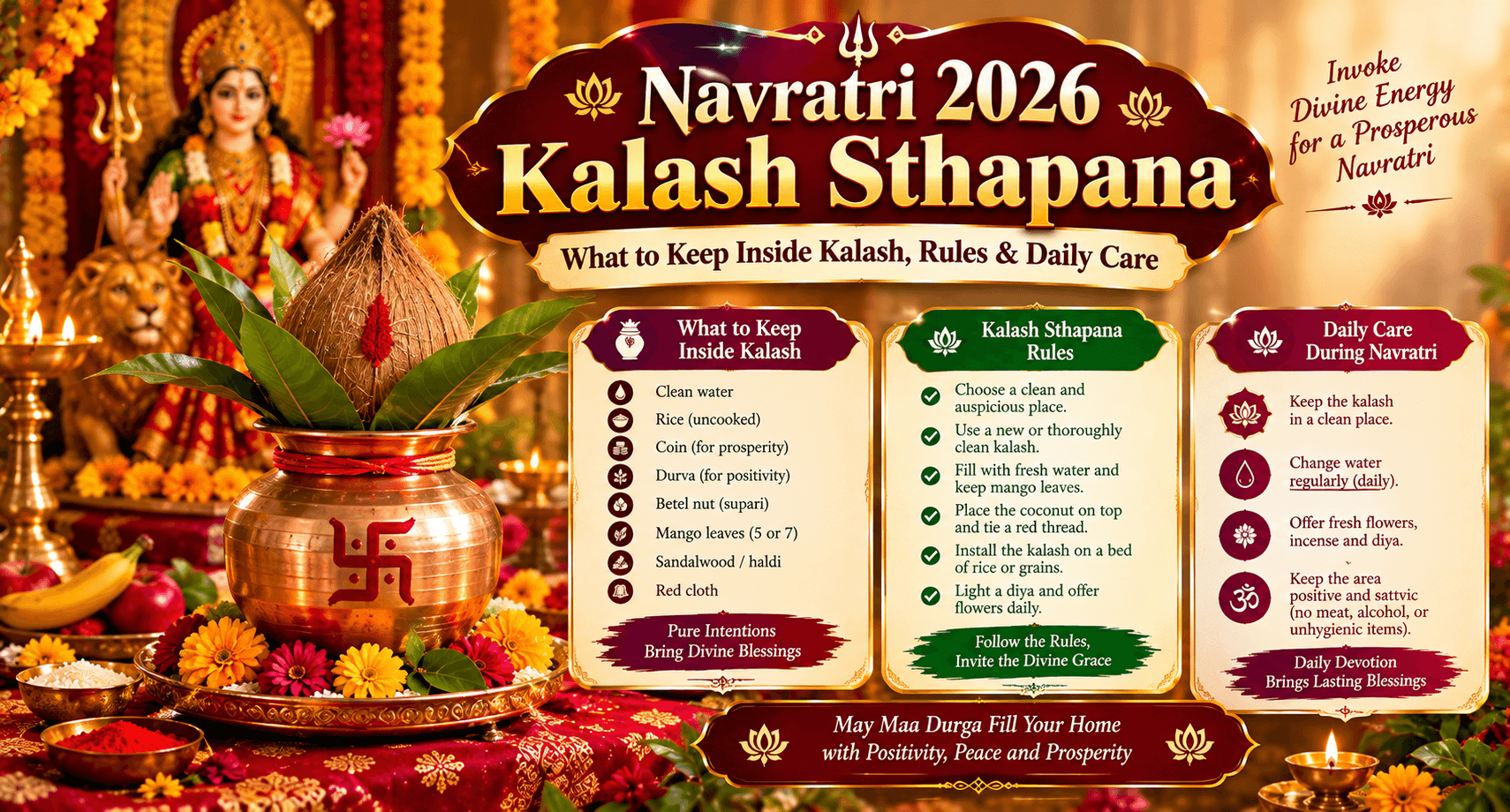
Kalash (copper, brass, or clay)
Water, often with a few drops of Gangajal
Mango or Ashoka leaves, generally five
Coconut with husk intact
Red cloth or chunari, to wrap the coconut
Moli or kalava, tied around the neck of the Kalash
Akshat (unbroken rice)
Roli or kumkum
Turmeric
Supari (betel nut)
A coin, placed inside the Kalash
Fragrance or perfume, where this is traditionally included
Jau (barley) seeds, for sowing
Clean soil, for the barley bed
A wide earthen pot or tray, to sow the barley beneath or beside the Kalash
Flowers
Durva grass, where traditionally used
It is worth being clear that not every family or region follows an identical list here. Some households simplify this considerably, while others add region-specific items. Rather than repeating the full step-by-step method here, refer to the dedicated Ghatasthapana 2026 vidhi and samagri article for the complete process.
3. Daily Navratri Puja Items
Across the nine days, a smaller set of items gets used repeatedly rather than purchased once. These typically include:
Fresh flowers
A garland, if replaced daily
Incense
Dhoop
Camphor
Ghee or oil, for the diya
Cotton wicks
Water
Roli and akshat
Fruits, for daily offering
Bhog or naivedya, prepared fresh each day
Prasad, for distribution
Panchamrit ingredients, where this is part of the daily puja
Since these are consumables, quantity depends heavily on family size and how elaborate the daily puja is. A household of four performing a simple daily aarti needs far less than a joint family hosting relatives each evening. As a general rule, buying flowers and fruit in small batches every two to three days keeps them fresh, while diya oil, wicks, incense, and camphor can reasonably be bought in bulk for all nine days at once.
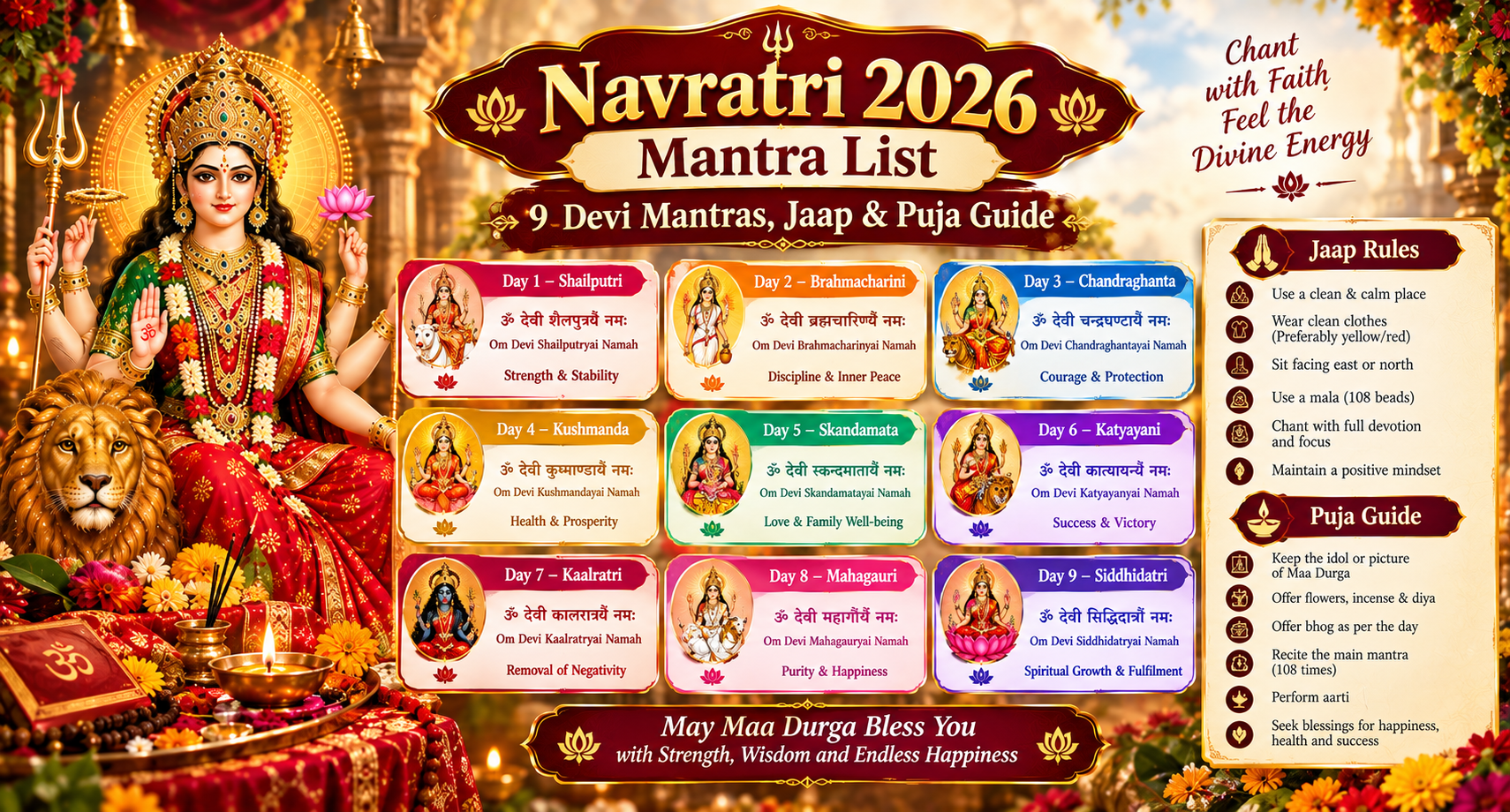
The Navratri 2026 Mantra List is a useful companion for this daily puja, since each of the nine days is dedicated to a different form of the Devi.
4. Akhand Jyoti Samagri
Families that keep an Akhand Jyoti (an unbroken lamp) through all nine days need a slightly different, smaller set of items, prepared with extra care:
A dedicated diya or lamp, ideally larger than the daily-use diya
Ghee, or a suitable oil according to family tradition
Cotton wicks, generally thicker than those used for a regular diya
A matchbox or lighter
A safe, stable place for the lamp, away from any draft
Safety note: An Akhand Jyoti is left burning continuously, so it should never be left genuinely unattended in a room with no one present, and must be kept well away from curtains, paper, decorations, or any other combustible material. A stable metal or glass lamp stand is strongly advisable.
5. Navratri Bhog and Prasad Items
Bhog preparation is one of the more variable parts of Navratri worship. Common ingredients across households include:
Fruits
Milk
Curd
Sugar or mishri
Honey
Dry fruits
Coconut
Makhana (fox nuts)
Sweets
Halwa
Puri
Kala chana
Specific offerings vary considerably by region and family, and no single bhog list should be treated as universally mandatory. For the complete day-by-day bhog tradition tied to each of the nine forms of Devi, see the Navratri 2026 Bhog List.
6. Kanya Pujan Samagri
Families that perform Kanya Pujan, typically on Ashtami or Navami, need a distinct set of items in addition to the regular daily puja samagri:
Halwa
Puri
Kala chana
Fruits or sweets
Water, for washing feet
Roli or kumkum
Akshat
Moli
Dakshina
Traditional gifts such as chunari, bangles, or another small item, according to family custom
This is only a brief summary. For the complete date, step-by-step vidhi, age and number guidance, and full samagri breakdown for Kanya Pujan 2026, the dedicated Kanya Pujan 2026 guide covers this in full, so it is not repeated here in detail. (Editor's note: confirm the final published URL of this article before linking live, as it is a newly drafted piece.)
7. Ashtami/Navami Puja and Havan Samagri
Families that perform a Havan, most commonly on Ashtami or Navami, need additional items beyond the standard daily puja setup:
Havan kund (fire pit or portable havan vessel)
Havan samagri (the mixed offering material)
Ghee
Wood or another suitable fuel, according to the specific ritual practice followed
Coconut, for the final purnahuti (concluding offering)
Camphor
Flowers
Any other item specifically prescribed by the family's own tradition or the officiating priest
Havan requirements genuinely vary by the specific ritual and the tradition a family or priest follows, so this list should be treated as a general starting point rather than a fixed formula. For readers who want to understand exactly what goes into a Havan offering, the Baglamukhi Havan Samagri guide explains the composition and purpose of typical havan samagri items in detail.
Navratri Puja Shopping Checklist 2026
This table is designed to be printed or screenshotted and taken shopping.
Item | Approximate Quantity | Used For | Buy Before Navratri? |
|---|---|---|---|
Kalash | 1 | Ghatasthapana | Yes |
Coconut | 1 (Ghatasthapana) + as required for bhog | Ghatasthapana, prasad | Yes |
Mango/Ashoka leaves | 5 leaves | Ghatasthapana | Yes |
Jau (barley) | Small packet | Sowing at Ghatasthapana | Yes |
Clean soil | As required for the tray | Ghatasthapana | Yes |
Roli/Kumkum | 1 small packet | Daily puja, tilak | Yes |
Akshat | Small quantity | Daily puja, tilak | Yes |
Moli/Kalava | 1 roll | Kalash, tilak, wrist thread | Yes |
Flowers | As required daily | Daily puja | Buy fresh every 2-3 days |
Garland | 1 or more, as preferred | Idol/photo decoration | As required |
Diya | 2-3, plus extra for Akhand Jyoti if kept | Daily puja, Akhand Jyoti | Yes |
Oil/Ghee | Quantity depends on family/ritual requirements | Diya, Akhand Jyoti | Yes, in bulk |
Cotton wicks | 1 packet | Diya, Akhand Jyoti | Yes |
Dhoop/Incense | 1-2 packets | Daily puja | Yes |
Camphor | Small packet | Aarti | Yes |
Fruits | As required for daily offering | Daily puja, bhog | Buy fresh every 2-3 days |
Sweets/Prasad ingredients | As required | Bhog | As required |
Chunari/Red cloth | 1-2 pieces | Kalash, Kanya Pujan | Yes |
Puja thali/utensils | 1 set | Daily puja | Yes, if not already owned |
Kanya Pujan items | As required per number of girls | Kanya Pujan | 1-2 days before Ashtami/Navami |
Havan samagri | Quantity depends on family/ritual requirements | Havan, if performed | 1-2 days before the Havan date |
Essential vs Optional Items
Many generic online lists present every single item as compulsory. In practice, requirements shift considerably based on:
Regional custom
Family tradition
The type of Navratri Puja being performed (simple daily worship versus a full Anushthan)
Whether Ghatasthapana is being performed at home
Whether Akhand Jyoti is observed
Whether Havan is performed
Whether Kanya Pujan is performed
Essential Navratri Puja Items
Kalash (if Ghatasthapana is done), Durga idol or photo, diya, oil or ghee, cotton wicks, incense, roli, akshat, flowers, fruits, and a clean puja space form the practical core that almost every household needs, regardless of how elaborate the rest of the worship is.
Optional or Tradition-Based Items
Conch, japa mala, Durva grass, specific fragrance or ittar, an Akhand Jyoti setup, Havan materials, and the full Kanya Pujan gift list fall into this category. These matter a great deal to families who follow that particular custom, but are not universal requirements of Navratri worship itself.
What to Buy 7-10 Days Before Navratri
Kalash, if a new one is needed
Durga idol or photo, if not already at home
Moli, roli, akshat, and other dry puja items that do not spoil
Chunari and red cloth
Diya, cotton wicks, and a stock of oil or ghee
Incense, dhoop, and camphor in bulk
Havan samagri, if a Havan is planned, so it does not need to be arranged in a rush later
What to Prepare Before Ghatasthapana
2-3 days before Ghatasthapana: Arrange jau (barley), clean soil, mango or Ashoka leaves, coconut, and confirm the exact Ghatasthapana date and muhurat for your city from the Ghatasthapana 2026 guide.
One day before: Check that all Ghatasthapana items are together in one place, clean the puja area, and confirm which daily-use items (flowers, fruit) still need to be bought fresh.
On Ghatasthapana day: The Kalash, coconut, barley bed, mango leaves, moli, roli, akshat, and the day's flowers and fruit should already be ready before the muhurat window begins, since Ghatasthapana is time-sensitive and should not be delayed while searching for a missing item.
Before Ashtami/Navami: Arrange Kanya Pujan samagri (halwa, puri, kala chana ingredients, dakshina, small gifts) and, if applicable, Havan samagri, a day or two in advance so the household is not rushing on the day itself.
Common Mistakes While Preparing Navratri Puja Samagri
Buying everything at the very last minute, leading to unnecessary stress
Forgetting jau (barley) and clean soil until Ghatasthapana morning
Running short on cotton wicks partway through the nine days
Not keeping enough flowers or naivedya ingredients for daily offering
Mixing up Ghatasthapana-specific items with ongoing daily-use items
Forgetting Kanya Pujan requirements until the morning of Ashtami or Navami
Buying Havan material without first checking what the specific ritual or priest actually requires
Assuming every family in the neighbourhood follows an identical samagri tradition
Regional and Family Tradition Variations
Navratri puja samagri is not perfectly identical across India, and treating one list as universally compulsory tends to create unnecessary confusion. Items can differ according to:
North Indian household traditions, which tend to follow the Ghatasthapana-and-Kanya Pujan structure covered in this guide
Regional customs, since eastern India's Durga Puja and southern India's Ayudha Puja emphasis bring different item priorities
Family tradition, since some households have followed a specific, slightly different samagri list for generations
Temple worship versus home worship, where temple rituals are typically more elaborate
The specific Puja Vidhi followed, whether a simple daily aarti or a structured Anushthan
If your family's list differs from what is described here, following your own established custom is entirely appropriate; this guide reflects widely followed practice rather than a single mandatory standard.
How to Prepare for Navratri Puja at Home
Bringing this together, a practical approach is to treat preparation in three stages: gather the non-perishable essentials well in advance, buy fresh items like flowers and fruit close to when they are needed, and set aside Kanya Pujan and Havan items separately so they are not confused with daily-use supplies. Reviewing the Shardiya Navratri 2026 dates, 9 days, and puja vidhi guide alongside this checklist gives a complete picture of both what to buy and how each day's worship is structured, including the Navratri colours followed for each day.
Relevant Baglamukhi Puja and Hawan Guidance
Navratri is traditionally considered one of the most significant periods for Shakti worship, and this extends, for many devotees, to the ten Mahavidyas, including Maa Baglamukhi. Devotees who already hold a personal or family connection to Maa Baglamukhi, and who prefer a structured Puja or Hawan performed with proper Sankalp rather than arranging every item themselves, can explore the Maa Baglamukhi Hawan or a more elaborate Maa Baglamukhi Maha Hawan conducted at the Nalkheda Siddha Peeth.
For those weighing costs before deciding between arranging their own Havan samagri at home versus a guided temple ritual, the Baglamukhi Puja cost guide and Baglamukhi Havan price guide set out what is typically involved, and the Baglamukhi Mantra guide explains the mantra tradition associated with this worship.
Devotees who would like guidance on which option suits their household this Navratri can book a puja online or speak with the temple's Acharya beforehand. This is offered as a devotional option for those already inclined toward Baglamukhi worship, not as a requirement of Navratri itself, and no specific outcome is guaranteed by any puja or havan.
Frequently Asked Questions
What items are needed for Navratri Puja?
A Kalash, coconut, mango or Ashoka leaves, jau and soil, roli, akshat, moli, flowers, a diya with oil and wicks, incense, camphor, fruits, prasad, a Durga idol or photo, and chunari form the practical core, with Kanya Pujan and Havan items added if those rituals are performed.
What is the most important item for Navratri Puja?
The Kalash is generally considered the central item, since it represents the invocation of Devi's presence for the nine days when Ghatasthapana is performed.
What is needed for Ghatasthapana?
A Kalash, water, mango or Ashoka leaves, a coconut, red cloth, moli, akshat, roli, jau, and clean soil for sowing barley are the commonly used Ghatasthapana items.
What should be kept inside the Navratri Kalash?
Water, often with Gangajal, along with items such as a coin, akshat, turmeric, and betel nut, according to family tradition.
What is needed for Akhand Jyoti?
A stable diya or lamp, ghee or a suitable oil, thicker cotton wicks, and a safe, draft-free spot away from anything flammable.
What should be bought for all 9 days of Navratri?
A steady stock of oil or ghee, cotton wicks, incense, dhoop, and camphor covers the nine days, while flowers and fruit are best bought fresh every two to three days.
What items are needed for Kanya Pujan?
Halwa, puri, kala chana, water for washing feet, roli, akshat, moli, dakshina, and small gifts such as chunari or bangles.
What is needed for Navratri Havan?
A havan kund, havan samagri, ghee, suitable fuel, coconut for purnahuti, camphor, and flowers, with the exact list depending on the specific ritual followed.
Can Navratri Puja be performed at home?
Yes, Navratri puja, including Ghatasthapana, daily worship, and Kanya Pujan, is very commonly performed at home and does not require a temple setting.
Are all Navratri Puja Samagri items compulsory?
No. Items such as the Kalash, diya, roli, and akshat are widely considered essential, while items like a conch, japa mala, or specific fragrance are optional additions based on family tradition.
How much Puja Samagri is required for a family?
Quantity depends on family size and the type of worship performed; a simple daily aarti needs far less than a household hosting an elaborate nine-day Anushthan.
When should Navratri Puja Samagri be purchased?
Non-perishable items are best bought 7 to 10 days in advance, while fresh flowers and fruit should be purchased close to when they are needed, ideally every two to three days.
What should be prepared before Ghatasthapana?
The Kalash, coconut, mango leaves, barley, soil, moli, roli, and akshat should all be ready before the chosen muhurat window on Ghatasthapana day.
What should be offered as Navratri Bhog?
Fruits, milk, curd, sweets, coconut, and dishes such as halwa, puri, and kala chana are commonly offered, though specific bhog varies by region and family.
What should be kept ready for Ashtami/Navami?
Kanya Pujan samagri (bhog ingredients, dakshina, small gifts) and, if a Havan is planned, havan samagri, should both be arranged a day or two in advance.
Is barley (jau) necessary for Navratri Puja?
Sowing barley beneath or beside the Kalash is a widely followed Ghatasthapana custom in North India, though it is a regional and family tradition rather than a universal requirement.
Can Ghatasthapana be done without a coconut?
Some households do simplify the setup, but a coconut wrapped in red cloth atop the Kalash is one of the most consistently followed elements of Ghatasthapana across North Indian tradition.
Do I need different diyas for daily puja and Akhand Jyoti?
Most households use a separate, sturdier lamp for Akhand Jyoti since it burns continuously, distinct from the diya lit for the daily aarti.
What if I cannot arrange every item on this list?
Focus on the essential items first. Sincerity in worship is considered more important than assembling every optional item, and most priests and elders agree that a simple, complete core puja is entirely valid.
Conclusion
A well-prepared Navratri puja samagri list takes most of the stress out of the nine days, letting the focus stay on the worship itself rather than last-minute shopping. Start with the non-perishable essentials a week or so in advance, keep fresh items like flowers and fruit on a short rotation, and set Kanya Pujan and Havan items aside separately so nothing is missed on Ashtami or Navami. For devotees who would prefer a guided Puja or Hawan rather than arranging every item themselves, the temple's Maa Baglamukhi Hawan services remain available throughout Navratri 2026.
Acharya Tiwari Chetan Guru
Siddha Peethadheesh & Head Vedic Scholar
With over 15+ years of unbroken Vedic practice at Maa Baglamukhi Siddha Peeth, Nalkheda, Acharya Ji is a globally authoritative voice on Tantra Shastra, Stambhan Vidya, and Karmic Astrology. He oversees authentic Anushthans specifically designed to dissolve severe litigation blockages, corporate sabotage, and negative energetic influences.