
The Cosmic Divinity of Maa Baglamukhi
In the sacred Shakta tradition of Sanatan Dharma, the Dasha Mahavidyas (Ten Great Wisdom Goddesses) represent ten transcendent facets of the Supreme Cosmic Feminine (Para Shakti). Among these primordial powers, Maa Baglamukhi reigns as the Eighth Mahavidya, venerated across millennia as the ultimate embodiment of Stambhan Shakti—the cosmic power to paralyze hostility, immobilize untruth, and dissolve spiritual turbulence.
Known affectionately by millions of devotees as Pitambara Devi (the Golden-Yellow Goddess) and Brahmastra Roopini, Maa Baglamukhi wields the unmatched energy of the primordial weapon that cannot be thwarted. Whether a devotee seeks inner mastery over intrusive thoughts, resolution from malicious legal conflicts, or divine guardianship against occult negativity, turning to Maa Baglamukhi invokes immediate spiritual stillness.
The Sacred Origin: Manifestation from Haridra Sarovar
The manifestation of Maa Baglamukhi is detailed in ancient Tantric treatises such as the Svatantra Tantra, Sankhayana Tantra, and Rudra Yamala. According to sacred tradition, during the Satya Yuga, a ferocious cosmic storm arose that threatened to annihilate the three worlds. The cosmic order (Rta) was destabilized, and neither devas nor mortals possessed the strength to pacify the violent tempest.
In extreme distress, Lord Vishnu performed intense austerities in the region of Saurashtra on the banks of Haridra Sarovar (the celestial lake of consecrated turmeric). Pleased by His unwavering tapasya, the Supreme Mother emerged from the radiant golden waters on the Shukla Chaturdashi of the Vaishakha month. With Her primordial aura, She cast a spell of profound stillness over the hurricane, freezing its destructive momentum instantly. This day is celebrated globally as Baglamukhi Jayanti.
Because She manifested from the radiant yellow turmeric waters of Haridra Sarovar, the Goddess is forever consecrated with the color yellow. Her garments, ornaments, garlands, and offerings are uniformly golden, vibrating harmoniously with the solar energy of the Manipura Chakra. Devotees regularly perform Maa Baglamukhi Pooja to align with this sublime purifying radiance.
Iconography and Esoteric Symbolism
Every element in the divine swaroop of Maa Baglamukhi carries layered metaphysical meaning that transcends outward appearances:
- The Golden Mace (Mudgar): Held in Her right hand, the mace represents the smashing of human ego (Ahamkara), deceit, and moral degradation. It shatters the illusion of duality and protects righteous seekers.
- Holding the Demon's Tongue (Jihva Grahan): In Her left hand, Devi grips the extended tongue of the demon Madanasura (or Vak-Asura). In Vedic psychology, the tongue represents speech, slander, pride, and sensory indulgence. By grasping it, Devi grants Vak-Stambhan—silencing slanderers, disabling false allegations, and instilling profound inner truth in the devotee.
- Golden Throne in the Ocean of Nectar: She sits upon a magnificent jeweled throne (Ratna Simhasana) placed within the Ocean of Nectar (Amrita Samudra) filled with blooming yellow lotuses, symbolizing supreme sovereignty over life and death.
- The Golden Complexion (Pitambara): Devi radiates a golden-yellow hue that burns through karmic impurities and cleanses the subtle aura of devotees.
The Historic Swayambhu Peeth at Nalkheda
While Devi is omnipresent across the universe, Her most concentrated physical vibration resides at the Maa Baglamukhi Temple in Nalkheda located on the holy banks of River Lakhundar in Agar Malwa, Madhya Pradesh. Established under the divine counsel of Lord Krishna and Maharshi Ved Vyasa by King Yudhishthira during the Mahabharata war, Nalkheda is renowned as a self-manifested (Swayambhu) Siddha Peeth.
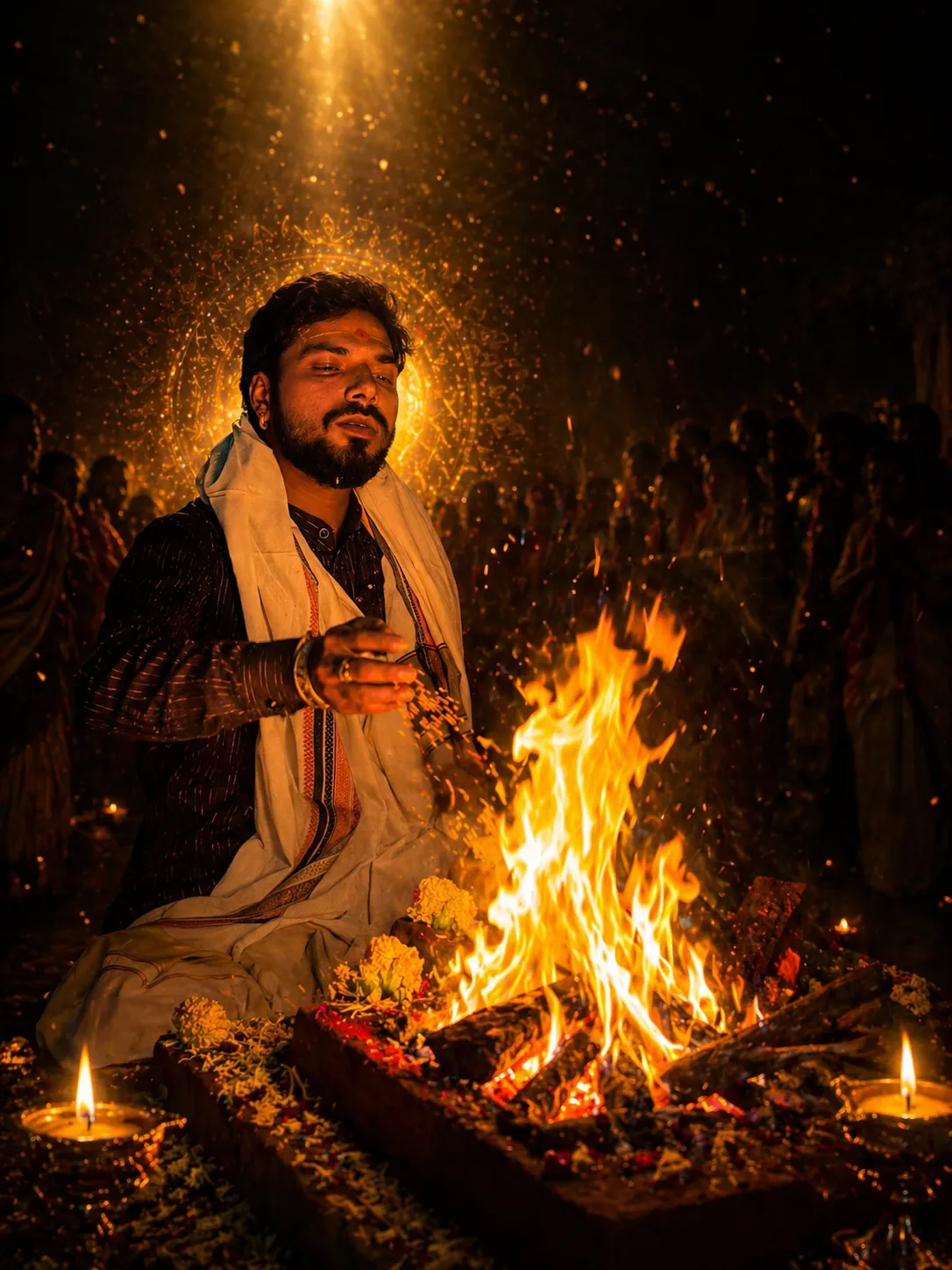
At Nalkheda, the sacred presence is uniquely revered as Trishakti—Maa Baglamukhi flanked by Maa Mahalakshmi and Maa Mahasaraswati. Here, generations of lineage priests, led today by Acharya Tiwari Chetan Guru, conduct traditional fire ceremonies that continue the unbroken Vedic lineage.
Rituals, Hawan & Spiritual Practices Dedicated to Devi
Approaching Maa Baglamukhi requires pure devotion, ethical integrity, and adherence to scriptural protocols. Devotees engage with Her through structured spiritual channels:
| Ritual Form | Nature of Practice | Core Benefit |
|---|---|---|
| Vedic Nitya Puja | Daily chanting of Chalisa, Kavach & Stotram | Mental tranquility, courage & household protection |
| Siddha Peeth Hawan | Fire ritual with yellow samagri & 36-letter Mool Mantra | Neutralizing active hostility, litigation & career obstacles |
| 1.25 Lakh Maha Anushthan | Intensive mantra discipline with Dashansh Havan | Complete karmic breakthrough, crisis resolution & life protection |
For individuals confronting prolonged adversity, a disciplined Baglamukhi Anushthan offers the highest spiritual shield. In acute situations of unjust aggression, lineage priests may perform a specialized Lal Mirch Hawan under strict tantric safeguards.
Devotees seeking to remove roadblocks in their career or enterprise can participate in Baglamukhi Hawan in Nalkheda. For family well-being, the gentle Sukh Shanti Hawan restores domestic serenity, while devotees facing financial stagnation perform the consecrated Financial Growth Pooja or entrepreneurial Business Growth Pooja.
Guidelines for Seekers and Devotees
Maa Baglamukhi is a protector of righteousness (Satya and Dharma). She must never be approached with malefic intentions or desires to unjustly harm others, as karmic law under the Mahavidyas is swift and self-correcting. Devotees must observe Sattvic dietary discipline, wear clean yellow attire, and seek authentic guidance from initiated priests before undertaking severe sadhana.