

Understanding the Sacred Baglamukhi Hawan at Nalkheda
On the sacred banks of the River Lakhundar in the ancient town of Nalkheda (Agar Malwa district, Madhya Pradesh) stands one of Sanatan Dharma's most venerated shrines: the Maa Baglamukhi Siddha Peeth. For centuries, devotees, scholars, and spiritual seekers have journeyed here to perform the consecrated Baglamukhi Hawan—a profound Vedic and Tantrokta fire ceremony dedicated to the 8th Mahavidya, Devi Pitambara.
Unlike routine household fire ceremonies, a Baglamukhi Hawan at Nalkheda is a specialized intervention. It invokes the divine faculty known as Stambhan Shakti—the cosmic capacity to freeze chaos, silence malicious speech (Vak-Stambhan), dismantle unseen energetic blockages, and safeguard the devotee against unjust hostility, lingering legal battles, and acute career sabotage.
Historical Roots: The Mahabharata Tradition at River Lakhundar
The spiritual sanctity of Nalkheda is grounded in sacred antiquity. According to local Sthal Purana and regional historical texts, during the Mahabharata era, the Pandavas were facing seemingly insurmountable odds before the Kurukshetra war. On the counsel of Lord Krishna, Maharshi Ved Vyasa advised King Yudhishthira to perform an intense Yagya at this exact geographic confluence.
Yudhishthira invoked the Supreme Goddess of Stambhan on the banks of River Lakhundar. Pleased by their unyielding adherence to Dharma, Maa Baglamukhi manifested Her Swayambhu (self-arisen) presence to bless the Pandavas with the Brahmastra-like energetic protection that immobilized the hostile forces of the Kaurava army. Read our comprehensive Maa Baglamukhi Nalkheda temple guide for details on the shrine's architectural lineage.
The Metaphysics of 'Stambhan Shakti' in the Hawan Kund
In Tantric cosmology, every element possesses a specific vibrational signature. Maa Baglamukhi represents the cosmic pause—the stillness between an inbreath and an outbreath. When destructive forces threaten the innocent, She grasps the tongue of the demon (Madanasura) and raises Her golden mace (Mudgar) to shatter untruth.
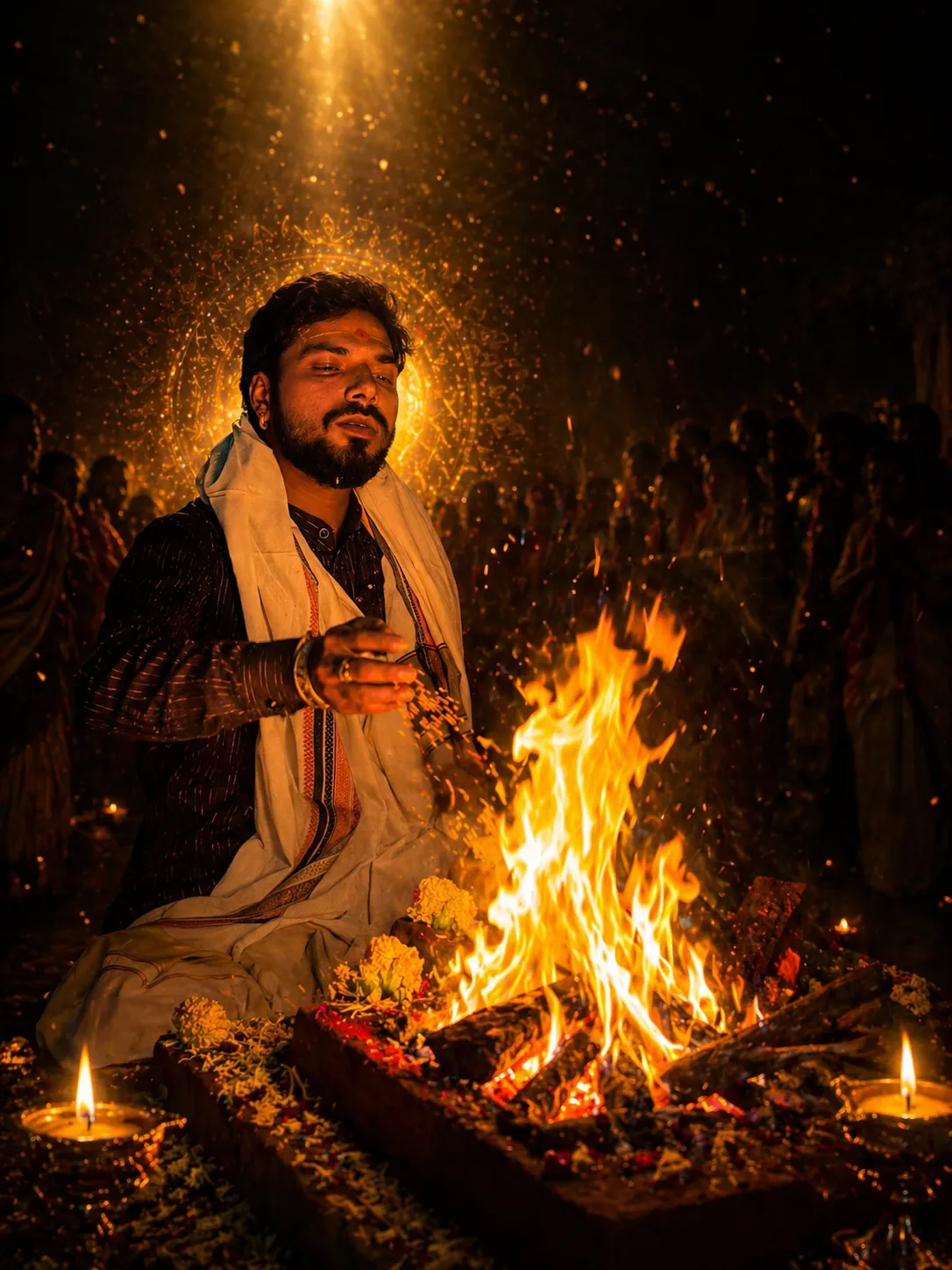
When the sacred fire (Agni) is ignited in the consecrated Havan Kund at Nalkheda, Agni Dev acts as the divine carrier (Havya-Vahana). Each offering infused with the 36-letter Mool Mantra sends high-frequency sound vibrations into the cosmos, directly burning karmic residue and establishing a defensive acoustic perimeter around the devotee's energetic aura.
Essential Yellow Samagri for an Authentic Hawan
Authentic Baglamukhi rituals demand strict adherence to scriptural ingredients. The Goddess is fondly venerated as Pitambara Devi (the Golden-Yellow Goddess), and yellow materials correspond directly to the solar energy of the Manipura Chakra:
- Sabut Peeli Haldi (Whole Turmeric Roots): The primary offering representing unyielding purification, spiritual grounding, and the core energy of Haridra Sarovar.
- Peeli Sarson (Yellow Mustard Seeds): Revered in Tantra as Raksha Beej (protective seeds) to cast off evil eye (Buri Nazar) and occult malevolence.
- Pure Desi Cow Ghee: Consecrated clarified butter from indigenous cows used to sustain the continuous sacred flame.
- Kamal Gatta (Dried Lotus Seeds): Offered to invoke the grace of Maa Mahalakshmi for financial stability and debt relief.
- Peeta Pushpa (Yellow Marigold & Kaner Flowers): Freshly gathered blossoms that honor the golden hue of the deity.
- Aam & Bel Ki Samidha (Sacred Wood): Naturally fallen, dry mango and wood-apple branches cut to canonical proportions without hurting living trees.
- Peeta Vastra (Yellow Silk/Cotton Fabric): Worn by the Yagya Karta (devotee) and spread over the sacred altar.
Step-by-Step Hawan Vidhi at Nalkheda
A legitimate Vedic fire ceremony must follow a meticulous sequence guided by an initiated priest, such as Acharya Tiwari Chetan Guru. Below is the canonical structure followed at Nalkheda:
- Pavithrikarana & Aachamana (Purification): Holy water sprinkles from River Lakhundar and Vedic mantras to purify the physical body and ritual space.
- Guru & Ganesha Pujan: Invoking Lord Ganesha to eliminate obstacles and seeking the blessings of the ancestral Guru Parampara.
- The Sacred Sankalp: The Acharya takes water, yellow rice (Akshat), and turmeric in the devotee's palm, chanting their exact Name, Gotra, and intention.
- Agni Sthapana & Navagraha Pujan: The fire is invoked using sacred camphor and samidha, harmonizing the nine planetary deities.
- Baglamukhi Mool Mantra Ahutis: Lineage priests chant the 36-letter Mool Mantra with rhythmic Sanskrit intonation, offering turmeric, ghee, and yellow samagri with each Svaha.
- Purnahuti & Bhasma Tilak: The ritual culminates with the Purnahuti dry coconut placed into the heart of the fire, followed by Maha Aarti and sacred ash tilak.
Comparison: Hawan Options at Nalkheda Siddha Peeth
| Hawan Category | Mantra & Ahuti Count | Typical Duration | Primary Devotional Focus |
|---|---|---|---|
| Samanya Shanti Hawan | 1,008 Ahutis | 2 to 3 Hours | General family peace, minor obstacles & birthday Sankalp |
| Vishesh Shatru-Badha Hawan | 11,000 to 21,000 Mantras | 1 Full Day | Active court disputes, hostile opposition & business rivalry |
| Maha Anushthan Purnahuti | 1,25,000 Maha Jaap + Dashansh | 3 to 9 Days | Severe crises, chronic litigation, corporate threats & life protection |
In severe conflicts involving active harassment or vicious opposition, an initiated priest may recommend a specialized Baglamukhi Lal Mirch Hawan. For maximum spiritual fortification, seekers undertake the multi-day Baglamukhi Anushthan.
If you are planning to visit Nalkheda in person, consult our verified Baglamukhi Temple information guide covering train routes, highway access, dharamshala accommodations, and darshan schedules.