
The Legendary Siddha Peeth of Nalkheda
Nestled along the tranquil banks of the sacred River Lakhundar in the Agar Malwa district of Madhya Pradesh stands the supreme spiritual sanctuary of Maa Baglamukhi Nalkheda. Recognized globally as one of the most energized Shakta Siddha Peeths on earth, this revered temple draws prime ministers, judges, spiritual luminaries, and humble seekers alike, all seeking the invincible shelter of Devi Pitambara.
To truly grasp the sanctity of Nalkheda, one must Learn about Maa Baglamukhi and understand the profound cosmic role She fulfills as the 8th Mahavidya. At Nalkheda, this divine energy is not merely an abstract concept—it is a tangible, living presence experienced by millions who enter the sanctum sanctorum.
Mahabharata Lineage: Lord Krishna, Vyasa & The Pandavas
The sacred roots of Nalkheda are interwoven with the greatest epic of Sanatan Dharma: the Mahabharata. Prior to the monumental conflict of Kurukshetra, the Pandava brothers faced formidable odds against the vast Kaurava forces, led by invincible warriors possessing celestial armaments. Sensing the immense moral and existential gravity of the impending war, King Yudhishthira sought guidance from Lord Sri Krishna.
Lord Krishna, along with Maharshi Ved Vyasa, instructed the Pandavas that victory could only be secured through the invocation of the ultimate goddess of immobilization—Maa Baglamukhi. The Pandavas were directed to the energized geographic confluence on the banks of River Lakhundar. There, King Yudhishthira undertook rigorous tapasya and consecrated the self-manifested (Swayambhu) idol of Devi Pitambara.
Blessed by the Mother's unyielding grace, the Pandavas received the Brahmastra-like energetic shield that neutralized the weapons, hostile speech, and strategies of their adversaries. From that historic epoch to the present day, Nalkheda remains the premier bastion for seekers seeking victory over unjust conflict and persecution.
The Sacred Confluence of Trishakti
What sets the Nalkheda sanctum apart from every other Shakta shrine in India is the rare, unified manifestation of the Trishakti:
- Maa Baglamukhi (Center): The supreme sovereign presiding over Stambhan, holding the demon's tongue and mace, draped in radiant yellow Pitambara robes.
- Maa Mahalakshmi (Right): The eternal provider of wealth, abundance, and auspiciousness, ensuring devotees leave free from financial suffering.
- Maa Mahasaraswati (Left): The goddess of supreme wisdom, discernment, and creative speech, ensuring righteous intellect and truth.
This triangular convergence creates a balanced spiritual matrix: protection (Baglamukhi), prosperity (Mahalakshmi), and wisdom (Mahasaraswati). Consequently, rituals conducted here yield multidimensional blessings for both worldly success and spiritual liberation.
Temple Architecture and the Sacred Lakhundar Ghat
The temple structure blends ancient Malwa stone craftsmanship with continuous devotional enhancements over centuries. The main sanctum is crowned with a traditional Shikhara that reflects the golden rays of the morning sun. Just behind the temple flows the sacred River Lakhundar, whose waters are utilized for the morning abhishekam and purification rituals.
The vast temple complex features dedicated Yagya Shalas (fire altars), Navagraha shrines, Lord Shiva's consecrated lingam, and an idol of Lord Hanuman. The courtyard hums with the acoustic resonance of Vedic chants and the rhythmic fragrance of burning guggul, camphor, and yellow turmeric.
Experiencing the Rituals at Nalkheda
Devotees traveling to Nalkheda can plan their stay, darshan timings, and travel itinerary through our comprehensive guide on the Baglamukhi Temple in Nalkheda. Whether you are traveling by train via Ujjain or driving from Indore, early arrival ensures tranquil participation in the morning Mangala Aarti.
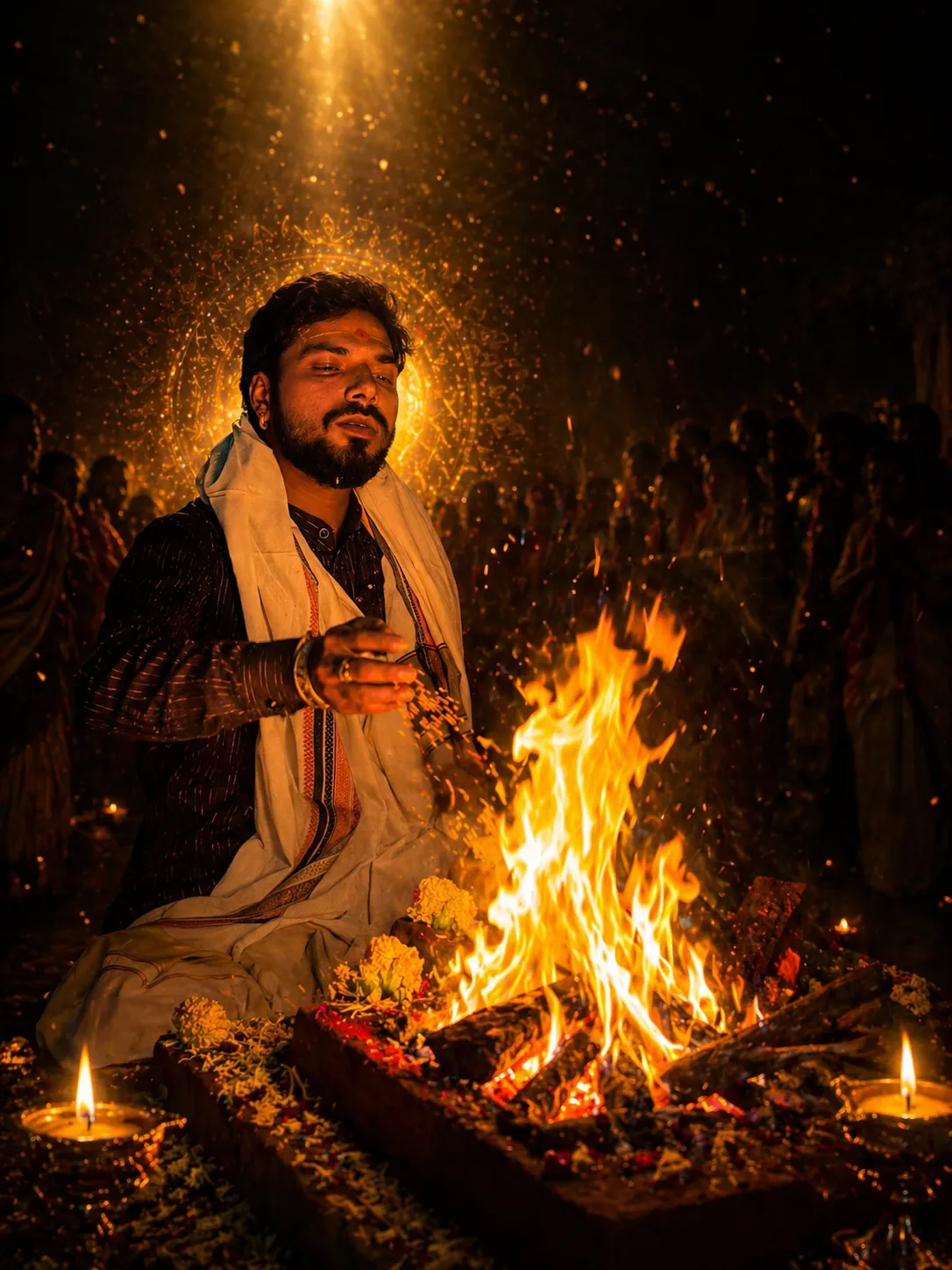
For those facing acute legal entanglements, hostile business opposition, or persistent family unrest, participating in authentic Hawan arrangements in Nalkheda is the traditional remedy. Lineage Acharyas conduct personalized Sankalp rituals where offerings of yellow mustard, turmeric roots, and desi cow ghee are dedicated into the sacred fire.
For deep spiritual sadhana or resolution of generational blockages, devotees often initiate a complete Baglamukhi Anushthan spanning 5, 7, 9, or 11 days, performed directly within the sacred precincts under strict Vedic vows.