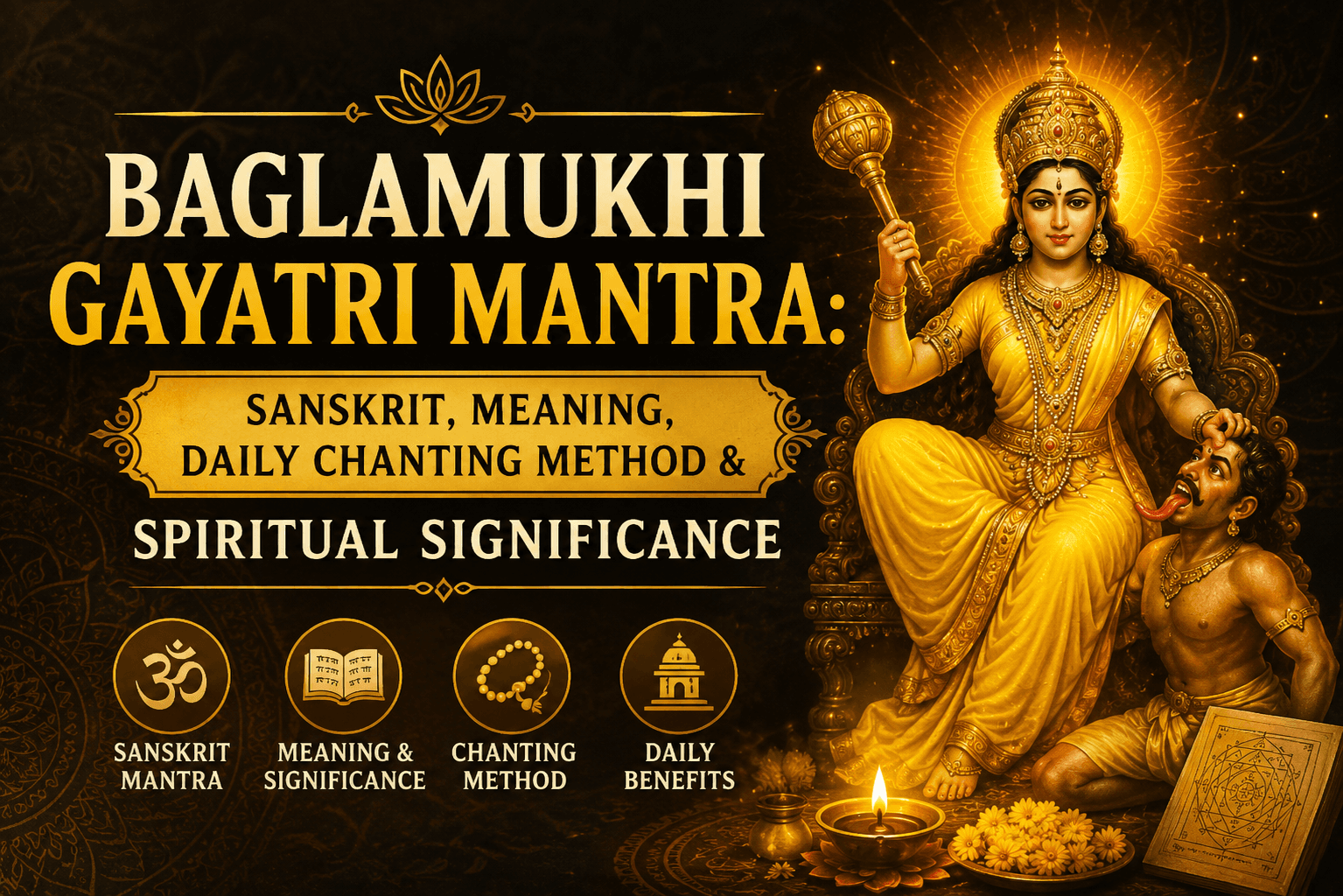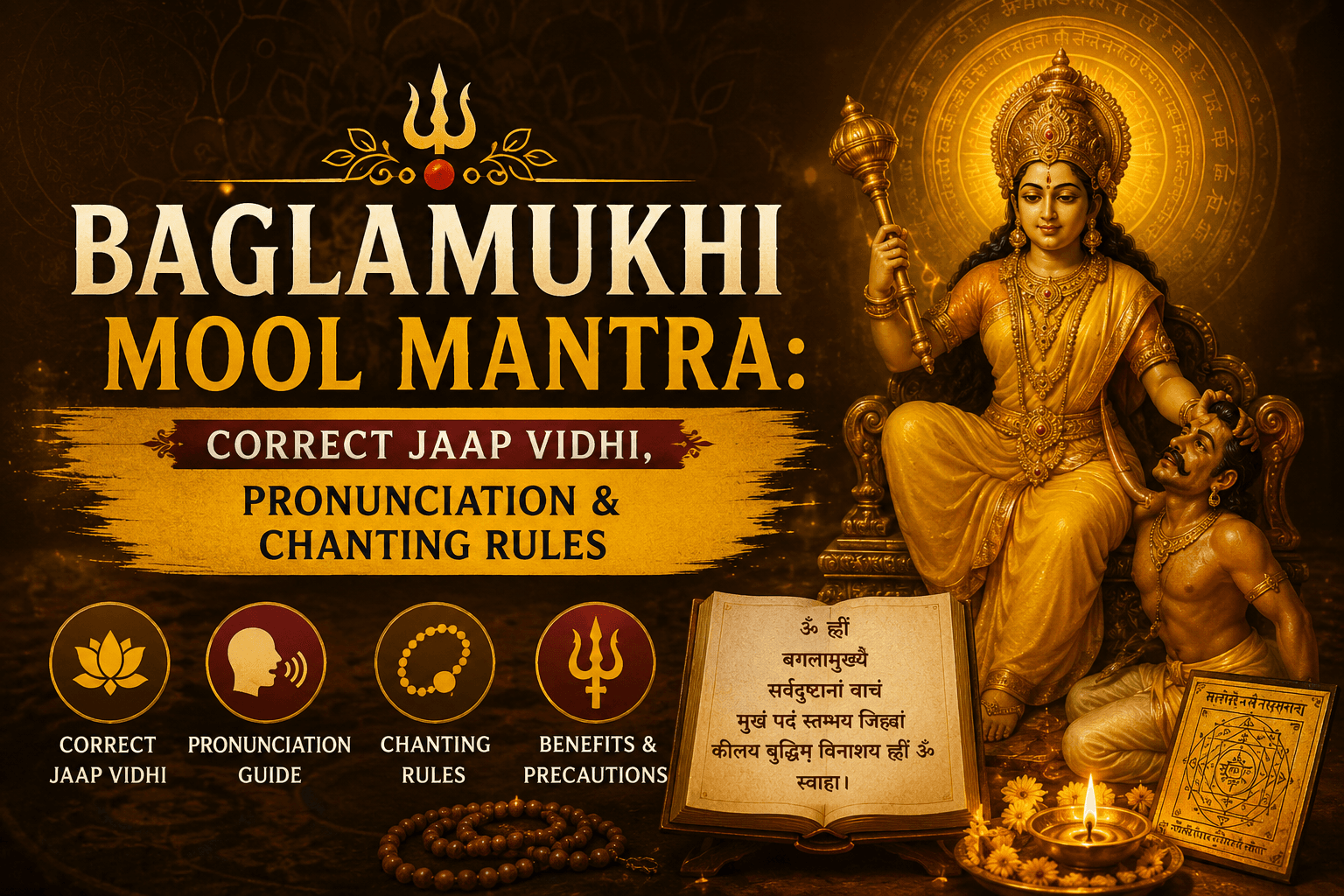
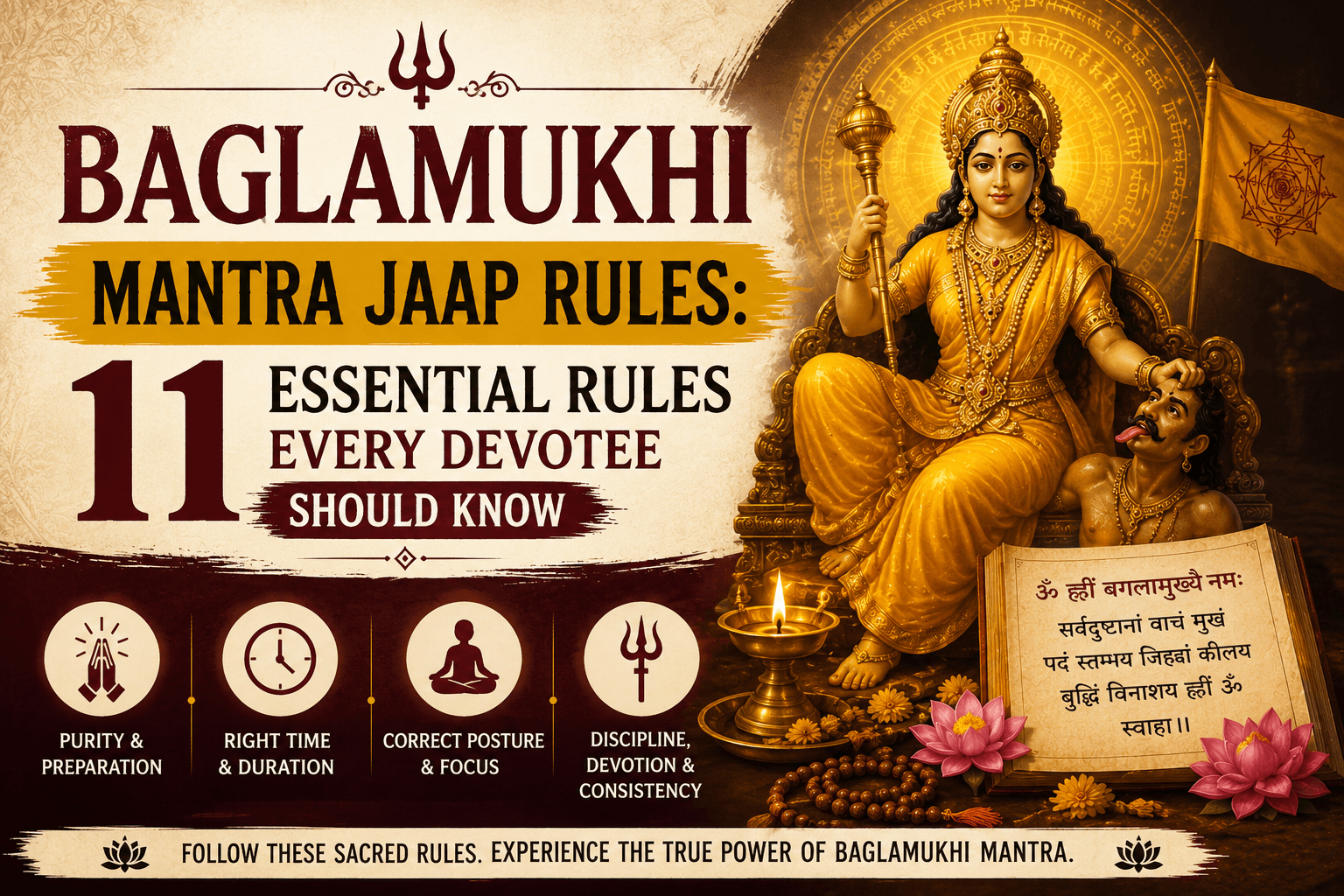
Maa Baglamukhi, the eighth of the ten Mahavidyas, is worshipped as the goddess of Stambhan Shakti — the divine power that paralyzes negativity, silences falsehood, and stalls the actions of enemies. Her mantra is counted among the most potent in the Shakta tradition, which is exactly why it cannot be chanted casually. Unlike a general prayer, Baglamukhi Mantra Jaap follows a structured discipline of timing, direction, purity, and pronunciation that has been passed down through generations of Tantric practice.
This guide lays out that discipline in plain, practical language — not as folklore, but as a rulebook you can actually follow at home. It draws on traditional Shakta practice as followed at the Nalkheda Siddha Peeth under the guidance of Acharya Tiwari Chetan Guru, while being honest about one thing: exact rituals can vary slightly by guru, sampradaya, and regional lineage. Where variation exists, we say so.
🪔Quick Answer Box
Baglamukhi Mantra Jaap Rules in brief: Chant during Brahma Muhurta (4–6 AM) or after sunset, facing East or North. Sit on a yellow asana, wear clean yellow clothing, and use a Haldi (turmeric) mala of 108 beads. Complete a fixed daily count without skipping days, maintain Sattvic food and celibacy during an Anushthan, pronounce the mantra clearly, and always close the session with gratitude and a short prayer of forgiveness for errors.
Why Correct Jaap Rules Matter
Baglamukhi Mantra belongs to the category of Ugra (fierce) Tantric mantras. Fierce mantras carry a concentrated, high-intensity vibration, and Vedic tradition treats them differently from soft, devotional mantras like the Gayatri Mantra of other deities. Correct rules exist for three practical reasons:
Consistency builds Siddhi — an irregular practice rarely produces a stable result; a fixed number chanted daily builds cumulative energy.
Discipline protects the sadhak — purity of body, food, and thought is believed to prevent the mantra's intensity from reflecting back on an undisciplined chanter.
Correct pronunciation preserves the mantra's structure — a Sanskrit mantra is a precise sound formula; mispronunciation is said to weaken its effect.
Featured Snippet Answer: Correct Baglamukhi Mantra Jaap rules matter because this is a fierce (Ugra) Tantric mantra that requires disciplined timing, purity, and pronunciation. Following the rules builds consistent spiritual energy, protects the practitioner from imbalance, and preserves the precise sound structure believed to activate the mantra's power.
Quick Highlights Table
Element | Recommended Practice |
|---|---|
Best Time | Brahma Muhurta (4–6 AM) or after sunset |
Best Direction | East (general purpose) or North (Tantric/urgent matters) |
Mala | Haldi (turmeric) mala, 108 beads |
Asana | Yellow cotton or wool asana |
Clothing | Clean yellow clothes, preferably unstitched |
Minimum Daily Count | 1 mala (108 repetitions) |
Diet | Sattvic, no onion-garlic, no alcohol |
Duration for Anushthan | 21, 40, or 41 days as guided by Guru |
Who Can Chant | Beginners, women, and all sincere devotees, with guidance for Tantric forms |
What is Baglamukhi Mantra Jaap?
Baglamukhi Mantra Jaap is the disciplined, repeated chanting of the sacred sound formulas dedicated to Maa Baglamukhi — most commonly the Beej Mantra (single seed syllable form) or the Mool Mantra (complete root mantra). The word "Jaap" itself means repetition, typically counted on a mala of 108 beads, with the aim of steadying the mind and invoking the goddess's Stambhan (paralyzing) and Vaak Siddhi (speech mastery) energies.
Unlike a one-time prayer, Jaap is a practice of accumulation. Each repetition is believed to add to a store of subtle energy that eventually reaches a tipping point — this is why traditional texts assign specific target numbers (called Purascharana) before a mantra is considered "activated" for a particular goal such as court case protection or removal of a hidden enemy.
Devotees can explore the exact wording, meaning, and variations of the mantra on our detailed Baglamukhi Mantra page, and the seed-syllable form on the Beej Mantra page.
Featured Snippet Answer: Baglamukhi Mantra Jaap is the disciplined repetition of Maa Baglamukhi's sacred mantra, usually counted on a 108-bead mala, performed to invoke her Stambhan (paralyzing) power against enemies, obstacles, and negativity. It is a practice of accumulated spiritual energy rather than a single prayer.
Why Following Proper Jaap Rules is Important
Every element of the Jaap ritual — time, direction, mala, posture, food — is not superstition for its own sake. Each rule is designed to remove a variable that could dilute focus or disturb the energetic balance of a fierce mantra practice.
Timing aligns the practice with hours of natural mental stillness.
Direction is believed to align the practitioner with specific planetary and elemental currents associated with the goddess.
Purity of body and food keeps the nervous system calm enough to sustain long chanting sessions.
A fixed mala prevents the "counting distraction" that breaks concentration.
Skipping these rules does not necessarily make the mantra "fail," but tradition holds that a disciplined Jaap reaches Siddhi (mastery) faster and with fewer disturbances than a casual one.
Featured Snippet Answer: Following proper Baglamukhi Mantra Jaap rules is important because each element — timing, direction, purity, and mala — is designed to reduce distraction and align the practitioner's energy with the mantra's fierce vibration, leading to faster, more stable results with fewer disturbances.
11 Essential Baglamukhi Mantra Jaap Rules
Rule 1 — Choose the Right Time
Brahma Muhurta, the period roughly 96 minutes before sunrise (commonly 4–6 AM), is considered the most powerful window for any mantra Jaap because the mind is naturally quiet and the environment is free of noise. For Baglamukhi Mantra specifically, the hours after sunset until midnight are also considered favourable, particularly for Tantric or urgent-result Sadhana. Avoid chanting during Rahu Kaal or immediately after a meal.
Featured Snippet Answer: The best time for Baglamukhi Mantra Jaap is Brahma Muhurta (4–6 AM) or the hours after sunset. Both periods offer natural mental stillness. Avoid chanting during Rahu Kaal or right after eating a heavy meal.
Rule 2 — Face the Correct Direction
Facing East is the general recommendation for daily, protective, or wish-fulfilling Jaap, as it aligns with the rising sun's energy of new beginnings. Facing North is preferred for Tantric or urgent Sadhana such as enemy neutralization or Stambhan-focused practice, since North is associated with Kubera and concentrated spiritual energy in Tantric geography. Some lineages also permit facing the deity's image or Yantra directly, regardless of compass direction — always confirm this with your own guru if you follow a specific sampradaya.
Featured Snippet Answer: For Baglamukhi Mantra Jaap, face East for general and protective purposes, or North for Tantric and urgent-result Sadhana. Some traditions allow facing the deity's image or Yantra directly instead of a fixed compass direction.
Rule 3 — Use the Right Mala
The Haldi (turmeric root) mala of 108 beads is the traditional choice for Baglamukhi Mantra Jaap. Turmeric is considered a purifying, Jupiter-aligned herb that complements the goddess's yellow (Pitambar) energy. Some traditions also permit a Kamalgatta (lotus seed) mala for milder, wish-fulfilling practice. Rudraksha and Tulsi malas, commonly used for other deities, are generally avoided for this specific fierce mantra.
Featured Snippet Answer: The recommended mala for Baglamukhi Mantra Jaap is a Haldi (turmeric) mala of 108 beads, which aligns with the goddess's yellow energy. A Kamalgatta (lotus seed) mala is an acceptable alternative; Rudraksha and Tulsi malas are typically avoided.
Rule 4 — Wear Clean Clothes
Yellow clothing, ideally unstitched (Pitambar-style dhoti or saree), is the traditional dress code for Baglamukhi worship, echoing the goddess's own golden-yellow form. The clothing should be freshly washed and reserved only for Jaap, not worn for other daily activities. This maintains a dedicated energetic boundary around the practice.
Featured Snippet Answer: Wear clean, freshly washed yellow clothing for Baglamukhi Mantra Jaap, ideally unstitched garments such as a dhoti or saree. Reserve these clothes exclusively for the practice to maintain ritual purity.
Rule 5 — Sit on the Correct Asana
A yellow woolen or cotton asana placed directly on the floor is preferred, as it insulates the practitioner from the earth's electrical currents and helps contain the mantra's energy within the body during chanting. Avoid sitting directly on bare floor, a chair, or a mixed-colour mat during formal Jaap sessions.
Featured Snippet Answer: Sit on a yellow woolen or cotton asana placed on the floor for Baglamukhi Mantra Jaap. This insulates the practitioner and helps contain the mantra's energy, unlike sitting on bare floor or a chair.
Rule 6 — Maintain Proper Pronunciation
Sanskrit mantras function as precise sound formulas, so Shuddha Uccharan (correct pronunciation) is treated as non-negotiable. Beginners are strongly encouraged to first listen to the mantra chanted by a qualified Acharya, or learn it directly under guidance, rather than reading it silently from a website or book and guessing the sounds. This is one of the most overlooked rules — and one of the most consequential.
Featured Snippet Answer: Correct Sanskrit pronunciation (Shuddha Uccharan) is essential for Baglamukhi Mantra Jaap because the mantra functions as a precise sound formula. Beginners should learn the exact pronunciation from a qualified Acharya rather than guessing from text alone.
Rule 7 — Chant with Concentration
Mechanical repetition without focus (called "Yantravat Jaap" in a negative sense) is considered far less effective than slow, attentive chanting. Devotees are advised to visualize the goddess's form, hold the intention (Sankalp) clearly in mind, and avoid multitasking — no phone, no conversation, no distracted counting — during the session.
Featured Snippet Answer: Chant Baglamukhi Mantra with full concentration — visualize the goddess, hold your Sankalp (intention) clearly, and avoid distractions like phones or conversation. Mechanical, unfocused repetition is considered far less effective than mindful chanting.
Rule 8 — Fixed Number of Jaaps
Decide your daily count before you begin — commonly 1, 3, 5, or 11 malas — and do not reduce it once started, though tradition allows increasing it. For a formal Anushthan aimed at a specific outcome, traditional texts often reference a target of 1.25 lakh (125,000) repetitions, though your personal Sankalp and guru's guidance should determine the exact figure for your situation.
Featured Snippet Answer: Fix your daily Jaap count in advance — commonly 1 to 11 malas — and never reduce it once started, though you may increase it. A dedicated Anushthan often targets 1.25 lakh repetitions, as guided by your Acharya.
Rule 9 — Maintain Purity and Discipline
During an active period of daily Jaap or Anushthan, follow a Sattvic vegetarian diet free of onion, garlic, and alcohol, and observe Brahmacharya (celibacy or restraint) as guided by tradition. Personal hygiene — a bath before sitting for Jaap — is considered mandatory, not optional.
Featured Snippet Answer: Maintain a Sattvic vegetarian diet without onion, garlic, or alcohol, observe Brahmacharya, and bathe before every Jaap session. These purity rules are considered mandatory for sustaining a fierce Tantric mantra practice.
Rule 10 — Avoid Common Mistakes
The most frequent mistakes include: chanting without knowing the meaning or correct pronunciation, skipping days randomly, changing the mala or direction mid-practice, chanting for aggressive or unjustified intentions, and starting a high-count Anushthan without a guru's guidance. Each of these is covered in more depth in the Mistakes to Avoid section below.
Featured Snippet Answer: Common Baglamukhi Mantra Jaap mistakes include incorrect pronunciation, skipping days irregularly, switching mala or direction mid-practice, chanting with unjustified aggressive intent, and attempting a large Anushthan without guidance from a qualified Acharya.
Rule 11 — Complete the Jaap with Gratitude
Every session should end with a short closing prayer — typically apologizing for any errors in pronunciation, ritual, or count, and offering gratitude to the goddess. This closing practice, sometimes called Kshama Prarthana, is considered essential to formally seal the session's energy.
Featured Snippet Answer: Always close a Baglamukhi Mantra Jaap session with a short prayer of gratitude and apology (Kshama Prarthana) for any unintentional errors in pronunciation or ritual. This formally seals the session's spiritual energy.
Dos and Don'ts Table
Do | Don't |
|---|---|
Chant during Brahma Muhurta or evening | Chant late at night without guidance for high-intensity forms |
Use a Haldi mala of 108 beads | Switch malas repeatedly mid-Anushthan |
Face East or North | Face South during formal Jaap |
Wear clean yellow clothes | Wear the same unwashed clothes daily |
Learn correct pronunciation first | Guess pronunciation from text alone |
Fix and maintain your daily count | Skip days or reduce the count once started |
Maintain a Sattvic diet | Consume alcohol, onion, or garlic during Anushthan |
Consult an Acharya for Tantric forms | Attempt a large-count Anushthan alone as a first-time practitioner |
Best Time to Chant
As covered in Rule 1, Brahma Muhurta (4–6 AM) remains the gold standard across nearly all Shakta traditions, followed by the post-sunset window for Tantric practice. Consistency of timing — chanting at roughly the same hour every day — is considered more valuable than chasing an astrologically "perfect" minute.
Morning vs Evening Comparison Table
Factor | Morning (Brahma Muhurta) | Evening (Post-Sunset) |
|---|---|---|
Best for | General protection, daily discipline, beginners | Tantric Sadhana, urgent enemy-related matters |
Mental State | Naturally calm, fewer distractions | Requires conscious winding down from the day |
Traditional View | Considered universally auspicious | Considered powerful for Ugra/fierce mantras |
Recommended For | Most household devotees | Practitioners under direct guru guidance |
Best Direction
Face East for general, protective, and wish-fulfilling Jaap. Face North for Tantric, Stambhan-focused, or urgent situations such as an active legal matter or a known hidden enemy. If you worship in front of a Baglamukhi Yantra, many practitioners simply face the Yantra itself, letting its placement determine the direction.
Recommended Mala
The Haldi mala remains the standard choice. Below is a quick comparison for devotees unsure which mala suits their practice.
Mala Comparison Table
Mala Type | Suitability | Notes |
|---|---|---|
Haldi (Turmeric) Mala | Best for Baglamukhi Mantra Jaap | Traditional, Jupiter-aligned, matches yellow energy |
Kamalgatta (Lotus Seed) Mala | Acceptable alternative | Milder energy, suited for wish-fulfilling Jaap |
Rudraksha Mala | Generally avoided | Associated with Shiva-centric practice, not ideal here |
Tulsi Mala | Not recommended | Associated with Vaishnav devotional practice |
Crystal/Sphatik Mala | Occasionally used | Some lineages allow it for cooling, balancing effect |
Recommended Asana
A dedicated yellow woolen or cotton asana, used only for this practice, is recommended. Keep it in a clean, elevated spot when not in use — never on the floor of a bathroom-adjacent area or a space used for eating.
How Many Times Should You Chant?
For daily household practice, one mala (108 repetitions) is considered the practical minimum. Devotees seeking a more intensive spiritual routine may chant 3, 5, 11, or more malas. For a formal Anushthan built around a specific life goal, traditional Purascharana figures of 1.25 lakh repetitions are often referenced, typically spread across 21 to 41 days. This number and duration should ideally be finalized in consultation with your guiding Acharya rather than chosen arbitrarily, since your personal circumstances, Sankalp, and available time all affect what is realistic and beneficial.
Featured Snippet Answer: Chant a minimum of one mala (108 times) daily for regular practice. A formal Anushthan for a specific goal often targets 1.25 lakh repetitions over 21–41 days, ideally planned with guidance from a qualified Acharya.
Can Beginners Chant?
Yes — with an important distinction. Beginners can safely begin with the Baglamukhi Gayatri Mantra or general devotional prayers such as the Baglamukhi Chalisa, which carry a gentler, devotional tone. The Beej Mantra and Mool Mantra, being concentrated Tantric formulas, are best approached gradually, ideally after some initial guidance on pronunciation and intention from an experienced Acharya. There is no rule against a sincere beginner chanting the Mool Mantra — but starting with humility and correct guidance produces far better, safer results than jumping straight into a high-intensity practice.
Featured Snippet Answer: Beginners can chant Baglamukhi Mantra, starting with the gentler Gayatri Mantra or Chalisa before progressing to the Beej or Mool Mantra. Learning correct pronunciation and intention from a qualified Acharya first is strongly recommended for safe, effective practice.
Can Women Chant?
Yes. Women can chant the Baglamukhi Mantra at any life stage, following the same rules of timing, purity, and posture as any devotee. The one widely observed exception across Shakta tradition is to pause formal Jaap during the menstrual cycle, resuming once the cycle ends, out of respect for the body's natural rest period rather than any restriction on a woman's spiritual right to worship the goddess. Practices vary by family and regional custom, so this is best confirmed with your own guru or family tradition.
Featured Snippet Answer: Yes, women can chant the Baglamukhi Mantra following the same rules as any devotee. Most Shakta traditions recommend pausing formal Jaap during the menstrual cycle and resuming afterward, though customs vary by family and lineage.
Mistakes to Avoid
Guessing pronunciation instead of learning it correctly from an Acharya or authentic source.
Starting a large Anushthan alone, as a first-timer, without any guidance on count, duration, or purpose.
Chanting with vengeful or unjustified intent, which tradition warns can create karmic backlash rather than genuine protection.
Inconsistent timing — chanting at a different hour every day breaks the rhythm the practice depends on.
Skipping the purification bath before sitting for Jaap.
Multitasking during Jaap — chanting while scrolling a phone or holding a conversation defeats the purpose of focused repetition.
Switching mala type mid-practice without a clear reason or guidance.
Ignoring the closing prayer, leaving the session energetically "open."
Featured Snippet Answer: The most common Baglamukhi Mantra Jaap mistakes are incorrect pronunciation, inconsistent timing, chanting with vengeful intent, skipping the purification bath, multitasking during Jaap, and attempting a large Anushthan without an Acharya's guidance.
Daily Jaap Routine
A simple, sustainable routine for household devotees:
Wake before sunrise and bathe.
Wear clean yellow clothing and sit on your dedicated yellow asana, facing East.
Light a diya and offer a short prayer of intention (Sankalp).
Chant one full mala (108 times) with focused attention, using the Haldi mala.
Close with a short gratitude prayer, acknowledging any unintentional errors.
Repeat in the evening if your practice includes a second session.
For devotees seeking a more elaborate ritual — including offerings, Havan, and a complete worship sequence — the Baglamukhi Puja Vidhi and Havan Vidhi guides walk through the full traditional process step by step.
Benefits of Following Proper Jaap Rules
Devotees who follow these rules consistently often report a gradual, cumulative shift rather than an overnight transformation — this is an honest expectation to set, not a marketing promise. Commonly described benefits include:
Greater mental clarity and confidence in difficult situations, including legal or interpersonal conflicts.
A steadier sense of protection from negativity, gossip, and hidden opposition.
Improved focus and discipline that extends beyond the practice itself.
A stronger personal connection to the goddess's energy, supporting other rituals such as Baglamukhi Puja or Baglamukhi Havan.
It is worth being clear-eyed here: mantra Jaap is a spiritual and psychological discipline, not a guaranteed mechanical fix for external problems. Results vary by individual sincerity, consistency, and life circumstances, and traditional texts themselves describe this as a gradual process of energetic alignment rather than instant magic.
Featured Snippet Answer: Following proper Baglamukhi Mantra Jaap rules is associated with greater mental clarity, steadier protection from negativity, improved discipline, and stronger spiritual connection. Results are gradual and depend on consistency and sincerity, not instant or guaranteed outcomes.
Summary Table
Rule | Core Guidance |
|---|---|
1. Time | Brahma Muhurta or after sunset |
2. Direction | East (general) or North (Tantric) |
3. Mala | Haldi mala, 108 beads |
4. Clothing | Clean, unstitched yellow garments |
5. Asana | Dedicated yellow asana |
6. Pronunciation | Learn correctly from an Acharya |
7. Concentration | Focused, distraction-free chanting |
8. Count | Fixed daily number, never reduced |
9. Purity | Sattvic diet, Brahmacharya, daily bath |
10. Mistakes | Avoid guessing, skipping, vengeful intent |
11. Closing | End with gratitude and apology prayer |
Frequently Asked Questions
1. What is the correct Baglamukhi Mantra Jaap Vidhi for beginners? Start with a bath, wear yellow clothing, sit on a yellow asana facing East, and chant one Haldi mala (108 times) using the Gayatri Mantra or, with guidance, the Beej Mantra, ending with a short gratitude prayer.
2. How many days does a full Baglamukhi Anushthan take? Traditional Anushthans commonly run 21, 40, or 41 days, depending on the target count and the guidance of your Acharya, though household daily Jaap can continue indefinitely.
3. Can I chant the Baglamukhi Mantra without a guru's initiation (Diksha)?
Sincere devotees can chant with devotion, but for the concentrated Tantric forms, guidance from a qualified Acharya on pronunciation and intention is strongly recommended for both effectiveness and safety.
4. What happens if I miss a day during my Jaap practice?
Tradition views a missed day as a minor disruption, not a failure — simply resume the next day, acknowledge the gap in your closing prayer, and continue your fixed count without restarting from zero unless your guru advises otherwise.
5. Is it necessary to use only a Haldi mala?
The Haldi mala is the traditional and most recommended choice for this specific mantra; a Kamalgatta mala is an acceptable alternative, but Rudraksha or Tulsi malas are generally not used for Baglamukhi Jaap.
6. Can the mantra be chanted mentally without speaking aloud?
Yes — Manasik Jaap (mental repetition) is considered a valid and, in some traditions, even more concentrated form of chanting, once the practitioner is thoroughly familiar with correct pronunciation.
7. What is the ideal number of malas per day for a working professional?
One mala (108 repetitions) daily is a realistic, sustainable target for most working devotees; consistency matters more than volume.
8. Should I face a photo of the goddess or a Yantra while chanting? Either is acceptable — many devotees keep a Baglamukhi Yantra or image in front of them while facing East or North, whichever direction their tradition follows.
9. Can this mantra be chanted for someone else's protection?
Yes, devotees commonly chant with a Sankalp naming a family member's protection or well-being; the intention should be clearly and specifically stated at the start of the session.
10. Is it safe to chant the Baglamukhi Mantra at home without a temple visit?
Yes, home practice is entirely valid; a temple or Siddha Peeth visit, such as to the Nalkheda Siddha Peeth, is considered an added amplifier, not a strict requirement for daily Jaap.
11. What is the difference between the Beej Mantra and Mool Mantra?
The Beej Mantra is the concentrated seed-syllable form used for quick, focused invocation, while the Mool Mantra is the complete root formula typically used for detailed, purpose-specific Sankalp — both are explained on our Baglamukhi Mantra page.
12. Can Jaap be combined with a Havan for stronger results?
Yes, many devotees pair sustained daily Jaap with a periodic Baglamukhi Havan or full Anushthan, as the fire ritual is traditionally seen as reinforcing the energy built through daily mantra repetition.
13. Do the rules differ between different gurus or lineages?
Yes, and this should be stated clearly: minor variations in direction, timing, or mala exist across different sampradayas and gurus. The rules in this guide reflect commonly followed Shakta practice; always prioritize your own guru's specific instructions if you follow one.
14. What if I make a mistake in pronunciation during Jaap?
Continue the session calmly, correct yourself for the remaining count, and include an apology in your closing prayer — traditional texts specifically provide for this kind of unintentional human error.
15. Where can I learn the exact Baglamukhi Mantra text and meaning?
The complete mantra text, meaning, and chanting guidance is available on our detailed Baglamukhi Mantra guide and the Sacred Texts Mantra page.
Conclusion
Baglamukhi Mantra Jaap is a precise, disciplined practice — and that precision is exactly what gives it its strength. The 11 rules covered here (timing, direction, mala, clothing, asana, pronunciation, concentration, count, purity, avoiding mistakes, and closing with gratitude) are not arbitrary restrictions; they are the accumulated wisdom of a Tantric tradition designed to help ordinary devotees chant safely and effectively at home.
If you are new to this practice, start gently, be consistent, and don't hesitate to seek guidance before attempting an intensive Anushthan. And remember — as with all Tantric and Vedic practice, specific steps can vary by guru, sampradaya, and family tradition, so let this guide be your foundation, not your final word.
Book Baglamukhi Puja
Want your Baglamukhi Mantra Jaap performed with complete Vedic accuracy, or guided by an experienced Acharya?
Acharya Tiwari Chetan Guru and the team at Nalkheda Siddha Peeth offer personalized Mantra Jaap, Puja, Havan, and Anushthan services — with correct Sankalp, live video participation, and worldwide Prasad delivery.
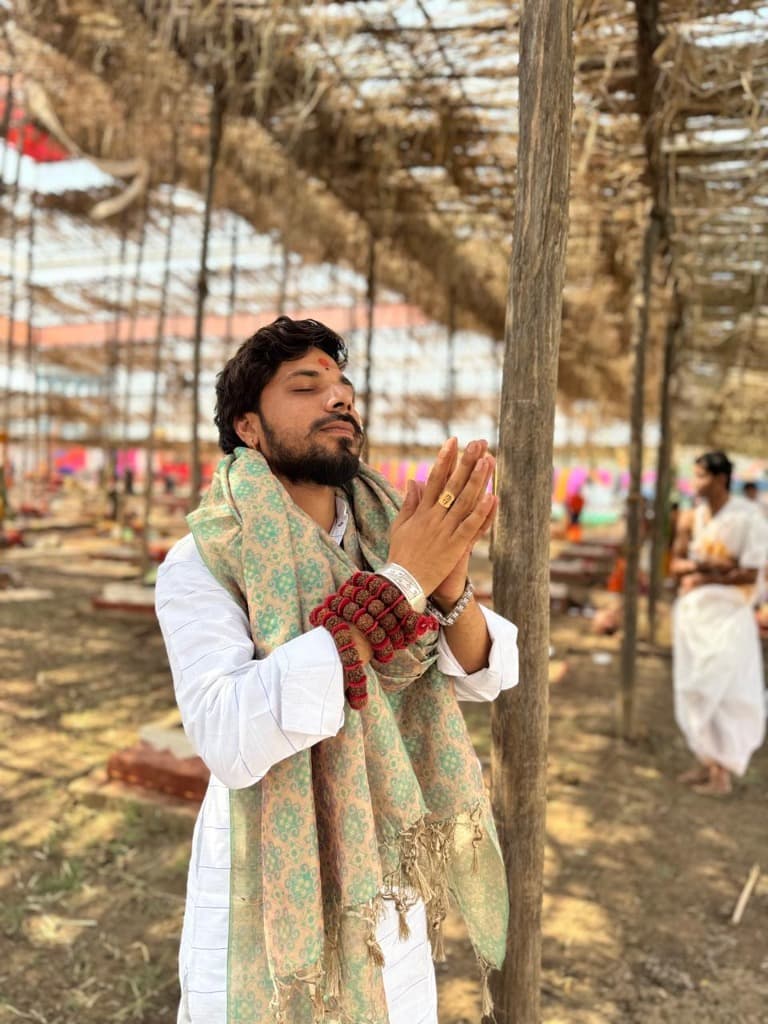
Acharya Tiwari Chetan Guru
Siddha Peethadheesh & Head Vedic Scholar
With over 15+ years of unbroken Vedic practice at Maa Baglamukhi Siddha Peeth, Nalkheda, Acharya Ji is a globally authoritative voice on Tantra Shastra, Stambhan Vidya, and Karmic Astrology. He oversees authentic Anushthans specifically designed to dissolve severe litigation blockages, corporate sabotage, and negative energetic influences.