

Sawan is the month devotees wait for all year. The rains arrive, temples fill up, and homes across India turn quieter and more prayerful. If your own practice includes Maa Baglamukhi, a natural question comes up every year around this time: is Sawan the right month for her mantra, or should this fierce, focused sadhana wait for another season?
This guide answers that question directly and honestly, without exaggeration or one-size-fits-all claims. You will find what different Guru Paramparas say, how the rules change (or don't) during Shravan, what time of day works best, how many jaaps are appropriate, and which mistakes tend to undo an otherwise sincere effort. Wherever the tradition asks for personal guidance rather than a generic answer, this article will tell you so plainly.
🪔Quick Answer Box
Yes, you can chant the Baglamukhi Mantra during Sawan. Sawan is not restricted for Devi sadhana; it is primarily associated with Lord Shiva worship, but Shakti mantras, including Baglamukhi, are commonly chanted throughout this month by householders and sadhaks alike. The Beej Mantra and Gayatri Mantra can generally be chanted without formal initiation, while the longer Mool Mantra and any Tantric Anushthan-level practice are best started only under a qualified Guru's guidance, in Sawan or any other month. Practices differ across Guru Paramparas, so if you follow a specific lineage, its rules take priority over general guidance.
Quick Highlights
Aspect | Guidance |
|---|---|
Can Baglamukhi Mantra be chanted in Sawan? | Yes, generally permitted; not a restricted month for Devi mantras |
Beej Mantra ("Hleem") | Can usually be chanted without initiation |
Mool Mantra (36-letter) | Best begun with Guru Diksha, regardless of month |
Best days | Any day of Sawan; Tuesdays and Saturdays are traditionally favoured for Baglamukhi |
Best time | Brahma Muhurat (roughly 4 AM to 6 AM) or a fixed evening hour |
Direction | East or North, facing the Goddess's image or yantra |
Mala | Haldi (turmeric) mala or yellow Hakik mala, 108 beads |
Diet | Sattvik food; some sadhaks observe partial fasting during Sawan |
Who should seek guidance first | Beginners, those attempting the Mool Mantra, and anyone doing an Anushthan-level jaap count |
Can You Chant Baglamukhi Mantra During Sawan?
Featured Snippet Answer: Yes, Baglamukhi Mantra can be chanted during Sawan. Sawan is dedicated mainly to Lord Shiva, but it does not prohibit Shakti or Mahavidya mantras. Many devotees use the quiet, rain-soaked days of Shravan for focused Beej Mantra practice. The Mool Mantra and higher-level Anushthans, however, are better approached with a Guru's guidance rather than started independently.
There is a common misconception that Sawan belongs exclusively to Shiva, and that any other deity's mantra should be paused for the month. This is not accurate. Sawan is a month of heightened devotion in general, and most temples, including Shakti and Mahavidya temples, see increased footfall through Shravan. What Sawan does bring is a certain restraint and simplicity, fasting on Mondays, avoiding certain foods, and a general mood of discipline, and that mood suits mantra sadhana of any deity rather well.
For Baglamukhi specifically, the answer depends slightly on which mantra you mean. The single-syllable Baglamukhi Beej Mantra, "Hleem," and the Baglamukhi Gayatri Mantra are considered accessible to most sincere devotees without formal initiation. The 36-letter Baglamukhi Mool Mantra, sometimes called the Brahmastra Mantra, carries more intensity and is traditionally reserved for those who have received it from a Guru. This distinction matters more than the calendar month does.
Why Sawan Is Considered Spiritually Powerful
Featured Snippet Answer: Sawan is considered spiritually powerful because it falls in the rainy season, when nature itself turns inward and reflective. It is Lord Shiva's month, marked by fasting, temple visits and simplified living. This collective atmosphere of restraint and devotion is believed to make any sincere spiritual practice, including mantra jaap, more focused and steady.
Shravan sits at a point in the year when the heat of summer breaks, rivers and wells fill again, and daily life slows down in many parts of India. Vedic tradition treats this shift as more than seasonal. It sees Sawan as a natural pause built into the year, a time when the mind is less scattered and more receptive to discipline.
This is also the month most associated with Kanwar Yatra, Shiva Abhishek, and the observance of Sawan Somwar Vrat. While these practices center on Lord Shiva, the underlying quality of the month, simplicity, restraint, and consistency, benefits any dedicated sadhana. Devotees of Devi worship, including the Das Mahavidyas, often use this same window to deepen their own practice, not because Sawan belongs to Shakti in scripture, but because the conditions it creates (quieter routines, cleaner diet, reduced distraction) genuinely help.
Can Baglamukhi Mantra Be Chanted During Sawan?
Featured Snippet Answer: Yes. There is no scriptural restriction preventing Baglamukhi Mantra chanting during Sawan. The month is open to Shakti and Mahavidya sadhana just as it is to Shiva worship. What changes during Sawan is not permission but intensity and discipline, many sadhaks choose to be stricter with diet, timing and consistency during this month.
Maa Baglamukhi is one of the ten Mahavidyas, and Mahavidya worship in general does not follow a single fixed calendar the way some seasonal festivals do. Navratri, Ashadha Gupt Navratri and specific Tithis are considered especially auspicious for Mahavidya sadhana, but this does not mean other months, including Sawan, are closed to it.
In practice, three things matter more than the month itself:
Which mantra you are chanting (Beej, Gayatri, or Mool)
Whether you have received initiation for that mantra
Whether your own Guru or family tradition has specific instructions for Sawan
If your Guru has told you to pause a particular practice during Sawan for a personal or lineage-specific reason, that instruction should be followed over any general guidance found online, including this article.
Traditional Views and Different Guru Paramparas
Featured Snippet Answer: Different Guru Paramparas hold different views on Baglamukhi sadhana during Sawan. Some lineages treat Shravan as ideal for Shakti mantras because of its disciplined atmosphere. Others prefer sadhaks to focus purely on Shiva worship during this month and reserve intensive Mahavidya Anushthans for Navratri. Both views are valid within their own tradition.
This is one of the most honest points to make about Baglamukhi sadhana: there is no single, universal rulebook that every household or lineage follows identically. Vedic and Tantric traditions have always carried regional and Guru-specific variations, and Baglamukhi worship is no exception.
Some Paramparas, particularly those rooted in Tantric practice from regions like Bundelkhand and Malwa, actively encourage Shakti mantra jaap through Sawan, viewing the rains as symbolically connected to the Goddess's cooling, protective energy. Other, more Shaiva-leaning family traditions ask practitioners to keep Sawan focused on Shiva Abhishek and Rudra chanting, and to take up or intensify Baglamukhi sadhana separately during Navratri or Gupt Navratri instead.
Neither view is wrong. If you already follow a Guru or a family tradition, its instructions should guide your practice. If you do not yet have a specific lineage instruction, the general position, that Sawan is open to Baglamukhi mantra chanting with normal rules applied, is a reasonable and widely accepted one to follow.
Benefits of Chanting Baglamukhi Mantra During Sawan
Featured Snippet Answer: Chanting Baglamukhi Mantra during Sawan is believed to bring focus, mental steadiness, and protection from confusion or opposition, supported by the disciplined, low-distraction atmosphere of the month. Devotees also associate it with improved clarity in speech and decision-making, though results vary by individual and consistency of practice.
Sawan's naturally slower pace tends to support any sadhana that needs concentration. For Baglamukhi, whose energy is traditionally connected to Stambhan Shakti (the power to still or restrain disturbance), this quieter season is often described by practitioners as easier to sustain a daily practice in, compared to busier months.
Benefit Area | What Devotees Typically Report |
|---|---|
Mental focus | Greater steadiness in thought during the rainy, low-distraction season |
Speech and communication | Improved clarity and confidence in expressing oneself |
Discipline | Sawan's fasting culture supports consistency in daily mantra jaap |
Emotional calm | A sense of protection from unnecessary conflict or negative influence |
Spiritual routine | Easier to build a lasting habit, since Sawan already encourages a fixed schedule |
These are traditional and experiential associations rather than guaranteed outcomes. As with any spiritual practice, results depend on sincerity, consistency and the guidance one follows, not on the month alone.
Who Can Chant It?
Featured Snippet Answer: The Baglamukhi Beej Mantra and Gayatri Mantra can generally be chanted by any sincere adult devotee, regardless of gender, without needing formal initiation. Household worship, done with respect and simple rules, is considered acceptable across most traditions. The Mool Mantra and Tantric-level practice are reserved for initiated sadhaks.
Most Guru Paramparas agree that the entry-level mantras (Beej and Gayatri) are open to any adult who approaches the practice with sincerity, patience and respect. This includes both men and women. What matters more than eligibility by birth or background is intention: the mantra is traditionally described as unsuitable for those seeking to cause harm to others, and appropriate for those seeking protection, clarity, or relief from genuine difficulty.
Students, working professionals, homemakers and elders can all chant the Beej Mantra as part of a simple daily routine. What changes with experience level is not whether one is "allowed" to chant, but how much is chanted, and whether the longer Mool Mantra or a structured Anushthan should be attempted.
Who Should Seek Proper Guidance Before Chanting?
Featured Snippet Answer: Complete beginners, anyone wanting to chant the 36-letter Mool Mantra, and those planning an Anushthan with a high jaap count (in the thousands or lakhs) should seek guidance from a qualified Acharya or Guru before starting. This ensures correct pronunciation, appropriate jaap sankhya, and rules suited to the individual's situation.
A few groups in particular benefit from speaking to an experienced Acharya first:
First-time practitioners who have never chanted a Devi or Mahavidya mantra before
Anyone intending to chant the Mool Mantra, since incorrect pronunciation or sequence is traditionally considered counterproductive
Those undertaking a fixed-count Anushthan (36,000, 1,25,000 jaaps and similar structured practices), which typically require a priest's supervision for Sankalp, Havan and Purnahuti
People going through serious personal difficulty (legal disputes, health concerns, or suspected negative influence), where a personalised approach is more appropriate than a generic online guide
For this kind of personalised guidance, you can explore Baglamukhi Puja options performed under Acharya Tiwari Chetan Guru at Nalkheda Siddha Peeth.
Best Time During Sawan
Featured Snippet Answer: Brahma Muhurat, roughly between 4 AM and 6 AM, is considered the best time to chant the Baglamukhi Mantra during Sawan, since the mind is naturally calmer before sunrise. For those unable to wake early, a fixed evening hour after sunset, kept consistent every day, is an accepted alternative.
Time Slot | Suitability | Notes |
|---|---|---|
Brahma Muhurat (4 AM–6 AM) | Best | Quietest hour, traditionally most favoured for Mahavidya mantras |
Early morning after bath (6 AM–8 AM) | Good | Practical alternative if Brahma Muhurat is difficult |
Midday | Not preferred | Considered too active and distracted for focused jaap |
Evening after sunset | Good | Acceptable for working professionals; consistency matters more than exact hour |
Late night | Avoid for beginners | Reserved for advanced sadhaks under Guru guidance |
Consistency in Sawan matters more than perfection in timing. Choosing one realistic time slot and repeating it daily through the month is considered far more valuable than an irregular attempt at the "ideal" hour.
Best Direction
Featured Snippet Answer: Facing East is generally recommended while chanting the Baglamukhi Mantra, as it is associated with new beginnings and clarity. Facing North, linked with stability and Kubera's direction, is also used by some sadhaks, particularly for matters of protection and stability.
Both directions are widely accepted across Guru Paramparas, and the choice often comes down to what your specific lineage or Acharya recommends. If you are chanting at home without a specific instruction, East is the simpler and more commonly suggested default.
Best Mala
Featured Snippet Answer: A Haldi (turmeric) mala or a yellow Hakik (agate) mala of 108 beads is the traditional choice for Baglamukhi Mantra jaap, since yellow is the Goddess's associated colour. Rudraksha mala is generally avoided for this specific mantra, as it is more closely linked with Shiva worship.
If a Haldi or yellow Hakik mala is not available, a plain cotton thread mala can be used as a simple, respectful substitute, particularly for beginners chanting the Beej Mantra at home.
Best Asana
Featured Snippet Answer: A yellow cloth or asan (seat) is traditionally used for Baglamukhi Mantra chanting, kept separate from other daily-use items. Sitting cross-legged on this yellow asan, in a clean and quiet corner of the home, is considered appropriate for both morning and evening practice.
The asana does not need to be elaborate. A clean, dedicated yellow cloth folded on the floor is sufficient for most household sadhaks. What matters more is that the same asan is used consistently for this practice and not for unrelated daily activities.
Recommended Number of Jaaps
Featured Snippet Answer: For beginners, 108 jaaps (one mala) once or twice daily is a reasonable starting count for the Baglamukhi Beej Mantra during Sawan. Higher counts, such as 1,100 or more, or Anushthan-level totals like 36,000, are generally undertaken only with a Guru's guidance and proper Sankalp.
Starting small and staying consistent through all of Sawan is considered far more valuable than an ambitious count abandoned after a few days. A steady 108 jaaps chanted daily for the full month builds a foundation that can later support a more intensive Anushthan, should one choose to pursue it under proper guidance. For the full step-by-step method, see the Baglamukhi Mantra Jaap Rules.
Daily Sadhana Routine During Sawan
Featured Snippet Answer: A simple daily Sawan routine for Baglamukhi sadhana includes an early bath, wearing clean (preferably yellow) clothes, lighting a diya, a short Sankalp stating intention, chanting 108 jaaps on a Haldi mala, and closing with a few minutes of silent gratitude.
A practical routine that most householders can sustain through Sawan looks like this:
Wake before or around Brahma Muhurat, if possible, and bathe.
Wear clean clothes, ideally yellow or a light colour, and sit on your dedicated asan.
Light a diya and, if you have one, place an image or yantra of Maa Baglamukhi facing you.
Take a short Sankalp, stating your name, Gotra if known, and the simple intention behind your practice.
Chant the Beej Mantra or Mool Mantra (only if initiated) for one full mala, keeping count on your Haldi or Hakik mala.
Sit quietly for a minute or two afterward, without immediately rushing into the day.
Repeat in the evening if your routine allows for a second sitting.
This structure is simple by design. During Sawan, many sadhaks add a Monday fast or reduce salt and non-vegetarian food, which naturally supports the discipline needed for consistent mantra practice. Those wanting a more intensive ritual alongside their daily jaap can also look into Baglamukhi Havan.
Rules to Follow
Featured Snippet Answer: Key rules for Baglamukhi Mantra chanting during Sawan include maintaining cleanliness, correct pronunciation, a fixed time and place, sattvik food, and avoiding the practice during personal impurity or while angry or distracted. Rules can vary by Guru Parampara, so lineage-specific instructions should be followed first.
Rule | Why It Matters |
|---|---|
Chant after bathing, on an empty stomach if possible | Maintains physical and mental cleanliness before sadhana |
Use a fixed time and seat | Builds discipline and helps the mind settle into practice |
Pronounce the mantra correctly | Mispronunciation is traditionally considered to weaken the mantra's effect |
Avoid chanting during anger or distress | The mantra is meant to be chanted with a calm, focused mind |
Keep the mala and asan dedicated to this practice only | Preserves the sanctity of the ritual items |
Do not chant the Mool Mantra without initiation | Prevents incorrect practice of a Tantric-level mantra |
Maintain sattvik food during the chanting period | Supports the discipline the practice is meant to build |
Common Mistakes to Avoid
Featured Snippet Answer: Common mistakes include starting the Mool Mantra without initiation, chanting inconsistently, expecting instant results, skipping the Sankalp, using the mantra out of anger or for harming someone, and ignoring one's own Guru Parampara's specific instructions in favour of generic online guidance.
Skipping the Sankalp: Beginning to chant without a clear, stated intention is considered incomplete practice.
Jumping straight to the Mool Mantra: Attempting the 36-letter mantra without initiation, based only on something read online, is discouraged by most traditions.
Irregular practice: Chanting for a few days and then stopping undermines the discipline Sawan is meant to build.
Wrong intention: The mantra is not meant for harming others; approaching it with ill intent goes against its traditional purpose.
Ignoring lineage instructions: If your family or Guru has a specific Sawan practice, following general internet guidance instead can create confusion.
Expecting guaranteed or instant outcomes: Spiritual practice is a discipline, not a formula with fixed results.
Dos and Don'ts
Do | Don't |
|---|---|
Chant with a calm, focused mind | Chant while angry, distracted, or in a hurry |
Keep a fixed time and seat | Change your timing and place randomly each day |
Start with the Beej Mantra if uninitiated | Attempt the Mool Mantra without a Guru's initiation |
Maintain personal and dietary cleanliness | Chant immediately after non-sattvik food without a gap |
Follow your Guru Parampara's specific rules | Assume one general rule applies to every lineage |
Stay consistent through the month | Abandon the practice after a few days |
Frequently Asked Questions
1. Can I chant Baglamukhi Mantra during Sawan?
Yes. Sawan does not restrict Baglamukhi or other Shakti mantras. The Beej Mantra can generally be chanted by any sincere devotee, while the Mool Mantra should be started only with initiation.
2. Should Baglamukhi Mantra be chanted during Shravan, or is it better to wait for Navratri?
Both are acceptable. Sawan offers a disciplined, low-distraction environment that suits mantra practice, while Navratri and Gupt Navratri are traditionally considered especially auspicious for Mahavidya sadhana. Neither excludes the other.
3. How should I chant Baglamukhi Mantra during Sawan?
Bathe, sit on a dedicated yellow asan, take a short Sankalp, and chant the mantra using a Haldi or yellow Hakik mala for 108 counts, ideally at a fixed time each day.
4. What are the rules for chanting Baglamukhi Mantra in Sawan? Maintain cleanliness, correct pronunciation, a fixed time and seat, sattvik food, and a calm state of mind. Avoid chanting the Mool Mantra without initiation.
5. Is morning or evening better for Baglamukhi Jaap in Sawan? Brahma Muhurat (4 AM to 6 AM) is traditionally preferred, but a consistent evening slot after sunset is an accepted alternative for those unable to wake early.
6. Who can chant the Baglamukhi Mantra during Sawan?
Any sincere adult devotee can chant the Beej and Gayatri Mantras. The Mool Mantra is reserved for those who have received it from a Guru.
7. Can women chant Baglamukhi Mantra during Sawan?
Yes. Most Guru Paramparas allow women to chant the Beej and Gayatri Mantras. As with all devotees, personal impurity periods are generally observed as a pause, in line with one's own family or Guru's guidance.
8. Do I need Guru Diksha to chant Baglamukhi Mantra?
Not necessarily for the Beej or Gayatri Mantra. Diksha is generally recommended before attempting the Mool Mantra or any structured Anushthan.
9. Can Baglamukhi Mantra be chanted along with Shiva mantras during Sawan?
Yes, many households combine a short Shiva chant with their Baglamukhi practice during Sawan, as long as each is done with proper attention rather than rushed together.
10. Is it necessary to fast while chanting Baglamukhi Mantra in Sawan?
No, fasting is not mandatory for the mantra itself, but many sadhaks combine it with the Sawan Somwar fast for added discipline, based on personal capacity and health.
11. How many days should I chant Baglamukhi Mantra during Sawan?
Chanting through the entire month, ideally all Shravan Somwars and as many other days as possible, is a common approach. Even 11, 21 or 40 consistent days of practice is considered meaningful.
12. What happens if I miss a day of chanting during Sawan?
Missing an occasional day is not considered a serious lapse. Simply resume the next day with a calm mind rather than treating it as a failure of the practice.
13. Can beginners start Baglamukhi Mantra sadhana specifically in Sawan?
Yes, Sawan's disciplined atmosphere makes it a reasonable month for beginners to start with the Beej Mantra, ideally with basic guidance on Sankalp and correct pronunciation.
14. Is the Baglamukhi Mool Mantra safe to chant without a Guru during Sawan?
It is not recommended. The Mool Mantra is considered a higher-intensity Tantric mantra, and most traditions advise initiation before attempting it, in Sawan or any other month.
15. Does Sawan increase the effectiveness of Baglamukhi Mantra chanting?
Sawan's quiet, disciplined atmosphere is widely believed to support focus and consistency in any sadhana, including Baglamukhi mantra jaap. This is understood as a supportive environment rather than a guarantee of specific results, which depend on sincerity, correct practice and guidance.
Conclusion
Sawan is not a closed month for Baglamukhi Mantra sadhana. It is, if anything, a season that naturally supports the discipline this practice asks for: a fixed routine, a calm mind, and simple, sincere repetition. The Beej Mantra and Gayatri Mantra are accessible starting points for most devotees, while the Mool Mantra and any structured Anushthan deserve the guidance of a qualified Guru, this Sawan or in any month you choose to begin.
If you already follow a Guru Parampara, let its instructions lead. If you are starting fresh this Sawan and want the practice done correctly from the first day, guidance from an experienced Acharya can help you avoid the common mistakes covered above and build a routine that actually lasts beyond the month.
If you would like this Sawan's practice guided properly, from Sankalp to the correct Jaap Sankhya for your situation, Acharya Tiwari Chetan Guru at Nalkheda Siddha Peeth offers personal guidance for Baglamukhi Puja and Baglamukhi Havan, performed both in person and online for devotees across India and abroad. For sadhaks seeking success across all areas of life, the Baglamukhi Sarva Karya Siddhi Mantra puja is also available as a guided ritual.
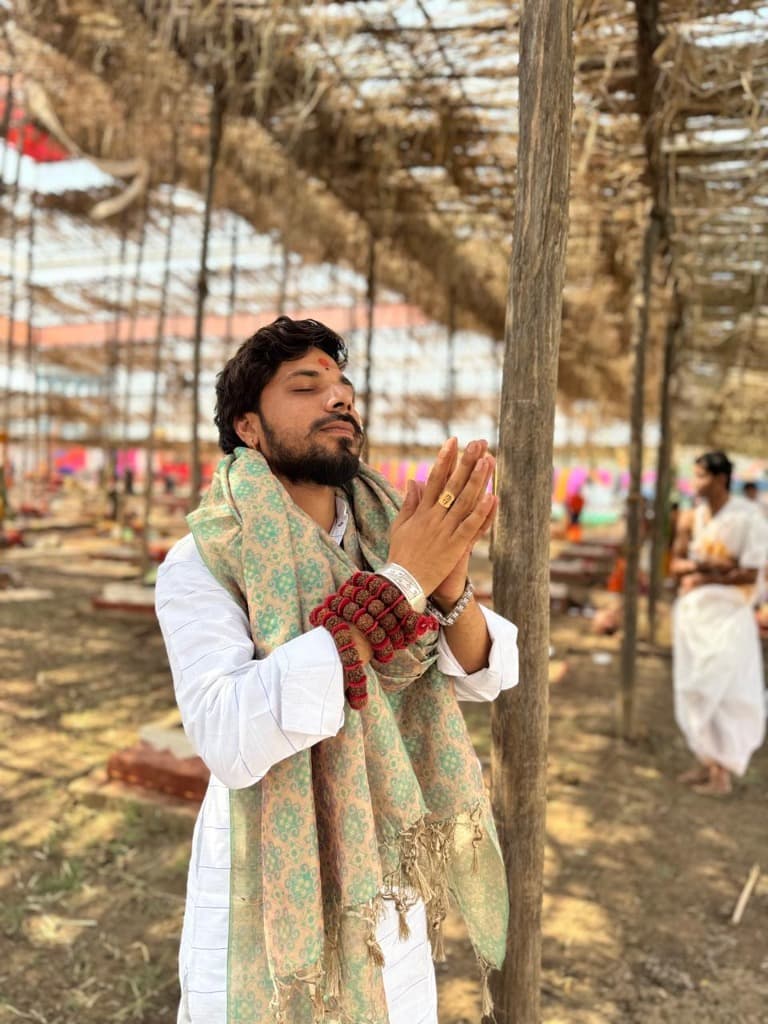
Acharya Tiwari Chetan Guru
Siddha Peethadheesh & Head Vedic Scholar
With over 15+ years of unbroken Vedic practice at Maa Baglamukhi Siddha Peeth, Nalkheda, Acharya Ji is a globally authoritative voice on Tantra Shastra, Stambhan Vidya, and Karmic Astrology. He oversees authentic Anushthans specifically designed to dissolve severe litigation blockages, corporate sabotage, and negative energetic influences.