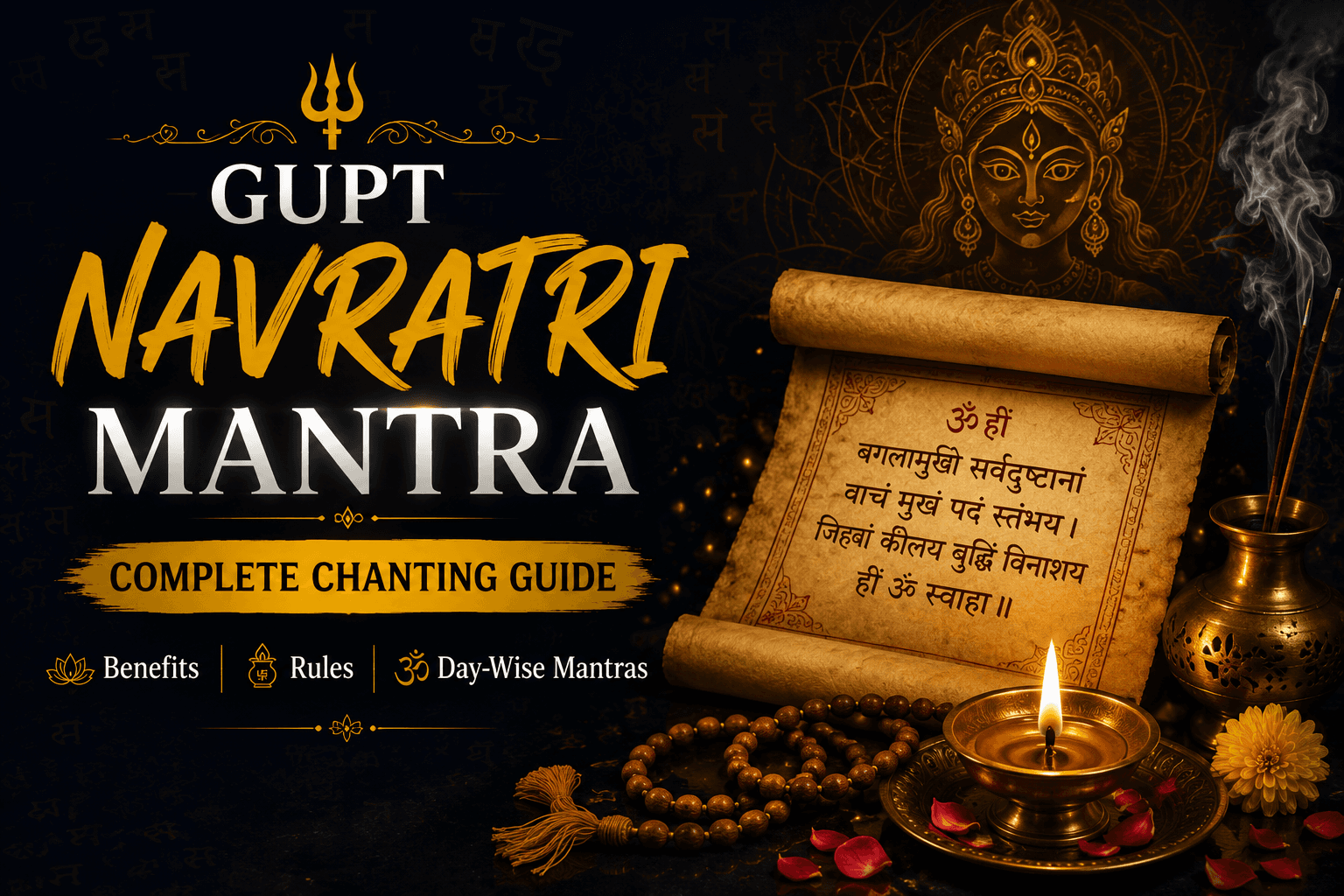
Gupt Navratri is often called the "hidden" Navratri because, unlike Chaitra or Shardiya Navratri, it is traditionally observed with quiet, personal Sadhana rather than public celebration. Mantra chanting sits at the heart of this practice. This guide walks you through exactly what to chant, when to chant it, and how to approach each of the nine days with the right understanding.
Quick Answer
During Gupt Navratri, devotees traditionally chant a specific mantra dedicated to each of the ten Mahavidyas across the nine-day period, with Ashtami reserved for Maa Baglamukhi. According to temple traditions, correct pronunciation, a fixed daily time, and consistency across all nine days matter more than the number of malas chanted.
Key Takeaways
Gupt Navratri Ashadha 2026 runs from 15 to 23 July, with Ashtami on 22 July
Each day is traditionally associated with a different Mahavidya and her mantra
Beginners can chant basic mantras; advanced Tantric mantras need proper guidance
Consistency across nine days matters more than chanting speed or volume
Maa Baglamukhi's mantra is chanted with special focus on Ashtami, the eighth day
What is Gupt Navratri?
Direct answer: Gupt Navratri is a nine-day period of hidden or secret worship dedicated to the Dasa Mahavidyas, observed twice a year during Magha and Ashadha months. Unlike the widely celebrated Chaitra and Shardiya Navratri, it is traditionally practiced quietly, often without public rituals or large gatherings, focused on personal Tantric and spiritual Sadhana.
Ashadha Gupt Navratri 2026 begins on 15 July with Ghatasthapana and concludes on 23 July with Parana. According to Hindu scriptures, this period is considered especially suited to inward spiritual work, mantra Sadhana, and resolving deep-rooted obstacles that ordinary worship does not always address.
Why are Mantras Important During Gupt Navratri?
Direct answer: Mantras are considered the primary tool of Gupt Navratri Sadhana because this period emphasizes internal, sound-based practice over external rituals like large processions or public Aarti. According to temple traditions, each Mahavidya's mantra carries a distinct vibrational quality believed to align the chanter with that specific form of divine energy.
Many devotees believe that consistent chanting during this window produces effects that are more concentrated than mantra practice on ordinary days, simply because the collective spiritual atmosphere of Gupt Navratri is considered heightened. This is one reason experienced Acharyas often recommend using this period specifically for problems that have not responded to regular remedies.
General Chanting Rules Every Devotee Should Follow
Direct answer: General rules include chanting on a clean seat, ideally facing east or north, using a rosary (mala) for counting, maintaining physical cleanliness, avoiding non-vegetarian food and alcohol during the period, and completing a set number of repetitions daily without interruption.
Bathe before beginning your chanting session
Sit on a wool or cotton asana, not directly on the floor
Keep a lit lamp nearby if possible
Use a rosary of rudraksha, crystal, or turmeric beads depending on the mantra
Maintain the same time and place daily for the full nine days
Avoid distractions such as phone calls during active chanting
Best Time to Chant During Gupt Navratri
Direct answer: Brahma Muhurat, the period roughly ninety minutes before sunrise, is traditionally considered the most powerful time to chant during Gupt Navratri. If that is not practical, early morning after bathing or a quiet period after sunset are both considered acceptable alternatives by experienced Acharyas.
Morning vs Evening Chanting
Direct answer: Morning chanting is generally preferred because the mind is considered calmer and the environment quieter before daily responsibilities begin. Evening chanting is an acceptable alternative for those with morning constraints, provided the same time is maintained consistently across all nine days.
Factor | Morning Chanting | Evening Chanting |
|---|---|---|
Traditional preference | Higher, especially Brahma Muhurat | Acceptable alternative |
Mental state | Generally calmer, less fatigue | Can be affected by day's stress |
Consistency | Easier before daily routine starts | Requires discipline after work |
Suitable for | Most devotees | Working professionals, night owls |
How Many Malas Should You Chant?
Direct answer: A single mala of 108 repetitions is traditionally considered the minimum daily count during Gupt Navratri. Devotees with more time may chant multiple malas, but experienced Acharyas generally emphasize consistency and correct pronunciation over increasing the number of repetitions.
Can Beginners Chant These Mantras?
Direct answer: Yes, beginners can chant the basic form of most Mahavidya mantras, including the Baglamukhi mantra, without prior initiation. However, according to temple traditions, more intense Tantric variations and Ugra Mantras are generally reserved for those who have received proper guidance from a qualified Acharya.
If you are new to mantra Sadhana, it helps to first understand the meaning and correct pronunciation before beginning. The Baglamukhi mantra guide breaks down the structure, meaning, and chanting method in detail, which is a useful starting point before Gupt Navratri begins.
Can Women Chant During Gupt Navratri?
Direct answer: Yes, women can chant these mantras during Gupt Navratri. Traditional practice generally advises pausing physical ritual activity during menstruation, in line with broader Hindu worship customs, while mental repetition of the mantra is not restricted during this time.
Can NRIs Chant from Abroad?
Direct answer: Yes, mantra chanting does not require physical presence in India. NRIs and devotees abroad can maintain the same nine-day chanting practice from home, and many also choose to combine this with an Online Baglamukhi Puja so that a temple-grade ritual is performed on their behalf at Nalkheda Siddha Peeth.
Day-wise Gupt Navratri Mantras (Day 1 to Day 9)
Gupt Navratri traditionally honours all ten Mahavidyas across nine days, with two forms often combined on the final day. Below is a day-by-day breakdown for Ashadha Gupt Navratri 2026.
Day 1, 15 July, Ghatasthapana - Maa Kali
Associated with Maa Kali, the first Mahavidya, representing the primal force of time and transformation.
Mantra: Om Kreem Kalikayai Namah
Meaning: Salutations to Goddess Kali, invoking her transformative energy
Benefits: Traditionally chanted to remove fear, dissolve deep-rooted obstacles, and build inner courage
Best time: Early morning, Brahma Muhurat
Colour: Deep red or black
Offerings: Red flowers, a lit lamp
Who should chant: Those seeking courage or facing situations rooted in fear
Common mistake: Rushing the chant without settling the mind first
Day 2, 16 July - Maa Tara
Associated with Maa Tara, the second Mahavidya, known for guidance through difficult situations.
Mantra: Om Hreem Streem Hoom Phat
Meaning: An invocation for protection and guidance
Benefits: Traditionally associated with clarity of thought and decisiveness
Best time: Early morning
Colour: Blue
Offerings: Blue or white flowers
Who should chant: Those facing confusion or difficult decisions
Common mistake: Chanting without understanding the mantra's protective intent
Day 3, 17 July - Maa Tripura Sundari
Associated with Maa Tripura Sundari, representing supreme beauty and balance.
Mantra: Om Aim Hreem Shreem Sauh
Meaning: Invocation of harmony, beauty, and inner balance
Benefits: Traditionally chanted for relationship harmony and emotional balance
Best time: Morning or early evening
Colour: Pink or red
Offerings: Pink or red flowers
Who should chant: Those seeking harmony in relationships or personal balance
Common mistake: Treating this as a beauty ritual rather than an inner balance practice
Day 4, 18 July - Maa Bhuvaneshwari
Associated with Maa Bhuvaneshwari, the sovereign form representing space and creation.
Mantra: Om Hreem Bhuvaneshwaryai Namah
Meaning: Salutations to the ruler of the universe
Benefits: Traditionally associated with stability, groundedness, and material security
Best time: Morning
Colour: Golden yellow
Offerings: Yellow flowers, jaggery
Who should chant: Those seeking financial or domestic stability
Common mistake: Skipping the Sankalp before starting this mantra
Day 5, 19 July - Maa Chhinnamasta
Associated with Maa Chhinnamasta, representing radical self-transformation.
Mantra: Om Shreem Hreem Kleem Aim Vajra Vairochaniye Hum Hum Phat Swaha
Meaning: An intense invocation associated with breaking old patterns
Benefits: Traditionally chanted for overcoming addiction, stagnation, or self-destructive habits
Best time: Early morning only, according to temple traditions
Colour: Red
Offerings: Red flowers, minimal decoration
Who should chant: Only with prior understanding, given the mantra's intensity
Common mistake: Attempting this mantra without any prior chanting experience
Day 6, 20 July - Maa Tripura Bhairavi
Associated with Maa Tripura Bhairavi, representing fierce protective energy.
Mantra: Om Hreem Bhairavyai Namah
Meaning: Salutations to the fierce protective mother
Benefits: Traditionally associated with protection from negative influences
Best time: Morning or night
Colour: Deep red
Offerings: Red flowers, a lit lamp
Who should chant: Those seeking protection from external negativity
Common mistake: Chanting fearfully instead of with steady devotion
Day 7, 21 July - Maa Dhumavati
Associated with Maa Dhumavati, representing detachment and the dissolution of ego.
Mantra: Om Dhoom Dhoomavati Thah Thah
Meaning: Invocation of the widow goddess associated with letting go
Benefits: Traditionally chanted for release from grief, loss, or prolonged hardship
Best time: Late morning or afternoon
Colour: Grey or smoky white
Offerings: Simple, undecorated offerings
Who should chant: Those processing loss or seeking detachment from a painful situation
Common mistake: Chanting this mantra with an expectation of quick, visible results
Day 8, 22 July, Ashtami - Maa Baglamukhi
Associated with Maa Baglamukhi, the eighth Mahavidya and goddess of Stambhan Shakti. This is traditionally regarded as her most significant day of the year.
Mantra: Om Hleem Baglamukhi Sarva Dushtanam Vacham Mukham Padam Stambhaya Jivham Kilaya Buddhim Vinashaya Hleem Om Swaha
Meaning: An invocation to still the speech and intent of opposing forces
Benefits: Traditionally chanted for court cases, enemy protection, and overcoming stubborn obstacles
Best time: Early morning, considered the most auspicious hour of the entire Gupt Navratri
Colour: Yellow
Offerings: Yellow flowers, turmeric, yellow sweets
Who should chant: Devotees facing legal disputes, hidden enemies, or repeated setbacks
Common mistake: Mispronouncing the Stambhan-related words, which changes the intended emphasis of the mantra
Day 9, 23 July, Navami and Parana - Maa Matangi and Maa Kamala
The concluding day honours both Maa Matangi, goddess of speech and wisdom, and Maa Kamala, goddess of prosperity, as the nine-day Sadhana comes to a close.
Mantra (Matangi): Om Hreem Matangyai Namah
Mantra (Kamala): Om Shreem Hreem Kamalatmikaye Namah
Meaning: Invocations for wisdom, expression, and abundance
Benefits: Traditionally chanted for clarity in communication and financial prosperity
Best time: Morning, followed by Parana later in the day
Colour: Yellow or gold
Offerings: Yellow or gold flowers, sweets shared with family
Who should chant: Anyone concluding their nine-day Sadhana
Common mistake: Ending the practice abruptly without a proper closing Sankalp
Baglamukhi Mantra During Gupt Navratri
Direct answer: Many devotees specifically extend their Baglamukhi mantra chanting beyond Ashtami through the full nine days, since she is one of the ten Mahavidyas honoured throughout Gupt Navratri. Experienced Acharyas recommend this for devotees dealing with ongoing legal issues, enemy problems, or situations that call for sustained Stambhan energy rather than a single day of focus.
Chanting the mantra at home is traditionally acceptable for building a personal connection with Maa Baglamukhi. However, according to temple traditions, a full Baglamukhi Havan or Anushthan, which involves fire ritual and extended mantra repetition performed by trained priests, is considered a separate and more concentrated level of practice. Simple chanting and Havan are not interchangeable; one is personal devotion, and the other is a structured Vedic ritual requiring precise procedure.
This is one reason many devotees choose Nalkheda Siddha Peeth specifically during Gupt Navratri. As a Swayambhu Siddha Peeth with an unbroken worship tradition, rituals performed there during this window are traditionally regarded as carrying a more concentrated effect than the same ritual performed elsewhere.
CTA
Chanting at home builds the foundation, but if your situation involves a court case, business setback, or hidden enemy, speaking with Acharya Ji can help you understand whether mantra Sadhana alone is enough or whether a temple ritual is traditionally recommended.
What to Do During Gupt Navratri
Direct answer: A simple daily structure across morning, afternoon, evening, and night helps maintain consistency through the nine days. This structure does not require major lifestyle disruption, only a fixed routine centred on cleanliness, chanting, and quiet reflection.
Morning
Bathe and clean the worship space
Light a lamp and take your daily Sankalp
Complete your mantra chanting for the day's Mahavidya
Afternoon
Read the Baglamukhi Chalisa or another devotional text if time permits
Maintain a Sattvic diet, avoiding heavy or non-vegetarian food
Evening
Light the lamp again
Offer flowers appropriate to the day's colour
Spend a few quiet minutes in reflection
Night
Mentally repeat the day's mantra before sleeping
Avoid arguments or negative conversations close to bedtime
Do's and Don'ts
Do | Don't |
|---|---|
Maintain the same time and place daily | Change your chanting schedule frequently |
Learn correct pronunciation before starting | Chant mantras phonetically without understanding them |
Keep offerings simple and consistent | Overload the altar with unrelated items |
Consult an Acharya for intense mantras | Attempt Ugra Mantras without guidance |
Stay consistent even if you miss a mala count | Abandon the practice after one difficult day |
Common Mistakes
Starting without understanding the meaning of the mantra
Mispronouncing key Sanskrit syllables
Changing the chanting time daily
Skipping the Sankalp step entirely
Using unrelated or randomly chosen offerings
Rushing through 108 repetitions without focus
Attempting Chhinnamasta or other intense mantras without prior experience
Mixing multiple unrelated mantras in a single session
Expecting immediate, dramatic results
Stopping the practice abruptly instead of a proper closing Sankalp on the final day
Day-wise Reference Table
Day | Date (2026) | Goddess | Mantra | Benefit | Colour | Offering |
|---|---|---|---|---|---|---|
1 | 15 July | Kali | Om Kreem Kalikayai Namah | Courage, removal of fear | Red/Black | Red flowers |
2 | 16 July | Tara | Om Hreem Streem Hoom Phat | Clarity, guidance | Blue | Blue/white flowers |
3 | 17 July | Tripura Sundari | Om Aim Hreem Shreem Sauh | Harmony, balance | Pink/Red | Pink flowers |
4 | 18 July | Bhuvaneshwari | Om Hreem Bhuvaneshwaryai Namah | Stability, security | Golden yellow | Yellow flowers, jaggery |
5 | 19 July | Chhinnamasta | Om Shreem Hreem Kleem Aim Vajra Vairochaniye Hum Hum Phat Swaha | Breaking old patterns | Red | Red flowers |
6 | 20 July | Tripura Bhairavi | Om Hreem Bhairavyai Namah | Protection | Deep red | Red flowers, lamp |
7 | 21 July | Dhumavati | Om Dhoom Dhoomavati Thah Thah | Release, detachment | Grey/smoky white | Simple offerings |
8 | 22 July | Baglamukhi | Om Hleem Baglamukhi Sarva Dushtanam Vacham Mukham Padam Stambhaya Jivham Kilaya Buddhim Vinashaya Hleem Om Swaha | Enemy protection, court cases | Yellow | Yellow flowers, turmeric |
9 | 23 July | Matangi and Kamala | Om Hreem Matangyai Namah / Om Shreem Hreem Kamalatmikaye Namah | Wisdom, prosperity | Yellow/Gold | Yellow flowers, sweets |
CTA
If Ashtami falls on a day you cannot be physically present at a temple, an Online Baglamukhi Puja with live Sankalp lets you observe this significant day meaningfully from wherever you are.
Who Should Chant Which Mantra?
Direct answer: While all nine mantras can be chanted by any sincere devotee, certain life situations traditionally align more closely with specific Mahavidyas. This table offers general guidance, though experienced Acharyas recommend a personal consultation for anything beyond basic daily devotion.
Situation | Recommended Focus |
|---|---|
Students preparing for exams | Matangi (wisdom and expression) |
Business owners facing losses | Kamala and Bhuvaneshwari (prosperity and stability) |
Court cases and legal disputes | Baglamukhi (Stambhan Shakti) |
Marriage-related delays | Tripura Sundari (harmony and balance) |
Health concerns | Tara (guidance and protection) |
Protection from enemies | Baglamukhi and Tripura Bhairavi |
Spiritual growth and detachment | Dhumavati and Chhinnamasta |
Job seekers | Bhuvaneshwari and Kamala |
Householders seeking general wellbeing | Bhuvaneshwari |
Devotees facing hidden or unknown enemies | Baglamukhi |
Frequently Asked Questions
1. What is the difference between Gupt Navratri and regular Navratri mantras?
Gupt Navratri mantras are traditionally more Tantric in nature and are chanted quietly, while regular Navratri worship tends to be more public and devotional in expression.
2. Do I need to chant all nine mantras, or can I focus on one?
You can focus on a single Mahavidya's mantra throughout the nine days if that aligns with your personal need, though following the full day-wise sequence is also a common practice.
3. Can I chant Gupt Navratri mantras without knowing Sanskrit?
Yes, transliteration is commonly used by devotees who are not fluent in Sanskrit, as long as pronunciation is learned carefully beforehand.
4. Is a specific rosary required for each mantra?
Traditionally, different mala materials are associated with different deities, such as turmeric beads for Baglamukhi, though a standard rudraksha mala is generally acceptable for all.
5. What happens if I start late and miss the first day?
You can begin from whichever day you start and continue through the remaining days, maintaining consistency from that point onward.
6. Can these mantras be chanted for someone else, like a family member?
Yes, with a Sankalp specifically dedicated to that person's name, though the chanting can still be done by you.
7. Are these mantras safe for daily use even outside Gupt Navratri?
The gentler mantras, such as those for Bhuvaneshwari or Tripura Sundari, are generally safe year-round, while more intense mantras are traditionally reserved for specific periods like Gupt Navratri.
8. How long does a single day's chanting session take?
A single mala of 108 repetitions typically takes between fifteen and thirty minutes, depending on chanting speed.
9. Can I chant multiple deities' mantras on the same day?
It is generally advised to focus on the day's designated Mahavidya rather than combining several mantras in one session.
10. What if I cannot pronounce the mantra perfectly?
Sincere effort with steady practice is traditionally valued; devotees are encouraged to keep listening to correct pronunciations and improve gradually.
11. Is fasting required during Gupt Navratri chanting?
Fasting is optional and depends on personal capacity; a Sattvic diet without fasting is also considered acceptable.
12. Can I chant these mantras mentally without speaking aloud?
Yes, mental repetition (Manasik Japa) is considered a valid and, in some traditions, even a more concentrated form of chanting.
13. Do I need a Guru's permission to chant these mantras?
Basic mantras generally do not require initiation, though intense Tantric mantras are traditionally best learned under a qualified Acharya.
14. What is the significance of chanting on Ashtami specifically?
Ashtami is considered Maa Baglamukhi's own day among the ten Mahavidyas, making mantra practice on this day especially significant for her devotees.
15. Can I combine mantra chanting with a Havan at home?
Basic chanting is suitable for home practice, but Havan is traditionally recommended to be performed under a trained Acharya rather than independently.
16. How is Parana observed on the final day?
Parana marks the formal conclusion of the nine-day Sadhana, typically involving a closing Sankalp, a final round of chanting, and sharing Prasad with family.
17. Can working professionals realistically maintain this practice?
Yes, a fixed fifteen to thirty minute window, whether early morning or evening, is generally sufficient to maintain the nine-day practice alongside work commitments.
18. What should I do if my personal situation feels too serious for home chanting alone?
This is a common and valid concern, and consulting an experienced Acharya is traditionally recommended to determine whether a dedicated ritual is needed alongside daily mantra practice.
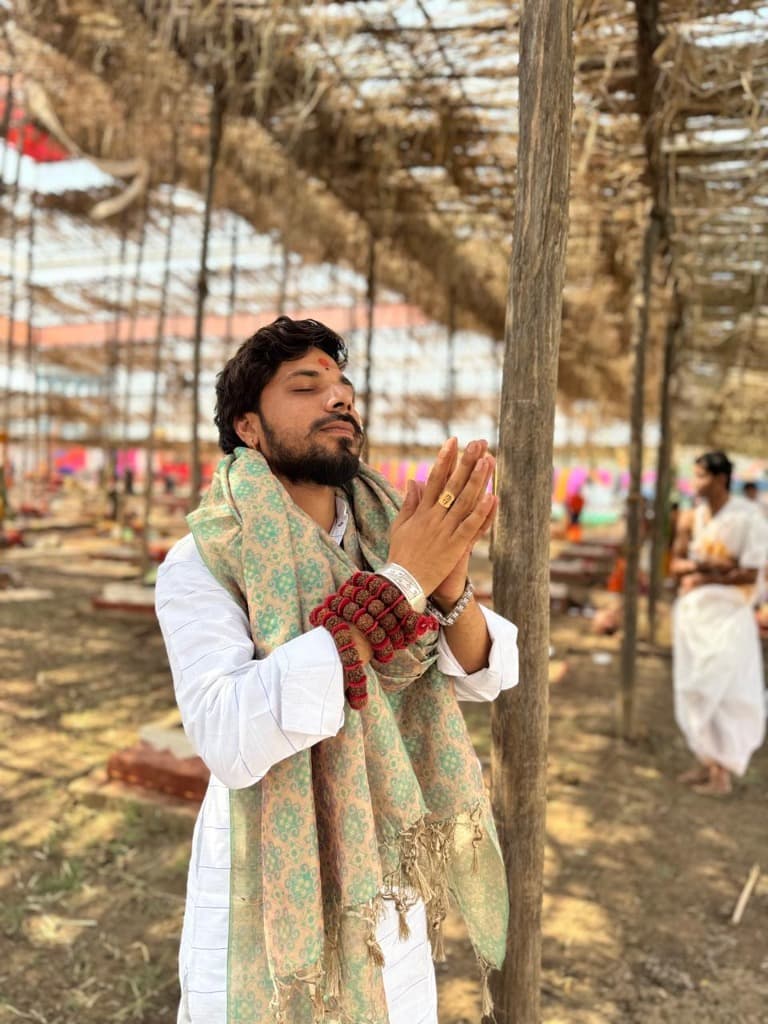
Acharya Tiwari Chetan Guru
Siddha Peethadheesh & Head Vedic Scholar
With over 15+ years of unbroken Vedic practice at Maa Baglamukhi Siddha Peeth, Nalkheda, Acharya Ji is a globally authoritative voice on Tantra Shastra, Stambhan Vidya, and Karmic Astrology. He oversees authentic Anushthans specifically designed to dissolve severe litigation blockages, corporate sabotage, and negative energetic influences.
Need Exact Hawan Cost & Shubh Muhurat?
Get direct guidance from Head Priest Acharya Tiwari Chetan Guru.