Sawan — also known as Shravan Maas — is widely regarded as the holiest month of the Hindu lunar calendar. It is a time when millions of devotees turn inward, observe fasts, chant mantras, and seek the blessings of the divine with renewed sincerity. Among the many sacred practices associated with this month, one question comes up repeatedly among devotees of the Dasha Mahavidyas: can Baglamukhi Havan be performed during Sawan, and what does it involve?
This guide answers that question in full — respectfully, factually, and without exaggeration. You will find the spiritual reasoning behind performing this havan in Sawan, the correct step-by-step vidhi, the samagri required, the best timing, common mistakes to avoid, and honest guidance on who this ritual is (and isn't) suited for. Every explanation here keeps one thing in mind: practices can vary by guru, sampradaya, and family lineage, so this article is meant to inform your understanding, not replace the guidance of your own spiritual teacher.
Quick Answer
Can Baglamukhi Havan be performed during Sawan? Yes. Many devotees and Acharyas consider Sawan a suitable and spiritually meaningful month for performing Baglamukhi Havan, since the month is already dedicated to disciplined worship, fasting, and fire rituals. However, the exact day, tithi, and vidhi should ideally be confirmed with an experienced Acharya, as traditions differ across lineages.
Why Sawan Is Spiritually Significant
Sawan is the fifth month of the traditional Hindu calendar and is dedicated primarily to Lord Shiva. Devotees observe weekly fasts on Sawan Somwar (Mondays), perform Rudrabhishek, chant the Shiva Panchakshari mantra, and engage in various forms of tapasya throughout the month. Because the atmosphere of the month is already oriented toward austerity, devotion, and fire worship, many spiritual traditions also consider it favorable for other Shakti-oriented sadhanas, including worship of the Dasha Mahavidyas — of which Maa Baglamukhi is the eighth.
Featured Snippet Answer: Sawan is considered spiritually significant because it is dedicated to Lord Shiva, a period of collective fasting, mantra chanting, and fire rituals across India. The heightened devotional atmosphere of the month is traditionally seen as supportive for other disciplined spiritual practices, including Havan and Mahavidya worship, though the exact significance can vary between regions and lineages.
Quick Highlights
Aspect | Details |
|---|---|
Month | Sawan / Shravan Maas |
Primary Deity of the Month | Lord Shiva |
Common Practices | Fasting, Rudrabhishek, mantra jaap, Havan |
Relevance to Baglamukhi Worship | Considered a favorable devotional period by many traditions |
Ideal For | Protection, mental strength, obstacle removal, spiritual discipline |
Guidance Recommended | Yes — timing and vidhi can vary by lineage |
Where Performed | Traditionally at a Siddha Peeth such as Nalkheda Baglamukhi Temple |
What is Baglamukhi Havan?
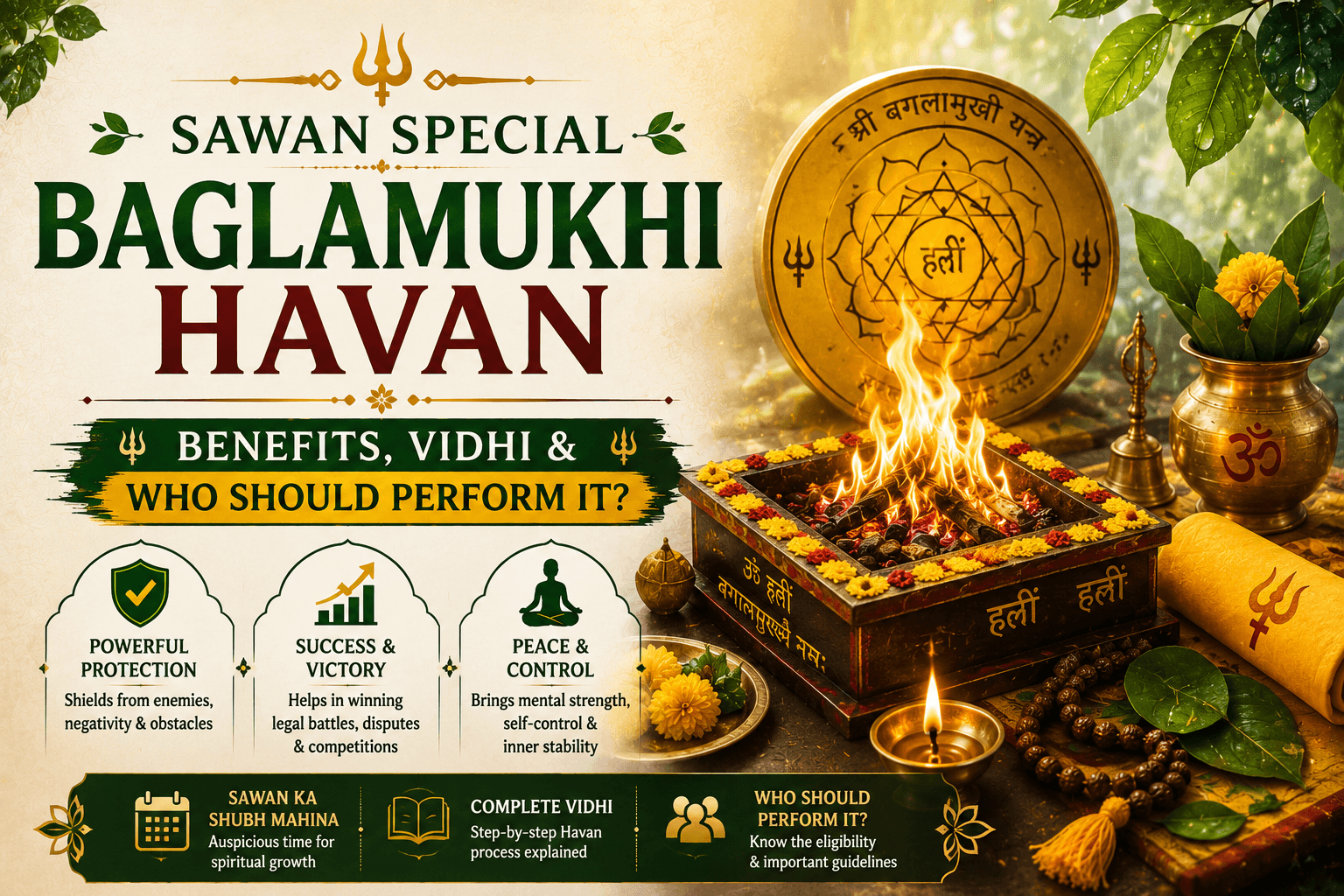
Baglamukhi Havan is a traditional Vedic fire ritual dedicated to Maa Baglamukhi, the eighth of the ten Mahavidyas in Shakta tradition. She is worshipped as the goddess of Stambhan Shakti — the power associated with stilling, restraining, or neutralizing negative forces, obstacles, and hostile influences. The havan involves invoking the goddess through specific mantras while offering samagri into a consecrated fire (kund), following a defined sequence of Sankalp, Avahan, mantra jaap, and Purnahuti.
Unlike a simple prayer, a havan is a structured ritual that requires knowledge of Vedic procedure, correct pronunciation of mantras, and disciplined preparation. This is why it is traditionally performed by or under the supervision of a qualified Acharya, often at a recognized Baglamukhi temple or Siddha Peeth.
Featured Snippet Answer: Baglamukhi Havan is a Vedic fire ritual dedicated to Goddess Baglamukhi, the eighth Mahavidya, performed to invoke protection, mental clarity, and Stambhan Shakti — the power to still or neutralize obstacles and hostile energies. It involves Sankalp, mantra chanting, and offerings into a sacred fire, typically guided by an experienced Acharya.
Why is Sawan Considered Auspicious for Spiritual Practice
Sawan holds a unique place in the Hindu spiritual calendar for several interconnected reasons:
It is the month in which Lord Shiva is believed to have consumed the poison (Halahala) that emerged during Samudra Manthan, making it a month of penance, restraint, and devotion.
The monsoon season itself is traditionally viewed as a period of inward reflection, reduced worldly activity, and increased spiritual focus.
Weekly fasting on Sawan Somwar and daily temple rituals create a sustained atmosphere of collective devotion across the country.
Many households and temples increase the frequency of Havan, Abhishek, and mantra jaap during this period as part of their regular spiritual calendar.
Because of this heightened, disciplined devotional environment, several spiritual lineages consider Sawan a suitable time to also take up other Sadhanas — including Mahavidya worship — provided it is done with sincerity and proper guidance.
Featured Snippet Answer: Sawan is considered auspicious because it is associated with Lord Shiva's penance, monsoon-season introspection, and a nationwide culture of fasting and fire rituals. This disciplined devotional environment is traditionally seen by many as favorable for undertaking additional spiritual practices, including Havan and Mahavidya Sadhana.
Can Baglamukhi Havan Be Performed During Sawan?
This is the most searched question on this topic, so let's answer it directly: yes, Baglamukhi Havan can be performed during Sawan, and many devotees choose to do so. There is no scriptural restriction that prevents Mahavidya worship during Shravan Maas. In fact, because the month already encourages fasting, mantra discipline, and fire rituals, some Acharyas consider it a naturally supportive period for this havan.
That said, three points are worth understanding clearly:
Traditions differ. Some lineages prefer performing Baglamukhi rituals specifically during Navratri Gupt Navratri or on Tuesdays and Saturdays, while others are comfortable with Sawan as well. Neither view is "wrong" — they reflect different sampradayas.
The day and tithi still matter. Even within Sawan, some days are considered more suitable than others (this is covered in the Best Time section below).
Personal guidance is valuable. Because Baglamukhi worship involves specific mantra and Sankalp procedures, consulting an experienced Acharya before finalizing the date is generally recommended.
Featured Snippet Answer: Yes, Baglamukhi Havan can be performed during Sawan. There is no scriptural restriction against it, and the month's atmosphere of fasting and fire worship is considered supportive by many traditions. However, the exact day and vidhi can vary by lineage, so guidance from an experienced Acharya is recommended.
Spiritual Importance of Baglamukhi Havan During Sawan
When performed during Sawan, Baglamukhi Havan is often approached with a slightly different intention than at other times of the year. Because Sawan is already a month of restraint and inner discipline, devotees frequently use this period to seek:
A calmer, more focused mind through the combined discipline of fasting and mantra practice
Protection from ongoing disputes, legal matters, or persistent obstacles that may have been affecting them
A renewed sense of courage and clarity before making important life decisions
Alignment between their personal Sadhana and the broader devotional energy of the month
It is important to state this respectfully: these are traditional beliefs and intentions held by devotees, not guaranteed outcomes. The value of the ritual lies in sincere devotion, discipline, and the guidance of a knowledgeable Acharya — not in any promised result.
Featured Snippet Answer: Performing Baglamukhi Havan during Sawan is traditionally seen as spiritually meaningful because it combines Mahavidya worship with the month's existing culture of fasting and fire rituals. Devotees often use this period to seek mental clarity, protection, and courage, though outcomes are a matter of personal faith rather than guaranteed results.
Benefits of Performing Baglamukhi Havan During Sawan
The benefits described below are the traditional spiritual intentions associated with this havan, as understood in Shakta practice. They are presented as beliefs held by devotees and practitioners, not as guarantees.
Benefits
Area | Traditional Spiritual Intention |
|---|---|
Protection | Seeking a sense of protection from hidden rivals, disputes, and negative influences |
Legal Matters | Seeking clarity, confidence, and calm during ongoing legal or official proceedings |
Mental Strength | Cultivating focus, courage, and resilience during difficult phases |
Career & Business | Praying for the removal of obstacles affecting professional growth |
Family Harmony | Seeking peace and reduced conflict within the household |
Spiritual Growth | Deepening one's Sadhana through disciplined fire-ritual practice |
Emotional Balance | Cultivating inner calm during the introspective monsoon season |
Featured Snippet Answer: Devotees traditionally perform Baglamukhi Havan during Sawan seeking protection, mental strength, clarity in legal or professional matters, and spiritual growth. These are long-held devotional intentions rather than guaranteed outcomes, and results are understood to depend on faith, sincerity, and personal circumstances.
Who Should Perform This Havan?
Baglamukhi Havan during Sawan is generally considered appropriate for devotees who:
Are already engaged in some form of regular spiritual practice or wish to begin one with discipline
Are facing prolonged disputes, obstacles, or a sense of stagnation in life
Wish to deepen their connection with the Dasha Mahavidya tradition during a spiritually significant month
Prefer performing important Sadhana during a period they are already observing fasts or restraint (such as Sawan)
Have received guidance from a family guru or Acharya recommending this practice
This havan is open to sincere devotees regardless of background, provided it is approached with respect for the tradition and, where possible, under proper guidance.
Featured Snippet Answer: Baglamukhi Havan during Sawan is generally suitable for devotees seeking protection, clarity, or spiritual discipline, especially those already observing Sawan fasts or facing ongoing obstacles. It is open to sincere devotees, ideally performed under the guidance of a qualified Acharya familiar with the correct vidhi.
Who May Wish to Seek Guidance Before Performing It?
Responsible spiritual practice also means recognizing when personal guidance is especially important. It is worth consulting an experienced Acharya first if you:
Are performing any Mahavidya Havan for the very first time
Belong to a specific sampradaya with its own prescribed rules for Shravan Maas worship
Are unsure about the correct mantra, Sankalp wording, or samagri for your intention
Have health restrictions that may affect your ability to fast or sit through a longer ritual
Wish to combine this havan with other ongoing remedies or rituals
There is no obligation to perform every ritual independently. Many devotees choose to have the Havan performed on their behalf</a> by qualified Vedic Pandits with a personalized Sankalp, which is an equally valid and widely practiced approach.
Featured Snippet Answer: First-time devotees, those following a specific sampradaya's rules, or anyone unsure about mantra or samagri details should consult an experienced Acharya before performing Baglamukhi Havan. Many devotees also choose to have the ritual performed on their behalf by qualified Vedic Pandits with a personalized Sankalp.
Correct Havan Vidhi
The following is a general outline of Baglamukhi Havan Vidhi as commonly followed in Shakta tradition. Specific mantras, sequence, and additional steps may vary depending on your guru or lineage, so this should be treated as an educational overview rather than a strict, one-size-fits-all procedure.
Step-by-Step Havan Process
Step | Process |
|---|---|
1 | Purification of the space, self, and havan kund (Achaman, Sankalp) |
2 | Ganesh Vandana and invocation of the presiding deities |
3 | Kalash Sthapana and worship of the sacred vessel |
4 | Avahan (invocation) of Maa Baglamukhi with appropriate mantras |
5 | Lighting of the sacred fire and initial offerings (Samidha Ahuti) |
6 | Chanting of the Baglamukhi Mantra or Beej Mantra with a fixed count of Ahutis |
7 | Offering of specific samagri items as prescribed |
8 | Purnahuti — the final, complete offering marking the ritual's conclusion |
9 | Aarti and closing prayers |
10 | Distribution or preservation of Prasad and Vibhuti |
Devotees who wish to combine mantra recitation with the havan may also refer to the Baglamukhi Gayatri Mantra and general Puja Vidhi for a fuller understanding of the worship sequence.
Featured Snippet Answer: The general Baglamukhi Havan Vidhi includes purification, Sankalp, Kalash Sthapana, Avahan of the goddess, lighting the sacred fire, mantra-based Ahutis, Purnahuti, Aarti, and Prasad distribution. Exact mantras and sequence can vary by lineage, so guidance from a qualified Acharya is recommended.
Required Samagri
A complete list of traditional havan samagri is available on our dedicated Baglamukhi Havan Samagri page. Below is a general summary of commonly used items.
Samagri
Category | Common Items |
|---|---|
Base Havan Items | Havan kund, mango wood samidha, dry coconut, camphor |
Offerings | Ghee, til (sesame seeds), yellow mustard seeds, turmeric |
Special Items | Yellow cloth, turmeric garland, yellow flowers |
Purnahuti Items | Coconut, betel leaves, supari, yellow sweets |
Additional | Kumkum, akshat (rice), incense, diya, camphor for Aarti |
The exact quantity and specific items can vary depending on the type of havan (standard Havan, Anushthan, or Maha Havan) and the guidance of your Acharya.
Featured Snippet Answer: Common Baglamukhi Havan samagri includes a havan kund, mango wood samidha, ghee, til, turmeric, yellow cloth and flowers, and Purnahuti items such as coconut and betel leaves. Exact requirements vary by the type and scale of the havan, so it's best confirmed with your Acharya.
Preparation Before Havan
Proper preparation is considered as important as the ritual itself in Vedic tradition. Devotees are generally advised to:
Maintain physical and mental cleanliness in the days leading up to the havan
Follow a simple, sattvic diet, and observe fasting if guided to do so
Wear clean, preferably yellow-colored clothing on the day of the havan, as yellow is associated with Maa Baglamukhi
Keep the mind calm and avoid unnecessary conflict or negativity before the ritual
Gather all samagri in advance to avoid disruption during the havan
Confirm the Sankalp wording (name, gotra, and intention) with the officiating Acharya beforehand
Featured Snippet Answer: Preparation before Baglamukhi Havan typically includes maintaining physical and mental purity, following a sattvic diet, wearing yellow clothing, gathering samagri in advance, and confirming the Sankalp details with the officiating Acharya before the ritual begins.
Best Time & Best Day
Timing plays an important role in Vedic ritual practice. While the specific Muhurat is best confirmed with your Acharya based on the current Panchang, the following general guidance is widely followed:
Time of Day: Early morning or evening hours, especially during Sandhya Kaal, are generally preferred for havan.
Auspicious Days: Tuesdays and Saturdays are traditionally associated with Shakti worship and are often chosen for Baglamukhi rituals, including within Sawan.
Within Sawan: Sawan Somwar (Mondays) are primarily dedicated to Lord Shiva, so many Acharyas suggest performing the Baglamukhi Havan on a Tuesday or Saturday that falls within the Sawan month, rather than on the Somwar itself — though this can vary by lineage.
Special Dates: If a Pradosh, Amavasya, or other significant tithi falls within Sawan, some traditions consider it especially favorable for this havan; again, this should be confirmed with your Acharya.
Featured Snippet Answer: The best time for Baglamukhi Havan is generally early morning or evening, with Tuesdays and Saturdays considered especially favorable. Within Sawan, many Acharyas suggest choosing a Tuesday or Saturday rather than a Sawan Somwar, since Mondays are primarily dedicated to Lord Shiva — though this can vary by tradition.
Sawan Somwar and Baglamukhi Havan
A common question devotees ask is whether Baglamukhi Havan should be combined with Sawan Somwar fasting. There isn't a single universal answer:
Some devotees prefer to keep Sawan Somwar dedicated entirely to Lord Shiva and perform their Baglamukhi Havan on a separate day within the same month.
Others, particularly those already engaged in a broader Shakti Sadhana, combine both practices, treating the entire month as one continuous period of devotion.
A few lineages specifically recommend performing the havan shortly after a Sawan Somwar fast, viewing it as a natural extension of that day's discipline.
Because this varies meaningfully across sampradayas, it is one of the areas where personal guidance is most valuable.
Featured Snippet Answer: Whether to combine Baglamukhi Havan with Sawan Somwar depends on your tradition. Some devotees keep Mondays reserved solely for Lord Shiva and perform the havan on another day within Sawan, while others combine both practices. This is best decided with guidance from your Acharya or family tradition.
Rules to Follow
Dos and Don'ts
Do | Don't |
|---|---|
Maintain cleanliness and simplicity throughout | Don't perform the havan in a state of physical or mental agitation |
Confirm mantras and Sankalp with a knowledgeable Acharya | Don't attempt unfamiliar Tantric procedures without guidance |
Use fresh, pure samagri | Don't reuse stale or previously offered items |
Keep the intention clear and respectful | Don't perform the ritual purely out of fear or superstition |
Observe silence or mantra focus during the havan | Don't engage in unrelated conversation during the ritual |
Complete the ritual with Purnahuti and Aarti | Don't leave the havan kund unattended before Purnahuti |
Featured Snippet Answer: Key rules for Baglamukhi Havan include maintaining cleanliness, using fresh samagri, confirming mantras with a knowledgeable Acharya, and completing the ritual with Purnahuti and Aarti. Devotees should avoid performing it in agitation, using stale items, or attempting unfamiliar Tantric steps without guidance.
Common Mistakes to Avoid
Even well-intentioned devotees sometimes make avoidable errors:
Skipping the Sankalp or reciting it incorrectly — this is considered central to personalizing the ritual.
Using incomplete or incorrect samagri, which can disrupt the intended sequence of offerings.
Rushing through mantra chanting without proper focus or correct pronunciation.
Performing the havan without any guidance, especially for first-time practitioners.
Expecting instant or guaranteed results, which goes against the spirit of patient, faith-based practice.
Ignoring lineage-specific instructions in favor of generic online procedures.
Featured Snippet Answer: Common mistakes in Baglamukhi Havan include skipping or misreciting the Sankalp, using incomplete samagri, rushing mantra chanting, performing the ritual without guidance, and expecting guaranteed outcomes. Following your lineage's specific instructions helps avoid most of these errors.
Frequently Asked Questions
1. Can we perform Baglamukhi Havan during Sawan?
Yes. There is no scriptural restriction against it, and many devotees choose Sawan specifically because of its disciplined, devotional atmosphere. The exact day is best confirmed with an Acharya.
2. What are the benefits of Baglamukhi Havan in Sawan? Traditionally, devotees seek protection, mental clarity, courage, and support during legal or professional obstacles. These are devotional intentions rather than guaranteed outcomes.
3. What is the best time for Baglamukhi Havan during Sawan?
Early morning or evening hours are generally preferred, with Tuesdays and Saturdays within Sawan considered especially favorable by many traditions.
4. Who should perform Baglamukhi Havan?
Sincere devotees facing obstacles, disputes, or seeking spiritual discipline, especially those already observing Sawan practices, may consider this havan — ideally with guidance from a qualified Acharya.
5. Is Baglamukhi Havan the same as Baglamukhi Puja?
No. Puja is a worship ritual focused on offerings and prayer, while Havan is a fire ritual involving specific mantra-based Ahutis. Many devotees combine both; see our Baglamukhi Puja page for more detail.
6. Can this havan be performed for protection from enemies or disputes?
Yes, this is one of the most common traditional intentions, often associated with the Shatru Nashak Puja as a related ritual.
7. Can Baglamukhi Havan be performed for career or business success?
Yes, many devotees perform it seeking clarity and the removal of obstacles in professional life, alongside sincere personal effort.
8. Do I need to fast during Sawan to perform this havan?
Fasting is not mandatory for the havan itself, though many devotees choose to fast as part of their overall Sawan discipline. This depends on personal capacity and tradition.
9. Can NRIs or devotees outside India participate in a Sawan Special Baglamukhi Havan?
Yes. It is common for the ritual to be performed on a devotee's behalf at a Siddha Peeth with a personalized Sankalp, with updates and Prasad shared afterward.
10. What samagri is essential for this havan?
Core items include a havan kund, samidha, ghee, til, turmeric, and Purnahuti items such as coconut and betel leaves. A full list is available on our Havan Samagri page.
Quick Summary
Question | Short Answer |
|---|---|
Can Baglamukhi Havan be done in Sawan? | Yes, widely practiced, subject to lineage guidance |
Best day within Sawan? | Often Tuesday or Saturday; confirm with Acharya |
Is fasting required? | Not mandatory, but commonly observed |
Who should perform it? | Sincere devotees seeking protection, clarity, or spiritual discipline |
Are results guaranteed? | No — outcomes are a matter of faith, not guarantee |
Where is it commonly performed? | At a recognized Siddha Peeth, such as Nalkheda |
Conclusion
Sawan offers a naturally disciplined, devotionally rich environment, and performing Baglamukhi Havan during this month is a well-established practice among devotees of the Dasha Mahavidyas. As with any Vedic ritual, the exact day, mantras, and procedure can differ based on your guru, sampradaya, or family tradition — so treat this article as a foundation for understanding, not a substitute for personal guidance.
If you wish to perform a traditional, correctly guided Sawan Special Baglamukhi Havan, you are welcome to connect with the Vedic Pandits at Nalkheda Siddha Peeth to discuss your intention, preferred dates, and the appropriate ritual for your situation. You can learn more about the Baglamukhi Havan offered here, explore the Shravan Maas Special rituals currently available, or simply reach out with your questions before making any decision. No outcome can ever be promised — but a sincere, well-guided ritual performed with faith remains a meaningful part of many devotees' spiritual journey through this sacred month.
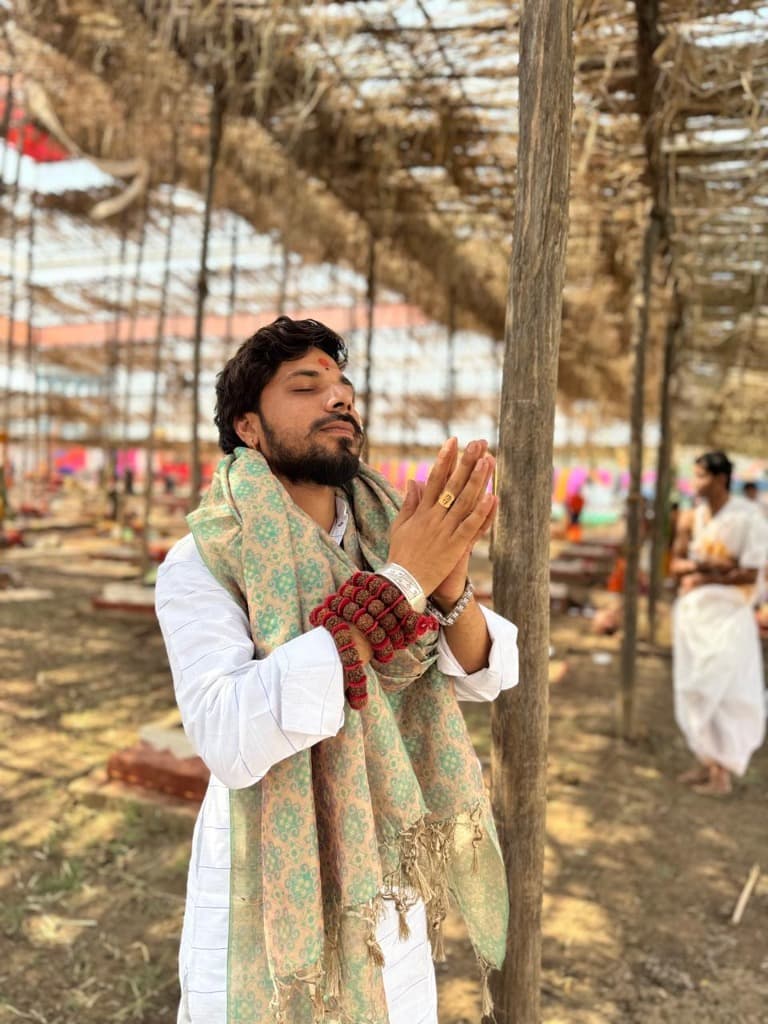
Acharya Tiwari Chetan Guru
Siddha Peethadheesh & Head Vedic Scholar
With over 15+ years of unbroken Vedic practice at Maa Baglamukhi Siddha Peeth, Nalkheda, Acharya Ji is a globally authoritative voice on Tantra Shastra, Stambhan Vidya, and Karmic Astrology. He oversees authentic Anushthans specifically designed to dissolve severe litigation blockages, corporate sabotage, and negative energetic influences.