Some devotees know exactly why they are searching for Baglamukhi Havan this Gupt Navratri. Others have a vague, persistent sense that something in their life needs attention, without being able to name it clearly. Both are common, and both are valid reasons to pause and look at your situation honestly.
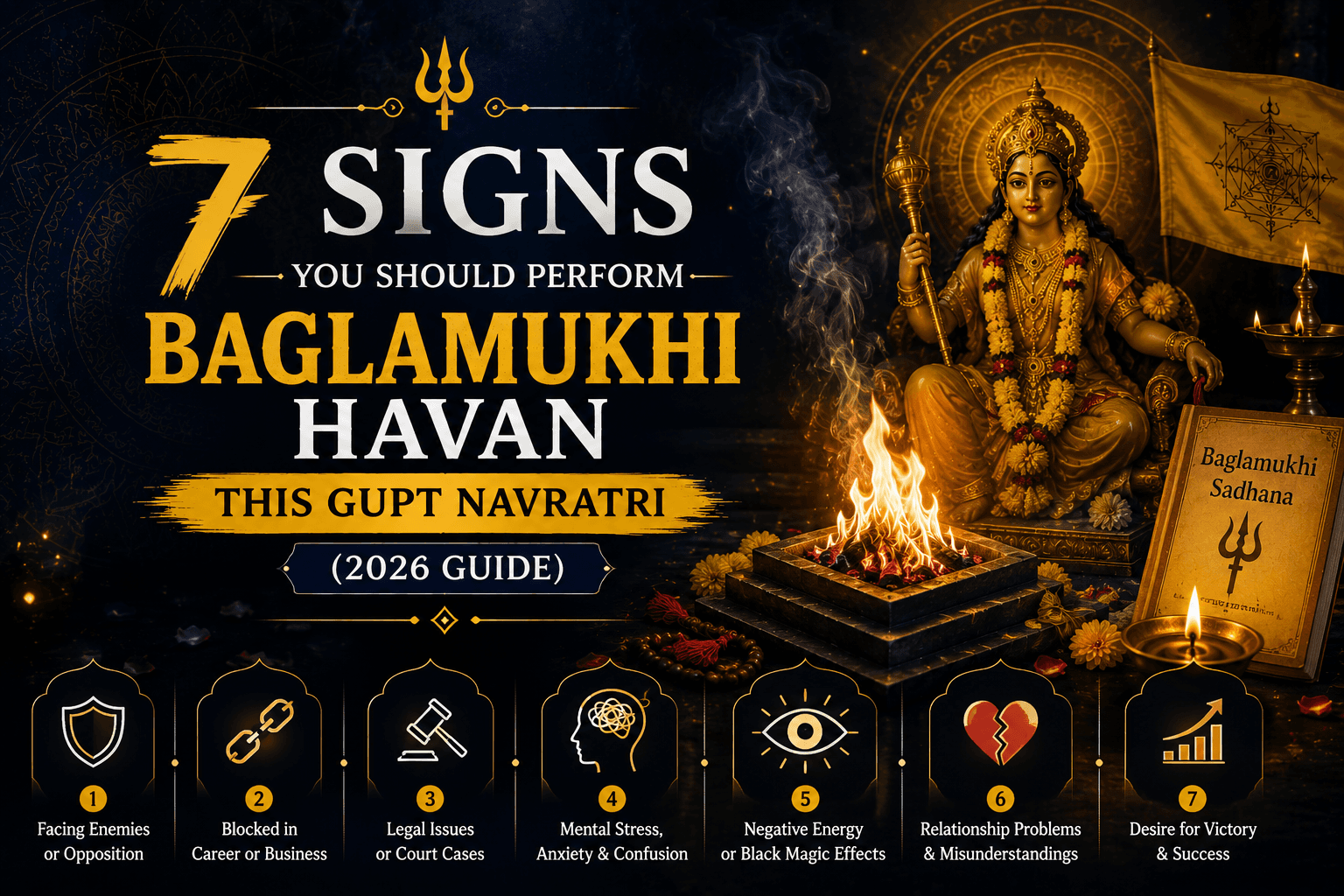
This guide walks through seven signs that, according to Hindu traditions, are commonly associated with devotees choosing to perform Baglamukhi Havan. It is not a checklist meant to alarm you into booking something. It is meant to help you recognise your own situation clearly enough to decide, calmly, whether this Gupt Navratri is the right time for this particular ritual.
Quick Answer: Baglamukhi Havan is traditionally considered when a devotee faces long-running court cases, persistent enemies, repeated business or financial setbacks, unexplained negative energy, repeated failures despite genuine effort, or a strong pull toward spiritual protection. Many devotees believe Gupt Navratri intensifies the traditional benefits of this fire ritual.
Key Takeaways
Baglamukhi Havan is traditionally linked to situations involving opposition, obstacles, or a need for protection, not to every kind of life difficulty.
Gupt Navratri is considered a particularly suitable window for this Havan, according to temple traditions.
Recognising your own situation among these seven signs is more useful than deciding based on urgency or fear alone.
Not every sign calls for the same intensity of ritual. Some point to a single Havan, others to a fuller Anushthan.
Speaking with an experienced Acharya before booking helps match the ritual to your actual situation.
What Is Baglamukhi Havan?
Quick Answer: Baglamukhi Havan is a Vedic fire ritual dedicated to Maa Baglamukhi, where offerings are placed into a sacred fire while her mantra is chanted, traditionally performed to invoke her Stambhan Shakti, the power to still opposition and negative influence.
The ritual generally begins with sankalp in the devotee's name and gotra, followed by continuous chanting of the Baglamukhi mool mantra while ghee, turmeric, and other prescribed samagri are offered into the fire. Many devotees describe it as more concentrated in effect than mantra chanting alone, since the fire is traditionally considered a direct medium between the devotee's intention and the divine. You can see the full procedure on our Baglamukhi Havan page.
Why Is Gupt Navratri Considered Important for Baglamukhi Havan?
Quick Answer: Gupt Navratri is dedicated to the ten Mahavidyas, and Maa Baglamukhi is the eighth among them, which is why temple traditions consider this window especially suited to her Havan compared to an ordinary day of the year.
Unlike Chaitra and Sharad Navratri, which are public and celebratory, Gupt Navratri is observed quietly, which many devotees associate with serious, focused sadhana rather than festivity. Performing Havan during this window is traditionally believed to carry a more concentrated effect than the same ritual performed at another time, particularly around Ashtami, considered Maa Baglamukhi's own day within the nine. Our Gupt Navratri 2026 guide covers the dates and daily significance in detail if you want that background first.
Who Traditionally Performs Baglamukhi Havan?
Quick Answer: Baglamukhi Havan is traditionally performed by devotees themselves under guidance, or on their behalf by an experienced Acharya, especially when the ritual requires precise mantra pronunciation, correct samagri, and disciplined sankalp.
Because the procedure is exacting, temple traditions generally recommend that anything beyond a very simple home lamp-lighting practice be performed or guided by someone experienced in the ritual. This is especially true for devotees dealing with serious situations, where errors in procedure are traditionally believed to reduce the ritual's intended effect.
7 Signs You Should Perform Baglamukhi Havan
The seven signs below are not a diagnosis. They are patterns that experienced Acharyas commonly see among devotees who choose this particular ritual. If more than one applies to you, that is worth noting, not worrying about.
Sign 1: Long-Running Court Cases
What it means: Your case has been active for an extended period, with repeated delays, adjournments, or setbacks that do not seem to resolve no matter how strong your legal position feels.
Traditional significance: According to Hindu traditions, Maa Baglamukhi's Stambhan Shakti is closely associated with stilling opposition, which is why litigation is one of the most classical reasons devotees turn to her Havan.
Who commonly experiences this: Devotees involved in property disputes, family litigation, or long-pending civil cases where the other party appears to have disproportionate influence or resources.
When Havan may be considered: Many devotees begin with a single Havan when the case is still relatively recent, moving toward a fuller Anushthan if it has continued for over a year without progress.
Important precautions: This Havan should never be treated as a replacement for proper legal representation. It is approached as a spiritual support alongside your legal process, not instead of it.
Related practices: Devotees in this situation often pair the Havan with the Shatru Nashak Puja, and our detailed guide on Baglamukhi worship for court cases covers this specific situation further.
Sign 2: Persistent Enemy-Related Problems
What it means: You feel that a specific person, or an unknown source, is consistently working against your interests, whether through open hostility, sabotage, or quiet undermining.
Traditional significance: Temple traditions describe this Havan as particularly suited to situations involving Shatru Badha, obstruction caused by an adversary, since Maa Baglamukhi's worship is directly tied to neutralising this kind of opposition.
Who commonly experiences this: Professionals facing workplace rivalry, families dealing with hostile relatives, or individuals who sense a pattern of interference they cannot otherwise explain.
When Havan may be considered: If the pattern has continued for months rather than being a single incident, many devotees consider this Havan a reasonable next step.
Important precautions: Experienced Acharyas recommend approaching this with a calm, clear intention rather than anger or a desire for retaliation, since the ritual is traditionally framed around protection, not harm to others.
Related practices: This sign often pairs naturally with the Shatru Nashak Puja and our guide on mantras for enemy protection and black magic removal.
Sign 3: Repeated Business Losses
What it means: Your business has faced a pattern of setbacks, whether through failed deals, unreliable partners, or a general sense that progress is constantly being blocked despite sound decisions.
Traditional significance: Many devotees believe that Baglamukhi Havan helps still the disruptive forces, whether human or circumstantial, that repeatedly interfere with business stability.
Who commonly experiences this: Business owners dealing with partnership disputes, repeated contract failures, or a sustained downturn that does not match the broader market conditions around them.
When Havan may be considered: A single Havan is often used as an initial step, with a fuller Anushthan considered if the losses have continued across multiple business cycles.
Important precautions: This ritual works best alongside sound business practice and professional advice, not as a substitute for reviewing what may be going wrong operationally.
Related practices: Devotees exploring this often also look into the complete range of Baglamukhi Puja and Havan options to find the combination that fits their specific business situation.
Sign 4: Continuous Financial Obstacles
What it means: Money seems to slip away faster than it should, debts do not clear despite effort, or financial recovery keeps getting delayed by unexpected events.
Traditional significance: According to temple traditions, financial obstruction is sometimes viewed as connected to the same disruptive energy that Baglamukhi's Stambhan Shakti is meant to still, particularly when the pattern feels persistent rather than occasional.
Who commonly experiences this: Devotees facing long-pending recovery cases, chronic debt cycles, or a string of financial setbacks that do not seem tied to any single clear cause.
When Havan may be considered: If financial difficulty has persisted for more than a few months despite reasonable effort and planning, many devotees consider this an appropriate time.
Important precautions: This should not replace practical financial planning or professional advice. It is approached as spiritual support running alongside, not instead of, sound money management.
Related practices: Some devotees combine this Havan with a broader Baglamukhi Anushthan if the financial pattern feels deeply entrenched.
Sign 5: Negative Energy or Unexplained Disturbances
What it means: You or your household have experienced a run of unexplained unease, disturbed sleep, unusual friction at home, or a general heaviness that does not trace back to any clear cause.
Traditional significance: Temple traditions associate Baglamukhi worship with protection from negative energy, evil eye, and what is described in Tantric tradition as abhichara, or harmful energetic influence directed at a person or household.
Who commonly experiences this: Families noticing a sudden shift in household harmony, or individuals who feel a persistent unease they cannot attribute to any specific life event.
When Havan may be considered: Many devotees approach this Havan when the disturbance has been ongoing for weeks rather than a single unsettled day or two.
Important precautions: It is worth ruling out ordinary explanations, stress, health, or household circumstances, before assuming a spiritual cause. Experienced Acharyas generally ask about this before recommending a ritual for this reason specifically.
Related practices: This sign is often addressed alongside guidance on the Baglamukhi Yantra for daily protection, which some devotees keep at home after the Havan.
Sign 6: Repeated Failures Despite Sincere Effort
What it means: You have worked hard, prepared well, and done everything reasonably expected, yet outcomes keep falling short in a way that feels disproportionate to the effort involved.
Traditional significance: According to Hindu traditions, this pattern is sometimes viewed as an obstruction that effort alone cannot clear, which is part of why devotees turn to Baglamukhi's Havan for a different kind of support alongside their own hard work.
Who commonly experiences this: Students facing repeated exam setbacks, job seekers who reach final stages without success, or professionals whose promotions or opportunities keep slipping away.
When Havan may be considered: If the pattern has repeated more than two or three times across genuinely different attempts, many devotees see this as worth addressing through ritual alongside continued practical effort.
Important precautions: This Havan is best approached as complementary support, not a substitute for continued preparation, skill-building, or honest reflection on what might be improved.
Related practices: Devotees in this situation sometimes pair a single Havan with sustained personal mantra practice, covered in our complete guide to the Baglamukhi mantra.
Sign 7: Strong Desire for Spiritual Protection and Inner Strength
What it means: There is no single crisis driving you, but you feel a genuine pull toward spiritual discipline, protection, and inner steadiness during this Gupt Navratri.
Traditional significance: Many devotees perform this Havan not out of urgency, but out of devotion and a desire to strengthen their spiritual foundation, which temple traditions treat as an equally valid reason as facing an active problem.
Who commonly experiences this: Long-time devotees deepening an existing practice, or those who have observed others benefit from Gupt Navratri sadhana and want to build their own discipline.
When Havan may be considered: This sign does not require a specific severity threshold. A single Havan performed with sincerity is generally considered complete on its own terms.
Important precautions: There is no need to manufacture urgency or exaggerate a situation to justify this Havan. Genuine devotional interest is, on its own, a valid and traditionally recognised reason.
Related practices: Devotees here often explore the full Maa Baglamukhi Puja options to find a ritual that matches ongoing personal sadhana rather than crisis response.
Recognised one or more of these signs in your own situation? A short conversation can help you understand which ritual actually fits. Discuss Your Situation With Acharya Ji
Puja vs Havan vs 9-Day Anushthan: Comparison Table
Quick Answer: A simple Puja generally suits mild or recent concerns, Havan is traditionally suited to moderate, specific obstacles like the seven signs above, and a 9-day Anushthan is reserved for long-standing or deeply entrenched situations.
Situation | Simple Puja May Be Suitable | Havan May Be Suitable | 9-Day Anushthan May Be Suitable |
|---|---|---|---|
Recent, mild obstacle | Yes | Optional | Not usually necessary |
One of the 7 signs above, moderate severity | Sometimes | Yes | If it has persisted over a year |
Long-running court case | Rarely sufficient alone | Yes, as a starting point | Yes, for cases over a year old |
Persistent enemy or sabotage pattern | Rarely sufficient alone | Yes | Yes, if deeply entrenched |
General blessings or devotion | Yes | Yes | Only if seeking deeper discipline |
Severe, multi-year difficulty | Not usually sufficient | Often a first step | Generally recommended |
If you want a deeper comparison between a single-day ritual and a full Anushthan, our guide on choosing between a single-day Baglamukhi Puja and a 9-day Anushthan walks through this decision in more detail.
Still unsure which column fits your situation? That uncertainty is common, and worth resolving before you book anything. Get Guidance Before You Book
Who Should Consult an Acharya First?
Personalised guidance matters most when more than one sign applies to you at once, or when your situation does not clearly match any single sign above. Experienced Acharyas recommend a short conversation before booking if you are dealing with a combination of issues, such as a court case alongside financial strain, or if you are unsure whether what you are experiencing counts as a genuine pattern or an ordinary rough patch. This conversation is also useful if you are considering a fuller Anushthan but are unsure your situation truly warrants it. Acharya Tiwari Chetan Guru typically discusses the specific details with each devotee before recommending Havan, a broader Anushthan, or a combination of rituals.
Why Many Devotees Choose Nalkheda During Gupt Navratri
Nalkheda holds a distinct place among sites associated with Maa Baglamukhi because it is regarded as a Swayambhu Siddha Peeth, where her presence is considered self-manifested rather than installed through consecration. Temple traditions describe this as significant for Havan specifically, since the setting in which the fire ritual is performed is considered part of its traditional depth. Acharya Tiwari Chetan Guru has conducted Havan and Anushthan rituals at this site every Gupt Navratri since 2010, which is part of why many devotees choose to have their ritual performed here rather than elsewhere. You can read more about the site in our guide to the history and significance of the Nalkheda temple, or about the best time to visit for puja if you are planning to attend in person.
Can You Participate Online?
Quick Answer: Yes. Baglamukhi Havan can be performed on a devotee's behalf through online sankalp, with the Acharya conducting the ritual at Nalkheda and sharing live updates and prasad with devotees anywhere in the world.
Online sankalp involves sharing your name, gotra, and intention before the Havan, after which the Acharya performs the ritual at the correct time and shares a video update with you, along with prasad shipped to your address. This format works well for several kinds of devotees:
NRIs who want an authentic ritual performed at a genuine Siddha Peeth without needing to travel to Madhya Pradesh
Senior citizens for whom long hours of travel or sitting through an in-person ritual are not practical
Busy professionals who want to observe Gupt Navratri meaningfully without restructuring their entire schedule around it
Live participation is also possible for devotees who want to watch the ritual as it happens rather than only receiving a recording afterward. If you want to understand the reasoning behind this format further, our page on why Navratri is the most powerful time for Baglamukhi Havan covers this in depth. You can also review our puja cost and booking process guide before reaching out.
Common Mistakes Before Performing Baglamukhi Havan
Booking a Havan based on fear or urgency rather than a clear look at the actual situation
Assuming every one of the seven signs requires the most intense ritual available
Skipping sankalp or treating it as a formality rather than the ritual's focal point
Not discussing the situation with an Acharya before deciding between Havan and Anushthan
Attempting an elaborate home Havan without proper guidance on procedure
Ignoring practical steps, legal, financial, or professional, in favour of ritual alone
Waiting until the final days of Gupt Navratri to book, reducing available slots
Assuming online participation is less authentic than being physically present
Approaching the ritual with anger toward a specific person rather than a calm, protective intention
Expecting a guaranteed timeline for results rather than approaching the ritual as a matter of faith and tradition
Do's and Don'ts
Do | Don't |
|---|---|
Reflect honestly on which of the seven signs applies to you | Book a ritual out of panic without understanding your own situation |
Speak with an experienced Acharya if more than one sign applies | Assume every situation needs the most intense ritual available |
Continue practical steps, legal, financial, or professional, alongside the ritual | Treat the Havan as a replacement for real-world action |
Approach the ritual with a calm, protective intention | Perform it out of anger or a desire for revenge |
Book early during Gupt Navratri for the best availability | Wait until the last few days and rush the decision |
This ritual works best when it matches your actual situation, not a general sense of urgency. Talk to Acharya Ji Before Booking
Final Thoughts
Recognising yourself in one or more of these seven signs is not a reason to panic, and it is not proof that something is definitively wrong either. It is simply information, the kind that helps you make a calmer, more informed decision about whether Baglamukhi Havan is right for you this Gupt Navratri. Temple traditions have kept this ritual available across generations precisely because situations like these keep recurring, in different forms, for different devotees. If your situation feels unclear even after reading this, that is a normal place to be, and exactly when a short conversation helps more than trying to decide alone.
Ready to explore whether Baglamukhi Havan fits your Gupt Navratri this year? Acharya Tiwari Chetan Guru personally reviews each devotee's situation before recommending a ritual. No advance payment to start a conversation. Book Your Baglamukhi Havan | Ask Acharya Ji First
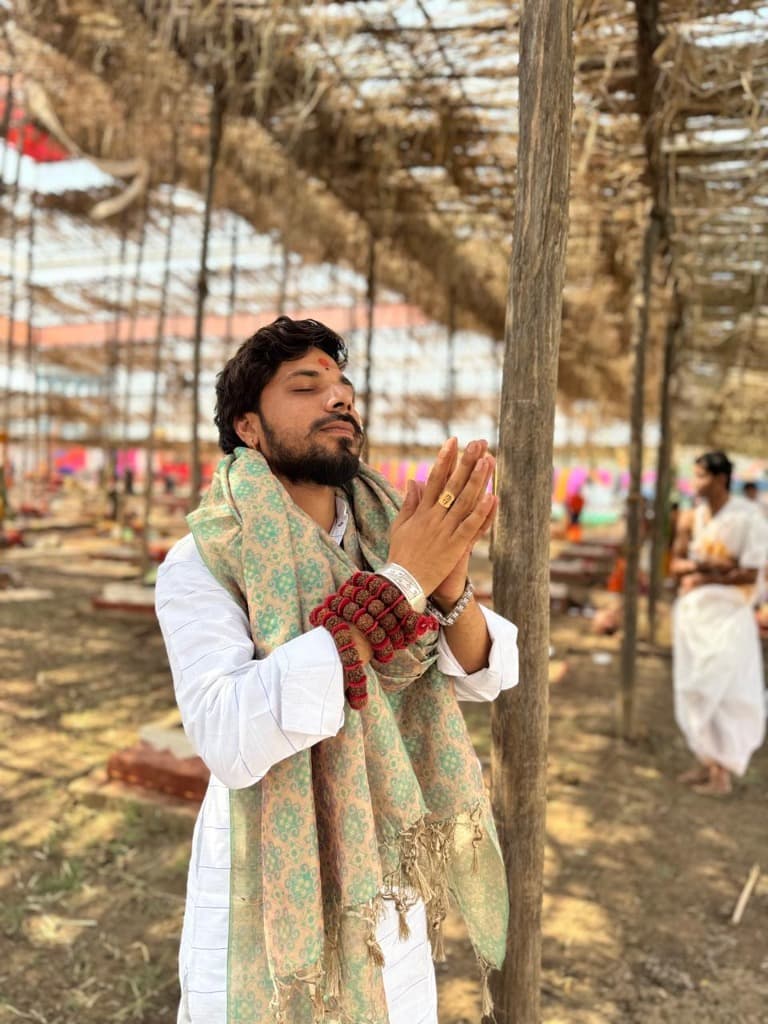
Acharya Tiwari Chetan Guru
Siddha Peethadheesh & Head Vedic Scholar
With over 15+ years of unbroken Vedic practice at Maa Baglamukhi Siddha Peeth, Nalkheda, Acharya Ji is a globally authoritative voice on Tantra Shastra, Stambhan Vidya, and Karmic Astrology. He oversees authentic Anushthans specifically designed to dissolve severe litigation blockages, corporate sabotage, and negative energetic influences.
Need Exact Hawan Cost & Shubh Muhurat?
Get direct guidance from Head Priest Acharya Tiwari Chetan Guru.