
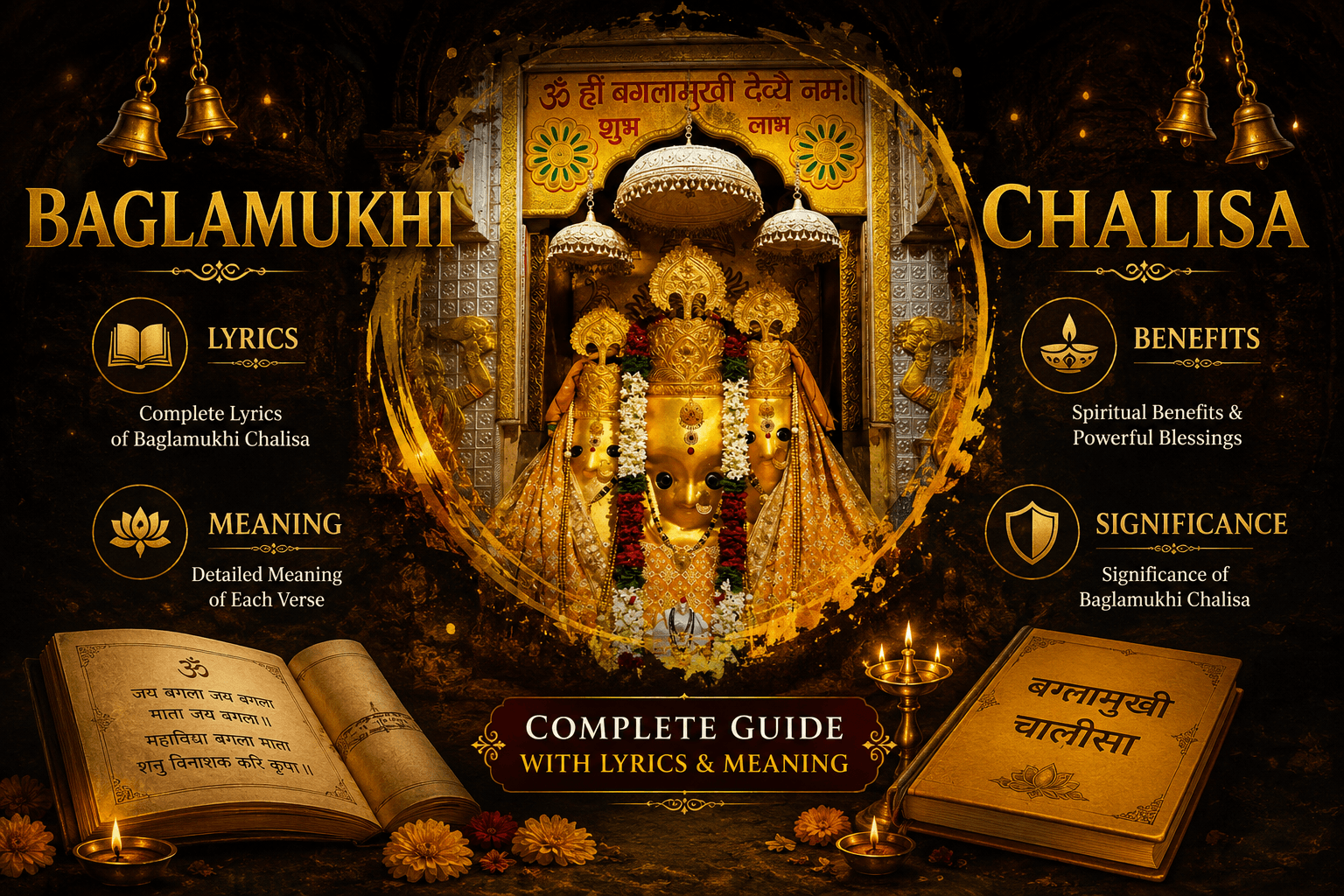
If you have ever felt surrounded by enemies, legal trouble, or negative energy, chances are someone has already told you to recite the Baglamukhi Chalisa. But most people jump straight to reciting it without understanding what it actually means or how to do it correctly.
This guide breaks down the real meaning, the benefits devotees report, the correct recitation method, and the exact rules that make the practice effective - in simple language, with no confusion between the Chalisa and other Baglamukhi practices.
Quick Answer: The Baglamukhi Chalisa is a 40-verse devotional hymn to Maa Baglamukhi, recited for protection from enemies, court case victory, and removal of negative energy. The best time to recite it is early morning on Tuesdays, facing east, wearing yellow. It takes 10-15 minutes and requires no special initiation.
What Is the Baglamukhi Chalisa?
The Baglamukhi Chalisa is a devotional hymn of 40 verses (chalis means forty in Hindi) dedicated to Maa Baglamukhi, the eighth of the Das Mahavidyas. She is worshipped for protection from enemies, victory in disputes, and removal of negative energy.
Unlike the Baglamukhi mantra, which is a short seed-sound chant repeated in rounds, the Chalisa is a longer prayer written in simple devotional language. It describes the goddess's form, her powers, and the blessings she offers to sincere devotees. It's meant to be recited daily, or at minimum on Tuesdays and during Navratri.
If you're looking for the complete verses in Hindi, you can read the full Baglamukhi Chalisa lyrics here on our dedicated page.
Meaning and Origin
Maa Baglamukhi is often called Pitambara Devi because of her association with the color yellow - her attire, her offerings, and even the ideal time of worship are tied to this color. The Chalisa draws directly from this Pitambara tradition, and devotees sometimes also recite the Pitambara Chalisa as a companion prayer to deepen their practice.
Each verse praises a specific quality of the goddess - her power to paralyze enemies (stambhan shakti), her fierce yet protective form, and her position among the ten Mahavidyas. Reciting the Chalisa is considered a simple way to invoke her blessings without needing elaborate ritual materials, unlike a full Baglamukhi hawan or havan ceremony, which requires a priest, samagri, and a fixed muhurat.
This makes the Chalisa the most accessible entry point into Baglamukhi worship for people who want a daily spiritual practice but cannot always arrange a full puja.
Who Should Recite the Baglamukhi Chalisa?
The Chalisa is open to anyone with sincere devotion. In practice, most devotees turn to it during specific life situations:
People facing an ongoing court case or legal dispute
Business owners dealing with unfair competition or sabotage
Students preparing for competitive exams under pressure
Individuals who feel targeted by office politics or rivalry
Families dealing with property disputes or inheritance conflicts
Anyone who feels affected by negative energy, jealousy, or black magic
Unlike advanced tantric mantras, the Chalisa does not require a guru's permission or a formal initiation, which is why it's often the first step recommended to new devotees.
Key Benefits of Reciting Baglamukhi Chalisa
Devotees and temple priests commonly associate regular recitation with the following benefits:
Protection from enemies and rivals This is considered the primary reason people turn to this Chalisa. It's closely linked to the intent behind the Baglamukhi Shatru Nashak Puja, which many devotees perform alongside daily recitation for stronger protection.
Mental clarity during court cases or disputes Many people recite the Chalisa specifically before hearings or important legal meetings. It's often paired with prayers focused on legal victory.
Relief from negative energy or black magic effects Devotees believe consistent recitation creates a protective shield around the household, especially when combined with turmeric and yellow offerings.
Confidence and courage in high-pressure situations Exams, interviews, business negotiations, and even political campaigns are common reasons devotees start a daily Chalisa practice.
Emotional steadiness during conflict Family disputes and property disagreements can be emotionally draining. Many devotees report a sense of calm and steadiness after a few weeks of consistent chanting.
A daily discipline that builds faith Beyond specific outcomes, the simple act of showing up every day - lighting a lamp, sitting with intention, and reciting the same 40 verses - builds a sense of discipline that devotees find valuable on its own.
These benefits are rooted in devotional belief and long-standing tradition rather than clinical evidence, and results vary by individual faith, intention, and consistency of practice.
Baglamukhi Chalisa vs Baglamukhi Mantra: What's the Difference?
People often confuse the two, assuming they serve the same purpose. Here's a simple comparison:
Aspect | Baglamukhi Chalisa | |
|---|---|---|
Length | 40 verses | Short seed-sound (beej mantra) |
Purpose | General devotion, daily protection | Specific goal-based sadhana |
Recitation time | 10-15 minutes | Can be repeated in short rounds (japa) |
Best for | Beginners, daily practice | Advanced practitioners, targeted results |
Guidance needed | Minimal | Often recommended with a guru or acharya |
Structure | Fixed verses, easy to memorize | Repetitive chant, counted with a mala |
Common use case | Daily protection, peace of mind | Specific enemy removal, court case, business rivalry |
If you're new to Baglamukhi worship, starting with the Chalisa is usually easier. Once comfortable, many devotees move on to mantra jaap for specific outcomes - read our complete guide on the Baglamukhi mantra to understand how that process works.
Best Time and Day to Recite
Tuesday is considered the most favorable day for Baglamukhi worship. Early morning after a bath, or during the Brahma Muhurta (the period before sunrise), is the traditional preferred time because the mind is calm and undistracted.
Evening recitation is also acceptable if mornings aren't possible, but consistency matters more than the exact hour. Choosing one time and sticking to it daily is considered more powerful than an irregular schedule.
Many devotees also intensify their practice during Navratri, especially Gupt Navratri, when the goddess's energy is believed to be most accessible. If you visit Maa Baglamukhi Temple, Nalkheda during this period, resident priests often guide devotees through combined Chalisa and havan sessions for deeper impact.
Step-by-Step Recitation Rules
Bathe and wear yellow clothing if possible - yellow is sacred to Maa Baglamukhi and is believed to amplify the effect of the prayer.
Face east or north while seated on a yellow asana (mat) rather than directly on the floor.
Light a ghee lamp and offer yellow flowers, turmeric, or chana dal if available.
Begin with "Jai Maa Baglamukhi" as an invocation before starting the verses.
Recite all 40 verses slowly and clearly - avoid rushing through the words just to finish quickly.
Close with the aarti if you have time, followed by a short moment of silence.
Maintain consistency - daily recitation is ideal, but at minimum, don't skip Tuesdays.
Avoid reciting during periods of impurity or when you're emotionally agitated, since a calm state of mind is considered essential to the practice. If you're chanting for a specific outcome like enemy removal or a pending legal case, many devotees pair this daily recitation with the Baglamukhi Kavach for an added layer of protection.
Baglamukhi Chalisa During Navratri
Navratri is considered one of the most powerful windows for Baglamukhi worship, and the Chalisa plays a central role in that period. During both Chaitra and Sharadiya Navratri, many devotees recite the Chalisa multiple times a day instead of once, treating it as a mini-anushthan.
Gupt Navratri, which falls in less commonly celebrated months, is particularly significant for tantric deities like Maa Baglamukhi. Devotees dealing with serious enemy trouble, legal battles, or persistent negative energy often choose this period specifically to intensify their Chalisa practice, sometimes combining it with a structured puja at a Baglamukhi temple.
If your situation feels urgent, waiting for the next Navratri isn't necessary. The Chalisa can be started on any Tuesday, though many devotees do feel that starting during Navratri gives the practice extra momentum.
Dos and Don'ts While Reciting
Do:
Recite with full attention rather than mechanically
Keep your surroundings clean during the prayer
Use a fixed seat and space if possible, reserved only for this practice
Approach the practice with patience rather than urgency
Don't:
Recite it out of fear or with the intention to harm someone
Skip days and expect the same result as consistent practice
Treat the Chalisa as a replacement for legal or medical action when those are genuinely needed
Mix the recitation rules of the Chalisa with the stricter rules meant for mantra sadhana
Quick Reference: Chalisa at a Glance
Detail | Information |
|---|---|
Deity | Maa Baglamukhi (8th Mahavidya) |
Ideal Day | Tuesday |
Ideal Time | Early morning (Brahma Muhurta) |
Sacred Color | Yellow |
Duration | 10-15 minutes |
Common Pairing | Baglamukhi Kavach, Baglamukhi Mantra |
Related Text | Pitambara Chalisa |
Initiation Required | No, safe for daily recitation |
Best Period to Intensify | Navratri, especially Gupt Navratri |
Common Mistakes to Avoid
Reciting without understanding the meaning behind the words
Skipping days and expecting instant results
Ignoring cleanliness and setup before starting the prayer
Mixing up Chalisa recitation rules with mantra jaap rules
Expecting the Chalisa alone to replace a full puja for serious, urgent problems
Reciting with anger or ill intent rather than sincere devotion
FAQs
Is Baglamukhi Chalisa safe to recite daily? Yes. Unlike some tantric mantras, the Chalisa is a devotional hymn suitable for daily recitation by anyone with sincere faith.
Can beginners recite it without a guru? Yes, the Chalisa doesn't require initiation. Guidance is more important for advanced mantra sadhana, not for Chalisa recitation.
What is the difference between Baglamukhi Chalisa and Pitambara Chalisa? Both praise the same goddess. Pitambara Chalisa emphasizes her yellow-attired form specifically, while Baglamukhi Chalisa covers her broader attributes and powers.
How long does it take to see results? This varies by individual and depends on consistency, faith, and personal circumstances. There's no fixed timeline, and results shouldn't be expected within a fixed number of days.
Should I combine Chalisa with a havan or puja? Many devotees do, especially during difficult phases like court cases or enemy troubles. A structured Baglamukhi puja can complement daily Chalisa recitation for stronger results.
Can women recite the Baglamukhi Chalisa during menstruation? Practices vary by personal and family tradition. Many devotees choose to pause active recitation during this period and resume afterward, following whatever convention feels appropriate to them.
Is there a fixed number of times I need to recite it? No fixed count is required for the Chalisa, unlike a mantra which often has a specific jaap count. Reciting it once with full attention is considered sufficient for daily practice.
Can I recite the Baglamukhi Chalisa for someone else's protection? Yes, many devotees recite it on behalf of family members, especially when someone else is facing a legal issue, illness, or hostility from others.
What if I miss a day of recitation? Missing an occasional day isn't considered harmful. The key is returning to the practice rather than abandoning it entirely out of guilt.
Do I need any special items to start reciting the Chalisa? No. While a ghee lamp, yellow flowers, and turmeric are recommended for a more complete setup, the Chalisa can be recited with just sincere devotion if ritual items aren't available.
Conclusion
The Baglamukhi Chalisa is one of the most accessible ways to connect with Maa Baglamukhi's protective energy - no elaborate rituals, no special initiation, just consistent devotion. Understanding its meaning and following the recitation rules correctly makes the practice more meaningful than simply reading words without context.
If you're ready to begin, read the complete Baglamukhi Chalisa here, and if your situation calls for stronger intervention - enemy trouble, court cases, or persistent negative energy - consider booking a Baglamukhi puja with our experienced acharyas for personalized guidance.
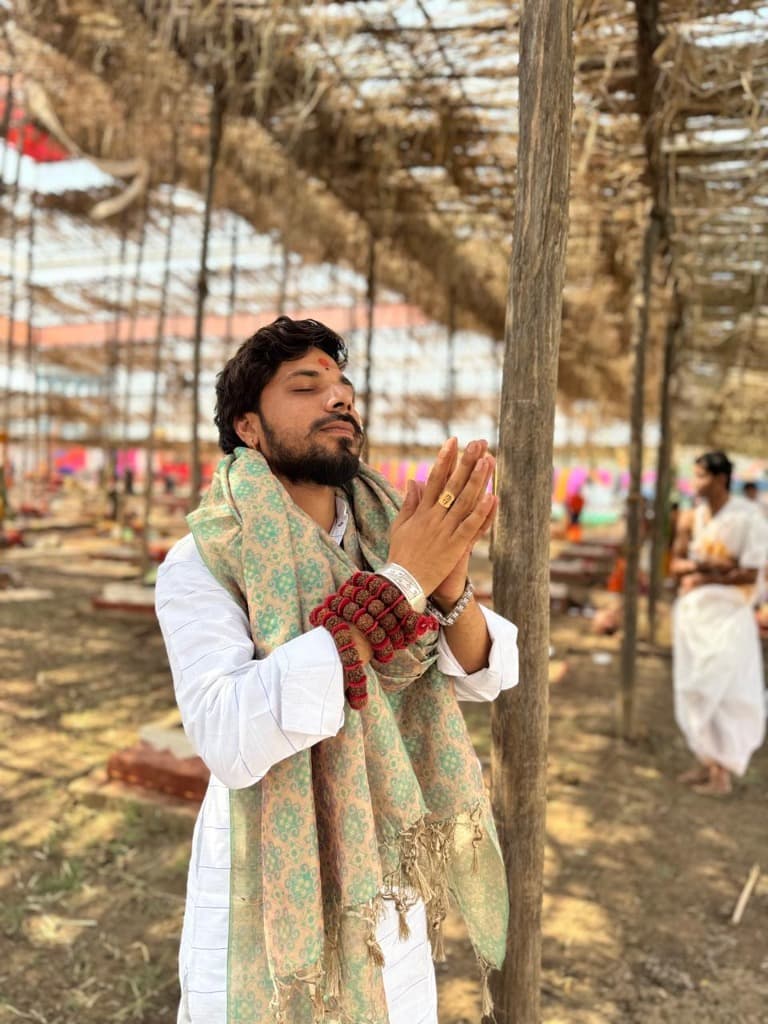
Acharya Tiwari Chetan Guru
Siddha Peethadheesh & Head Vedic Scholar
With over 15+ years of unbroken Vedic practice at Maa Baglamukhi Siddha Peeth, Nalkheda, Acharya Ji is a globally authoritative voice on Tantra Shastra, Stambhan Vidya, and Karmic Astrology. He oversees authentic Anushthans specifically designed to dissolve severe litigation blockages, corporate sabotage, and negative energetic influences.