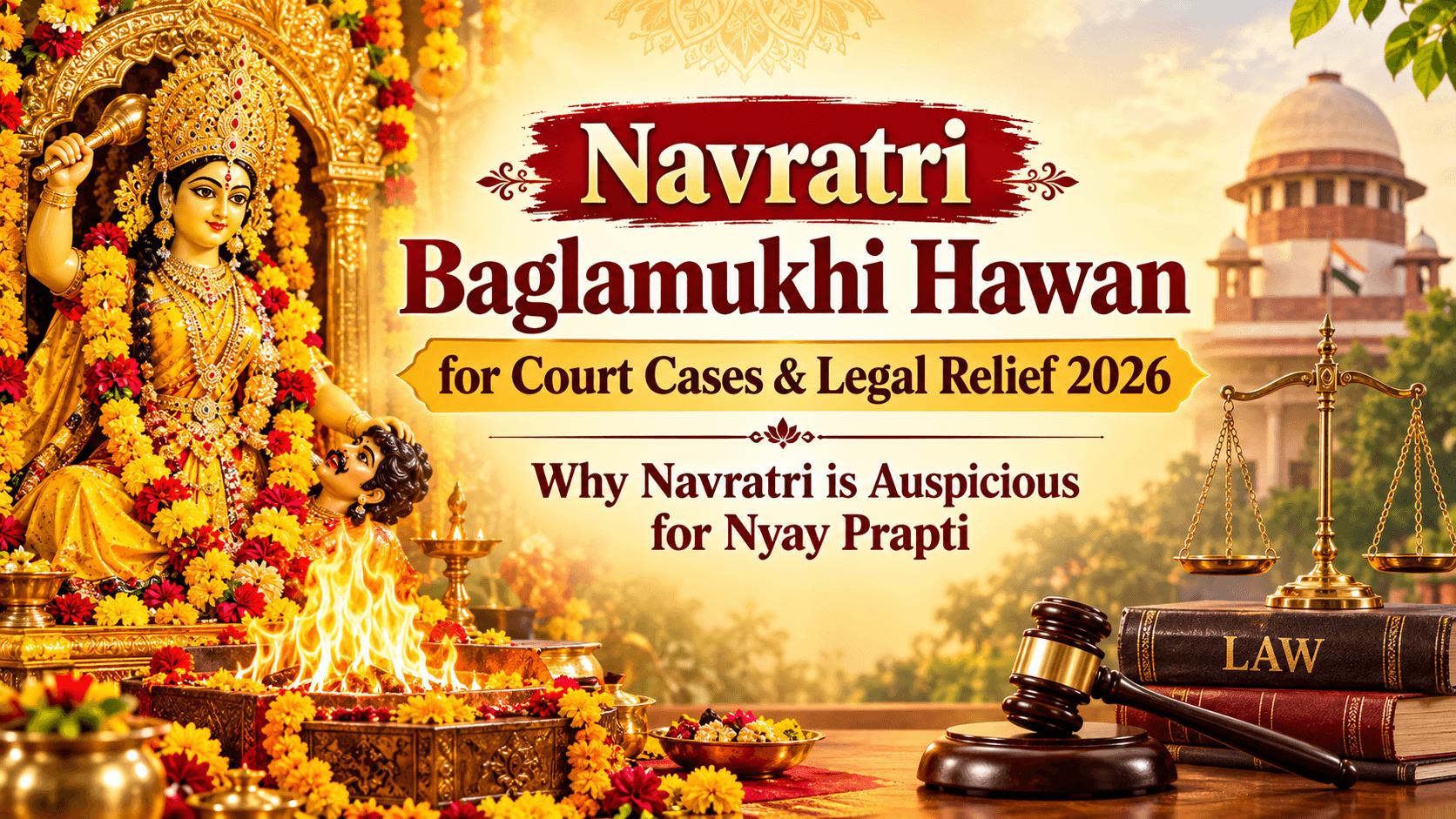

If your life has been stuck in an unfair fight, whether it is a court case that will not move, an enemy who will not stop, or a mind that will not settle, you have probably come across one single sound: Hleem. This is the Baglamukhi Beej Mantra, and it is one of the most concentrated pieces of sacred sound in the entire Tantric-Vedic tradition.
Most people search for this mantra at a difficult point in life. So let's be direct and useful, not vague.
🪔Quick Answer Box
Baglamukhi Beej Mantra is "Hleem" (ह्लीं), the single-syllable seed sound of Maa Baglamukhi, the eighth Mahavidya and goddess of Stambhan Shakti (the power to still, freeze, or paralyze negative forces). It is chanted for protection from enemies, court case victory, mental stillness, and removal of black magic. Beginners can chant it on a yellow asana, facing east, ideally in the morning or during Navratri, using a turmeric or haldi mala. It is considered safe for most sincere devotees, though the longer 36-letter mantra is best learned under a qualified guru's guidance.
Who is Maa Baglamukhi?
Maa Baglamukhi is the eighth of the ten Mahavidyas, the great wisdom goddesses of the Tantric tradition in Hinduism. She is also called Pitambara Devi, "the one dressed in yellow," because her worship, offerings, and even her seat are traditionally associated with the colour yellow, which represents Stambhan Shakti, the power of stillness.
Origin and History
According to tradition, Maa Baglamukhi manifested from Haridra Sarovar, a turmeric-coloured lake, to calm a catastrophic storm that threatened to destroy the universe. This is why her energy is associated with stopping destructive forces before they cause harm. Her worship has been documented for centuries within Tantra Shastra and is closely tied to sacred sites such as Shri Pitambara Peeth in Datia and the Baglamukhi Siddha Peeth in Nalkheda, Madhya Pradesh, which many devotees consider a Swayambhu (self-manifested) site.
Mahavidya Significance
Among the ten Mahavidyas, Maa Baglamukhi is unique because her power is not primarily about destruction. It is about stambhan, the ability to halt or neutralize a negative situation before it escalates. This is why her mantras are used so widely for court cases, enemy problems, and mental agitation. If you want the fuller mythological and iconographic background, our complete Baglamukhi Mantra guide covers her origin story in detail.
Why She is Called Pitambara Devi
The yellow colour is not decorative. In Tantric symbolism, yellow is linked to the earth element, to stability, and to the solar plexus, the seat of willpower and confidence. Devotees are advised to wear yellow, sit on a yellow asana, and use yellow flowers precisely because this colour is believed to align the body's energy with the goddess's own frequency during mantra jaap.
What is the Baglamukhi Beej Mantra?
A Beej Mantra (seed mantra) is the most compressed form of a deity's energy, reduced to a single syllable. Just as a seed contains an entire tree within it, a Beej Mantra is believed to contain the entire power of the goddess in one sound.
The Complete Beej Mantra
Sanskrit (Devanagari): ह्लीं
Transliteration: Hleem (also written Hlreem or Hlrim in some texts)
Hindi: ह्लीं
How It Fits Into the Larger Mantra
The Beej "Hleem" rarely stands completely alone in ritual use. It is the opening and closing seed of the well-known 36-letter Baglamukhi Mool Mantra:
"Om Hleem Baglamukhi Sarva Dushtanam Vacham Mukham Padam Stambhaya Jivham Kilaya Buddhim Vinashaya Hleem Om Swaha"
Notice that Hleem appears twice, once near the beginning and once near the end, acting like bookends that seal the mantra's energy. For beginners, however, chanting the Beej Mantra alone, simply "Hleem," repeated with focus, is considered a complete and safe practice in itself. Our detailed breakdown of the longer mantra and its use for legal and enemy-related concerns is available in how the Baglamukhi Mantra works for court cases, enemies and politics.
Literal, Spiritual, and Symbolic Meaning
Literal meaning: As a Beej Mantra, "Hleem" does not translate word-for-word like ordinary language. Its meaning is understood as a vibration rather than a sentence.
Spiritual meaning: It represents the union of stillness (stambhan) and inner strength, calling on the goddess's power to halt negativity in its tracks.
Secret (Tantric) meaning: In Tantra Shastra, Beej Mantras are believed to correspond to specific energy centres in the body and specific cosmic frequencies. "Hleem" is traditionally associated with the throat and solar plexus, connecting speech and willpower.
Symbolic meaning: Just as Maa Baglamukhi is depicted holding an enemy's tongue in one hand and a club in the other, the Beej Mantra symbolically "holds" chaotic energy still.
Meaning of Every Word
Since the Beej Mantra is one syllable, this section breaks down the full Mool Mantra word by word, since most sincere practitioners eventually move from the Beej to this complete form.
Sanskrit Word | Meaning |
|---|---|
Om | The primordial cosmic sound |
Hleem | The Beej Mantra of Maa Baglamukhi |
Baglamukhi | Invocation of the goddess herself |
Sarva Dushtanam | Of all wicked or hostile beings |
Vacham | Speech |
Mukham | Mouth/face |
Padam | Feet/movement |
Stambhaya | Still, paralyze, freeze |
Jivham | Tongue |
Kilaya | Pin down, immobilize |
Buddhim | Intellect |
Vinashaya | Destroy (the harmful intent, not the person) |
Swaha | A ritual offering word that completes the invocation |
Read together, the mantra is a request that the speech, movement, tongue, and harmful intellect of hostile forces be stilled, not a call for personal violence against anyone. This distinction matters and is central to how the mantra is traditionally understood.
Why is "Hleem" the Beej?
The Sound Vibration
In Tantric phonetics, every consonant and vowel combination carries a specific vibrational quality. "Hleem" combines the aspirated "H" sound (associated with prana, life force), the "L" sound (associated with earth and stability), and the nasal "M" sound (associated with completion and containment). Together, this is believed to create a vibration suited precisely to invoking stillness.
Spiritual Energy and Tantric Importance
Within Tantra Sadhana, Beej Mantras are treated as more potent, in some respects, than full mantras, because they bypass ordinary language and work directly on subtle energy. This is one reason experienced practitioners often recommend beginners start with the Beej Mantra "Hleem" before attempting the longer Mool Mantra, which carries more Tantric weight and is traditionally recommended under a guru's guidance. For those already working with a Baglamukhi Yantra, chanting the Beej Mantra in front of it is considered a way to keep the Yantra's energy active; see our complete guide to the Baglamukhi Yantra for details.
Benefits of the Baglamukhi Beej Mantra
Traditional belief attributes a wide range of benefits to sincere, regular chanting of this Beej Mantra. These are described here as traditional beliefs passed down through Tantric practice, not as guaranteed or medically verified outcomes.
Legal and court case matters: Devotees dealing with prolonged litigation often chant this Beej Mantra daily, believing it brings clarity, patience, and a shift in the direction of proceedings. Read more in our guide to Baglamukhi Puja for court case victory.
Enemy and rival protection: The mantra is traditionally used to create a sense of psychological and spiritual shielding against hidden opposition, gossip, and rivalry.
Business and career stability: Many professionals chant it before important meetings or negotiations, believing it steadies the mind and neutralizes office politics.
Confidence and mental peace: Regular practitioners report a felt sense of calm and steadiness, consistent with the mantra's core theme of stillness.
Protection from black magic and negative energy: This is one of the most searched uses; see our dedicated piece on Baglamukhi mantras for enemy and evil eye removal.
Marriage and relationship harmony: Used by some devotees to calm ongoing family conflict or hostility between spouses.
Political and competitive success: Historically associated with those in public life who face organized opposition.
Spiritual growth: Beyond material outcomes, long-term practitioners describe the Beej Mantra as a foundation for deeper meditation and self-discipline.
It is worth being honest here: no mantra guarantees a specific outcome such as winning a particular case, and any source promising guaranteed results should be treated with caution. What tradition consistently claims is a shift in the practitioner's inner steadiness, which in turn shapes how they respond to conflict.
A Scientific Perspective on Beej Mantra Chanting
Separating verifiable science from traditional belief matters, so here is what can be said responsibly.
Repetitive chanting, or japa, shares structural features with practices studied in contemplative research: a fixed sound repeated with focused attention, paired with slow, controlled breathing. Research on mantra-based meditation and similar repetitive-sound practices has associated them with reduced physiological arousal, improved sustained attention, and a subjective sense of calm, largely through the mechanisms of controlled breathing and focused, non-judgmental attention rather than the specific Sanskrit syllables themselves. This does not mean the mantra "cures" anything or produces the specific supernatural effects described in Tantric tradition. It means the practice of quiet, rhythmic chanting is plausibly linked to relaxation and concentration benefits, independent of one's spiritual beliefs. We do not make medical claims here, and anyone with a diagnosed condition should continue to consult qualified professionals.
Who Can Chant the Baglamukhi Beej Mantra?
The Beej Mantra "Hleem," unlike some advanced Tantric mantras, is traditionally considered accessible to most sincere devotees:
Beginners with no prior mantra experience
Women, including through all life stages, though see the note on menstruation below
Students preparing for exams or facing academic pressure
Professionals dealing with workplace rivalry or stress
Business owners facing competition or setbacks
Politicians and public figures dealing with organized opposition
Devotees simply seeking a daily spiritual discipline
The Beej Mantra alone is generally considered low-risk and suitable for daily personal practice. The full 36-letter Mool Mantra, and especially any Tantric Anushthan involving a specific count such as 1.25 lakh repetitions, is traditionally recommended under the guidance of an experienced Acharya. Our guide to Baglamukhi mantras for success explains the distinction between the everyday Beej practice and more advanced Sadhana.
Who Should Avoid Chanting?
This section is meant to be respectful and cautious, not alarming.
Those seeking to cause deliberate harm to another person. Tantric tradition is explicit that mantras used with malicious intent are believed to rebound on the practitioner; this mantra is meant for protection and stillness, not offence.
Individuals attempting advanced Tantric Anushthans, Prayogs, or Siddhi practices without a qualified guru's supervision. These carry traditional cautions around discipline, diet, and conduct that a guru is meant to guide.
Anyone who has not received proper guidance and wants to attempt very high repetition counts (lakhs of jaap) alone. This is where most traditional warnings apply, not to the simple daily Beej Mantra.
If in doubt about your specific situation, especially around advanced Sadhana, it is genuinely best to consult a qualified guru or Acharya rather than rely on internet instructions alone.
Best Time to Chant
Time | Why it is favoured |
|---|---|
Brahma Muhurta (pre-dawn) | Considered the most spiritually receptive hour of the day |
Morning, after bathing | Clean body and clear mind before the day's demands begin |
Night, before sleep | Used to release the day's stress and mental noise |
Thursday (Guruvar) | Associated with wisdom and guru energy |
Tuesday | Traditionally linked with strength and protection deities |
Amavasya (new moon night) | Considered especially potent for Tantric practice |
Navratri | All nine days are favoured; Ashtami is often singled out as most powerful |
Considered even more powerful for Tantric Sadhana than the public Navratris; see our detailed Gupt Navratri 2026 guide | |
Baglamukhi Jayanti | The goddess's manifestation day, ideal for beginning a new practice; see our Baglamukhi Jayanti rituals guide |
Consistency matters more than any single "perfect" moment. A modest daily practice at the same time each day is traditionally valued over occasional intense sessions.
Correct Pronunciation
Getting Sanskrit sounds right matters in mantra practice, because the vibration, not just the meaning, is considered part of the mantra's effect.
Hleem breaks down as:
H — a soft aspirated breath, like the "h" in "house"
L — a clear, forward "l" sound, tongue touching just behind the upper teeth
EE — a long vowel, like "ee" in "see"
M — closed with lips together, allowing the sound to hum and fade through the nose
Said together, it should sound like "H-leem," with the "m" trailing off in a soft nasal hum rather than a hard stop.
Common Pronunciation Mistakes
Saying "Hlim" (short vowel) instead of the correct long "ee" sound
Dropping the aspirated "H" and saying only "leem"
Cutting the final "m" short instead of letting it hum and fade naturally
Rushing the syllable so it blends into the next repetition without a clear boundary
Pronouncing it like the English word "leam," losing the Sanskrit breath quality entirely
If you are unsure, listening to an experienced practitioner or priest chant it aloud a few times before starting your own practice is genuinely more useful than reading phonetic spellings alone.
Step-by-Step Chanting Method
1. Preparation
Bathe and wear clean clothes, ideally yellow, before sitting for chanting. Keep your space quiet and free of distraction.
2. Asana (Seat)
Use a yellow asana or cloth to sit on. In Tantric tradition, the seat is believed to insulate the practitioner from the energy drawn during chanting.
3. Direction
Face east for general practice, or north if your intention is specifically related to wealth or stability.
4. Clothing
Yellow clothing is traditionally preferred, though this is not a strict requirement for the simple Beej Mantra; a clean, comfortable outfit is the minimum standard.
5. Rosary (Mala)
A haldi (turmeric) mala or a yellow crystal mala of 108 beads is traditionally recommended for this Beej Mantra.
6. Offerings
A simple ghee lamp, yellow flowers, and a pinch of turmeric placed before an image of the goddess are considered sufficient for daily practice.
7. Sankalp (Intention)
Before beginning, hold a little water in your right hand and silently or aloud state your name, gotra (if known), and your intention for the practice, then let the water fall to the ground or into a small vessel.
8. Number of Chants
Beginners typically start with 1, 5, or 11 rounds of the mala (108 repetitions each) and build up gradually. There is no strict rule that more is automatically better; steady, focused repetition matters more than volume.
9. Rules
Maintain a calm, undisturbed mind during chanting. Avoid interruptions, and try to chant at the same time each day to build consistency.
10. Completion
Close the session with a short prayer of gratitude and, if possible, a moment of silent sitting before returning to daily activities.
For those looking to combine mantra chanting with a formal ritual, our guide to Maa Baglamukhi Puja benefits and vidhi explains how the Beej Mantra fits into a complete puja, and our Baglamukhi Havan guide at Nalkheda covers how mantra jaap is paired with fire ritual for stronger traditional effect.
Common Mistakes to Avoid
Chanting without understanding the basic meaning of "stambhan" (stilling, not destroying a person)
Using the mantra with an intention to cause harm rather than protection
Skipping the Sankalp (intention-setting) step entirely
Rushing through repetitions just to finish a count
Attempting the full 1.25 lakh jaap Anushthan alone without a guru's guidance
Chanting in a noisy, distracted environment
Mispronouncing the long vowel in "Hleem," turning it into a short sound
Using any ordinary mala instead of a haldi or yellow crystal mala for this specific practice
Skipping the closing prayer and abruptly stopping mid-practice
Expecting instant or guaranteed results and losing faith after a few days
Chanting with anger or agitation instead of calm focus
Ignoring cleanliness of body and space before sitting
Comparing your practice or count to others instead of staying consistent
Sharing your Sankalp or personal intention publicly, which is traditionally discouraged
Attempting advanced Tantric variations found online without verifying them with a qualified source
Myths vs Facts
Myth | Fact |
|---|---|
The mantra can harm or curse a specific person if you wish it | Traditional understanding limits it to stilling harmful intent, not personal vengeance; misuse is believed to rebound on the practitioner |
Only Tantriks or advanced practitioners can chant it | The Beej Mantra "Hleem" alone is considered accessible to ordinary devotees |
Women cannot chant this mantra at all | Women can chant it; most traditions only advise pausing formal ritual chanting during menstruation, a personal choice many devotees now revisit with their own guru |
You need a temple to chant it | Home practice is fully valid; temple visits during Navratri simply intensify the traditional experience |
More repetitions always mean faster results | Consistency and focus matter more than raw repetition count |
The mantra guarantees winning a court case | Tradition attributes support and clarity, not a guaranteed legal outcome |
Chanting it wrong will cause immediate harm | Sincere, respectful practice with imperfect pronunciation is traditionally seen as far better than not practicing at all; refinement comes with time |
It is only for people facing enemies | It is equally used for mental peace, confidence, and spiritual growth |
You must know Sanskrit fluently to chant it | You only need to learn the correct pronunciation of this one syllable |
Anyone can perform the full Anushthan without guidance | The larger Anushthan and Mool Mantra practices are traditionally reserved for guided, disciplined practice |
Common Search Queries, Answered
Baglamukhi Beej Mantra PDF: Devotees often look for a printable version to keep near their puja altar. A simple handwritten or printed card with "ह्लीं (Hleem)" in Devanagari, alongside the transliteration, is sufficient; no special formatting is required.
Baglamukhi Beej Mantra MP3: Audio recitations are widely used to correct pronunciation before independent practice, especially useful given how much the long vowel and nasal ending matter here.
Baglamukhi Beej Mantra lyrics: As a single syllable, there are no "lyrics" in the conventional sense; what most searchers actually want is the correct Sanskrit spelling and pronunciation, both covered above.
Baglamukhi Beej Mantra Hindi: ह्लीं, pronounced "Hleem."
Baglamukhi Beej Mantra Sanskrit: ह्लीं, the same script used in classical Sanskrit texts referencing this Mahavidya.
Baglamukhi Beej Mantra meaning: Covered in detail in the sections above; in short, it is the seed vibration representing Maa Baglamukhi's power of stillness.
Baglamukhi Beej Mantra pronunciation: "H-leem," with a long vowel and a soft, nasal closing hum.
Frequently Asked Questions
1. Can anyone chant the Baglamukhi Beej Mantra?
Yes. Most sincere devotees can chant the Baglamukhi Beej Mantra without formal initiation. While advanced Baglamukhi sadhanas may require guru guidance, the Beej Mantra is generally suitable for beginners who chant it with devotion and discipline.
2. How many times should I chant the Baglamukhi Beej Mantra daily?
Beginners usually start with one mala (108 repetitions) daily. As practice becomes regular, the number of repetitions can be increased according to personal devotion and spiritual guidance.
3. Can women chant the Baglamukhi Beej Mantra?
Yes. Women can chant the Baglamukhi Beej Mantra with devotion. Practices may vary among traditions, so those following a specific lineage should follow the guidance of their guru.
4. Can I chant the Baglamukhi Beej Mantra without initiation (Diksha)?
Yes. Formal Diksha is not generally required for daily chanting of the Beej Mantra. However, advanced mantra sadhana and Anushthans are traditionally performed under the guidance of a qualified guru.
5. Which mala is best for chanting the Baglamukhi Beej Mantra?
A Haldi (turmeric) mala of 108 beads is traditionally considered the most suitable for Maa Baglamukhi mantra chanting. Some devotees also use yellow crystal malas for regular practice.
6. Can I chant the Baglamukhi Beej Mantra at night?
Yes. The mantra can be chanted both in the morning and at night. Many devotees also begin their practice during Brahma Muhurta, Thursdays, or Gupt Navratri for greater spiritual focus.
7. What is the correct pronunciation of the Baglamukhi Beej Mantra?
The Beej Mantra should be pronounced carefully, especially the sacred syllable "Hleem (ह्लीं)". Correct pronunciation improves clarity and concentration, though sincere devotion is considered more important than perfect pronunciation.
8. What is the difference between the Baglamukhi Beej Mantra and the Mool Mantra?
The Beej Mantra consists of the powerful seed syllable "Hleem," while the Mool Mantra is a longer invocation that includes the Beej Mantra along with additional sacred Sanskrit verses for complete worship.
9. Can students chant the Baglamukhi Beej Mantra?
Yes. Many students chant the mantra to improve concentration, confidence, and mental discipline during studies and examinations as part of their spiritual practice.
10. Can the Baglamukhi Beej Mantra be chanted for protection from enemies and negative energy?
According to traditional beliefs, devotees chant the Baglamukhi Beej Mantra seeking divine protection, courage, and strength during challenging situations involving obstacles or negativity.
11. How long does it take to experience the benefits of chanting the Baglamukhi Beej Mantra?
There is no fixed timeline. The benefits depend on consistency, devotion, discipline, and individual spiritual practice. Regular chanting is traditionally believed to bring gradual inner strength and mental clarity.
12. Can I chant the Baglamukhi Beej Mantra for court cases and legal matters?
Many devotees traditionally chant the mantra while praying for courage, confidence, and favorable outcomes during legal challenges. It is considered a spiritual practice and should not replace professional legal advice.
13. Which direction should I face while chanting the Baglamukhi Beej Mantra?
Facing east is generally recommended for daily chanting. Some traditions also suggest facing north for specific spiritual intentions, depending on the purpose of the practice.
14. What if I cannot pronounce the Sanskrit perfectly?
Perfect pronunciation develops with regular practice. Beginners should focus on chanting with sincerity and gradually improve pronunciation by learning from authentic sources or qualified teachers.
15. Is Gupt Navratri the best time to start chanting the Baglamukhi Beej Mantra?
Yes. Gupt Navratri is traditionally regarded as one of the most auspicious periods for beginning or intensifying Baglamukhi mantra chanting. However, devotees can start sincere daily practice at any time of the year.
Conclusion
The Baglamukhi Beej Mantra "Hleem" is deceptively simple: one syllable, easy to learn, and accessible to nearly anyone willing to practice it with sincerity. But within Tantric tradition, it is treated as a complete gateway to Maa Baglamukhi's power of stillness, useful for everything from daily mental peace to support during genuinely difficult legal and personal battles.
Start simple. Learn the pronunciation properly, sit consistently, and treat the practice as a discipline rather than a quick fix. When you are ready to go deeper, whether that means the full Mool Mantra, a Baglamukhi Yantra for your home, or a formal Puja and Havan at the Nalkheda Siddha Peeth, proper guidance from an experienced Acharya makes a real difference in how the practice is conducted.
If you would like personal guidance on your chanting practice, or wish to book an authentic Baglamukhi Puja, Havan, or Anushthan at Nalkheda under Acharya Tiwari Chetan Guru, you can reach out directly through Baglamukhihawan.com.
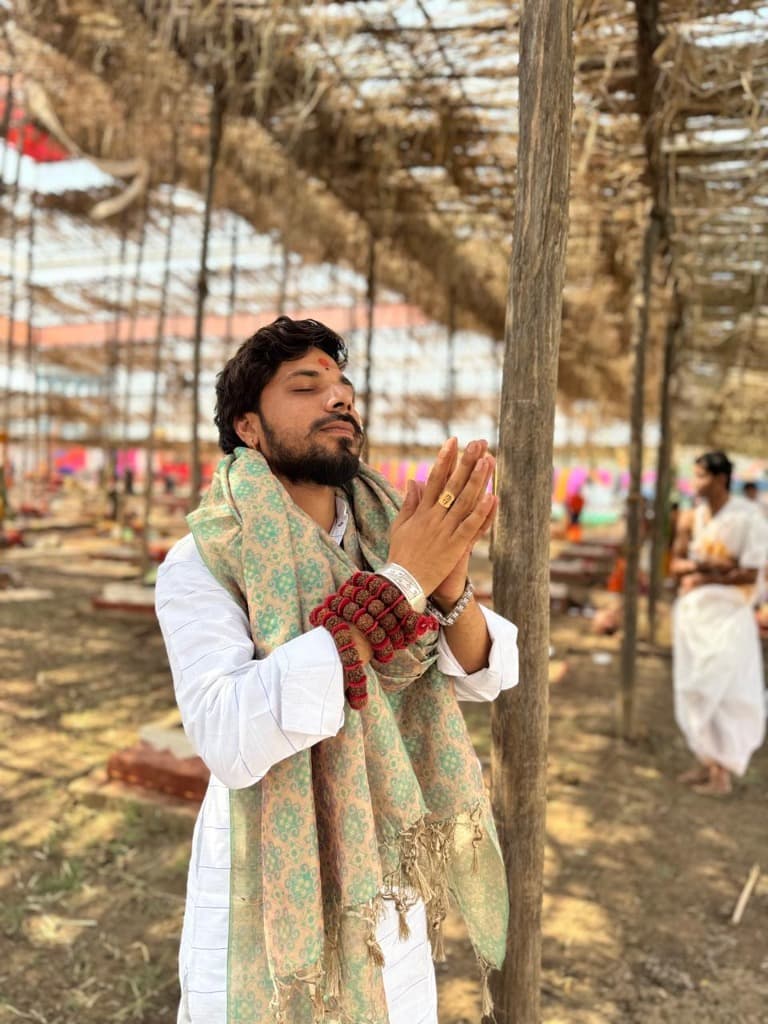
Acharya Tiwari Chetan Guru
Siddha Peethadheesh & Head Vedic Scholar
With over 15+ years of unbroken Vedic practice at Maa Baglamukhi Siddha Peeth, Nalkheda, Acharya Ji is a globally authoritative voice on Tantra Shastra, Stambhan Vidya, and Karmic Astrology. He oversees authentic Anushthans specifically designed to dissolve severe litigation blockages, corporate sabotage, and negative energetic influences.
Need Exact Hawan Cost & Shubh Muhurat?
Get direct guidance from Head Priest Acharya Tiwari Chetan Guru.