
Pitru Paksha 2026 falls from Saturday, 26 September to Saturday, 10 October, a 16-tithi lunar fortnight in Ashwin Krishna Paksha set aside for honouring departed ancestors. Shradh is performed on the specific tithi (lunar date) on which an ancestor passed away — not the matching English calendar date — which is why a tithi-wise chart matters more than a single fixed date. This guide walks you through the correct 2026 Shradh dates by tithi, the rules families commonly follow, and a general overview of Puja Vidhi, so you can plan your family's rituals with clarity.
Quick Answer
When is Pitru Paksha 2026? It runs from Saturday, 26 September 2026 to Saturday, 10 October 2026.
How are Shradh dates chosen? Each ancestor is remembered on the lunar tithi they passed away on, matched against the current year's Panchang — not on the same Gregorian date every year.
What is Shradh Tithi? It is the specific lunar day within Pitru Paksha assigned to a particular ancestor's Shradh, based on their date of death in the lunar calendar.
What is Sarva Pitru Amavasya? The final day of the fortnight (10 October 2026), when Shradh can be offered for all ancestors, including those whose tithi is unknown or forgotten.
What are the main Pitru Paksha rules? Auspicious events like weddings and griha pravesh are generally postponed; daily routines, work, and charity continue as usual.
What's in a basic Shradh Puja Vidhi? Sankalp, offerings to ancestors (Tarpan and, where performed, Pind Daan), and concluding prayers — the exact sequence can vary by family and region.
Pitru Paksha 2026 Dates at a Glance
Detail | 2026 Date |
|---|---|
Pitru Paksha begins (Purnima Shradh) | Saturday, 26 September 2026 |
Pitru Paksha ends (Sarva Pitru Amavasya) | Saturday, 10 October 2026 |
Total shradh tithis covered | 16 (across 15 calendar days, due to one combined tithi) |
Lunar month / paksha | Ashwin (Bhadrapada Purnima onward), Krishna Paksha |
Next major festival after Pitru Paksha | Sharad Navratri begins the following day |
These dates reflect Indian Standard Time and are consistent with how Pitru Paksha is calculated across most Panchang traditions for 2026. Because tithis are astronomical, not clock-based, the day on which a particular tithi is observed can occasionally shift by a day in a different city or country — so treat this table as your starting point and confirm the exact tithi timing for your location before finalising a date. For the temple's official Shradh booking window and Muhurat details for Nalkheda, see the Pitru Paksha Shradh booking page.
What Are Shradh Dates and Why Are They Based on Tithi?
A tithi is a lunar day — the time it takes the moon's angular distance from the sun to increase by 12 degrees. Unlike a Gregorian date, a tithi does not always begin at midnight and end 24 hours later; it can start partway through one day and finish partway through the next, or occasionally get skipped entirely within a single sunrise-to-sunrise cycle.
Shradh is tied to tithi rather than to the Gregorian calendar because Hindu ritual timing has traditionally followed the lunar cycle. In practice, this means an ancestor who passed away on, say, Panchami tithi is remembered on whichever calendar date Panchami falls during Pitru Paksha that year — and that date shifts annually. This is also why simply reusing last year's dates, or assuming a fixed English date, leads families to the wrong day.
Regional and family variations exist too. Some communities begin counting the fortnight from Purnima, others from Pratipada the next day; some southern and eastern traditions apply slightly different tithi-reckoning rules (particularly around sunrise time). None of these variations is "incorrect" — they simply reflect different, equally valid parampara. This is precisely why a current, verified Panchang matters more than memory or a general online chart, and why many families still prefer guidance from a knowledgeable priest when in doubt.
How to Find the Correct Shradh Date in 2026
If you're trying to identify your family's Shradh date for this year, this sequence is generally the most reliable way to go about it:
Start with the ancestor's known tithi, if your family has recorded or remembers it — this is usually more reliable than the Gregorian date of death alone.
Check the current year's Panchang for your city, since tithi timings are calculated against local sunrise.
Match the tithi to the 2026 calendar using a verified table (see the section below) rather than a table copied from a previous year.
Follow your family's tradition where one exists — some households have a fixed practice for which muhurat or which day within a combined tithi they use.
When in doubt, ask a priest. A purohit familiar with your family's parampara can confirm the correct day, especially in years where a tithi is skipped or two tithis fall on the same date.
This is a matter of tradition and Panchang interpretation, not financial, legal, or medical guidance — if your family's practice differs from what's described here, following your own parampara is entirely appropriate.
Pitru Paksha 2026 Shradh Dates by Tithi
The table below maps each shradh tithi to its corresponding date in 2026. Use it to find the tithi your ancestor is traditionally remembered on.
Tithi | Shradh Association | 2026 Date |
|---|---|---|
Purnima | Purnima Shradh | Saturday, 26 September |
Pratipada | Pratipada Shradh | Sunday, 27 September |
Dwitiya | Dwitiya Shradh | Monday, 28 September |
Tritiya | Tritiya Shradh | Tuesday, 29 September |
Chaturthi | Chaturthi Shradh | Wednesday, 30 September |
Panchami | Panchami Shradh | Thursday, 1 October |
Shashthi | Shashthi Shradh | Friday, 2 October |
Saptami + Ashtami | Combined tithi (tithi kshaya) | Saturday, 3 October |
Navami | Navami Shradh (also observed as Avidhava Navami) | Sunday, 4 October |
Dashami | Dashami Shradh | Monday, 5 October |
Ekadashi | Ekadashi Shradh | Tuesday, 6 October |
Dwadashi | Dwadashi Shradh (also associated with Sanyasi Shradh) | Wednesday, 7 October |
Trayodashi | Trayodashi Shradh | Thursday, 8 October |
Chaturdashi | Chaturdashi Shradh (Ghata Chaturdashi) | Friday, 9 October |
Amavasya | Sarva Pitru Amavasya (Mahalaya) | Saturday, 10 October |
A quick note on why there are 15 rows but 16 named tithis: lunar tithis don't align neatly with solar days, so occasionally one tithi begins and ends without ever touching a sunrise, and gets "absorbed" into the next. In 2026, this happens once — Saptami and Ashtami fall together on 3 October. If your family's Shradh falls on either of these tithis, this is the date to use; because different Panchang traditions can treat combined tithis slightly differently, it's worth confirming with your family purohit if this affects you. For the complete year-round festival and Muhurat calendar the temple follows, you can also check the Pitru Paksha festival page.
Important Shradh Days During Pitru Paksha 2026
A few days within the fortnight carry distinct significance beyond the general tithi-wise Shradh:
Purnima Shradh (26 September): The opening day of the fortnight, observed for those who passed away on a Purnima tithi in any month.
Avidhava Navami (4 October): Traditionally set aside for married women who passed away while their husband was still living; in many families this Shradh is performed by sons, with the offering directed to a married woman rather than a Brahmin. Practices here vary meaningfully by community, so this is worth confirming with your own family tradition.
Ghata Chaturdashi (9 October): Traditionally associated with those who died an unnatural, sudden, or violent death. Many families who would otherwise use Chaturdashi for a natural-cause death choose to perform that Shradh on Sarva Pitru Amavasya instead — again, this differs by parampara.
Sarva Pitru Amavasya (10 October): The most significant day of the fortnight. Shradh performed on this day is traditionally considered valid for all ancestors — known or unknown, remembered or forgotten — making it the day many families rely on when a specific tithi cannot be established.
Some traditions also give special weight to a Shradh tithi that coincides with the Bharani Nakshatra during this fortnight, regarding it as comparable in merit to Shradh performed at a tirtha like Gaya. Because nakshatra-tithi overlaps shift with the Panchang, it's best confirmed for your city rather than assumed from a general list.
Pitru Paksha Rules: What Is Traditionally Followed?
Pitru Paksha rules are best understood in three tiers, since not every practice is followed identically by every family.
Widely followed across most traditions:
Auspicious ceremonies — weddings, engagements, mundan, griha pravesh — are generally postponed until after the fortnight.
New purchases considered "celebratory" (a new vehicle, a new home) are often deferred, though this varies by family.
Charity, feeding the needy, and daily worship continue as normal, and are in fact encouraged during this period.
Common regional customs:
Many households avoid non-vegetarian food, alcohol, onion, and garlic during the fortnight, particularly on Shradh days themselves.
Some families avoid haircuts, shaving, or buying new clothes until their own family Shradh is completed.
Certain communities observe stricter Satvik conduct throughout, while others limit this to the specific Shradh day.
Family-specific practices:
Which day is used for a combined tithi, whether daughters perform the rite in the absence of a son, and how strictly celebratory activity is paused — these differ from household to household and are usually guided by each family's own kul parampara.
Traditionally, families believe that neglecting these observances may affect ancestral peace, though customs vary widely and no single rule should be treated as universal Hindu law. If your family follows a different practice, that is not a departure from "correct" observance — it is simply a different, equally valid tradition.
Pitru Paksha Puja Vidhi — A General Overview
The exact Puja Vidhi followed for Shradh can differ by family tradition, region, sampradaya, and the guidance of the officiating priest. What follows is a general overview of the structure most Vedic Shradh ceremonies share — not a single prescribed method.
Preparation
The performer typically bathes early, wears clean and simple clothing, and prepares the items required for the ritual — items such as havan samagri, black sesame seeds, and water are commonly kept ready in advance.
Sankalp
A formal vow is taken, stating the performer's name, gotra, the ancestor being honoured, and the specific intention of the ritual. This step is considered central to the ceremony, since it formally dedicates the rite to the ancestor concerned.
Traditional Offerings
Offerings typically include water, black sesame, rice, and — depending on family custom — cooked food prepared without excessive spice, onion, or garlic.
Shradh
The core ceremony, where the ancestor is formally remembered and the offerings are consecrated with mantras, usually with a priest guiding the sequence.
Tarpan
Water mixed with black sesame is offered, typically facing south, with the ancestor's name and gotra recited. Many families perform this both for the paternal and maternal lines.
Food or Charity Traditions
In many households, food is offered to a Brahmin, a family member, or those in need before the performer eats; feeding a cow, crow, or dog is also a widely observed custom, understood traditionally as a way of reaching the ancestors.
Concluding Prayers
The ceremony closes with prayers seeking peace for the ancestor and blessings for the family, followed by pranam.
For readers who want to understand the broader structure of a temple-conducted Puja and Havan before booking one, the temple's general Puja Vidhi and Havan Vidhi guides walk through the sequence followed at Nalkheda Siddha Peeth in more detail.
What to Do If You Do Not Know the Ancestor's Death Tithi
This is one of the most common concerns families have going into Pitru Paksha, and there are a few traditional ways to approach it:
Check with elders or family records first — sometimes the tithi is remembered even if the exact Gregorian date isn't, or vice versa.
Consider Sarva Pitru Amavasya (10 October 2026). This day is traditionally treated as suitable for Shradh on behalf of any ancestor whose tithi is unknown, forgotten, or unrecorded.
Consult a knowledgeable priest. Many families rely on a purohit familiar with their lineage or region to help identify or confirm the correct day, particularly where old records are incomplete.
Don't assume a "default" day without checking. Different families resolve this differently — some default to the Amavasya, others to the Ekadashi if the ancestor was a sanyasi, and so on — so this is worth clarifying rather than guessing.
There is no single mandated answer here; the guidance above reflects commonly followed approaches, not an absolute rule.
What to Do and What to Avoid
What People Traditionally Do | What Some Families Traditionally Avoid |
|---|---|
Perform Tarpan and Shradh on the ancestor's tithi | Scheduling weddings or engagements |
Feed a Brahmin, a family member, or someone in need | Starting a new business or making a large purchase |
Offer food to a cow, crow, or dog | Griha Pravesh or moving into a new home |
Continue daily work, travel, and routine responsibilities | Non-vegetarian food, alcohol, onion, and garlic (varies by family) |
Give charity and donate in the ancestor's memory | New clothes or haircuts (in some households) |
Continue regular daily puja and japa | Large celebrations or festive parties |
As with the rules above, this list reflects commonly observed customs rather than a universal code — regional and family practices vary, and Pitru Paksha customs should never be presented as strict Hindu law applicable to everyone in the same way.
Pitru Paksha and Pitru Dosh — Are They the Same?
These two terms are often confused, but they refer to different things:
Pitru Paksha | Pitru Dosh |
|---|---|
A 16-day lunar observance period each year | A concept in Vedic astrology, identified through a birth chart |
Followed as a tradition of remembrance for all ancestors | Believed to affect only some individuals, based on planetary combinations |
Marked by Shradh, Tarpan, and Pind Daan | Addressed through remedies including a dedicated Pitru Dosh Nivaran Puja |
A calendar period, not a personal affliction | A traditionally discussed astrological affliction, not a scientific diagnosis |
In short, Pitru Paksha is a time period; Pitru Dosh is a specific astrological concept some families choose to address during that period, often after a Kundli reading. If you want to understand Pitru Dosh in more depth — its traditionally associated signs, causes, and remedies — the temple's detailed guide on Pitru Dosh: Symptoms, Causes, Effects & Remedies covers this separately.
Can Pitru Dosh Puja Be Performed During Pitru Paksha?
Yes, Pitru Paksha is widely regarded as one of the most suitable periods in the Hindu calendar for a Pitru Dosh Nivaran Puja, since this fortnight is already dedicated to ancestral remembrance. That said, the specific arrangements — which day within the fortnight, what Sankalp is taken, and whether it's combined with a family Shradh or performed separately — can vary depending on the devotee's situation and the priest's guidance.
For a complete look at how this ritual is typically approached within the fortnight, including timing considerations and what the ceremony generally involves, see Pitru Dosh Puja During Pitru Paksha 2026. Devotees who'd like a personalised reading of their situation before deciding on timing can also start with a consultation with Acharya Ji at Nalkheda Siddha Peeth.
Shradh and Pitru Dosh Puja Cost Information
This article focuses on dates, tithi, rules, and Vidhi rather than pricing. If you're specifically looking for cost details — what's typically included, how charges are structured, and what to expect when booking — that information is covered separately in the Pitru Dosh Puja Cost 2026 guide. As a general note, no fixed price is quoted for these rituals without first understanding the devotee's specific situation.
Common Mistakes When Checking Shradh Dates
A few recurring errors lead families to the wrong Shradh day each year:
Reusing last year's calendar. Because Shradh follows the lunar tithi, the Gregorian date for the same tithi changes every year — a date that worked in 2025 will not be correct for 2026.
Confusing tithi with the Gregorian date. The ancestor's date of death in the English calendar is not the date to look up; it's the corresponding lunar tithi that matters.
Ignoring location differences. Tithi timings are calculated from local sunrise, so the same tithi can occasionally fall a day earlier or later outside India, or even between cities within India.
Following unverified social media posts. Dates circulated informally are sometimes copied from a different year or a different regional Panchang without correction.
Assuming every ancestor shares the same Shradh date. Each ancestor is generally remembered on their own tithi, not a single family-wide date, unless the family specifically follows a combined-Shradh tradition.
Confusing Pitru Paksha with Pitru Dosh. As covered above, one is a calendar period and the other is an astrological concept — treating them as interchangeable can lead to confusion about what ritual is actually needed.
Need Guidance for Shradh or Pitru Dosh Puja?
If you're planning Shradh, Tarpan, or a Pitru Dosh Nivaran ritual this Pitru Paksha and would like guidance specific to your family's situation, gotra, or ancestral tithi, the Acharyas at Nalkheda Siddha Peeth are available to help you plan the correct Sankalp and timing. You can explore the Pitra Dosh Puja options offered at the temple, or start with a straightforward consultation if you're unsure which ritual applies to your circumstances. Devotees ready to proceed can go directly to the Pitru Paksha Puja booking page, or reach out through the contact page with any questions beforehand.
Frequently Asked Questions About Pitru Paksha 2026
1. When is Pitru Paksha 2026?
Pitru Paksha 2026 runs from Saturday, 26 September to Saturday, 10 October, a 16-tithi lunar fortnight in the Ashwin Krishna Paksha dedicated to honouring ancestors.
2. How do I find my ancestor's Shradh date?
Start with the ancestor's known death tithi, then match it against the 2026 tithi calendar above. If the tithi is unknown, Sarva Pitru Amavasya (10 October 2026) is traditionally used instead.
3. What is Shradh Tithi?
It's the specific lunar day within Pitru Paksha on which a particular ancestor is remembered, based on the tithi they passed away on rather than a fixed Gregorian date.
4. Are Shradh dates different every year?
Yes. Because tithis follow the lunar calendar, the Gregorian date matching any given tithi shifts from year to year, which is why a fresh calendar is needed annually.
5. Can I perform Shradh if I do not know the death Tithi?
Yes — Sarva Pitru Amavasya, the final day of Pitru Paksha, is traditionally considered appropriate for ancestors whose tithi is unknown or forgotten.
6. What is Sarva Pitru Amavasya 2026?
It falls on Saturday, 10 October 2026, marking the end of Pitru Paksha and traditionally regarded as suitable for Shradh on behalf of all ancestors, known or unknown.
7. What are the main Pitru Paksha rules?
Auspicious events like weddings and griha pravesh are generally postponed, Satvik food is preferred by many families, and daily routines, charity, and worship continue as normal.
8. What is Tarpan?
Tarpan is the ritual offering of water, typically mixed with black sesame, made to ancestors as an act of remembrance and spiritual nourishment.
9. Can Shradh be performed at home?
Yes, many families perform Tarpan and a simplified Shradh at home, particularly when travel to a temple or tirtha isn't possible; guidance from a priest is commonly sought for the correct sequence.
10. What is offered during Shradh?
Offerings commonly include water, black sesame, rice, and Satvik food, along with formal prayers and a Sankalp dedicating the ritual to the ancestor.
11. What should be avoided during Pitru Paksha?
Many families avoid scheduling weddings, griha pravesh, and other celebratory events during this period, though the extent of dietary and lifestyle restrictions varies by household.
12. Is Pitru Paksha and Pitru Dosh the same?
No. Pitru Paksha is a calendar period observed annually by most families, while Pitru Dosh is an astrological concept identified through an individual's birth chart.
13. Can Pitru Dosh Puja be performed during Pitru Paksha?
Yes, this fortnight is widely considered a suitable time for it, though the specific day and Sankalp are usually decided with a priest based on the devotee's situation.
14. How is the correct Shradh date selected?
It's selected by matching the ancestor's known tithi to the current year's Panchang, rather than using a fixed calendar date or a previous year's dates.
15. Do Shradh dates vary by location?
Yes, slightly. Since tithis are calculated from local sunrise, the same tithi can occasionally fall a day earlier or later depending on where you are.
16. Where can I get guidance for Shradh rituals?
Many families consult a family purohit or a temple's Acharyas for guidance specific to their gotra and tradition, particularly when records are incomplete.
17. What happens if the exact Tithi is unknown?
The ritual can generally be performed on Sarva Pitru Amavasya, which is traditionally treated as covering ancestors whose exact tithi is not known.
18. When is Sarva Pitru Amavasya in 2026?
It falls on Saturday, 10 October 2026, the final day of the Pitru Paksha fortnight.
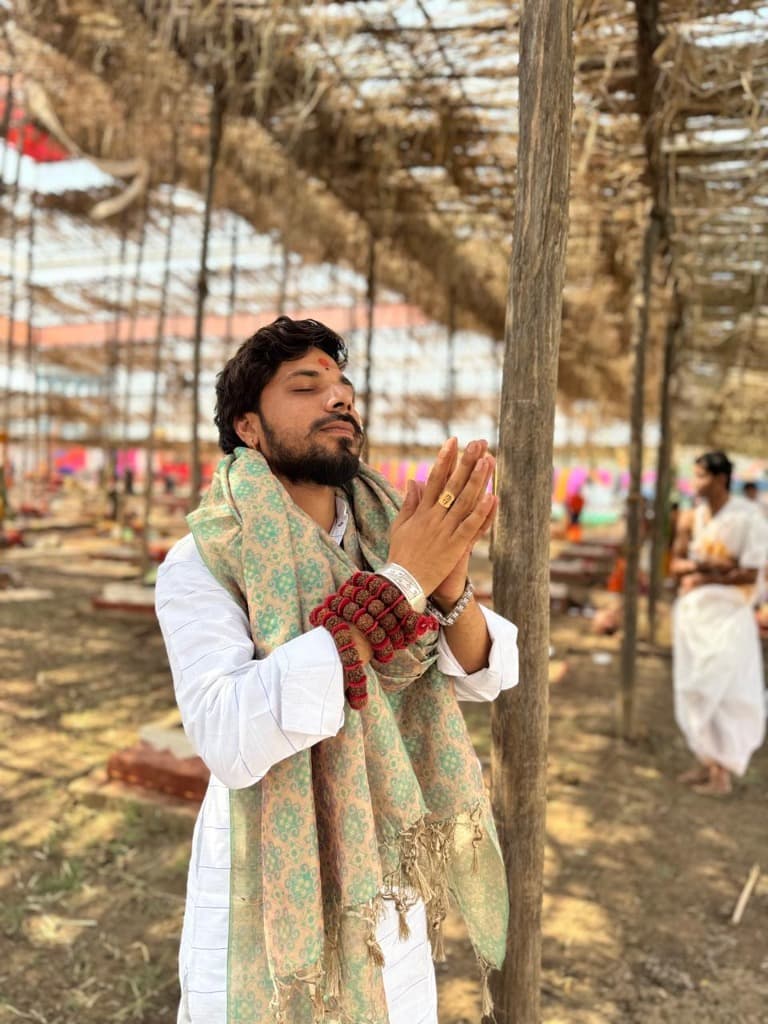
Acharya Tiwari Chetan Guru
Siddha Peethadheesh & Head Vedic Scholar
With over 15+ years of unbroken Vedic practice at Maa Baglamukhi Siddha Peeth, Nalkheda, Acharya Ji is a globally authoritative voice on Tantra Shastra, Stambhan Vidya, and Karmic Astrology. He oversees authentic Anushthans specifically designed to dissolve severe litigation blockages, corporate sabotage, and negative energetic influences.
Need Exact Hawan Cost & Shubh Muhurat?
Get direct guidance from Head Priest Acharya Tiwari Chetan Guru.