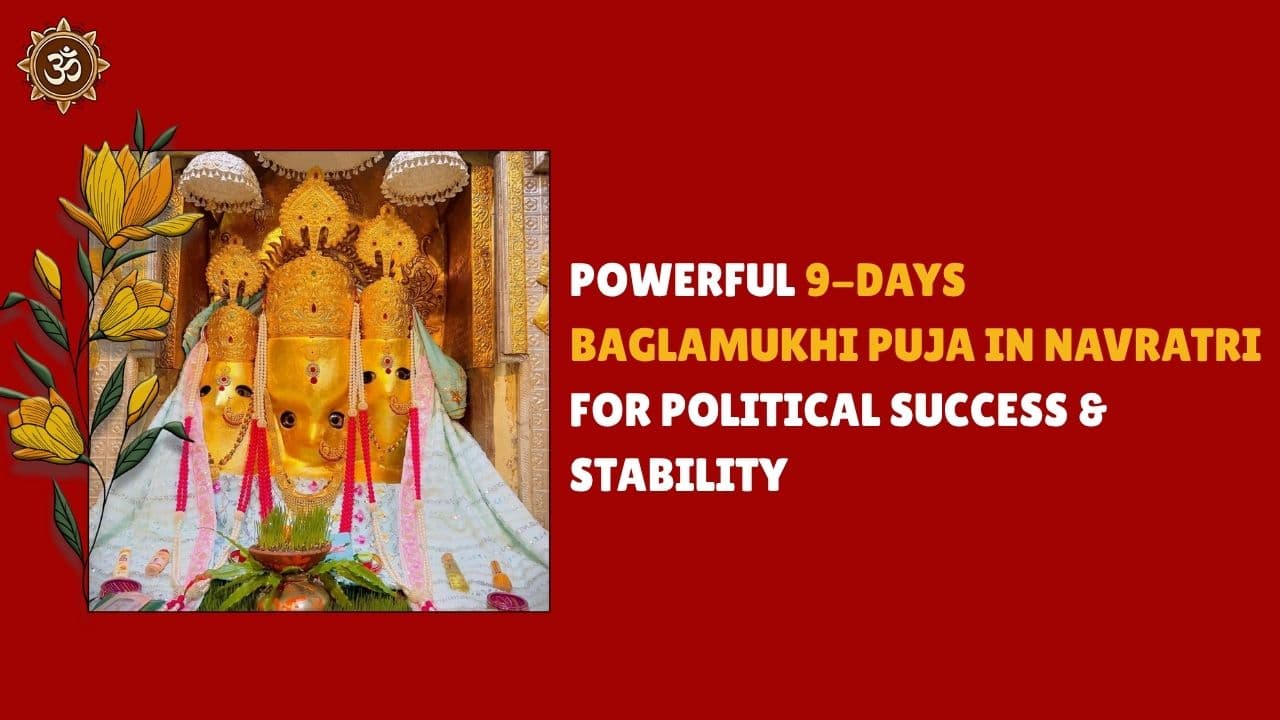
Quick Answer: Baglamukhi Puja for Political Success
Maa Baglamukhi Puja is a traditional Vedic and Shakta worship dedicated to the eighth Mahavidya, revered for Stambhana Shakti—the spiritual quality associated with stilling hostility, silencing unfair criticism, and cultivating deep inner stability. Political leaders, candidates, and public representatives traditionally undertake this worship during Shardiya Navratri to seek mental clarity, articulate speech, strategic composure, and protection against intense public rivalry.
While religious observances have a long tradition in Indian public life, authentic spiritual practice is an anchor for personal discipline, focus, and moral strength. It does not replace democratic campaign strategy, lawful conduct, grassroots public service, or the independent decision of voters.
What Is Maa Baglamukhi Puja and Why Is It Associated With Victory?
Maa Baglamukhi, known across sacred texts as Pitambara Devi, holds an esteemed place within Sanatana Dharma as the eighth of the Dasha Mahavidyas (the ten wisdom aspects of the Divine Mother). The name Baglamukhi comes from the root word Valga, meaning a bridle or rein, which symbolizes the divine power to restrain erratic forces, control hostile agitation, and quiet the restless human intellect.
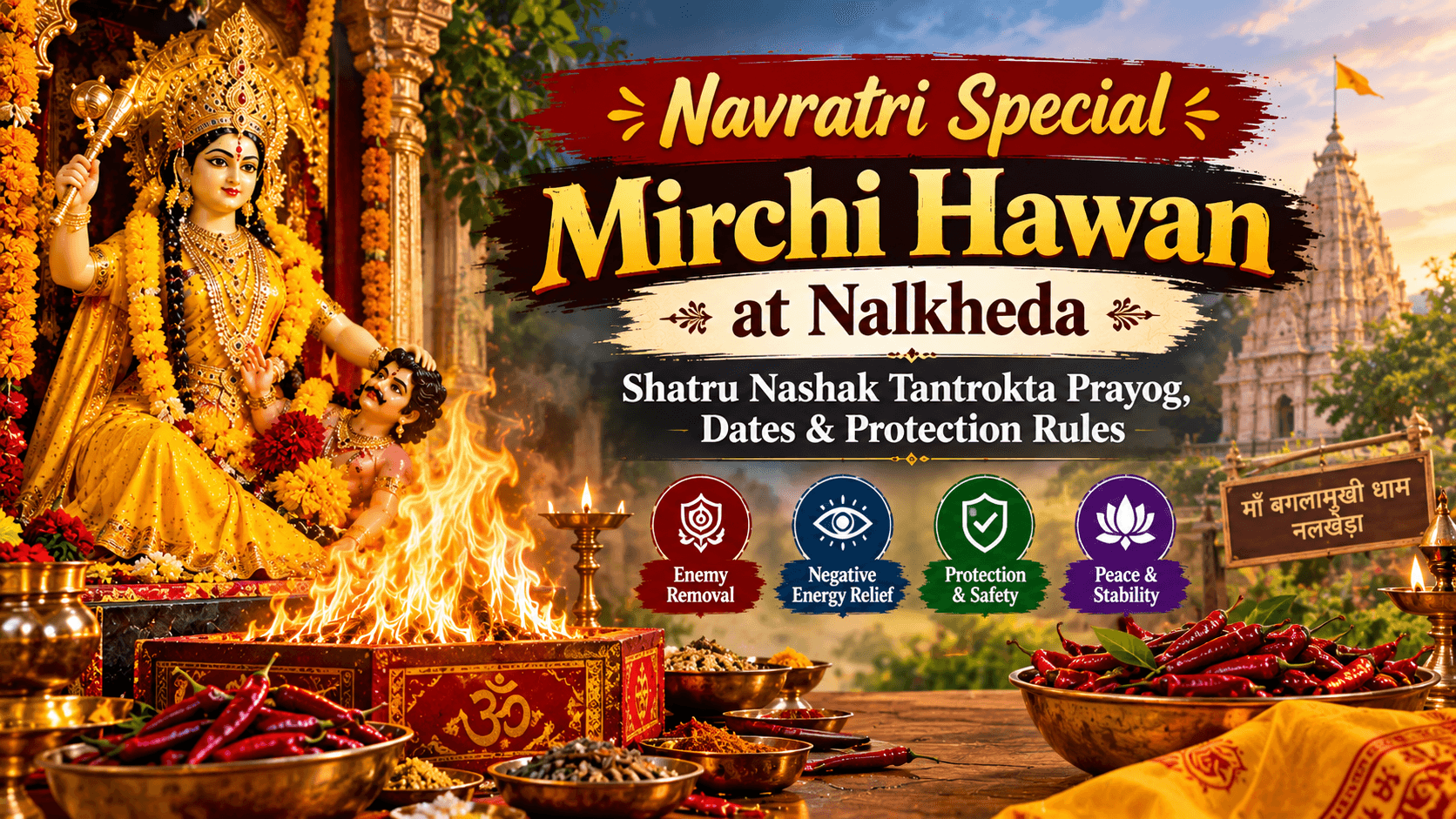
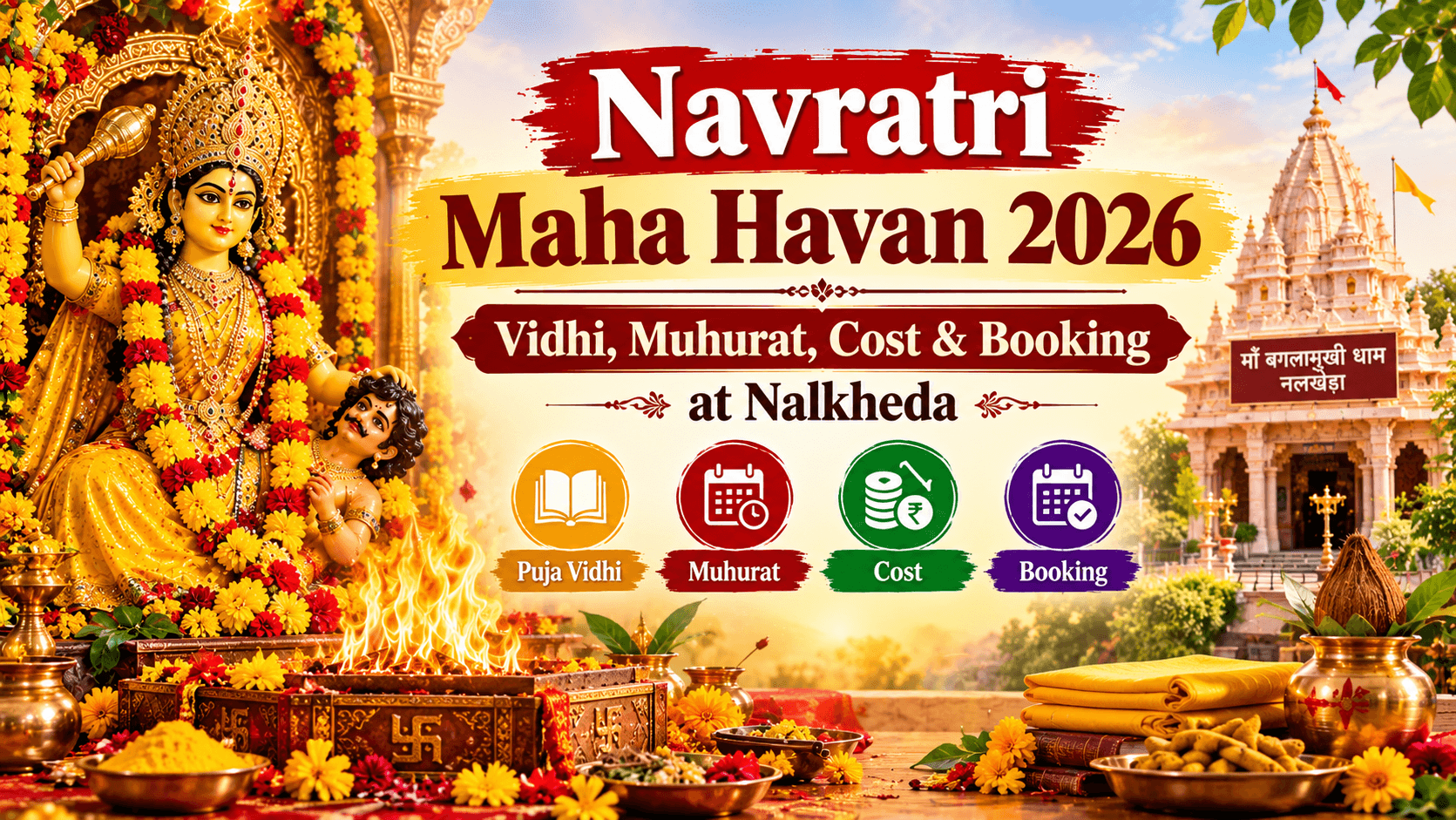
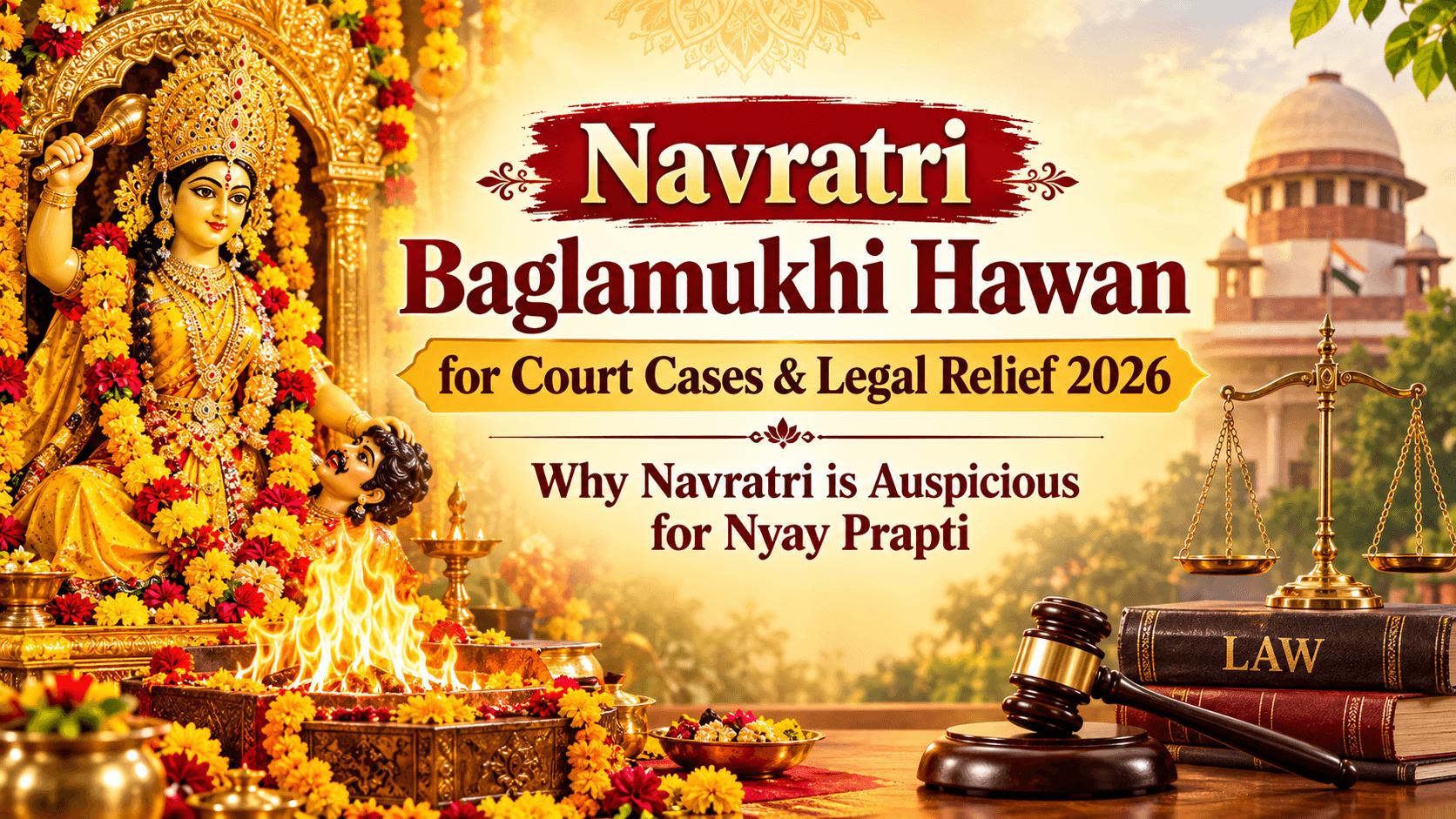
In traditional iconography, the Goddess is depicted in golden-yellow attire, holding a mace in one hand while steadying the tongue of a demon with the other. This visual representation is deeply symbolic. It does not represent physical violence. Instead, it depicts the internal and external conquest of deceit, slander, destructive speech, and mental confusion.
In Shakta philosophy, the Goddess embodies the principle of Stambhana—the power of stillness, immobilization, and divine restraint. When applied to human struggles, devotees view this energy as a protective shield against destructive attacks. Throughout history, kings, statesmen, and spiritual seekers have turned to Maa Baglamukhi Puja during moments of profound conflict, high-stakes negotiation, and heavy administrative responsibility.
Devotees associate this worship with victory because it addresses the psychological, verbal, and karmic friction common in public competition. However, traditional scholars emphasize that true victory begins with mastery over oneself: conquering emotional impulsiveness, speaking with disciplined restraint, and maintaining unwavering resolve when confronting opposition.
Why Perform Baglamukhi Puja During Navratri 2026?
Shardiya Navratri is the primary nine-night autumn festival dedicated to the worship of divine Shakti. In Shakta theology, this season represents a cosmic window when the atmosphere is uniquely receptive to spiritual practices, prayers, and disciplined vows. While devotional worship can be carried out on any day of the year, disciplines observed during Navratri are traditionally believed to bring deeper focus and spiritual merit because of the collective devotion taking place across the country.
Devotees of Maa Baglamukhi choose Shardiya Navratri for several distinct reasons:
Alignment with Cosmic Shakti: The nine nights are consecrated entirely to the Goddess. Undertaking an extended spiritual discipline during this period aligns the devotee's personal Sankalp with this concentrated devotional flow.
Structured Daily Discipline: Navratri encourages a disciplined daily routine of early rising, sattvic diet, mantra recitation, and prayer, which helps establish mental clarity and emotional purification.
Traditional Culmination with Fire Rituals: Navratri naturally culminates on sacred transitional days—especially Maha Ashtami, Maha Navami, and Vijayadashami—providing an auspicious time to conclude extended prayers with a traditional Havan and Purnahuti.
Verified Shardiya Navratri 2026 Calendar & Muhurat Overview
Because astronomical calculations rely on local sunrise timings and regional Panchangs, exact tithi transitions vary by geographic location. Below is the general schedule followed across most North and Central Indian calendars:
Gregorian Date (2026) | Navratri Day & Tithi | Traditional Devotional Focus | Significance for Leaders & Public Life |
|---|---|---|---|
11 October (Sunday) | Pratipada (Day 1) | Ghatasthapana & Maa Shailputri | Taking the formal Sankalp; setting clear personal and public intentions. |
12 October (Monday) | Dwitiya (Day 2) | Maa Brahmacharini | Building patience, self-discipline, and emotional endurance. |
13 October (Tuesday) | Tritiya (Day 3) | Maa Chandraghanta | Developing courage, presence of mind, and public resilience. |
14 October (Wednesday) | Chaturthi (Day 4) | Maa Kushmanda | Enhancing creative vision, strategic planning, and team cohesion. |
15 October (Thursday) | Panchami (Day 5) | Maa Skandamata | Fostering social goodwill, broad outreach, and public trust. |
16 October (Friday) | Shashti (Day 6) | Maa Katyayani | Overcoming political friction, rivalry, and organizational obstacles. |
17 October (Saturday) | Saptami (Day 7) | Maa Kalaratri | Dispelling hidden conspiracies, false narratives, and anxiety. |
18–19 October (Sun–Mon) | Maha Ashtami / Navami | Maa Mahagauri & Maa Siddhidatri | Intensive mantra jaap; Sandhi Puja; major protective fire ceremonies. |
20 October (Tuesday) | Vijayadashami | Dussehra / Purnahuti | Consecration of prayers; celebrating the triumph of truth over deception. |
Panchang Note: The transition between Ashtami and Navami in October 2026 spans across the 18th and 19th of October in several regional calendars. Families and devotees should confirm exact tithi and muhurat timings with their regional Panchang or guiding Acharya before finalizing ritual hours.
Devotees wishing to learn more about the broader spiritual significance of this period can read our dedicated guide on Baglamukhi Puja during Shardiya Navratri 2026.
Baglamukhi Puja for Political Success, Leadership & Public Life
The arena of democratic governance, party politics, and public elections is demanding. Leaders in public life face continuous public scrutiny, rival maneuvering, internal party rivalries, sudden shifts in public opinion, and relentless media attention. Surviving and thriving in such an environment requires remarkable mental poise, clear strategic thinking, and firm personal ethics.
In this context, Maa Baglamukhi Political Success Puja is approached as a spiritual foundation rather than an electoral guarantee. Devotees believe that seeking the blessings of the Mother supports public figures across four essential areas:
1. Strategic Discernment and Composure
In high-pressure situations, fear and confusion can lead to impulsive decisions that damage a career. The stilling influence of Maa Baglamukhi helps calm mental restlessness, allowing a leader to assess complex political challenges with detachment and strategic foresight.
2. Restraint and Authority in Speech
Modern public life revolves around spoken communication. An unconsidered comment can create an immediate media controversy or alienate supporters. Devotees pray for Vak Siddhi—not to deceive, but to speak with poise, dignity, conviction, and persuasive clarity.
3. Protection Against Unfair Hostility
Political journeys are frequently complicated by character assassination, manufactured scandals, and factional sabotage. Practitioners turn to the Goddess to help neutralize false narratives and keep public attention focused on constructive leadership.
4. Resilience Through Political Transitions
Whether contesting a nomination, facing a tough general election, or managing policy responsibilities, public representatives deal with prolonged uncertainty. Regular worship helps instill the inner strength required to handle political pressure with dignity.
What Political Challenges Do Devotees Traditionally Seek Guidance For?
Throughout history, public leaders, legislators, party functionaries, and aspiring candidates have turned to sacred traditions during critical junctures. Devotees traditionally seek spiritual support for several common challenges:
1. Demanding Election Campaigns
Campaigns require months of continuous travel, public appearances, and strategic coordination under intense pressure. Candidates often seek blessings during ticket distributions, filing of nominations, and the final campaign weeks to preserve organizational unity and focus.
2. Defamation and Smear Campaigns
In today's digital media landscape, candidates frequently encounter coordinated disinformation campaigns intended to harm their personal reputation. Devotees pray to Maa Baglamukhi to still slanderous voices and ensure that truth prevails in public discussion.
3. Internal Party Factionalism
Often, the most difficult challenges come not from external opponents, but from internal party rivalries. Devotees seek spiritual guidance to build consensus, bridge internal divisions, and earn the trust of party leadership.
4. Legal Disputes and Inquiries
Political contests frequently lead to legal battles, election petitions, or politically motivated complaints. Devotees facing unfair legal challenges often perform rituals to seek peace of mind, fair proceedings, and the resolution of disputes. When facing severe opposition, devotees also consider the Maa Baglamukhi Shatru Nashak Puja to help remove unjustified hostility.
5. Instability in Office
Holding public office requires balancing diverse stakeholder interests, managing coalitions, and maintaining public confidence during emergencies. Leaders seek divine support to encourage administrative stability and prevent abrupt disruptions to their work.
Important Boundary: Religious practice should not be presented as a substitute for campaign strategy, legal advice, professional decision-making, or democratic processes. Authentic spiritual practice nurtures internal clarity and moral strength; it does not replace diligent work or the democratic choices of citizens.
9-Day Baglamukhi Puja During Navratri: How a Structured Program Unfolds
A complete nine-day Baglamukhi program during Shardiya Navratri is a progressive spiritual sadhana. Rather than a brief, single-day ceremony, this extended discipline allows devotional energy to build steadily over the course of the festival.
Under the guidance of qualified Vedic and Shakta priests, a traditional 9-day program typically follows this structure:
Phase 1: Purification and Sankalp (Day 1)
The anushthan begins on Ashwin Shukla Pratipada with ritual purification, ground blessings, and Kalash Sthapana. The presiding priests invoke Lord Ganesha, Lord Shiva, and the Navagrahas before chanting the formal Sankalp. In this opening prayer, the devotee’s full name, family lineage (Gotra), location, and specific ethical intention (such as career stability or focus in public service) are formally spoken before the altar.
Phase 2: Foundational Chanting and Daily Rites (Days 2 to 5)
During this stage, the priests begin coordinated daily recitations of the prescribed Baglamukhi mantras. Each day includes:
Detailed morning offerings, including water, sandalwood paste, unbroken rice, and fresh yellow flowers.
Recitation of traditional protective hymns, particularly the Baglamukhi Kavach, which serves as a traditional devotional shield.
Disciplined mantra counting using consecrated turmeric or sandalwood rosaries (Haldi Mala) to fulfill the targeted mantra counts.
Phase 3: Focused Stambhana Invocations (Days 6 and 7)
As Navratri approaches Shashti and Saptami, the focus shifts toward neutralizing external obstacles. Offerings feature sacred yellow materials: yellow mustard seeds, whole turmeric roots, yellow oleander flowers, and pure yellow cloth. Prayers center on calming hostile speech, subduing factional sabotage, and securing mental fortitude for upcoming political tests.
Phase 4: Sandhi Puja and Intensive Offerings (Day 8 – Maha Ashtami)
Maha Ashtami represents the energetic apex of Navratri. At the pivotal junction where Ashtami yields to Navami (Sandhi Kaal), an elaborate worship takes place. Priests conduct intensive mantra recitations, invoke the traditional accompanying deities, and prepare the sacred Havan Kunda for extensive fire offerings.
Phase 5: Purnahuti, Consecration, and Blessing (Day 9 / Vijayadashami)
The observance concludes with a grand fire ceremony. Every chant culminates in an offering (Ahuti) of clarified cow ghee, samidha, and herbal samagri into the consecrated flames. The ritual finishes with the Purnahuti—the final offering using a consecrated dry coconut filled with sacred herbs. The presiding Acharya sprinkles sanctified waters upon the altar, ties protective threads (Raksha Sutra), and formally concludes the Sankalp with prayers for righteous leadership and peace.
Baglamukhi Puja vs Havan vs Anushthan: Which Is Different?
Devotees frequently use the terms Puja, Havan, and Anushthan interchangeably, leading to confusion when selecting an appropriate ritual. Each represents a distinct tier of complexity, duration, and spiritual focus.
The following comparison clarifies how these rituals differ in scope and format:
Ritual Format | General Scope & Description | Typical Duration | Best Suited For | Booking Modality |
|---|---|---|---|---|
Maa Baglamukhi Puja | Traditional worship featuring idol/yantra bathing, yellow offerings, stotram recitation, and aarti. | 1.5 to 3 hours (Single sitting) | General protection, mental peace, and initial devotional introductions. | Available online or in person at temple altars. |
Maa Baglamukhi Hawan | Complete puja coupled with fire ceremonies, offering consecrated samagri into the holy fire with mantras. | 3 to 5 hours (Single sitting or paired) | Specific, pressing intentions (resolving disputes, calming immediate crises). | Highly recommended with experienced Acharyas. |
Maa Baglamukhi Anushthan | Comprehensive multi-day sadhana involving counted mantra goals (e.g., 36,000, 125,000 jaap), daily havans, and strict vows. | 3, 7, 9, or 11 days (Multi-priest team) | High-stakes public leadership, parliamentary elections, and structural stability. | Scheduled well in advance through Baglamukhi Anushthan Booking. |
For leaders navigating major public campaigns, a multi-day observance provides deeper continuity than a single-hour prayer. Those considering an extended discipline can review the comprehensive Shardiya Navratri Maha Anushthan 2026 guide for details on multi-priest coordination.
Baglamukhi Puja Vidhi During Navratri: A Devotional Overview
While complex Tantric fire rituals must only be conducted by trained priests, sincere householders and public figures can maintain a clean, devotional worship at their personal residence during Navratri.
A traditional devotional routine includes:
Purification and Cleanliness: Bathe early each morning, wear fresh, unstitched yellow or white cotton clothing, and maintain a sattvic diet free from onion, garlic, or alcohol throughout the nine days.
Sanctifying the Space: Place a clean wooden stool facing East or North. Cover it with a clean yellow silk or cotton cloth. Respectfully place an image or consecrated Yantra of Maa Baglamukhi on the cloth.
Lighting the Lamp: Light a brass lamp using pure cow ghee or sesame oil. Light fragrant, chemical-free dhoop or incense.
Devotional Offerings: Present clean water, chandan (sandalwood paste), haldi (turmeric paste), unbroken yellow-tinted rice (Akshat), and fresh yellow flowers (such as marigolds or yellow kaner). Offer seasonal yellow fruits and sweets like besan laddoos.
Taking the Devotional Sankalp: Hold water, a coin, and yellow flowers in your right hand. Speak your name, your Gotra (or Kashyap if unknown), your current location, and a humble prayer asking for wisdom, moral clarity, and protection in your daily public duties. Release the water onto a clean copper plate.
Mantra Contemplation: Using a sanctified turmeric rosary (Haldi Mala), calmly recite the prescribed hymns or the simpler devotional texts.
Concluding Aarti and Forgiveness: Conclude with the traditional Baglamukhi Aarti. Bow low to the ground and ask for forgiveness for any inadvertent errors committed during the prayers.
Caution Regarding Tantric Practices: Devotees must never attempt severe Tantric rituals, Uchchatan, or Marana prayogs found in unverified online sources. Classical Shakta literature warns that attempting complex Tantric procedures without formal Guru Diksha can cause emotional imbalance and spiritual confusion. Home worship should remain purely devotional, peaceful, and sattvic.
Traditional Mantra and Havan Practices
Mantra recitation lies at the core of all Vedic and Shakta disciplines. In the worship of Pitambara Devi, sound vibrations are considered precise spiritual tools that align the mind with divine order.
Om Hleem Baglamukhi Sarvadushtanam Vacham Mukham Padam StambhayaJihvam Keelaya Buddhim Vinashaya Hleem Om Swaha.
The Spiritual Meaning of the Mantra
Hleem: The sacred Beej Mantra (seed sound) of Maa Baglamukhi. It encapsulates the combined forces of preservation, divine light, and the spiritual power to halt negativity.
Sarvadushtanam Vacham Mukham Padam Stambhaya: A prayer asking the Divine Mother to restrain destructive speech, hostile communication, and aggressive actions directed against righteous efforts.
Jihvam Keelaya: Symbolizes anchoring the deceptive tongue, removing deceitful narratives that mislead the public.
Buddhim Vinashaya: Refers to dissolving malicious plots, hidden conspiracies, and misguided intentions before they cause harm.
Devotees wishing to learn correct pronunciation and practice safely can study the educational guide on the Baglamukhi Beej Mantra alongside the classical Baglamukhi Mantra compendium.
Essential Havan Offerings
During a formal Maa Baglamukhi Hawan, the sacred fire serves as the consecrated messenger carrying prayers to the Deity. The offerings include:
Yellow Mustard Seeds (Peeli Sarson): Traditionally offered to disperse hidden negative influences, cleanse the atmosphere, and protect the candidate's public aura.
Whole Turmeric Roots (Haldi Ganth): Offered to represent stability, healing, moral grounding, and the preservation of honorable authority.
Clarified Cow Ghee: Feeds the sacred flame as a symbol of pure consciousness and clarity of thought.
Lotus Seeds (Kamal Gatta): Offered to represent unblemished honor, material stability, and prosperity.
Palash and Mango Wood: Specially selected dried woods used to sustain the consecrated flame with ritual purity.
Why Nalkheda Is an Important Place for Maa Baglamukhi Worship
While shrines dedicated to Maa Baglamukhi exist across the subcontinent—including notable centers such as Pitambara Peeth in Datia (Madhya Pradesh) and Bankhandi (Himachal Pradesh)—the ancient Maa Baglamukhi Temple at Nalkheda holds a uniquely revered place in Shakta tradition.
Geographical and Spiritual Prominence
Located on the banks of the sacred Lakhundar River in the Agar Malwa district of Madhya Pradesh, Nalkheda is recognized as an authentic Siddha Peeth. Tradition holds that the sanctum sanctorum houses a self-manifested (Swayambhu) idol of the Goddess. Uniquely, the central icon is flanked by Maa Lakshmi and Maa Saraswati, earning it the title of Trishakti Peeth. This presence of wisdom (Saraswati), authority (Baglamukhi), and prosperity (Lakshmi) makes it a deeply meaningful pilgrimage for people carrying heavy public and administrative duties.
The Mahabharata Tradition
Local tradition and historical accounts link the temple's origins to the Mahabharata era. As legend recounts, during the Pandavas' exile and on the eve of the Kurukshetra war, King Yudhishthira faced overwhelming despair when confronting the vast Kaurava armies. Under the direct spiritual counsel of Lord Krishna, Yudhishthira conducted an extensive Baglamukhi Anushthan on the banks of the Lakhundar River to overcome internal anguish, secure victory over injustice, and regain his lawful kingdom.
Why Contemporary Leaders Travel to Nalkheda
For decades, public figures, ministers, party organizers, and business leaders across party lines have quietly journeyed to Nalkheda to seek spiritual blessings during critical milestones:
Unbroken Ritual Lineage: The temple preserves uninterrupted traditions of Vedic and fire worship passed down through generations of scholarly priests.
Atmospheric Spiritual Intensity: The consecrated environment at Nalkheda provides a peaceful retreat where public figures can disconnect from administrative stress and reconnect with spiritual principles.
Priest-Guided Conduct: Rituals are overseen by scholarly Acharyas who maintain traditional propriety, avoiding sensationalized shortcuts.
Devotees planning a pilgrimage can review visiting hours, route maps, and accommodations on the Maa Baglamukhi Temple Nalkheda guide.
How to Book Baglamukhi Puja for Political Success at Nalkheda
Booking an authentic, priest-guided ritual at Nalkheda is structured, respectful, and transparent. The temple team ensures every seeker receives proper guidance before any ritual is confirmed.
The standard booking process follows five clear steps:
Initial Inquiry: Reach out via the official website, phone (+91 9074342490), or direct WhatsApp communication to express your interest in an anushthan or puja.
Pre-Ritual Consultation: You will speak directly with Acharya Tiwari Chetan Guru or senior scholars from the Nalkheda Peeth. They will assess your goals, review any pressing career factors, and recommend an appropriate ritual format.
Selecting the Format and Dates: Choose between a single-sitting puja, a focused havan, or an extended 9-day Navratri anushthan. Auspicious muhurats are selected based on your astrological chart and current calendar transits.
Providing Devotee Information: Share essential Sankalp details—including your full name, Gotra, birth information, and specific career prayers.
Execution and Sankalp Participation: The ritual is performed at Nalkheda. Devotees attending in person participate directly, while those participating remotely join the live Sankalp via secure video call.
Receiving Energized Prasad: Following the concluding Purnahuti, consecrated prasad—including blessed Raksha Sutras, energized yellow cloth, dry offerings, and sanctified ashes—is carefully packed and shipped to your address.
To begin this process, submit an inquiry through the official Book Puja platform.
Can You Book Baglamukhi Puja Online From India or Abroad?
Public life moves at a relentless pace. During campaign tours, parliamentary sessions, or sudden political emergencies, leaders often find it difficult to travel to Madhya Pradesh in person. Similarly, Non-Resident Indian (NRI) public servants, policy experts, and community leaders living in the United States, the United Kingdom, Canada, Australia, or the UAE frequently seek blessings from Nalkheda.
The Nalkheda temple provides a transparent remote worship process that honors authentic shastric principles:
Remote Sankalp via Live Video: Distance does not diminish the sincerity of an intention. The devotee connects directly with the presiding Acharya via WhatsApp video call. At the appointed auspicious hour, the Acharya recites the sacred Sanskrit verses while the devotee repeats their personal Sankalp from their current location.
Full Transparency Throughout: Devotees receive regular video recordings and photographs documenting each day's mantra chanting, offerings, and fire ceremonies.
International Prasad Delivery: Once the ritual completes with the final Purnahuti on Vijayadashami, the sanctified prasad box is securely packaged and dispatched via trusted domestic and international couriers.
This arrangement enables leaders to maintain uninterrupted devotion even during demanding campaign schedules or while residing overseas.
What Information Is Needed for Sankalp?
The Sankalp is the formal declaration of intention that connects a ritual to the individual devotee. In Vedic tradition, a puja cannot proceed without anchoring this sacred vow.
The booking team will ask for:
Devotee’s Full Name: The legal or formal name used in public life and sacred ceremonies.
Gotra (Ancestral Lineage): The Vedic lineage passed through generations. If you do not know your Gotra, the Acharyas will guide you in using Kashyap Gotra, the traditional universal default for Sanatana devotees.
Date, Time, and Place of Birth: Helpful for cross-referencing favorable astrological transits with ritual muhurats.
Current Residential Location: Used by the priest to orient the Sankalp toward your current geographical location during the invocation.
Specific Ethical Intention: A concise summary of your focus—such as restoring peace within an organization, navigating an upcoming election, or seeking relief from public defamation.
Family Names (Optional): Up to five immediate family members may be included in the protective Sankalp.
Complete Postal Address: Required for international or domestic courier delivery of the energized prasad box.
Baglamukhi Puja Cost: What Determines the Price?
Devotees searching online often encounter widely conflicting prices, ranging from implausibly low figures to exorbitant commercial rates. In genuine Vedic practice, there is no one-size-fits-all package. Authentic rituals are individually scoped based on the scale of the ceremony, logistical needs, and scriptural requirements.
The primary factors that shape the cost of an authentic Baglamukhi ritual include:
Mantra Recitation Count: Chanting 36,000, 108,000, or 125,000 repetitions of the Mool Mantra requires disciplined time. A high-count jaap cannot be completed in an afternoon; it requires dedicated hours of focused practice.
Size of the Priestly Team: Extended anushthans require multiple qualified priests chanting simultaneously to complete the targeted repetitions within auspicious muhurat windows. Each priest receives traditional Dakshina and honoraria.
Purity and Volume of Samagri: Authentic offerings use premium ingredients: pure desi cow ghee, natural saffron, whole turmeric, unbroken lotus seeds, dry fruits, and specific samidha woods. Over a nine-day Navratri anushthan, the required volume of materials is substantial.
Duration of the Ritual: A single-sitting Havan requires significantly fewer resources than a nine-day sadhana featuring daily morning and evening fire offerings.
Location and Infrastructure: Costs vary depending on whether the ceremony is hosted within the sacred environs of Nalkheda, at a private residence, or via a remote online arrangement.
Because every devotee's Sankalp and ritual needs differ, we do not publish fixed, speculative rates. Devotees seeking transparent breakdowns can review the Baglamukhi Puja Cost 2026 guide, or speak directly with our team for an itemized estimate.
What to Expect From a Priest-Guided Anushthan
Commissioning an authentic anushthan at Nalkheda ensures your worship is conducted with scriptural precision, dignity, and absolute discretion.
When you work with a respected team led by scholars like Acharya Tiwari Chetan Guru, you can expect:
Correct Sanskrit Pronunciation: Vedic mantras must be chanted with accurate inflection, meter, and clear pronunciation. Experienced scholars ensure that recitations follow shastric rules rather than hurried shortcuts.
Strict Confidentiality for Public Figures: Public leaders require complete privacy. Our team maintains total confidentiality regarding devotee identities, private Sankalps, and ritual dates.
Disciplined Conduct from Priests: The attending priests observe strict personal disciplines—including traditional fasting, dietary restrictions, and daily purification rites—to maintain the spiritual sanctity of your anushthan.
Clear, Regular Communication: Devotees receive designated contact points, regular photo and video documentation, and scheduled times for their live video Sankalp.
If you would like to discuss whether a Puja, Havan, or full Anushthan best fits your current situation, you can Book a Consultation with our senior scholars before making any commitment.
Important Things to Understand Before Booking
Before undertaking a Baglamukhi ritual for political life, every seeker should reflect on these foundational principles:
1. No Guaranteed Outcomes in Democratic Politics
Sanatana Dharma views worship as a way to purify consciousness, foster righteous wisdom, and reduce negative karmic obstacles. No authentic Vedic temple or Acharya promises guaranteed election victories, miraculous cabinet appointments, or guaranteed voter behavior. Such claims contradict both spiritual philosophy and the constitutional foundations of democratic societies.
2. Religious Worship Is an Anchor, Not a Replacement
Spiritual disciplines should complement—not replace—careful policy planning, grassroots community service, persuasive public speaking, skilled campaign strategy, and sound legal advice. Worship provides internal calm and ethical clarity; your worldly success depends on your dedicated public work.
3. Sincerity and Purity of Motive
Maa Baglamukhi represents Supreme Truth. Devotees should approach her altar with humility, seeking the strength to lead righteously, protect their community, and serve the greater good. Approaching her with petty, malicious, or unjust intentions runs counter to the fundamental spirit of Shakta sadhana.
Frequently Asked Questions
1. Can Baglamukhi Puja help with political success?
Maa Baglamukhi Puja is traditionally performed by leaders and candidates to seek mental clarity, articulate speech, strategic stability, and protection against intense public rivalry. Within Shakta philosophy, the Goddess is believed to subdue negative hostility and calm internal anxiety. However, this ritual is a spiritual discipline—it does not provide guaranteed election outcomes, which depend on democratic processes and candidate efforts.
2. Why do devotees perform Baglamukhi Puja during Navratri?
Navratri is the premier nine-night festival honoring Divine Shakti. Devotees believe the spiritual atmosphere during this autumn period magnifies the efficacy of prayer and mantra disciplines. Performing a Baglamukhi Puja during Navratri enables candidates and public figures to align their personal Sankalp with this concentrated current of devotion, culminating in the auspicious Vijayadashami fire ceremonies.
3. Is Baglamukhi Puja suitable for politicians?
Yes, politicians, candidates, legislators, and public figures have traditionally sought Maa Baglamukhi's blessings for generations. High-profile careers carry immense public pressure, media scrutiny, and factional friction. Worshiping the Goddess helps leaders cultivate emotional poise, sharp strategic focus, disciplined oratory, and resilience against political conspiracies.
4. Can Baglamukhi Puja be performed for an election campaign?
Devotees frequently commission Baglamukhi Pujas and Havans during election campaigns to seek protection against slander, foster unity within their teams, and maintain mental clarity under pressure. While the ritual serves as a spiritual anchor, authentic tradition notes that it complements—rather than replaces—diligent campaigning, voter engagement, and democratic debate.
5. Can Baglamukhi Puja be booked online?
Yes, devotees across India and around the world can book an authentic Baglamukhi Puja online. The presiding Acharyas conduct the formal Sankalp with the devotee via a live WhatsApp video call, perform the ritual at the sacred Nalkheda Peeth, share photographic and video documentation, and deliver energized prasad by courier.
6. Can Baglamukhi Havan be booked online from abroad?
Yes, Non-Resident Indians (NRIs) and international community leaders living in countries like the United States, the United Kingdom, Canada, Australia, and the UAE frequently arrange remote Havans. The ritual is conducted at Nalkheda with your name and Gotra, and consecrated prasad is shipped internationally following the Purnahuti.
7. What is the difference between Baglamukhi Puja and Anushthan?
A standard Baglamukhi Puja is typically a single-sitting ritual (lasting 2 to 3 hours) featuring prayers, bathing, offerings, and aarti. An Anushthan is a multi-day, structured spiritual sadhana (lasting 3 to 9 days) involving multiple priests, targeted mantra goals (such as 36,000 or 125,000 jaap), daily fire offerings, and strict personal disciplines.
8. How long is a Baglamukhi Anushthan?
A Baglamukhi Anushthan can last 3, 7, 9, or 11 days, depending on the devotee's specific Sankalp and the guidance of the presiding Acharya. During Shardiya Navratri, the most popular format is the complete 9-day program, which begins on Pratipada (Ghatasthapana) and concludes on Maha Navami or Vijayadashami with the grand Purnahuti.
9. What is a 9-day Baglamukhi Puja?
A 9-day Baglamukhi Puja is a progressive devotional program conducted across the nine nights of Navratri. It incorporates daily invocations, regular protective hymn recitations (such as the Baglamukhi Kavach), continuous mantra chanting on turmeric rosaries, daily fire offerings, and a culminating Maha Havan to anchor public stability.
10. Can Baglamukhi Puja be performed at Nalkheda on behalf of a devotee?
Yes. If a devotee cannot travel to Madhya Pradesh due to campaign tours, official duties, or geographic distance, the temple priests can perform the ritual on their behalf. The sacred vow is formally taken in the devotee's name, Gotra, and location through a live video call.
11. What information is required for Sankalp?
To take an authentic Vedic Sankalp, the temple team requires the devotee's full legal name, ancestral lineage (Gotra), date, time, and city of birth, current residential address, and a concise summary of their personal prayer or intention. If your Gotra is unknown, the Acharyas will guide you in using Kashyap Gotra.
12. Can NRI devotees book Baglamukhi Puja?
Yes. NRI leaders and professionals frequently arrange Baglamukhi worship to navigate career transitions, public responsibilities, and high-pressure negotiations. The booking, live Sankalp, and delivery of energized prasad are coordinated smoothly across international time zones.
13. Is Navratri a suitable time for Baglamukhi worship?
Navratri is widely considered one of the most auspicious seasons for all forms of Shakta worship. While Gupt Navratri holds special historical prominence for solitary Tantric sadhanas, Shardiya Navratri provides an exceptional public, seasonal corridor for leaders seeking victory, clarity, and protection.
14. Can Baglamukhi Puja be performed for political rivalry?
Devotees traditionally turn to Maa Baglamukhi when facing intense, malicious opposition, character assassination, or factional intrigue. The ritual is intended to neutralize unfair hostility, calm tension, and reveal the truth; it is not designed to inflict harm on others or bypass legal processes.
15. What is the role of Havan in Baglamukhi worship?
The Havan (fire ceremony) is the dynamic heart of Baglamukhi worship. Offerings such as pure ghee, yellow mustard seeds, turmeric roots, and sacred woods are offered into consecrated flames alongside ancient mantras. The fire is revered as the divine vehicle that carries devotional intentions directly to the Deity.
16. How do I book Baglamukhi Puja at Nalkheda?
You can book by contacting the official temple team via the website, phone (+91 9074342490), or WhatsApp. You will discuss your needs with Acharya Tiwari Chetan Guru, select an auspicious date and format, share your Sankalp information, and finalize your booking.
17. Does Baglamukhi Puja guarantee election victory?
No. Authentic Vedic tradition emphasizes that religious rituals cannot guarantee election victories or political appointments. Worship purifies personal consciousness, removes negative karmic friction, and nurtures mental resilience, but democratic outcomes remain firmly in the hands of the voting public.
18. Can someone perform the Puja online while living in another country?
Yes. Devotees living in North America, Europe, Australia, or anywhere across the globe can participate through online booking. The live Sankalp connects you directly to the Nalkheda altar via video call, allowing you to join the sacred ceremony from anywhere in the world.
The path of public leadership is inherently challenging. Leading communities, guiding political organizations, and shaping public policy demands rare mental toughness, strategic poise, and unwavering moral clarity. When external rivalries and high-pressure campaigns threaten to overwhelm your focus, drawing on the wisdom of ancient traditions can provide deep, enduring strength.
Maa Baglamukhi worship during Shardiya Navratri 2026 offers an opportunity to quiet internal doubt, silence baseless hostility, and reconnect with your core purpose of righteous service. By entering this sacred corridor with sincere humility, proper guidance, and ethical conviction, you can cultivate the inner calm needed to lead with wisdom, dignity, and lasting authority.
For leaders seeking dedicated guidance, you can explore the Shardiya Navratri Havan Booking 2026 options, or connect with our team to arrange an authentic, priest-guided observance at the sacred Siddha Peeth of Nalkheda.
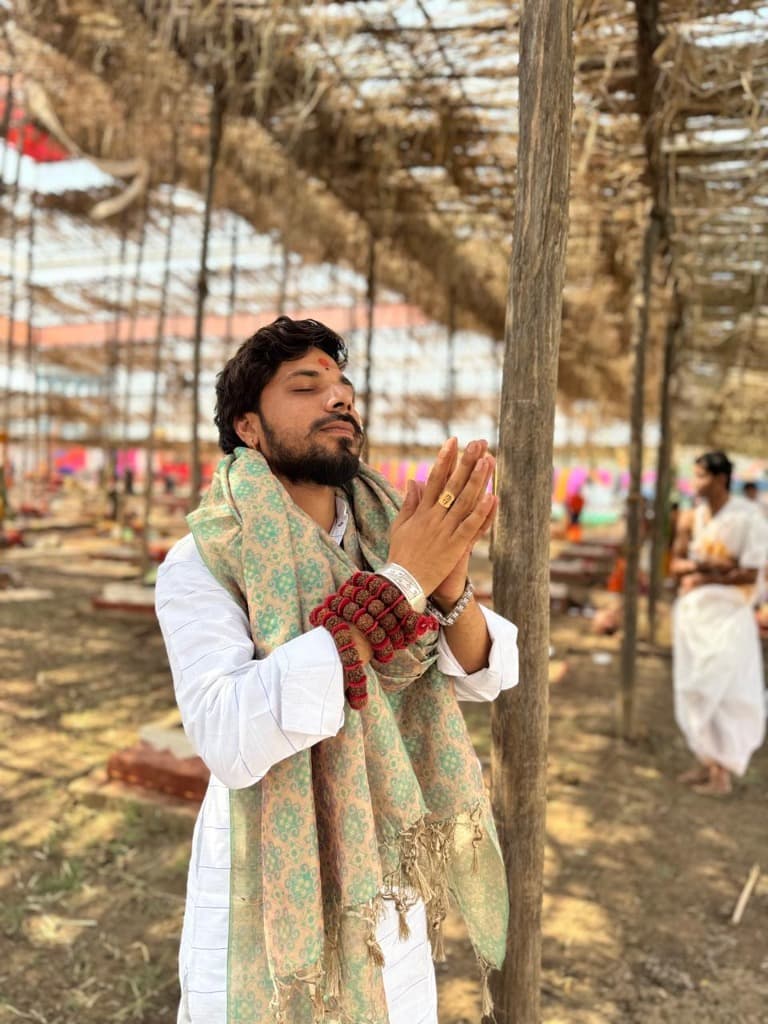
Acharya Tiwari Chetan Guru
Siddha Peethadheesh & Head Vedic Scholar
With over 15+ years of unbroken Vedic practice at Maa Baglamukhi Siddha Peeth, Nalkheda, Acharya Ji is a globally authoritative voice on Tantra Shastra, Stambhan Vidya, and Karmic Astrology. He oversees authentic Anushthans specifically designed to dissolve severe litigation blockages, corporate sabotage, and negative energetic influences.
Need Exact Hawan Cost & Shubh Muhurat?
Get direct guidance from Head Priest Acharya Tiwari Chetan Guru.