Shardiya Navratri 2026 begins on Sunday, 11 October, and many devotees who wish to go beyond a single Puja start planning an extended observance well before Ghatasthapana. This guide is written for that decision. It explains what a Maha Anushthan is, how long it can run, how a nine-day format may be structured, what published reference prices exist, and how booking works at Maa Baglamukhi Siddha Peeth, Nalkheda. Everything is presented as traditional belief and practice, not as a promise of any outcome.
Shardiya Navratri Maha Anushthan 2026 at a Glance
Detail | Quick Answer |
|---|---|
Festival | Shardiya Navratri 2026 |
Navratri Begins | 11 October 2026 (Sunday), subject to local Panchang |
Navami / Vijayadashami | 19 October / 20 October 2026; Ashtami is listed on 18 or 19 October by different calendars |
Anushthan Period | Can vary according to the selected ritual |
Common Durations | 1 day, 3 days, 5 days, 9 days, 11 days or as prescribed |
Location | Nalkheda, Madhya Pradesh |
Worship | Devi / Maa Baglamukhi worship according to the chosen Anushthan |
Includes | Puja, Mantra Jaap, Havan and other prescribed rituals as applicable |
Cost | Depends on duration, ritual and requirements |
Booking | Advance booking recommended |
According to the Panchang followed in your location, tithi and Muhurat timings can shift by city, so please verify them locally. Many North and Central Indian calendars follow the dates above. For the full calendar, see the Shardiya Navratri 2026 dates and Puja guide, and for the opening ritual, the Ghatasthapana 2026 date and Muhurat guide.
What Is a Maha Anushthan During Shardiya Navratri?
Quick answer: An Anushthan is a structured, multi-day spiritual practice built around a Sankalp, repeated mantra Jaap, daily worship and a concluding Purnahuti. A Maha Anushthan is a larger version, with more days or a higher Jaap count. It differs from a single Puja in duration, repetition and discipline.
A regular Puja is usually completed in one sitting. An Anushthan returns to the same focused practice day after day, which is why repeated mantra work sits at its centre. It generally begins with a Sankalp, a spoken intention made with the devotee's name and gotra. Daily Puja and Jaap follow, often with Havan, and the observance closes with Purnahuti, the final offering.
Duration differs because the format depends on the chosen mantra, the Sankalp and the tradition followed. For that reason a priest or Acharya usually prescribes the format after understanding the devotee's purpose. The mantras used across the festival are listed in the Navratri 2026 mantra list.
Why Do Devotees Perform Anushthan During Shardiya Navratri?
Shardiya Navratri is traditionally regarded as a major period of Devi and Shakti worship, organised as nine days of devotion. Because the festival already offers a disciplined nine-day framework, some devotees choose to place an extended Puja, Jaap, Havan or Anushthan within it. Others prefer different times of the year, and that is equally valid.
What matters most is discipline: a clear Sankalp, regular practice and adherence to the prescribed method. The nine-day Navadurga sequence is explained in the dates guide linked above, so it is not repeated here.
Maa Baglamukhi Anushthan During Shardiya Navratri 2026
Baglamukhi Anushthan is dedicated to Maa Baglamukhi, the eighth of the ten Mahavidyas, traditionally associated with Stambhan Shakti, the power to still or restrain. According to the format described on the Maa Baglamukhi Anushthan page, it may include a personalised Sankalp, Kalash Sthapana and Ganesh Puja, invocation of the Goddess, continuous Beej Mantra Jaap by temple Acharyas, daily rituals, dedicated prayers, concluding rituals and Prasad. The page also notes that the exact Vidhi varies with duration and Sankalp.
Some devotees choose Navratri because it is a Devi-focused window, and because Ashtami is often linked with the eighth Mahavidya in devotional tradition. This is a devotional preference, not a rule. If you prefer a simpler offering, a Maa Baglamukhi Puja may be a more suitable starting point. Following the prescribed method under priestly guidance matters more than the format chosen, and no outcome is guaranteed.
Why Perform Maa Baglamukhi Anushthan at Nalkheda?
Maa Baglamukhi Temple Nalkheda stands near the Lakhundar River in Agar Malwa district, Madhya Pradesh, and is traditionally revered as a Baglamukhi Siddha Peeth. Local tradition connects the site with the Mahabharata era and holds that Yudhishthira sought the Goddess's blessings here. These are traditional accounts, not independently verified history. Devotees visit for darshan, prayer, mantra practice and arranged rituals within Shakta and Tantric worship traditions.
For many, the appeal is practical as well as devotional. The site describes rituals as guided by Acharya Pandit Chetan Tiwari, associated with the Peeth since 2010, and participation is possible in person or through live video Sankalp. Choosing Nalkheda is a matter of faith and preference, and no claim of superior results is made here.
Explore Maa Baglamukhi Temple Nalkheda →
baglamukhihawan.com/temple/baglamukhi-temple-nalkheda
How Many Days Is a Navratri Maha Anushthan?
Quick answer: There is no single required length. Common formats run 1, 3, 5, 9 or 11 days, and some traditions prescribe other numbers. Duration depends on the Sankalp, mantra, ritual format, Acharya's guidance and the devotee's purpose. A nine-day format simply follows the festival from Ghatasthapana to Navami.
1 day: a single-sitting Puja or Havan with Sankalp
3 days: a shorter Anushthan
5 days: followed in some traditions
9 days: aligned with the nine days of Navratri
11 days: an extended format
Other durations: as the Sankalp or tradition prescribes
Nine days is a common Navratri choice, but it is not mandatory. The right length is best decided in conversation with the Acharya.
9-Day Shardiya Navratri Anushthan: How It May Be Structured
The outline below is an illustrative example, not a fixed rule. Actual structure varies by tradition and by the Anushthan chosen.
Day | Possible Focus |
|---|---|
Day 1 | Sankalp, Ghatasthapana and initiation of Jaap |
Day 2 | Daily Puja and Jaap |
Day 3 | Continued mantra Sadhana |
Day 4 | Devi worship and offerings |
Day 5 | Continued Jaap and Puja |
Day 6 | Special worship as prescribed |
Day 7 | Kalaratri-related worship where applicable |
Day 8 | Ashtami Puja and Havan |
Day 9 | Navami worship and completion |
Final | Purnahuti and Prasad as prescribed |
Each day's Devi and her offerings are covered in the daily Navratri Puja checklist, and local timings in the Navratri Puja Schedule 2026. Please confirm tithi timings for your location.
What Is Included in a Maa Baglamukhi Maha Anushthan?
A Maha Anushthan may include the components below. The temple team confirms the exact scope at booking, and no fixed package is assumed here.
Sankalp: name, gotra and intention
Puja and daily rituals: worship with traditional offerings
Mantra Jaap: Beej Mantra chanting by Acharyas
Havan and Aahuti: see Maa Baglamukhi Havan and Maa Baglamukhi Maha Havan
Purnahuti: the concluding offering
Prasad: dispatched where the service includes it
Dakshina: where applicable
Acharya guidance: on format and Muhurat
Shardiya Navratri Maha Anushthan Cost 2026
Quick answer: Anushthan cost depends on duration, type of Anushthan, Jaap count, Havan requirements, number of priests, samagri and special rituals. The temple page lists reference prices for 3-day and 11-day formats. For the Navratri 2026 format, confirm the current quotation with the Puja team.
Cost may also vary with Purnahuti, additional rituals and whether the devotee participates physically or remotely.
Ritual (as listed) | Duration | Published Price |
|---|---|---|
Maa Baglamukhi Anushthan | 3 days | ₹31,000 |
Sampurna Anushthan | 11 days | ₹51,000 |
These figures come from the Havan Price List 2026 on the Nalkheda temple page, which states that listed prices include puja samagri, pandit dakshina and prasad, and that custom requirements are quoted separately. No separate price is published for a 9-day Navratri format. Anushthan cost varies according to the selected ritual and duration, so please contact the temple team for the current 2026 booking quotation. General pricing factors are explained in the Baglamukhi Puja cost guide.
How to Book a Shardiya Navratri Maha Anushthan at Nalkheda
Quick answer: Contact the Puja team, discuss your purpose and preferred duration, let the Acharya recommend a suitable Anushthan and Muhurat, confirm details, share your Sankalp information and participate in person or by live video. Prasad is dispatched where the service includes it.
Contact the team through the Puja Booking page, WhatsApp or +91 9074342490.
Discuss your purpose and desired duration, optionally through a consultation with Acharya Ji.
Select the Anushthan the Acharya recommends.
Confirm the date and Muhurat.
Complete the booking and payment process as communicated by the team.
Share your Sankalp details.
Receive confirmation and instructions.
Participate in person or through live video.
Receive Prasad and completion details where applicable.
For a wider view of Puja, Havan and Anushthan options during the festival, see Navratri Puja Booking 2026.
Book Your Shardiya Navratri Anushthan at Nalkheda →
baglamukhihawan.com/book-puja
When Should You Book a Navratri Anushthan?
Navratri is a limited window, and a nine-day Anushthan generally needs to begin on Ghatasthapana, 11 October. Longer formats need advance planning for Acharya availability, samagri and Sankalp details, and certain days may see higher demand. Booking early helps confirm your preferred dates and leaves time to verify names and gotra without haste. Since Navratri begins on 11 October, it is sensible to enquire as early as possible.
Which Days Are Suitable for Navratri Anushthan?
Suitability depends on the chosen ritual and tradition, and no single date is universally best.
Beginning of Navratri: the usual start for a full nine-day Anushthan, since the Sankalp is taken then
Ashtami: chosen by many devotees for Puja or Havan; Sandhi Puja 2026 falls at the Ashtami-Navami junction
Navami: commonly associated with completion and Purnahuti
All nine days: for a continuous Anushthan
For tithi details, read the Ashtami and Navami 2026 guide.
Can You Book a Navratri Anushthan Online?
Quick answer: Yes. The website lists online booking for Maa Baglamukhi Anushthan, with a personalised Sankalp, live video availability and Prasad delivery. Temple Acharyas perform the ritual at Nalkheda on the devotee's behalf. Exact arrangements depend on the Anushthan selected, so confirm them at booking.
You share your name, gotra if known and purpose, and the team explains how updates and Prasad dispatch work. Devotees abroad should ask about timing in their own time zone.
Visiting Nalkheda for Shardiya Navratri Anushthan
Devotees may visit during Navratri for darshan and to attend the Sankalp or Havan. Booking before you travel avoids uncertainty on arrival. The site's travel guide lists Indore airport, Ujjain Junction and Shajapur station among usual access points, but road distances and travel time should be verified before setting out. Please confirm arrangements with the team, as no assumptions are made here about crowds. Full directions are in the guide on how to reach Nalkheda.
What Information Is Needed to Book a Navratri Anushthan?
Requirements vary by ritual, but keep the following ready:
Devotee's full name
Gotra, if known (the team guides you if you do not know it)
Purpose of the Sankalp
Preferred date and duration
Contact and WhatsApp number
Any family or traditional requirements
Preferred participation method: in person or live video
Postal address for Prasad, where applicable
Puja vs Havan vs Maha Anushthan
Ritual | General Purpose | Duration | Havan | Typically Suits |
|---|---|---|---|---|
Navratri Puja | Devi worship with Sankalp and offerings | Usually shorter | Optional or varies | A simple festival observance |
Navratri Havan | Fire-based ritual with mantra offerings | Usually shorter | Yes | A fire ritual in the devotee's name |
Maha Anushthan | Extended structured worship with repeated Jaap | Multiple days possible | May include | Sustained, disciplined practice |
This is a general comparison, not a universal religious classification. Fire-ritual details are in Navratri Havan 2026.
Maa Baglamukhi Worship During Shardiya Navratri
Navratri is associated with Devi and Shakti worship, and Maa Baglamukhi is worshipped within Shakta traditions. Some devotees choose this period for Baglamukhi Puja, Havan or Anushthan, following the prescribed tradition and priestly guidance. Navratri does not automatically make any ritual more powerful, and no outcome is promised.
Frequently Asked Questions
1. What is a Maha Anushthan during Shardiya Navratri?
It is an extended, structured spiritual practice built around a Sankalp, repeated mantra Jaap, daily worship and a concluding Purnahuti. It is longer and more disciplined than a single Puja, and its format is prescribed according to the chosen tradition and the Acharya's guidance.
2. When is Shardiya Navratri 2026?
It begins on Sunday, 11 October 2026, with Navami on 19 October and Vijayadashami on 20 October in many calendars. Ashtami is listed on 18 or 19 October. Exact timings may vary by location, so verify them with the Panchang followed in your area.
3. How many days is a Navratri Maha Anushthan?
There is no universal length. Common formats run 1, 3, 5, 9 or 11 days. The duration depends on the Sankalp, mantra, ritual format and the Acharya's guidance, so a nine-day Anushthan is a popular choice but not a requirement.
4. What is included in a Baglamukhi Anushthan?
It may include Sankalp, Kalash Sthapana, invocation, continuous Beej Mantra Jaap, daily rituals, Havan where prescribed, concluding rituals and Prasad. The exact scope varies with duration and Sankalp, so confirm the inclusions with the temple team at the time of booking.
5. How much does Navratri Maha Anushthan cost in 2026?
The Nalkheda temple page lists a 3-day Anushthan at ₹31,000 and an 11-day Sampurna Anushthan at ₹51,000. No price is published for a 9-day Navratri format, so request the current 2026 quotation from the Puja team before deciding.
6. Can I book a Navratri Anushthan at Nalkheda?
Yes. Bookings are arranged through the Puja Booking page, WhatsApp or phone. The Acharya's team discusses your purpose, recommends a suitable Anushthan and confirms the Muhurat. Advance booking is recommended because longer formats need preparation before Navratri begins.
7. Can Navratri Anushthan be booked online or performed remotely?
Yes, where the service is offered. The website lists online Anushthan booking with a personalised Sankalp, live video availability and Prasad delivery. The ritual is performed at Nalkheda by Acharyas on your behalf, and arrangements should be confirmed during booking.
8. Which day is suitable for a Navratri Anushthan?
It depends on the ritual and tradition. A full nine-day Anushthan usually starts on Ghatasthapana, while many devotees choose Ashtami for a Puja or Havan and Navami for completion. No single day is universally best.
9. Can Anushthan be performed for all nine days?
Yes. A nine-day format follows Navratri from Ghatasthapana to Navami and is among the common durations. It is one option rather than a rule, and shorter formats are also practised according to the Sankalp and the Acharya's advice.
10. What is the difference between Puja, Havan and Anushthan?
A Puja is devotional worship with offerings, a Havan is a fire ritual with mantra offerings, and an Anushthan is a multi-day practice centred on repeated Jaap. This is a general comparison, and traditions may classify them differently.
11. Is Havan included in a Maha Anushthan?
It may be, depending on the format. Some Anushthans include daily or concluding Havan, while others emphasise Jaap and Puja. Ask the temple team which components your chosen Anushthan contains before you confirm the booking.
12. Do I need to visit Nalkheda personally?
No. Visiting is optional. Devotees may attend in person or take part through live video Sankalp, as the website describes. Choose the mode that suits your circumstances, and confirm the arrangement with the team when you book.
13. What information is needed for Sankalp?
Typically your full name, gotra if known, the purpose of the Sankalp and contact details. If you do not know your gotra, the temple team guides you. Requirements can vary by ritual, so share any family or traditional needs at the outset.
14. When should I book Navratri Anushthan?
As early as possible. A nine-day Anushthan generally needs to begin on Ghatasthapana, 11 October, and longer formats require preparation of Acharya availability and samagri. Early enquiry also leaves time to verify Sankalp details calmly.
15. Can I perform Baglamukhi Anushthan during Shardiya Navratri?
Yes, many devotees choose this period for Baglamukhi worship, though others prefer different times. It is a devotional preference rather than a requirement. Follow the prescribed method under the guidance of a priest or Acharya.
16. What is the role of a priest or Acharya in Anushthan?
The Acharya recommends the format, selects the Muhurat, guides the Sankalp and conducts the ritual according to the prescribed Vidhi. This guidance matters most for first-time devotees, since correct procedure is considered important in traditional practice.
17. What should I confirm before booking?
Confirm the type and duration of Anushthan, the exact inclusions, the current 2026 quotation, the Muhurat, how you will participate, and how Prasad is dispatched. Also ask whether any payment or schedule conditions apply to your chosen format.
Final Thoughts
A Maha Anushthan during Shardiya Navratri is a matter of faith, discipline and correct procedure rather than a fixed package. Decide your intention, choose a duration with the Acharya's guidance, confirm the quotation and plan early. Spiritual practice is best treated as a support alongside sensible action, not a substitute for legal, medical or professional advice where those are needed.
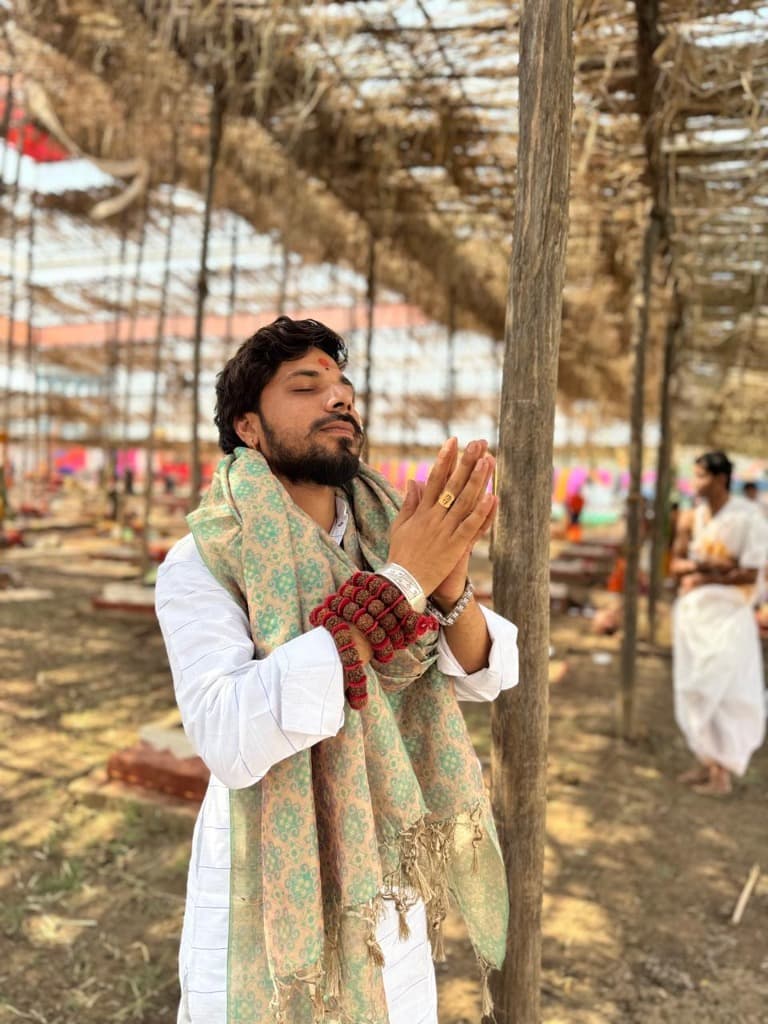
Acharya Tiwari Chetan Guru
Siddha Peethadheesh & Head Vedic Scholar
With over 15+ years of unbroken Vedic practice at Maa Baglamukhi Siddha Peeth, Nalkheda, Acharya Ji is a globally authoritative voice on Tantra Shastra, Stambhan Vidya, and Karmic Astrology. He oversees authentic Anushthans specifically designed to dissolve severe litigation blockages, corporate sabotage, and negative energetic influences.