Pitru Paksha 2026 runs from 26 September to 10 October, the sixteen-day window that Hindu tradition sets aside for Shraddh, Tarpan, and remembrance of departed ancestors. Alongside these rituals, Daan (charitable giving) is one of the most commonly asked-about parts of the observance, since many families are unsure exactly what counts as a meaningful donation and to whom it should be given. Most people searching for this topic want a practical answer: what items are traditionally donated, who should receive them, and whether there are any real rules to follow. This guide walks through the traditional Pitru Paksha Daan list, the categories of charity most families consider, and the rules and variations worth knowing before you give.
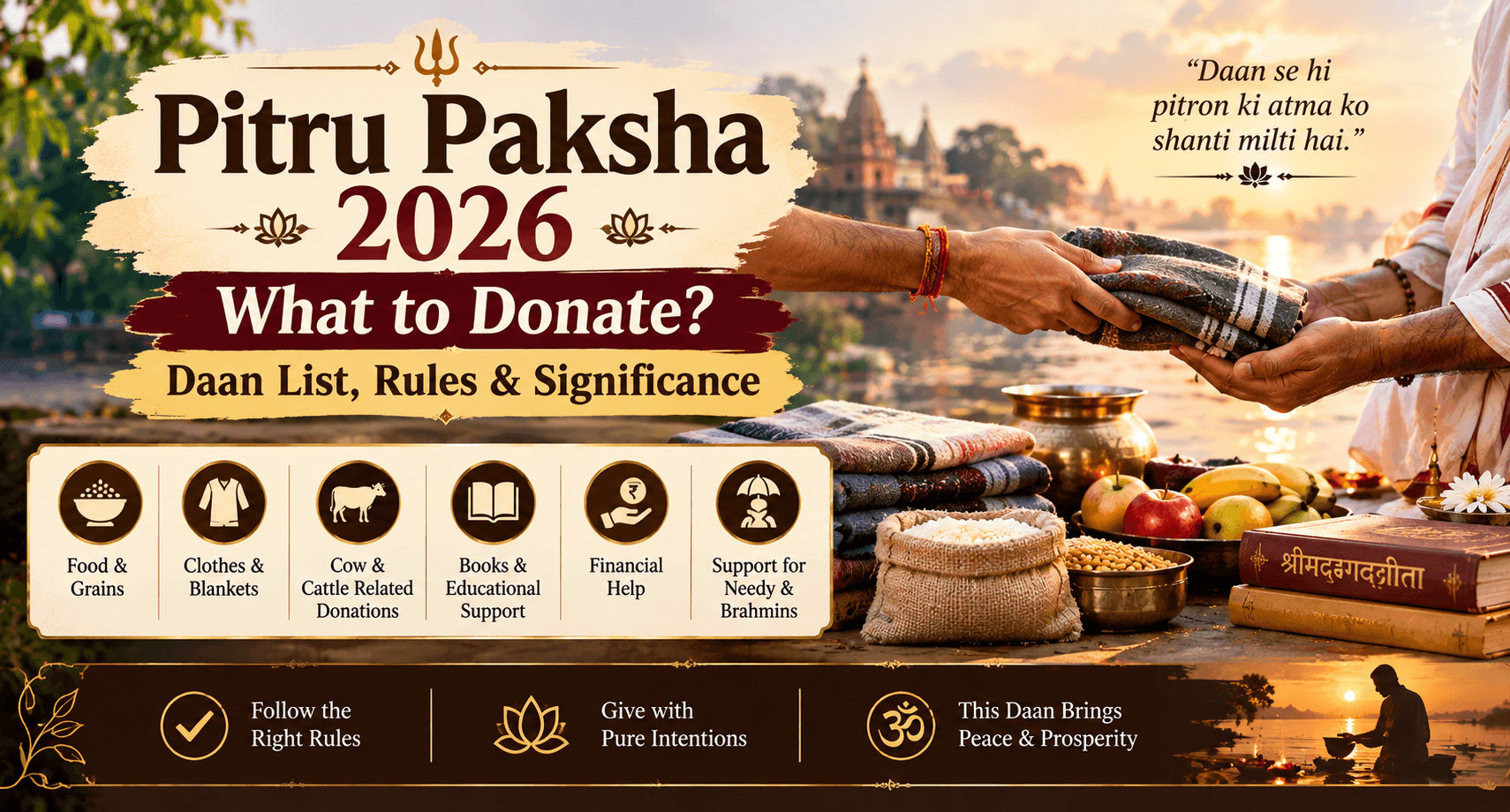
Across Hindu households, Pitru Paksha Daan traditionally includes Anna Daan (food donation), grains such as rice, wheat, and til (sesame), clothing and useful daily essentials, and Dakshina given to a priest or to those in need. Many families also feed cows, crows, or dogs as part of the same charitable spirit, and some extend their giving to broader community food distribution or established charitable causes. None of these items are treated as compulsory in every household; what matters, according to tradition, is sincerity, giving within one's means, and following one's own family custom where it exists. The sections below go through each category in more depth, along with the rules commonly associated with them.
What Is Daan During Pitru Paksha?
Daan, in general Hindu practice, refers to an act of giving performed without expectation of anything in return - a gift offered with sincerity rather than a transaction. During Pitru Paksha, Daan takes on an additional, ancestral dimension: it is traditionally understood as an extension of Shraddh, the ritual of remembering a specific departed relative.
The connection between charity and ancestor worship goes back to the legend of Karna from the Mahabharata, also referenced in the temple's guide to Pitru Paksha 2026 dates and the complete Shraddh calendar. According to the story, Karna had donated generously throughout his life but never specifically offered food to his ancestors, and was permitted to return to earth to correct this through Shradh and Daan. Many households treat this story as the traditional basis for including charity as part of the fortnight's observances, alongside Tarpan and the core Shraddh ceremony.
Traditionally, Daan during Pitru Paksha is not viewed as a separate ritual bolted onto Shraddh, but as one of its natural expressions - a way of directing generosity outward, in an ancestor's name, at a time set aside for remembering them.
What to Donate During Pitru Paksha 2026?
There is no single fixed list that every Hindu family follows for Pitru Paksha Daan. What exists instead is a set of widely recognized traditional categories, shaped over generations, from which most families choose according to their own custom, means, and regional practice. Below is a breakdown of the categories most commonly discussed and practiced.
Anna Daan or Food Donation
Food donation is the category most consistently associated with Pitru Paksha across regions. It may take the form of a full sattvic meal offered to a priest, a family in need, or a wider community feeding effort, and is discussed in more detail in the dedicated section further below.
Grains and Daily Food Essentials
Rice, wheat, barley, and pulses are traditionally donated either as raw grain or as part of a prepared meal. In many households, these staple items are set aside specifically for this fortnight and given to those who may not have easy access to them.
Til or Sesame-Related Traditional Offerings
Black sesame (til) holds a specific place in Pitru Paksha, since it is a core ingredient in Tarpan itself. Beyond the ritual offering of water and til, some families also donate raw sesame seeds or til-based sweets as a separate act of charity, particularly around the days associated with Chaturdashi and Amavasya.
Clothes and Useful Essentials
Simple, unstitched or ready-to-wear clothing is a common Daan item, along with everyday useful essentials such as umbrellas or footwear. In many regional traditions, these two items in particular carry symbolic meaning tied to protection and the journey of the soul, though the emphasis on them varies considerably by community and is not treated identically everywhere.
Donations to People in Need
Beyond ritual-specific items, many families use Pitru Paksha as an occasion to give more generally to people facing hardship - whether through direct giving, a local charitable organization, or a community food and essentials drive.
Traditional Dakshina or Religious Charity
Dakshina refers to the gift, usually a combination of money and items, offered to the priest who conducts the Shraddh. According to the Garuda Purana, feeding and honoring the officiating priest is considered symbolically significant, since the priest is regarded as the intermediary through whom the offering reaches the ancestor.
Cow Seva or Other Traditional Forms of Seva
Feeding a cow is a long-standing part of Shraddh in many households, generally performed alongside offerings to crows and dogs. Where feeding these animals directly is not practical, particularly in urban settings, some families support this through a local goshala or an organized Seva initiative instead.
Traditional Daan Categories at a Glance
Traditional Daan Category | Common Examples | Traditional Context |
|---|---|---|
Anna Daan | Sattvic meals, cooked rice, dal, sweets | Widely regarded as the most significant form of charity during the fortnight |
Grains | Rice, wheat, barley, pulses | Given raw or as part of a prepared meal to those in need |
Til (Sesame) | Black sesame seeds, til-based sweets | Connected to Tarpan; also donated separately in some households |
Clothing and essentials | Simple clothes, umbrella, footwear | Regional symbolic significance; varies by community |
General charity | Money, essentials, community food drives | Extends the spirit of giving beyond ritual-specific items |
Dakshina | Money, clothing, personal items for the priest | Traditionally seen as reaching the ancestor through the priest |
Cow Seva | Fodder, goshala support | Alongside feeding crows and dogs as part of Shraddh custom |
It is worth being clear that none of these items are mandatory for every family, and no scripture-backed source treats this as an exhaustive or compulsory checklist. Families are generally encouraged to follow their own established custom first, and to treat this list as a starting reference rather than a strict requirement.
Anna Daan During Pitru Paksha
Anna Daan, or food donation, is widely regarded as one of the most meaningful forms of charity associated with Pitru Paksha, and for many families it forms the centerpiece of their observance alongside Shraddh and Tarpan.
There is an important distinction worth understanding here. Within the Shraddh ceremony itself, a portion of food is ritually offered - traditionally to a priest, and in many households also set aside for a cow, a crow, and a dog, believed to act as intermediaries who carry the offering onward. Anna Daan, in the broader charitable sense, extends beyond this ritual offering: it refers to feeding people in need, whether that is a single family, a group of underprivileged children, or a wider community, done specifically in an ancestor's memory during this period.
Family practices differ meaningfully here. Some households prepare and personally distribute food; others prefer to support an established food-relief effort or a local temple's community kitchen, particularly where cooking and distributing a large meal at home is not practical. Both approaches are consistent with the underlying idea, which is feeding others in an ancestor's name rather than any single prescribed method being the only correct one. Devotees who want to understand how a complete Vedic ceremony, including the point at which offerings are made, is typically structured can refer to the temple's general Puja Vidhi guide.
What matters, according to widely followed tradition, is that the food offered is fresh, prepared with care, and given respectfully - not the scale or cost of the donation.
Pitru Paksha Daan List - Traditional Items Commonly Given
The list below draws together the items most frequently mentioned across Hindu households and traditional sources for Pitru Paksha. It is presented as a practical reference, not an exhaustive or mandatory checklist.
Cooked sattvic food - A full vegetarian meal, generally prepared without onion or garlic, commonly offered to a priest, a family in need, or distributed more widely. This is one of the most consistently mentioned items across regions.
Raw grains (rice, wheat, barley, pulses) - Given either alongside a cooked meal or as a standalone donation of staples to someone who can use them.
Black sesame seeds (til) - Central to Tarpan itself, and sometimes donated separately in raw form or as til-based sweets, particularly close to Amavasya.
Milk, honey, and ghee - Traditional Shraddh offerings that some families also extend into a broader charitable gift.
Simple clothing - New or clean, unstitched or ready-made garments, generally given to someone in genuine need rather than as a symbolic gesture alone.
Umbrella or footwear - Mentioned in several regional traditions, sometimes with particular emphasis around specific tithis such as Chaturdashi, though this varies by community and family custom.
Dakshina to the officiating priest - Typically a combination of money and small personal items, given with respect as thanks for conducting the Shraddh.
Fodder or support for cows - Either through direct feeding or by supporting a goshala, in continuation of the practice of feeding a cow as part of the ceremony.
General charitable donations - Money or essentials given to a verified organization working with people facing hardship, particularly for families who prefer a structured, accountable way of giving.
For each of these, the underlying context is the same: the item is offered with the intention of ancestral remembrance, and given to someone who can genuinely benefit from it, whether that is a priest, a family member, or someone outside the family entirely.
What Is the Best Day for Daan During Pitru Paksha?
There is no single day that is universally treated as "the" day for Daan across all of Pitru Paksha, because the appropriate timing generally follows the same logic as Shraddh itself.
For most families, charity is offered on the same day as the Shraddh performed for a specific ancestor - that is, on the lunar tithi matching the date of that ancestor's passing. The complete tithi-wise breakdown for 2026 is available in the temple's Pitru Paksha 2026 dates and Shraddh calendar, which explains how to match a specific tithi to a specific ancestor.
Where a family does not know the exact tithi, or wishes to remember the whole ancestral line together, Sarva Pitru Amavasya - the final day of the fortnight - is traditionally treated as the appropriate occasion, since it is regarded as valid for all ancestors collectively. Beyond these tithi-specific days, many families also treat the entire fortnight as a general period suited to charitable acts, without tying every donation to a single date. There is no scriptural basis for treating any one day as producing a materially different or superior result compared to another; the emphasis, according to tradition, is on sincerity rather than exact timing.
Can Daan Be Given on Sarva Pitru Amavasya?
Yes. Sarva Pitru Amavasya, the concluding day of Pitru Paksha, is widely regarded as a suitable and, for many families, preferred day for Daan, particularly when the exact tithi of an ancestor is unknown or when a family wishes to make a collective offering for their whole ancestral line.
The reasoning is straightforward: since Shraddh performed on this day is traditionally considered valid for all ancestors together, charity given alongside it is generally viewed the same way. Many households specifically time their Anna Daan, Dakshina, or general charitable giving to this date for exactly this reason. That said, some families give throughout the fortnight rather than concentrating everything on this single day, and both approaches are consistent with tradition. For the full date, significance, and Vidhi associated with this day, see the temple's dedicated guide to Sarva Pitru Amavasya 2026.
Pitru Paksha Daan Rules - What Should You Keep in Mind?
The points below reflect general, widely followed guidance rather than a fixed or universal set of rules. They are intended as practical principles, not requirements enforced identically in every household.
Sincerity matters more than scale. A modest donation given with genuine intent is traditionally considered as meaningful as a larger one given without care.
Follow family tradition first. Where a household has an established practice - specific items, a specific recipient, or a specific day - that custom generally takes precedence over generic guidance found online.
Give within your means. Tradition does not ask for donations beyond what a family can reasonably afford; the intention behind the gift is what is emphasized.
Choose genuinely useful items. Food that will actually be eaten, clothing that will actually be worn, and money directed to a real need are generally preferred over symbolic gestures with limited practical value.
Verify local and regional customs. Some items, such as umbrellas or footwear, carry more weight in certain regions than others, so it is worth checking what applies to your own community rather than assuming a single national standard.
Seek guidance when unsure. Where a family is uncertain about what to give, to whom, or on which day, consulting a family priest or an experienced Acharya is generally preferred over relying on an unverified list.
Who Can Receive Daan During Pitru Paksha?
Traditional and charitable practice recognizes several possible recipients for Pitru Paksha Daan, and most families choose based on what feels appropriate to their own custom and circumstances.
The officiating priest. In the ritual sense, Dakshina and food offered to the priest conducting the Shraddh is considered a direct extension of the ceremony itself.
People facing genuine need. Many families extend their Anna Daan or general charity to individuals or families experiencing hardship, independent of any religious affiliation.
Religious or charitable institutions. Where consistent with family tradition, some households prefer to give through a temple, ashram, or an established charitable organization rather than directly to an individual.
Community food distribution efforts. Donating to or supporting a wider food-relief initiative is increasingly common, particularly for urban families who may not have easy access to feeding a cow or distributing food door to door.
None of these options is presented as the single correct choice for every household. Some families combine several of them - for instance, offering Dakshina to a priest while also supporting a broader community charity - and this is entirely consistent with tradition.
Pitru Paksha Daan and Shradh - What Is the Difference?
Shradh and Daan are closely connected but not identical concepts, and understanding the distinction helps clarify what each actually involves.
Aspect | Shradh | Daan |
|---|---|---|
Nature | A structured ritual ceremony performed for a specific ancestor | An act of charitable giving, which may or may not be tied to a formal ceremony |
Core requirement | Sankalp, invocation by name and gotra, and prescribed offerings | Sincere giving, without a fixed ritual structure |
Timing | Performed on the specific tithi matching the ancestor's passing, or Sarva Pitru Amavasya | Can be given on the same day as Shraddh, or spread across the fortnight |
Typical setting | Usually conducted with or under the guidance of a priest | Can be given directly by the family, with or without a priest involved |
Relationship between the two | Daan is traditionally treated as a component that concludes or accompanies Shraddh | Shraddh is the formal ceremony; Daan is the charitable expression connected to it |
In short, Shraddh is the ritual, and Daan is one of the ways that ritual's spirit is carried outward through generosity. Devotees who want the full picture of how a Shraddh ceremony is typically structured can refer to the temple's guide on Pitru Paksha 2026 Shradh dates, Tithi, and Puja Vidhi.
Pitru Paksha Daan and Pitru Dosh - Are They the Same Thing?
No, and this is one of the more common points of confusion for people researching this topic online.
Pitru Paksha Daan refers to the charitable and ancestral observances traditionally associated with the Pitru Paksha fortnight - a fixed annual period on the Hindu lunar calendar. Pitru Dosh, by contrast, is generally discussed as an astrological concept, examined through an individual's birth chart (Kundli) and typically linked to planetary positions such as the Sun, Rahu, Ketu, or the ninth house.
In practical terms, Pitru Paksha Daan is something most Hindu families consider each year as part of a broader annual observance, regardless of their astrological chart. Pitru Dosh, on the other hand, is specifically relevant to individuals whose Kundli has been read as showing this particular affliction, and is generally addressed through a dedicated Puja rather than routine charity alone. For a detailed look at what Pitru Dosh is traditionally believed to involve, including its commonly discussed signs and remedies, see the temple's guide: Pitru Dosh: Symptoms, Causes, Effects & Remedies.
Can Pitru Dosh Puja Be Performed During Pitru Paksha?
Yes. Pitru Paksha is widely regarded in Hindu tradition as one of the most suitable windows in the year for a dedicated Pitru Dosh Puja, since the fortnight is already centered on ancestral remembrance. Many families choose to combine their annual Shraddh and Daan with a focused Pitru Dosh Nivaran ritual during this period, rather than scheduling it separately.
That said, the exact day, Sankalp, and arrangements can vary depending on a family's specific situation and the guidance of the officiating priest, so this is generally worked out through a direct conversation rather than a fixed template. For a complete look at the benefits, Vidhi, and best timing for this specific ritual, see the companion guide: Pitru Dosh Puja During Pitru Paksha 2026: Benefits, Vidhi, Best Time & Booking.
Considering a Pitru Dosh Puja alongside your Daan this Pitru Paksha? Book Your Pitru Dosh Puja → baglamukhihawan.com/book-puja
Common Mistakes to Avoid When Giving Daan During Pitru Paksha
A number of avoidable missteps come up repeatedly when families look into Pitru Paksha Daan, often because of unverified information circulating online.
Treating every online list as a universal rule. Daan items and customs vary meaningfully by region and family; a list found online should be treated as a general reference, not a mandatory checklist.
Blindly following unverified social media information. Claims about specific items being "compulsory" or producing guaranteed outcomes are not consistent with how tradition actually presents this practice.
Giving items without considering local or family tradition. What is emphasized in one region, such as footwear or umbrellas, may hold little significance in another; check what applies to your own custom.
Confusing Daan with a mandatory payment. Daan is an act of generosity, not a fee attached to the ritual, and no fixed amount is prescribed by tradition.
Believing expensive donations are always better. Sincerity and genuine usefulness to the recipient matter more than the monetary value of the gift.
Ignoring genuine charitable needs. Focusing only on symbolic or ritual-specific items while overlooking real need in the community misses much of the spirit behind Anna Daan.
Confusing Pitru Paksha rituals with Pitru Dosh remedies. As explained earlier, these are related but distinct topics, and treating them as identical can lead to unnecessary confusion about what is actually needed.
A Simple Pitru Paksha Daan Checklist
A short, practical checklist to work through before finalizing your Daan for the fortnight:
Check the relevant Shraddh Tithi for your ancestor, or confirm Sarva Pitru Amavasya applies.
Follow your own family's established tradition for items and recipients first.
Choose one or two genuinely useful charitable acts rather than trying to cover every possible item.
Give within your means, without financial strain.
Focus on sincerity and respect over scale or cost.
Seek priestly guidance if you are unsure about ritual-specific practices, such as Dakshina wording or Sankalp.
Frequently Asked Questions
1. What should I donate during Pitru Paksha?
Commonly donated items include cooked sattvic food, grains, black sesame (til), simple clothing, and Dakshina for a priest. The right combination depends on family tradition and personal means, and none of these items are individually compulsory.
2. What is the best Daan during Pitru Paksha?
Anna Daan, or food donation, is the most widely emphasized form of charity during this period, since it is directly connected to the legend and tradition behind the observance. That said, any sincere act of giving is considered meaningful.
3. Can I donate food during Pitru Paksha?
Yes. Food donation, or Anna Daan, is one of the most traditional and commonly practiced forms of Daan during this fortnight, whether given directly to someone in need or through an established food-relief effort.
4. What is Anna Daan during Pitru Paksha?
Anna Daan refers to donating food, typically fresh and sattvic, either to a priest, a family in need, or a wider community, specifically in memory of one's ancestors during the fortnight.
5. Can clothes be donated during Pitru Paksha?
Yes. Simple, clean clothing is a commonly practiced Daan item in many households, though the emphasis on this varies by region and is not treated as mandatory everywhere.
6. Can I donate money during Pitru Paksha?
Yes. Monetary Dakshina to a priest, or a monetary donation to a person in need or a charitable organization, is a widely accepted form of Daan, provided it is given within one's means.
7. Who should receive Daan during Pitru Paksha?
Traditional recipients include the officiating priest, people facing genuine need, and religious or charitable institutions. Families often choose based on their own custom rather than a single fixed rule.
8. Can Daan be given every day during Pitru Paksha?
Yes. While many families concentrate their Daan around a specific tithi or Sarva Pitru Amavasya, giving charity across multiple days of the fortnight is also consistent with tradition.
9. Is Daan given on the Shraddh Tithi?
Commonly, yes. Many families time their charitable giving to coincide with the Shraddh performed for a specific ancestor, following the tithi calendar for the year.
10. Can Daan be given on Sarva Pitru Amavasya?
Yes, and it is a widely preferred day for Daan, particularly for ancestors whose exact tithi is unknown or when a family wishes to make a collective offering for their entire ancestral line.
11. What should not be donated during Pitru Paksha?
There is no formally prohibited list, but tradition generally discourages giving items that are used, damaged, or of little practical value to the recipient, since the emphasis is on genuine usefulness and respect.
12. Is Pitru Paksha Daan compulsory?
No single item or amount is compulsory. Daan is traditionally understood as a voluntary act of generosity performed with sincerity, not an obligatory payment tied to the ritual.
13. Is Shradh and Daan the same thing?
No. Shradh is the formal ritual ceremony performed for a specific ancestor, while Daan is the charitable act often given alongside or as part of that observance. The two are related but distinct.
14. Can I give Daan if I do not know my ancestor's death Tithi?
Yes. In such cases, many families give their Daan on Sarva Pitru Amavasya, the final day of Pitru Paksha, which is traditionally considered valid for ancestors whose tithi is unknown.
15. What is the difference between Pitru Paksha and Pitru Dosh? Pitru Paksha is a fixed annual lunar-calendar period for ancestral remembrance and charity. Pitru Dosh is an astrological concept identified through an individual's birth chart. They are related in theme but are not the same thing.
16. Can Pitru Dosh Puja be performed during Pitru Paksha?
Yes. This fortnight is widely regarded as one of the most suitable times in the year for a dedicated Pitru Dosh Puja, often combined with a family's routine Shraddh and Daan.
17. How can I follow the correct Daan tradition?
The most reliable approach is to follow your own family's established custom first, and where that is unclear, to consult a family priest or an experienced Acharya rather than relying on a generic online list.
18. Where can I get guidance regarding Pitru-related rituals? Guidance is available through a family priest, or through a temple's Acharyas, such as those at Nalkheda Siddha Peeth, who can advise on Shraddh, Tarpan, Daan, and Pitru Dosh Puja based on a family's specific situation.
Have a specific question about Daan, Shraddh, or Pitru Dosh Puja for your family? Start a Free Consultation → baglamukhihawan.com/book-consultation
Need Guidance for Pitru Paksha Rituals or Pitru Dosh Puja?
If you are still deciding what to donate, which day to choose, or whether a dedicated Pitru Dosh Puja fits your family's situation this Pitru Paksha, a direct conversation is generally more reliable than piecing together guidance from multiple online sources. The Acharyas at Nalkheda Siddha Peeth can help confirm the appropriate tithi, explain the Daan and Vidhi suited to your family's tradition, and outline the arrangements available for Shraddh, Tarpan, or Pitru Dosh Puja this Pitru Paksha 2026, whether performed at the temple in person or through a remote Sankalp.
Nothing here is intended as a guarantee of any outcome. These are traditional observances performed with sincerity and respect for one's lineage, and families are always encouraged to also follow their own established customs and priestly guidance alongside anything discussed in this guide.
Explore Pitru Paksha & Pitru Dosh Puja Services Book Puja Now → baglamukhihawan.com/book-puja
This article is intended for general informational purposes and reflects traditional Hindu beliefs and customs. It is not medical, financial, or legal advice. Practices, items, and rules for Daan may vary by region and family tradition; please confirm specific details with your family priest or an officiating Acharya before finalizing any Sankalp.
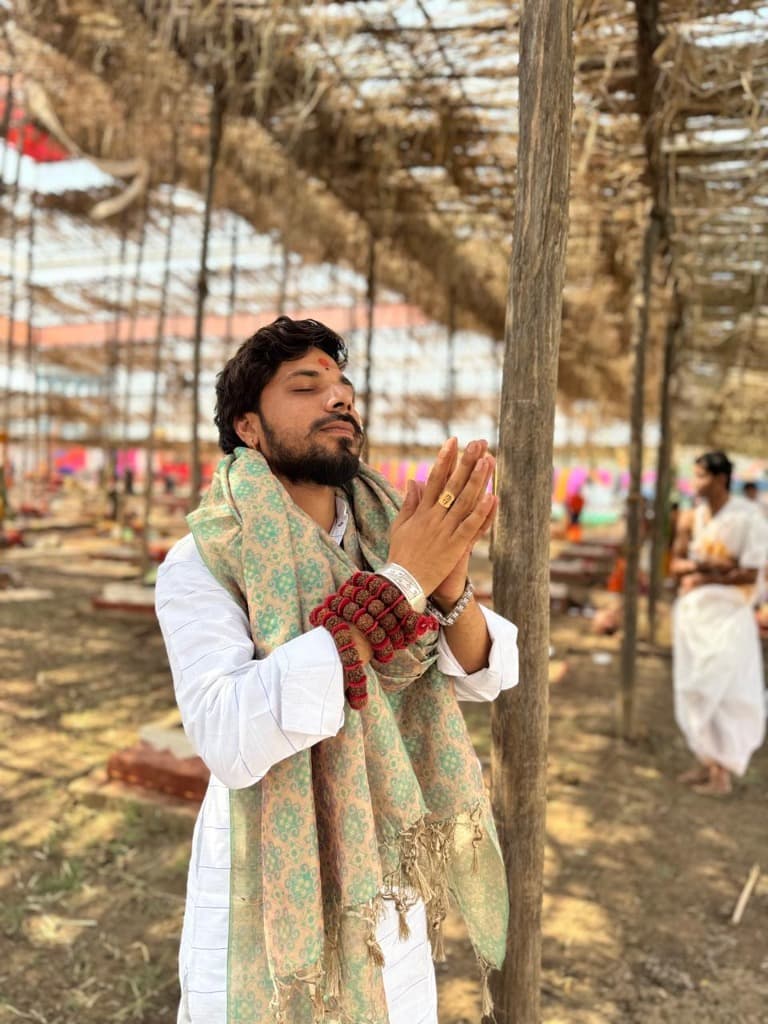
Acharya Tiwari Chetan Guru
Siddha Peethadheesh & Head Vedic Scholar
With over 15+ years of unbroken Vedic practice at Maa Baglamukhi Siddha Peeth, Nalkheda, Acharya Ji is a globally authoritative voice on Tantra Shastra, Stambhan Vidya, and Karmic Astrology. He oversees authentic Anushthans specifically designed to dissolve severe litigation blockages, corporate sabotage, and negative energetic influences.
Need Exact Hawan Cost & Shubh Muhurat?
Get direct guidance from Head Priest Acharya Tiwari Chetan Guru.